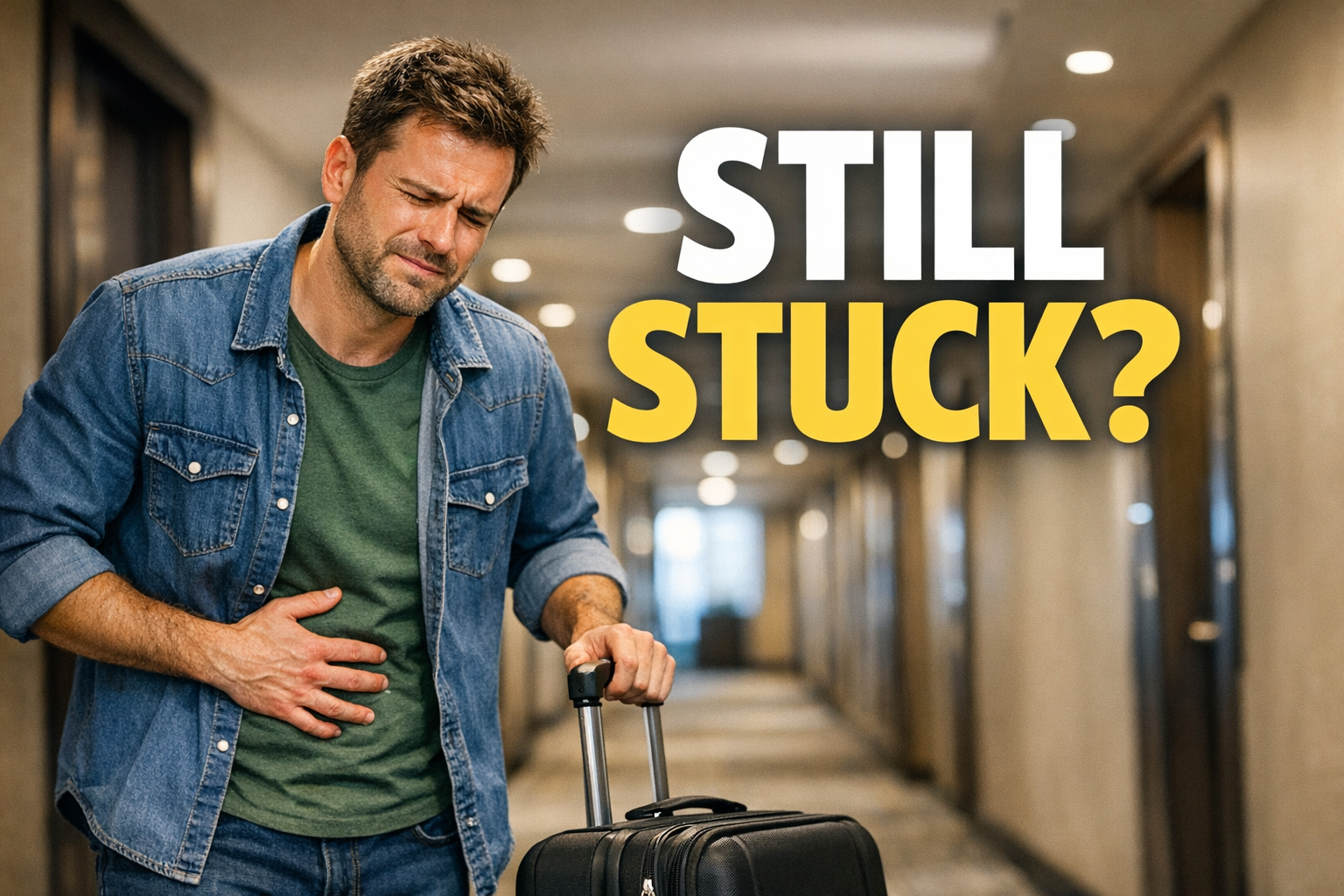
You can be doing keto just fine at home, then go on one travel week and suddenly get stuck, bloated, and uncomfortable. That’s why keto constipation travel problems show up so often. It usually isn’t one terrible meal. It’s the whole routine breaking at once.
You leave early, drink coffee instead of eating, grab salty packaged food, barely drink water because you do not want to hunt for bathrooms, and keep telling yourself you will fix it later. Two days later, your stomach feels off and nothing is moving.
That pattern is common. I’ve seen it happen on airport days, hotel stays, road trips, and work travel where the whole schedule turns weird fast.
Why keto constipation travel problems get worse fast
At home, your body usually gets some kind of rhythm. You wake up around the same time, drink water in the same places, eat familiar meals, and use the bathroom without overthinking it. Travel blows up that rhythm.
That matters because constipation on keto is rarely just about fiber. Most of the time, it is a mix of low fluids, low sodium balance, delayed meals, not enough total food, stress, and a body that is suddenly off schedule. Travel stacks all of those problems together.
If you are eating jerky, cheese, nuts, or random low-carb snacks while running through airports or sitting in a car for hours, you can stay technically low carb and still create the exact setup that makes constipation worse.
Start here:
1. You drink less water because travel makes normal hydration annoying
This is one of the biggest reasons the problem starts. On travel days, people often drink less on purpose. They do not want to stop on a road trip. They do not want to use an airport bathroom five times. They do not want to carry a bottle through a long day.
So the day turns into coffee in the morning, maybe one bottled drink later, and a promise to “catch up tonight.” That usually does not happen. By then, you are behind.
On keto, low water hits harder because your body already dumps more water and electrolytes than it did when you were eating more carbs. If your hydration drops during travel, your digestion often slows down with it.
A common mistake is thinking, “I’m not thirsty, so I’m fine.” That is not a reliable test on a chaotic travel day. Another mistake is drinking a lot all at once late at night and expecting that to fix the whole day. Usually it just means a rough night of sleep and a body that still felt under-watered for most of the day.
The fix is boring but real: make water automatic before the day gets messy. Start early. Carry something easy to finish, not something you forget in a bag. If a simple electrolyte powder helps you actually drink more consistently, that is a practical tool, not a magic trick.
If you want a deeper look at how this plays out in normal life, read Keto Dehydration in Real Life. Travel constipation often starts there.
2. Travel food is usually salty, packaged, and weirdly incomplete
Most travel food is not a real meal. It is bits and pieces. A meat stick here. A handful of nuts there. Cheese, hotel eggs, a bunless burger, maybe nothing for six hours, then a late heavy dinner.
That kind of eating keeps a lot of people “on keto,” but it does not always keep digestion moving well. The food is often salty, dry, low in water, and low in overall meal structure. Sometimes it is also low in total food because you are trying so hard to avoid carbs that you end up under-eating.
Real life example: you travel all morning, grab jerky at noon, pick at almonds at 3 PM, then eat a giant restaurant dinner at 8 PM because you are starving. That does not feel like a disaster in the moment, but your body spent the whole day under-watered and under-fed, then got hit with a heavy late meal.
The mistake here is thinking “low carb” automatically means “good enough.” It does not. Travel keto works better when your meals still look like meals. Protein. Enough food. Some fat. Fluids with it. Not just snack fragments.
The fix is to build around one or two solid anchors each day. If lunch is going to be messy, make breakfast more real. If you know dinner will be restaurant food, do not let the whole first half of the day run on scraps. This is the same logic that helps in Keto Travel Survival: do not wing every meal just because you are out of routine.
3. You avoid bathrooms, hold it longer, and throw off your normal rhythm
This part gets ignored, but it matters. Travel changes when people are willing to use the bathroom. Some people hate public restrooms. Some do not want to stop during a drive. Some are rushing between flights, meetings, or family plans all day.
So even when the urge shows up, they put it off. Then they keep sitting, keep moving, keep waiting, and the normal rhythm gets disrupted again.
At home, you probably have a pattern your body knows. During travel, that pattern gets replaced with “not now,” “maybe later,” or “I’ll wait until the hotel.” Do that a few times while also drinking less and eating worse, and the problem grows fast.
The mistake is treating bathroom timing like it does not count. It counts. If your body is giving you a window and you keep pushing it aside, that can turn a mild slowdown into a two-day problem.
The fix is to stop pretending the day is too important for basic body maintenance. If you get a chance, go. Use the decent gas station bathroom. Use the airport bathroom before boarding. Use the hotel bathroom before heading back out. This is not glamorous advice, but it is the kind that actually works.
4. Stress, sitting, and bad sleep make the whole thing worse
Travel is not just food. It is also stress, long sitting, bad sleep, and a body that is not getting its usual signals. Early alarms, delayed flights, road traffic, hotel noise, and unfamiliar beds all add up.
That matters because digestion usually works better when your routine is steady. Travel gives you the opposite. You sit more, move less naturally, sleep worse, and often wake up already behind on fluids and food.
A simple example: you sleep badly in a hotel, wake up puffy and tired, drink extra coffee, skip breakfast because checkout is rushed, then sit in a car or on a plane most of the day. By evening, you feel heavy, bloated, and not very hungry for a real meal. The next morning, the constipation problem is even worse.
The mistake is blaming one meal when the bigger issue is the full chain reaction. Travel constipation is usually a systems problem, not a single-food problem.
The fix is to reduce friction where you can. Get one decent meal earlier. Drink before caffeine gets out of control. Walk a little when you have the chance instead of sitting every possible minute. And if travel also brings the usual dizziness, dry mouth, or headache mess, read Keto Side Effects Outside the House because these problems often travel together.
Common mistakes that keep travel constipation going
Most people do not fix this because they keep making the same small mistakes over and over.
They wait until day two or three to do anything
By then, the pattern is already built. The earlier fix is easier than the late rescue.
They treat snacks like meals
Nuts, cheese, and meat sticks can help in a pinch. They are not always enough to carry the whole day well.
They chase fiber while ignoring hydration and meal timing
Fiber is not the first fix for every keto constipation problem. If water, electrolytes, meals, and routine are a mess, that is where you start.
They keep drinking coffee like it counts as a travel plan
Coffee plus stress plus no breakfast is a great way to feel worse later.
They try to “be good” by eating too little
Under-eating during travel often backfires into a late heavy meal, more bloating, and a body that feels stuck.
Related:
What to do when you know a travel week is coming
You do not need a perfect travel routine. You need a less stupid one.
Think in terms of damage control:
- Start the day with water before the first coffee.
- Make at least one meal feel like a real meal instead of a snack pile.
- Do not purposely avoid fluids all day.
- Use bathroom opportunities when they show up.
- Expect travel food to be imperfect, so your goal is structure, not purity.
If you already know you tend to get backed up on keto travel weeks, stop waiting for it to surprise you. Build around the weak points you already know are coming.
Fix this first:
- Drink early, not just late. Get ahead on water before the travel day turns chaotic, and use electrolytes if they help you stay consistent.
- Eat one real meal early in the day. Do not let the entire day run on coffee, jerky, nuts, and crossed fingers.
- Stop delaying bathroom chances. When you get a decent opportunity, take it instead of waiting for the “better” option later.
- Watch the full travel chain. If sleep, stress, long sitting, and late meals are all piling up, fix the system instead of blaming one food.
- Use travel as a troubleshooting pattern. If this keeps happening, your body is showing you exactly what breaks first: hydration, timing, or under-eating.
If this helped, here are more no-BS keto guides worth reading next:
- Constipation on Keto: Why It Happens and How to Fix It Fast
- Keto Dehydration in Real Life
- Keto Side Effects Outside the House
Explore more Keto Problems & Side Effects guides here: