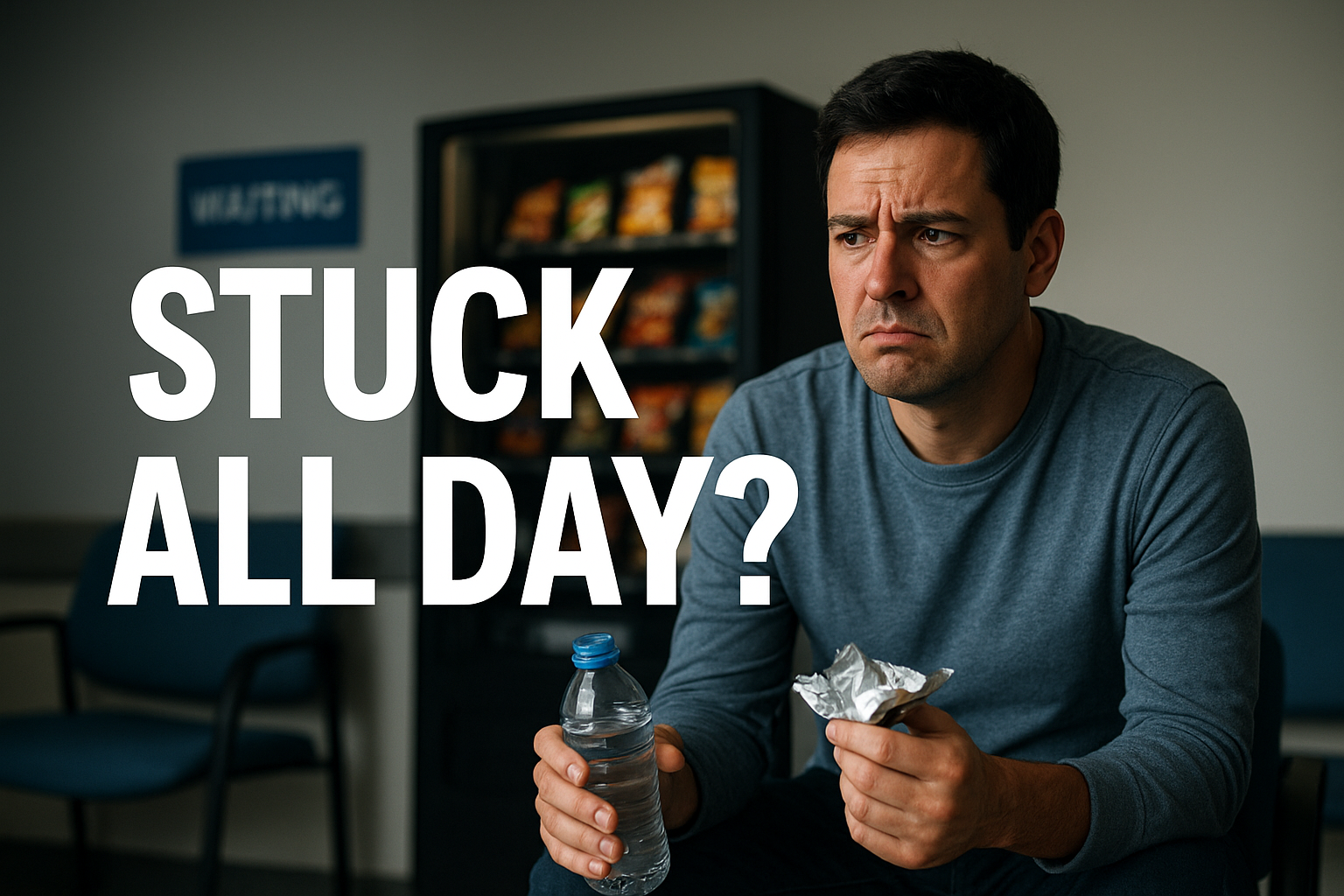
You can leave home thinking you’ll “figure food out later” and still watch your whole keto day fall apart in a hospital waiting room.
That’s not bad luck. It’s what happens when stress, delays, and weak food options stack up all at once.
If you need lazy keto in hospital waiting rooms to work in real life, you need a backup plan before the day gets weird.
One minute you think it’s a quick visit. Three hours later you’re drinking bad coffee, staring at crackers, and telling yourself you’ll fix it at dinner.
Why hospital waiting rooms wreck lazy keto so fast
This setup is rough because it attacks the exact things that keep keto easy: routine, timing, and decent food access.
You’re usually stressed. You don’t know how long you’ll be there. Food choices are limited, and the longer you wait, the more “anything will do” starts sounding reasonable.
That’s why this isn’t really about willpower. It’s about having a simple damage-control system before hunger gets loud.
Cause #1: you leave without real food because you think you’ll be home soon
This is where most people get trapped. You skip packing food because it feels dramatic or unnecessary, especially if the visit is “just a quick appointment” or “just dropping someone off.”
Then the timeline changes. A scan gets delayed. A doctor runs late. Someone gets admitted. Now you’re stuck in a place built around waiting, not eating well.
In real life, that looks like leaving the house after coffee, maybe grabbing nothing, then realizing at 2 PM that your only options are chips, candy, a dry sandwich, or whatever is left in the cafeteria.
The common mistake is acting like backup food means you expect disaster. It doesn’t. It means you understand how these days actually go.
The fix is simple: leave with one real protein option and one hydration option every time there is even a small chance the day could drag out. A pack of Chomps beef sticks works well because it’s shelf-stable, portable, and better than turning vending machine snacks into lunch. If you’ll be gone through a meal, bring an actual container of food instead of hoping you’ll “find something.”
If your bigger problem is that keto only works when your home routine is perfect, read Keto Away From Home. It helps with the same routine-breakdown problem from a wider angle.
Cause #2: stress makes fake hunger and bad decisions hit harder
Hospital waiting rooms aren’t neutral. Even if you’re not the patient, your body reads the whole situation as stress.
Stress can make you want fast comfort, sweet taste, crunchy snacks, or just something to do with your hands. That’s why people who were “fine” an hour ago suddenly want pretzels, muffins, or peanut M&Ms from the machine.
What makes this worse is that stress and real hunger blur together. If you haven’t eaten enough protein and salt earlier, that emotional pull gets even stronger.
A real-life version is pacing the hall, checking updates, drinking coffee, and grabbing a snack “just to take the edge off.” Then one snack becomes two because it never actually solved the problem.
The mistake is thinking the craving means you need a treat. A lot of the time, you need a steadier input: protein, water, sodium, and a clear food decision.
The fix is to stop asking, “What sounds good right now?” Ask, “What will keep this day from getting worse?” That usually means eating the least chaotic real option you can find first. If you brought backup food, use it early instead of saving it until you’re desperate.
If this pattern happens on caregiving days too, Caregiver Days on Keto is worth reading next because the emotional-food loop is very similar.
Cause #3: the food you can get fast is usually low in control and high in rebound hunger
Hospital food problems are not just about carbs. They’re also about weak fullness.
A muffin, crackers, trail mix, granola bar, or random cafeteria side might keep you busy for 20 minutes, but it usually doesn’t solve the actual problem. You still end up hungry later, and now you’ve also kicked off the “I already messed up” mindset.
This is why vending-machine food is such a trap on keto. It feels small, but it’s rarely satisfying. You get quick energy, then the crash, then the next bad decision.
It can also happen with hospital cafeteria food that looks safer than it is. Maybe you get a salad, but it barely has protein. Or you grab eggs and bacon in the morning, then nothing solid again until late afternoon. That kind of meal gap can blow up dinner later.
The mistake here is choosing by label instead of by outcome. “Low carb” is not enough if the food still leaves you starving an hour later.
The fix is to build every hospital food decision around staying power. If you can buy cafeteria food, look for a plain protein first, then add something simple around it. If you can’t, use your backup protein so you don’t start chasing snacks. This is the same reason Lazy Keto at Gas Stations matters: convenience food gets expensive fast when you keep buying things that never really count as a meal.
Cause #4: you delay eating too long, then the whole night turns into damage control
“I’ll eat later” is one of the biggest hospital-day lies.
Sometimes later never comes. You get pulled into updates, moving rooms, paperwork, family texts, pickup logistics, or the drive home. By the time you finally stop, you’re not calmly choosing dinner. You’re trying to shut down a full-body hunger problem.
That’s when people hit drive-thrus, order extra sides, raid the pantry, or eat keto-ish food in portions that are way bigger than they planned.
The common mistake is treating late hunger like a self-control failure. Most of the time it’s just the result of under-eating for six or eight hours while stressed.
The fix is to use an earlier cutoff. If it’s getting close to a normal meal time and you still don’t know when you’ll be home, eat something real then. Do not wait until the car ride back. Do not wait until you’re shaking and irritated. Protect dinner by handling hunger before it becomes an emergency.
If your day already got away from you, read Keto Recovery Guide for the Next 24 Hours. That’s the right move when one rough day is about to roll into two.
Cause #5: hydration falls apart when coffee becomes the whole strategy
A lot of hospital waiting room days run on caffeine, not food or fluids.
You grab coffee because it’s available, it gives you something to hold, and it helps you stay alert. But coffee on an empty stomach, with hours of stress and not much water, can make the day feel worse. Now you’re jittery, hungry, headachy, and even more likely to grab quick junk.
This gets uglier if you’re already someone who runs low on sodium. Long, stressful, underfed days can make keto feel harder than it really is.
The mistake is assuming water later will fix it. Usually by “later,” you’re already behind.
The fix is to bring water and something that helps you stay on top of electrolytes without turning the day into another sweet-drink habit. A plain packet option like LMNT Zero Sugar Electrolytes can be useful as a backup tool when you’re stuck for hours and starting to feel off. Just don’t use packets as a substitute for real meals if the bigger problem is that you haven’t eaten actual food.
If symptoms start stacking up, Lazy Keto on Long Appointment Days is another good read because it covers the missed-meal and waiting-game pattern from a similar angle.
What to do before you leave for the hospital
You do not need a full cooler and a survival bunker. You need less drama and more predictability.
Here’s the easiest setup:
- Eat something real before leaving if the timing is even slightly weird
- Pack one portable protein backup
- Bring water
- Bring electrolytes if long waits or stress usually make you feel rough
- Assume the day may run longer than people say
That last point matters. Hospital days almost never improve because you were optimistic.
What to buy if you’re already stuck and unprepared
If you’re already there with no food, don’t try to be perfect. Try to be less trapped.
Start with the cafeteria if there is one. Look for the plainest protein-heavy option you can get. Even if the meal is boring, boring is better than spiraling.
If the cafeteria is closed, use the gift shop, nearby pharmacy, or whatever convenience setup is inside the building. Again, the goal is not “best keto meal ever.” The goal is preventing a long stress day from turning into nonstop snack logic.
If your only immediate choices are weak snack foods, buy the least messy option available and use it as a bridge while you solve the next meal properly. Don’t pretend a few crackers and coffee counts as a plan.
Common mistakes that make hospital days worse on keto
- Leaving with no food because you assume you’ll be home soon
- Using coffee as breakfast and lunch
- Saving your backup snack until you’re already desperate
- Buying “small” junk foods over and over instead of making one decent decision
- Trying to compensate by barely eating all day, then overeating at night
- Telling yourself the day doesn’t count because it was stressful
That last one is understandable, but it keeps the whole cycle going. A rough day does not need a rough night attached to it.
A simple lazy keto hospital waiting room plan that actually works
If this keeps happening, build a repeatable rule set.
Eat before leaving when possible. Bring backup protein every time. Use hydration early. Make one decent food choice before you get overly hungry. Then when you get home, eat a normal meal instead of revenge-eating because the day felt hard.
That is what keeps lazy keto in hospital waiting rooms from turning into a full-day wipeout.
You are not trying to win a nutrition contest in a hospital lobby. You are trying to keep one hard day from creating two more hard days after it.
Fix this first:
- Stop leaving empty-handed. Bring one real backup protein any time a hospital or emergency-style day could run long.
- Handle hunger earlier. If meal time is getting close and you’re still stuck, eat before you become desperate.
- Use coffee as support, not the whole plan. Keep water and electrolytes in the mix, especially on long stressful waits.
- Choose food by what happens next. Pick the option most likely to keep you steady for the next few hours, not the one that just sounds good for five minutes.
🔎 If this helped, here are more no-BS keto guides worth reading next:
- How to Keep Keto Going on Caregiver Days When Stress, Errands, and Other People’s Needs Take Over
- Why Lazy Keto Falls Apart on Long Appointment Days When Waiting Rooms, Drive-Thrus, and a Late Dinner Blow Up the Whole Plan
- Keto Away From Home: How to Stop One Off-Routine Day From Turning Into a Full Weekend Mess
Explore more Lazy Keto guides here: