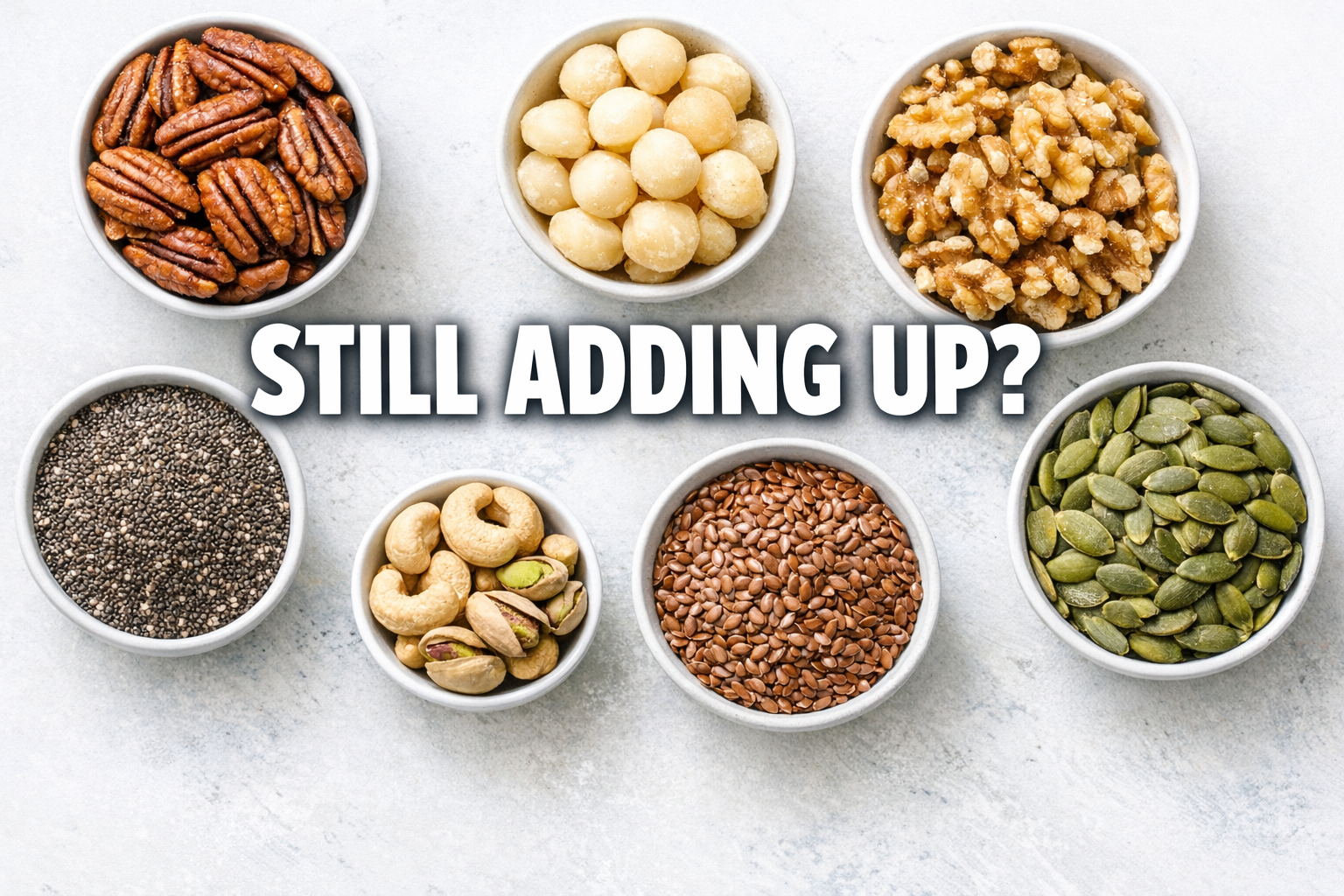
Keto nuts and seeds can fit your plan just fine.
They can also quietly wreck your carb count when portions get sloppy.
Here is the reality check: most people do not get in trouble because nuts are banned. They get in trouble because small, dense foods are easy to undercount and easy to keep eating.
It usually starts with something small. You grab a handful of cashews while making lunch, spoon some peanut butter after dinner, and sprinkle seeds on yogurt because they seem healthy. None of that feels like much in the moment.
But that is exactly where people get fooled. Nuts and seeds are small, dense, easy to overeat, and often paired with labels or serving sizes that make the carb hit look smaller than it really is.
Why keto nuts and seeds confuse so many people
Nuts and seeds live in a weird middle ground. They are not candy. They are not bread. They are not obvious junk food. So people treat them like harmless little extras.
That is the mistake. Nuts and seeds can absolutely fit keto, but they only help when you use them with some honesty. You need to know which ones are easier to fit, which ones get carby fast, and where portions quietly get out of control.
The nuts and seeds that usually fit keto best
Some options are simply easier to work with because their carb load is lower and they do not spike upward as fast in a normal serving.
In general, pecans, macadamias, walnuts, chia seeds, flaxseed, hemp hearts, and pumpkin seeds tend to be easier keto picks than cashews, pistachios, and bigger spoonfuls of nut butter. Almonds and peanuts sit more in the middle. They can work, but they still need real portion control.
If you already struggle with “healthy” foods creeping up on you, this matters a lot. The difference between a measured serving and a casual bowl can be the difference between a useful keto food and a sneaky carb bomb.
The nuts that add up the fastest
This is where most people mess up. Cashews are the classic example. Pistachios can do the same thing. Peanuts and almonds are not terrible, but they are easy to overeat because people think of them as light snack food instead of dense add-ons.
A lot of readers also miss how fast nut butters climb. A “tablespoon” of peanut butter or almond butter is often not a real tablespoon at home. It turns into a heavy spoonful, then another taste, then one more swipe from the jar.
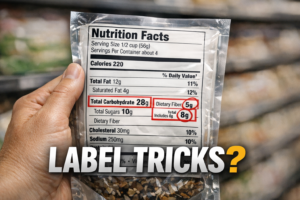
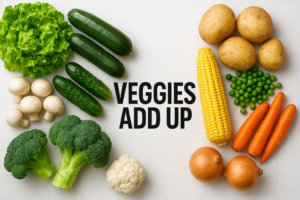
If you need help spotting these kinds of portion traps in other foods too, read Keto Vegetables: Which Ones Actually Work, Which Ones Add Up Fast, and Where People Miscount Them and How to Read Keto Nutrition Labels Without Getting Tricked by Net Carbs, Serving Sizes, and Hidden Ingredients.
Cause 1: Carb density changes fast from one nut to another
People love to say “nuts are keto,” but that is too vague to be useful. The real issue is carb density. Different nuts are not interchangeable.
Macadamias and pecans are usually easier to fit into a keto day than cashews. Chia and flax are often used in smaller amounts and bring fiber, so they are less likely to turn into a carb pile by accident. Cashews and pistachios, on the other hand, can climb a lot faster than people expect.
Here is what this looks like in real life: someone buys a “healthy snack” bag with cashews, dried fruit, and seeds, then counts it mentally as a low-carb choice because it came from the nuts section. That is not a keto snack anymore. That is a mixed-carb snack wearing a health halo.
The common mistake is assuming every nut deserves the same trust. It does not. If your carbs are tight, higher-carb nuts need more caution than lower-carb ones.
The fix: keep your easiest picks simple. If you want the least drama, base your routine around lower-carb nuts and seeds first, and treat cashews, pistachios, and sweetened mixes like foods that need actual limits.
Cause 2: Portion distortion makes a small food turn big fast
This is probably the biggest reason nuts and seeds go wrong on keto. A real serving is usually much smaller than people picture.
A handful is not a unit of measurement. Neither is “just a few.” A small bowl of nuts can contain multiple servings without looking extreme, especially at night, at your desk, or in the car.
You see the same thing with seed toppings. Chia, flax, sunflower seeds, and pumpkin seeds can be useful add-ons, but people often stack them on top of yogurt bowls, salads, or smoothies without counting how many extras are landing in that one meal.
That is why nuts and seeds can stall progress even when the rest of the day looks decent. It is not always one huge mistake. It is three or four small, dense add-ons that never felt important enough to count.
If this keeps happening, a digital food scale is one of the few tools that can fix the guessing fast. You do not need to weigh everything forever, but weighing nuts, seeds, and nut butter for a week can reset your idea of what one serving actually looks like.
Cause 3: Nut butters and seed products are easy to romanticize
People get into trouble when they stop looking at nuts and seeds as ingredients and start treating them like unlimited comfort food.
Peanut butter, almond butter, sunflower seed butter, and “natural” mixed seed spreads sound clean. Sometimes they are clean. That does not make them light.
The real-life version is simple: you eat a pretty normal dinner, then later want something “safe,” so you stand in the kitchen with a spoon and take a few bites from a jar. Since it was not cookies or chips, it feels responsible. But calorie-dense foods do not stop being dense just because the ingredient list looks better.
Another mistake is buying flavored nut butters or crunchy blends with honey, chocolate, or added sugar, then acting surprised when the carbs are higher than expected. The label matters here. The front of the jar does not.
The fix: if you buy nut butter, choose unsweetened versions with short ingredient lists, and use them as measured foods, not standing-at-the-counter foods. The same label-reading skills that matter for packaged keto snacks matter here too, which is why Net Carb Trap Map is worth reading if you keep getting fooled by “healthy” packaging.
Cause 4: Nuts and seeds get used as background food instead of real food
Nuts and seeds work best as part of a meal or as a measured support item. They work worst when they become constant background eating.
This is where the problem shifts from carbs to total intake and weak meal structure. A person skips a real lunch, grabs almonds at 2 PM, has cheese and peanuts at 4 PM, then still eats dinner because none of that felt like a meal. By the end of the day, intake is high, fullness is weird, and they think keto is broken.
That pattern is a close cousin of what happens in Why “Just a Handful” of Nuts and Cheese Can Stall Keto Weight Loss. The issue is not that nuts are forbidden. The issue is that dense snack foods are very easy to stack on top of meals instead of replacing anything.
The common mistake is using nuts and seeds to patch bad structure all day. They become the thing you grab while cooking, working, driving, or watching TV. Then you wonder why you are still hungry or not losing weight.
The fix: give nuts and seeds a job. Put them in a meal, measure them into a container, or use them in a planned portion. If they are floating around loose in a pantry bag, they usually turn into background eating. Even simple portion containers can help if your problem is mindless grabbing rather than food knowledge.
Which nuts and seeds are easiest to fit on keto?
If you want the short version, these are usually the easier options to build around:
- pecans
- macadamias
- walnuts
- chia seeds
- ground flaxseed
- hemp hearts
- pumpkin seeds in measured amounts
These are usually the ones to watch more carefully:
- cashews
- pistachios
- sweetened trail mixes
- glazed or flavored nuts
- nut butters eaten straight from the jar
- large amounts of peanuts or almonds just because they seem “safe”
That does not mean the second list is banned. It means the margin for error is smaller.
Where people miscount nuts and seeds the most
There are a few repeat trouble spots.
1. Trail mix logic
People count the nuts and ignore the raisins, candy, banana chips, or sweet coating. That is not a nuts-and-seeds issue anymore. That is just hidden sugar and extra carbs.
2. Spoon math
A level tablespoon and a heavy spoonful are not the same thing. This matters most with peanut butter, almond butter, tahini, and seed spreads.
3. Healthy topping stacking
You add chia, flax, pumpkin seeds, nut butter, coconut, and berries to one bowl and tell yourself each item was small. Together, they are not small.
4. Bag eating
If you eat from the bag, tin, or jar, you will usually undercount. That is not a willpower issue. It is a visibility problem.
5. Restaurant and store versions
Honey-roasted nuts, spicy blends, glazed pecans, and salad toppers often come with sugar, starch, or bigger portions than expected. Read the label. Then read it again.
Common mistakes with keto nuts and seeds
The biggest mistake is asking whether nuts and seeds are “allowed” instead of asking how they are being used.
Another big one is treating seeds as invisible because they are small. Chia and flax can be helpful, but a lot of seed-heavy breakfasts get loaded with too many extras and stop being a simple keto meal.
People also confuse “natural” with “self-limiting.” Nuts are not very self-limiting for a lot of people. They are crunchy, salty, easy to carry, and easy to keep eating.
And finally, a lot of shoppers buy products that look clean but come with sweeteners, dried fruit, starches, or misleading serving sizes. If you want simple pantry options, plain chia seeds and other single-ingredient products are usually smarter than dressed-up keto snack blends.
How to make nuts and seeds work on keto without kidding yourself
Use them like tools, not like magic food.
Nuts and seeds can help with texture, crunch, baking, simple toppings, and occasional measured snacks. They can also become one of the easiest ways to overshoot carbs or calories without feeling like you ate much.
The difference usually comes down to three things: which type you chose, how much you actually ate, and whether they were part of a real plan or just random background food.
If you want keto nuts and seeds to work for you, lower-carb choices plus boring honesty beat “clean eating” vibes every time.
Fix this first:
- Start with easier picks. Build around lower-carb nuts and seeds like pecans, walnuts, chia, flax, and measured pumpkin seeds before you make cashews or pistachios a habit.
- Measure the foods that fool you. For one week, weigh nuts, seeds, and nut butters so you can see what a real serving looks like.
- Stop eating from bags and jars. Portion them out first, especially if your overeating happens at night, at work, or while distracted.
- Check the ingredient list. Skip sweetened mixes, glazed nuts, and flavored butters with sugar or syrup hiding in them.
- Use nuts and seeds as part of meals, not all-day filler. If they keep replacing real meals and still leave you snacky, the problem is not keto. The problem is the structure.
🔎 If this helped, here are more no-BS keto guides worth reading next:
- Why “Just a Handful” of Nuts and Cheese Can Stall Keto Weight Loss
- Keto Vegetables: Which Ones Actually Work, Which Ones Add Up Fast, and Where People Miscount Them
- How to Read Keto Nutrition Labels Without Getting Tricked by Net Carbs, Serving Sizes, and Hidden Ingredients
Explore more Keto Food & Carbs guides here: