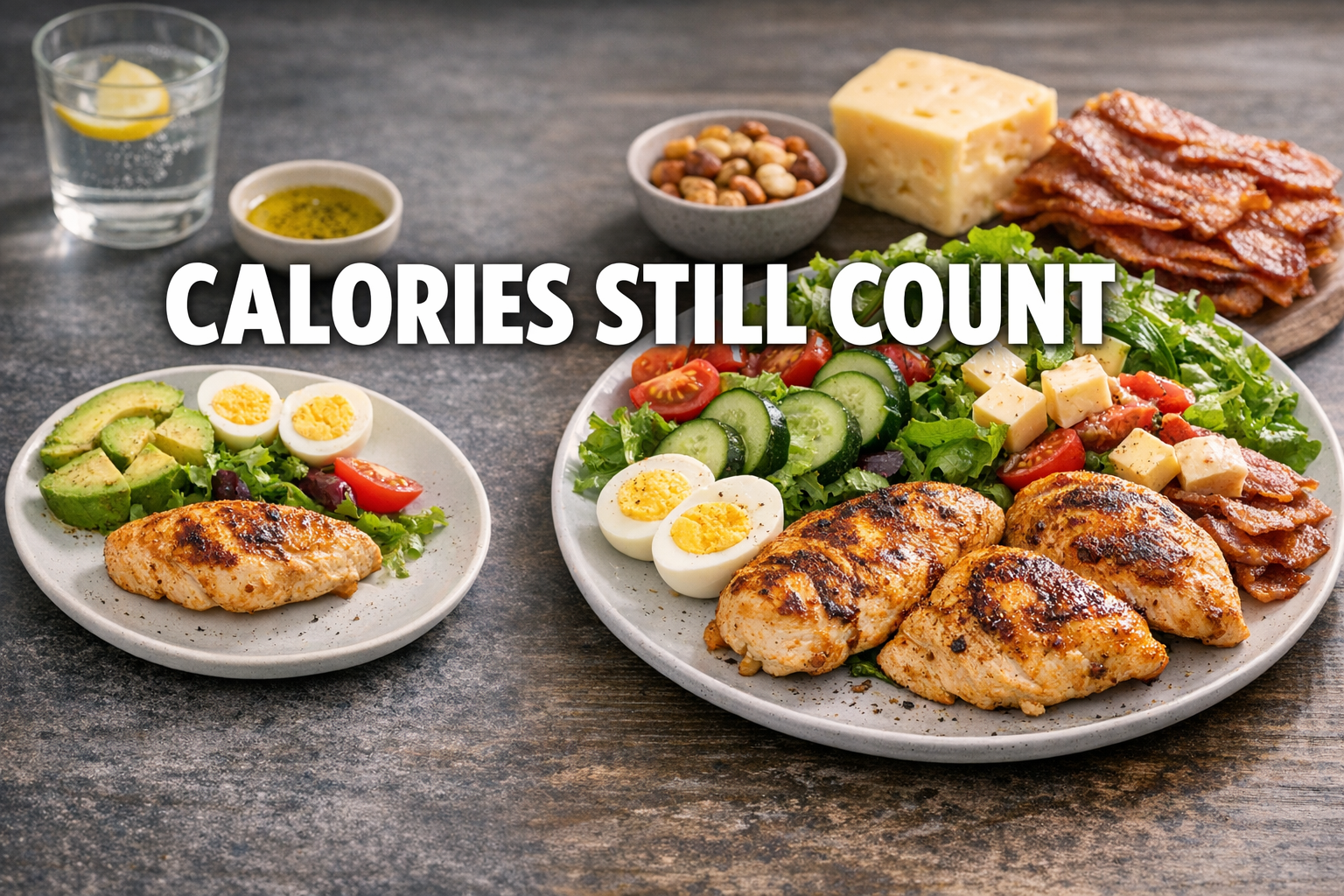
Do calories matter on keto? Yes. They just matter in a different way than a lot of people expect. Keto can make it easier to eat less because hunger often drops, but if your meals are built from calorie-dense foods, restaurant extras, and “small” add-ons that keep stacking up, fat loss can slow down fast.
You can be low carb and still be overeating enough to block weight loss.
That is the part people miss.
A lot of readers hit this point after a few good weeks. Carbs are down, sugar is gone, and the scale should be moving.
Then they look up and realize they are pouring oil into coffee, adding butter to already-fatty meals, grabbing handfuls of nuts, and calling it all harmless because it fits keto.
I have seen this play out in the most normal way possible: eggs for breakfast, salad with chicken for lunch, steak for dinner, then enough cheese, nuts, cream, and sauces around the edges to turn a solid day into a stalled one.
Do calories matter on keto, or is that old diet thinking?
Here is the truth: calories still matter on keto, but keto changes how the problem shows up.
On a higher-carb diet, some people overeat because blood sugar swings and hunger are all over the place. On keto, the problem is often quieter.
You feel more in control, so you stop watching the stuff that adds up. That is why people can honestly say, “I barely eat anything,” while still eating more energy than they realize.
Keto does not break the basic rule of fat loss. If your body is getting more energy from food than it needs, progress gets slower or stops. The reason this gets confusing is that keto foods can be very filling and very calorie-dense at the same time.
That means two things can be true:
- Keto can help you naturally eat less.
- You can still eat enough keto food to stall fat loss.
If you have been stuck, this is where most people mess up. They argue about whether calories “count” instead of fixing the daily patterns that keep intake high.
1. Liquid fats make a normal meal bigger without making it much more filling
This is one of the biggest reasons people think keto stopped working. They start adding fat to everything because they heard keto means more fat, more butter, more cream, more oil, more MCT, more cheese sauce.
The problem is simple: liquid fats and extra fats raise calories fast, but they usually do not create the same “meal is done” feeling that solid protein does. A tablespoon of oil is easy to pour. Two tablespoons is even easier. The same goes for heavy cream in coffee, butter melted over food, and dressing that turns a decent lunch into a much bigger one.
Real life looks like this: you eat chicken and vegetables, which would have been fine on their own, but you also cook it in extra oil, add avocado oil dressing, then finish with shredded cheese. It still looks like a keto meal. It just became a much bigger keto meal.
The common mistake is acting like any added fat is automatically helpful because keto uses fat for fuel. That misses the point. Your body can burn dietary fat, or it can burn stored body fat. If a lot of fuel keeps coming in from your plate, it has less reason to pull from storage.
The fix is not “eat dry food forever.” It is being more honest about extras. Use fat to make meals satisfying, not as a bonus layer on top of meals that were already enough. If this is a blind spot, a digital food scale helps fast because it shows how quickly oils, cheese, dressings, and nut portions grow when you stop eyeballing them.
If this sounds familiar, also read Keto Macro Blind Spots because this is exactly the kind of hidden creep that stalls progress.
2. Nuts, cheese, and keto add-ons turn meals into all-day portion creep
Nuts and cheese are not bad foods. They are just easy to undercount.
This is where people get trapped by “it is only a little.” A little cheese while cooking. A few almonds after lunch. A low-carb snack plate in the afternoon. A few more bites while cleaning up dinner.
None of it feels like a real meal, which is exactly why it gets missed.
The problem is that these foods are dense and easy to repeat. You can eat a lot of calories without ever feeling like you sat down and ate a lot of food. That makes them one of the most common reasons keto weight loss slows down even when carbs look fine.
A good example: lunch was a burger patty and lettuce. Pretty solid. But then the afternoon becomes string cheese, a handful of pecans, and a few bites of leftover taco meat.
By dinner, you still feel like you “barely ate,” but you actually spent the day layering extra intake between meals.
The usual mistake is blaming your metabolism, hormones, or age before fixing the obvious repeat foods. Sometimes the problem is not mysterious. It is just repeated handfuls and slices.
The fix is to make these foods part of meals instead of background eating. Put portions on a plate. Stop eating from the bag, block, or tub. If you need a practical way to keep leftovers and portions from getting messy, simple meal-prep containers can help you pre-portion the stuff that usually gets picked at.
For a deeper look at this exact pattern, this nuts and cheese weight loss stall guide breaks down why these “safe” foods cause so much trouble.
3. Weak protein structure leaves you full enough for now, but hungry enough later
A lot of people blame calories when the real issue starts with weak meals.
If breakfast is coffee with cream, lunch is a salad with a little chicken, and dinner starts late, you are more likely to drift into snacking, toppings, and second-helping behavior. That usually leads to higher calories, but the cause is bad meal structure, not lack of discipline.
This matters because protein does more work than people give it credit for. It helps meals feel finished. It gives your day structure. It makes random extra food less tempting. When protein is too light, fats and snack foods slide in to fill the gap.
Real life version: someone says they are doing high-fat keto, but lunch is basically greens, dressing, and a little feta. Technically keto. Practically weak. Two hours later they are into macadamias, pepperoni, or a low-carb treat because the meal never really landed.
The common mistake is chasing satiety with fat alone. That often backfires. You end up adding calories without fixing the actual problem, which was that your meal needed more real protein and a clearer stopping point.
The fix is to anchor meals with enough protein first, then use fats around that. Build the plate around eggs, chicken, beef, fish, Greek yogurt if it fits you, or another protein source you can repeat consistently. If your meals never feel finished, this protein fix guide is worth reading next.
4. Restaurant portions and sauces can turn a “good keto choice” into a stall meal
People often think they are making a clean choice because they skipped the bun, potatoes, or rice. That is a good start. It is not the whole story.
Restaurant food is usually built to taste big, not to stay portion-aware. That means more oil, more butter, more cheese, more creamy sauces, and bigger cuts of meat than you would eat at home. Even salad dressings and dipping sauces can quietly push a meal way up.
Here is what this looks like: bunless bacon cheeseburger, side salad, ranch, and maybe wings as an appetizer because they are low carb too. Still keto? Sure. Easy to turn into a very high-calorie meal? Also yes.
The mistake is assuming low carb automatically means fat-loss-friendly. It does not. Low carb helps. But restaurant portions can wipe out the natural appetite control that makes keto useful in the first place.
The fix is to simplify. Pick one main protein. Go easy on creamy extras. Ask for sauces on the side. Do not treat every restaurant meal like a special event just because the bread basket is gone. If takeout and eating out are regular problems, these keto mistakes that stop weight loss will probably hit home.
5. “It is keto, so it is fine” thinking kills awareness
This is the mindset problem underneath almost everything above.
When people first start keto, they often move from carb fear to calorie blindness. They get so focused on avoiding sugar, bread, and starch that they stop paying attention to total intake. That works for a while if appetite drops hard. Then progress slows, and they do not know why.
The truth is that keto foods are not free foods. Bacon, butter coffee, cheese crisps, keto desserts, nut butter, fat bombs, and low-carb sauces can all fit keto and still work against your goal if they become everyday extras.
A common real-life pattern is the person who says, “I am not cheating,” while eating a lot of keto snacks, rich coffee drinks, and extra toppings every day. They are telling the truth. They are not cheating on carbs. They are just overshooting on energy more often than they think.
The mistake is turning keto into a label system instead of a results system. If a food is technically keto but keeps you stuck, hungry, or overeating, it is not helping you right now.
The fix is to ask better questions:
- Does this meal actually keep me full?
- Am I adding this because I need it, or because I can?
- Would this portion look different if I had to measure it?
- Is this helping weight loss, or just fitting the keto rules on paper?
Common mistakes people make when calories matter on keto
- Adding fat to already-satisfying meals because someone said more fat always helps.
- Counting carbs carefully but ignoring portions of cheese, nuts, dressing, cream, and oils.
- Calling snack foods “meals” and then wondering why hunger keeps bouncing back.
- Using restaurant meals as proof that keto is not working, when the real problem is portion size and extras.
- Assuming fat loss should happen automatically as long as carbs stay low.
If your weight loss has stalled, do not jump straight to fasting, extreme carb cuts, or panic. First look at the simple stuff that usually causes the stall. The big patterns are usually more important than tiny macro math.
And if you want the broader troubleshooting view, this keto weight loss stall guide is the best next step because it connects portions, snacks, drinks, and routine problems in one place.
Fix this first:
- Stop adding bonus fats for a week. Keep enough fat to make meals taste good, but cut the automatic extra oil, butter, cream, and heavy dressing.
- Build meals around protein first. Make sure each meal has a real anchor so you are not patching hunger later with cheese, nuts, and keto snacks.
- Measure your usual problem foods. Check nuts, cheese, oils, dressings, and nut butter instead of guessing.
- Clean up restaurant meals. One protein, one side, sauces on the side, fewer add-ons.
- Judge food by results, not by the keto label. If something is technically keto but keeps stalling progress, it is part of the problem.
If this helped, here are more no-BS keto guides worth reading next:
- Keto Weight Loss Stalls: The No-BS Hub for Portions, Snacks, Drinks, Takeout, and Weekend Reset Problems
- Keto Macro Blind Spots: Why Portions, Sauces, Bites, and Drinks Stall Progress
- Keto Mistakes That Stop Weight Loss
Explore more Keto Weight Loss guides here: