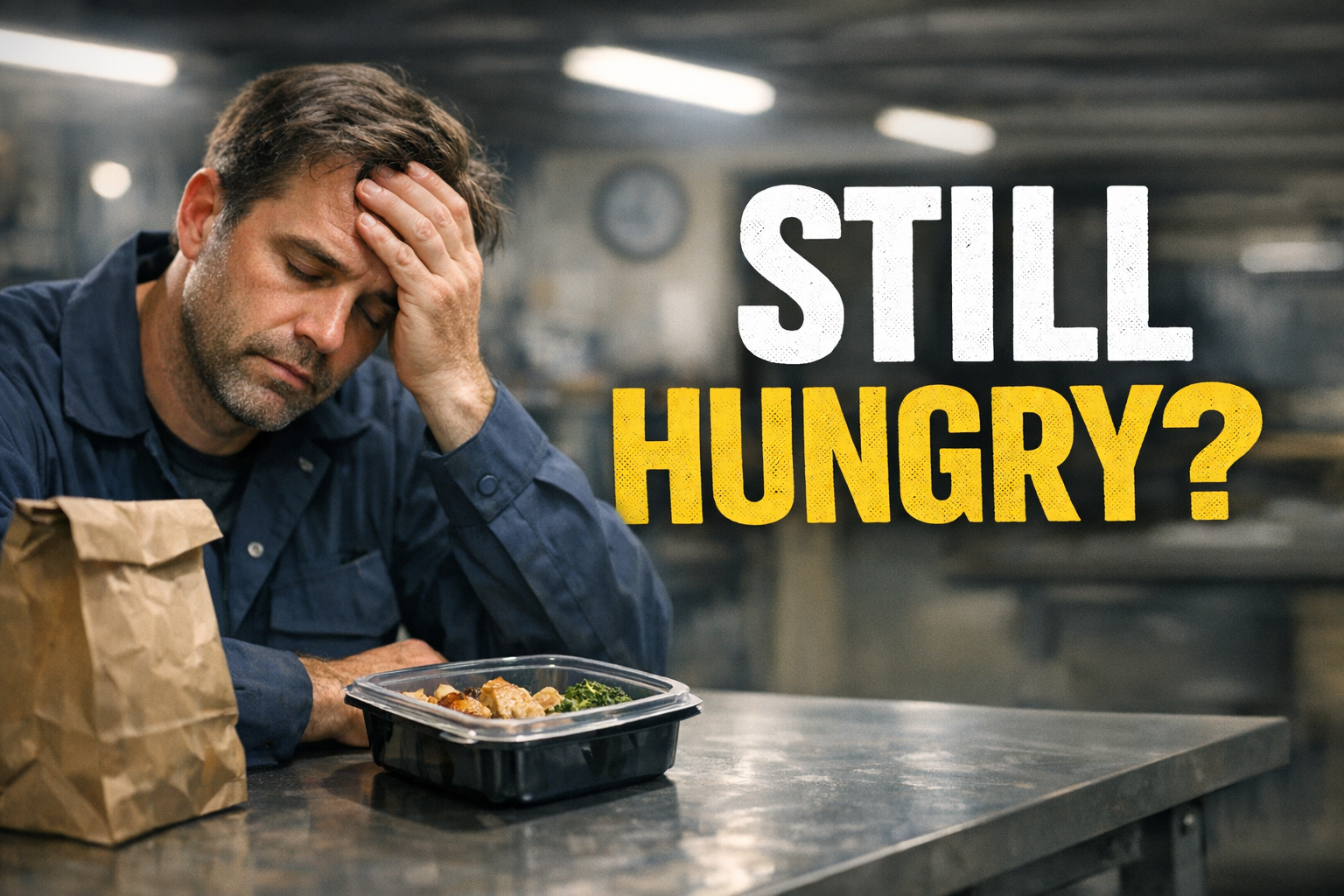
You can stay on plan for the first half of a double shift and still watch the whole day fall apart by night.
That is not lazy keto failing. It is a long day exposing a weak second-half food plan.
If you have ever eaten your packed lunch at 11, felt weirdly proud at 1, then found yourself buying random low-carb snacks, jerky, cheese, or a gas-station dinner at 8:30, this is that problem. The first half was handled. The second half was pure damage control.
Why double-shift days blow up lazy keto
Double shifts create a fake sense of control early and a real food problem later. You start with structure, but the structure runs out before the day does.
That gap matters. When the second half of the day is built on fatigue, missed breaks, vending-machine logic, and “I just need something quick,” you stop making meal decisions and start making survival decisions.
That is the part most people miss. The problem is not only what you packed. It is what happens after the packed food is gone.
The first big problem: you packed for a workday, not for the whole shift
This is where a lot of double-shift days go wrong. You bring a decent lunch, maybe a snack, maybe a drink, and it works great until mid-afternoon. Then the day keeps going.
In real life, that looks like eggs or leftovers before work, a packed lunch around noon, maybe a cheese stick or nuts later, and then nothing solid between 3 PM and 9 PM. By the time you finally get a chance to eat, you are not calmly choosing dinner. You are fixing an emergency.
The common mistake is assuming early success means later success is automatic. It is not. A lunch that gets you through a normal shift may not even get you halfway through a double.
The fix is to build your food in two phases. Pack one real meal for the first half and one real meal for the second half. Not a “snack backup.” A real second meal with enough protein to actually shut hunger down.
If your hunger keeps blowing up later in the day, read Why Keto Hunger Explodes Later. That pattern shows up hard on long workdays.
The second problem: your second-half food is too snacky to count as a meal
This is the fake-fix trap. Once the packed meal is gone, people start piecing together “keto enough” foods and pretending that adds up to dinner.
Maybe it is beef jerky, a handful of nuts, cheese crisps, and coffee. Maybe it is two bites here, a protein bar there, and whatever looks safe in a break room or convenience store. It is low carb, sure. But it often leaves you half-fed and still hunting.
That is why the second half feels endless. You are eating, but you are not landing the plane.
A lot of readers do better when they stop treating shelf-stable food like a full plan. Portable food is fine, but it needs a job. Something like grass-fed beef sticks works best when it covers a gap or supports a real second meal, not when it becomes the whole second half of the day.
The smarter fix is simple: decide what your “late-shift meal” actually is before the day starts. That could be cold chicken and cheese, burger patties in a container, deli meat with hard-boiled eggs, or a shake plus something solid if that is all you can manage. The point is that your second-half food needs enough protein and enough substance to feel like an ending.
If you need help building meals that are actually filling, the best related guide is Keto Protein Fix Map.
The third problem: your handoff between planned food and exhausted improvising is too late
This is the ugly middle. You are not hungry enough yet to eat your backup meal at 3 PM, so you wait. Then work gets busy. Then your break moves. Then suddenly it is 6:30, you are shaky, annoyed, and willing to call almost anything dinner.
That is why double-shift eating feels so random. The breakdown usually happens in the handoff window between “I still have a plan” and “now I will eat whatever is easiest.”
A common mistake is waiting until you feel starved to switch to phase two. On long days, that is too late. Hunger gets louder, patience gets smaller, and portions start getting sloppy.
The fix is to set a second-half trigger before the day starts. For example: “If I have not had a real meal by 4 PM, I eat my late-shift meal on the next break.” No debate. No hopeful waiting.
This is also where gear can actually help instead of becoming clutter. An insulated lunch bag makes a real difference if your second meal needs to survive a long day without becoming gross or annoying to carry. That is not magic. It just removes friction from doing the obvious thing.
If your whole workday food structure keeps breaking down, Keto Workday Survival System is worth reading next.
The fourth problem: the first half of the day is too light, so the second half starts in a deficit
Some double-shift days fail before the second shift even starts. The first meal is coffee. Lunch is small. The packed food is technically low carb but not very filling. Then people are shocked when they become impossible to satisfy later.
Here is what that looks like in real life: coffee at 6, a light lunch at 11, maybe a snack at 2, and then a huge wall of hunger around dinner time. By then the body is not asking for perfect keto structure. It is asking for calories, salt, and something fast.
The mistake is thinking you are being disciplined because you were not hungry early. That is often not discipline. It is delayed fallout.
The fix is to make the first half sturdier, not bigger in a random way. Start with real protein. Make lunch something that would still make sense if dinner got delayed by four hours. If your day can go sideways, your first half cannot be built on vibes.
This is one reason midweek meal systems matter more than perfect prep. Lazy Keto Meal Prep for Wednesday Dinner Chaos does a good job showing how to set up repeat meals that survive real life instead of only surviving Sunday.
The fifth problem: you keep rewarding survival instead of fixing the pattern
After a brutal double shift, it is easy to think, “I made it through, so I deserve this.” That is where random takeout, snack runs, drive-thru extras, and second dinners sneak in.
There is nothing weird about wanting relief after a long day. The problem is that relief food usually shows up after you already under-ate, over-caffeinated, and got too hungry. At that point, even low-carb choices can turn into way more food than you needed.
The mistake is treating the late-night blowup like a motivation problem. Usually it is a systems problem. Your body is collecting the bill for a day that was underfed and badly timed.
The fix is to make post-shift eating boring on purpose. Decide in advance what “done eating” looks like when you get home. Maybe it is the packed second meal during the shift and a simple protein-heavy plate at home. Maybe it is leftovers and water, then bed. But if your post-shift plan is “I will figure it out later,” later will usually turn into too much food.
What people on double shifts usually get wrong
Most people do not need a more complicated keto plan. They need a plan that respects how long the day actually is.
- They pack one lunch and call it preparation.
- They rely on snack foods to do a meal’s job.
- They wait too long to eat the second-half meal.
- They under-eat early because they are busy or caffeinated.
- They come home and eat like recovery starts with whatever is closest.
None of that means you failed keto. It means your structure only covered the easy half of the day.
What a better lazy keto double-shift setup actually looks like
Keep it plain. You do not need a motivational speech. You need a repeatable setup that still works when you are tired.
Phase 1: first-half meal
Make this protein-forward and real. Leftover meat, eggs, burgers, chicken, tuna, whatever you will actually eat. The goal is not to be fancy. The goal is to avoid starting the second half already behind.
Phase 2: second-half meal
Pack an actual meal, not just emergency bites. If you cannot store much, at least combine portable protein with something that gives it stopping power.
Phase 3: end-of-day landing
Know what happens when you get home. If dinner is still needed, make it simple and limited. If the second-half meal was enough, do not create a bonus eating session just because the day was hard.
This is the whole game on double shifts: stop leaving the hardest part of the day to your most tired version of yourself.
Fix this first:
- Pack for two halves of the day, not one. One real meal early and one real meal for the late shift.
- Stop calling snack piles dinner. Your second-half food needs real protein and enough substance to end hunger.
- Set a trigger time for the late-shift meal before the day starts so you do not wait until you are starving.
- Make your first-half meals stronger, especially if coffee usually replaces breakfast or lunch is too small.
- Decide what post-shift eating looks like before you clock out so exhaustion does not make every food decision for you.
🔎 If this helped, here are more no-BS keto guides worth reading next:
- Keto Workday Survival System
- Lazy Keto Meal Prep for Wednesday Dinner Chaos
- Why Keto Hunger Explodes Later
Explore more Lazy Keto guides here: