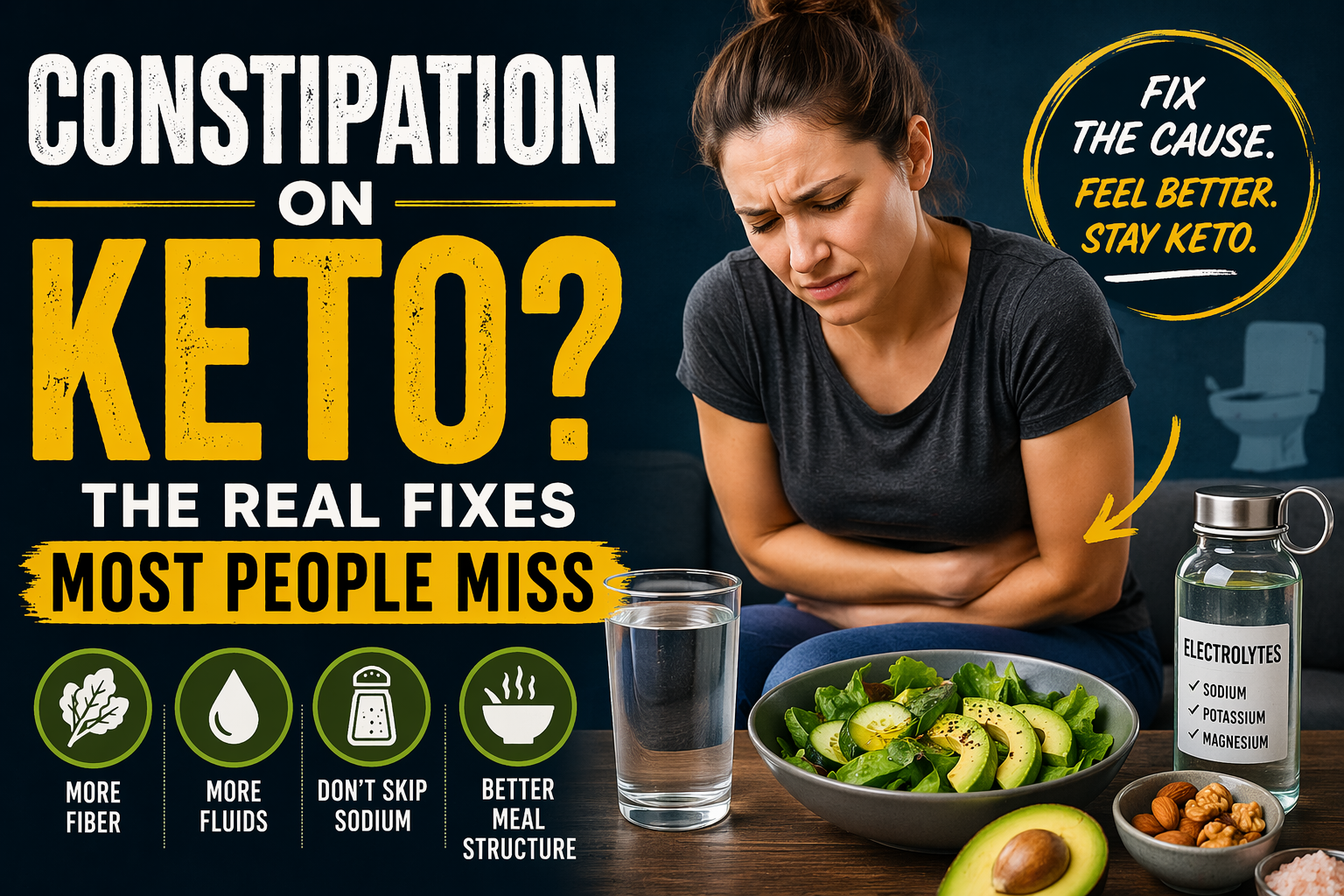
Constipation on keto is one of those problems that makes people think the whole plan is broken.
Most of the time, keto is not the real problem. Your setup is.
People cut bread, pasta, fruit, and cereal. Then they accidentally cut food volume, hydration, salt, and meal structure too. A few days later, they are backed up, bloated, annoyed, and Googling whether keto ruined their digestion.
Here is the no-BS version: constipation on keto usually shows up when the day gets smaller, drier, denser, and more random. That means less food bulk, weaker hydration, more cheese, more convenience food, and fewer real meals.
If you fix the pattern causing it, this usually gets a lot easier to fix.
Why constipation on keto happens in real life
Most people do not get constipated on keto because carbs disappeared. They get constipated because their routine changed in a way that slows digestion down.
The common pattern looks like this: coffee instead of breakfast, cheese instead of a full meal, a lot of meat but not much volume, low fluids early in the day, and random snack foods filling the gaps. Travel, desk days, rushed workweeks, and fast-food stretches make that worse.
That is why the right question is not just, “How do I get more fiber?” The better question is, “What changed in my routine that made my food smaller, drier, and less consistent?”
Start here first: If constipation is happening with headaches, dizziness, cramps, poor sleep, or that washed-out “keto feels harder than it should” feeling, read Keto Side Effects Guide: What Causes Headaches, Dizziness, Nausea, and More – and What to Fix First. Constipation is often one part of a bigger side-effect mess.
Quick decision path: what to check first
- If your meals got tiny and mostly turned into eggs, cheese, and meat, start with food volume.
- If you are thirsty, crampy, headachy, or living on coffee, start with hydration and sodium.
- If the problem got worse during travel, desk days, or fast-food weeks, fix the routine pattern behind it.
- If dairy and packaged low-carb snacks took over, clean those up before chasing supplements.
If this is part of a bigger gut mess, start here too: Keto Digestive Problems.
1. Your keto meals got low in fiber and even lower in food volume
This is one of the biggest reasons constipation on keto starts early.
People remove the high-carb foods they used to eat, which makes sense. But then they also remove a lot of food bulk. Now breakfast is eggs, lunch is deli meat and cheese, dinner is chicken with ranch, and vegetables barely show up.
That is low carb. It is also a very low-volume day.
This is where people mess up. They hear “eat low carb” and turn that into “eat as little plant food as possible.” Then they act surprised when digestion slows down.
The fix is not to force giant bowls of salad. The fix is to put some actual bulk back into keto meals. Leafy greens, broccoli, cauliflower, zucchini, cucumbers, cabbage, avocado, and similar low-carb foods do more for this problem than another cheese stick ever will.
Real life example: if lunch is just meat, mayo, and cheese rolled in lettuce, that may still be too small. Add a side of cucumbers, cabbage slaw, or cooked vegetables so the meal is not just dense food with no volume.
2. You are low on fluids and your electrolytes are sloppy too
A lot of constipation on keto is really a hydration problem with an electrolyte problem sitting right next to it.
When carbs go down, your body drops water fast. That is why the scale often moves early. But if you do not replace fluids and salt well, everything can start feeling off. Energy drops. Mouth feels dry. Headaches show up. Using the bathroom gets harder.
Real life example: you start keto, lose a few pounds fast, feel great for a day, then spend the next three days tired, thirsty, and backed up. That is not random. Your fluid balance changed, and your routine did not catch up.
The common mistake is pounding plain water at night and assuming that fixes the whole thing. It usually does not. Another mistake is living on coffee, diet soda, and “I’ll drink more later.”
The better fix is simple. Drink earlier in the day. Drink with meals. Salt your food like a normal person. Use broth or salty meals if needed. If constipation on keto is showing up with headaches, fatigue, or that drained early-keto feeling, a simple electrolyte powder can help support hydration during the transition, but it is support, not the whole answer.
3. Travel days quietly wreck the whole routine
Travel constipation on keto is common because travel strips out the stuff that normally keeps digestion moving. You drink less, eat later, sit more, rely on airport or gas-station food, and often avoid using unfamiliar bathrooms.
That creates a perfect storm: dry day, low food bulk, long gaps between meals, and a lot of dense convenience food.
Real life example: coffee at the airport, jerky and almonds on the plane, cheese and burgers on the road, hardly any water because you do not want extra stops. By the time you get to the hotel, you are bloated and uncomfortable.
This is where people get it wrong. They blame keto, when the real issue was a travel routine that would slow almost anybody down.
The fix is to stop treating travel like a free-for-all. Drink earlier, not just at night. Build one or two actual meals instead of piecing together snack foods all day. If you already know travel is a trigger, plan your first solid meal before you leave.
If that is your pattern, read Keto Constipation While Traveling. It breaks down the travel-specific mistakes and fixes.
4. Desk days and low movement make a weak setup worse
Some people do fine on keto until they hit a stretch of long desk days. Then constipation shows up fast.
The problem is usually not that sitting magically causes it by itself. It is that desk days often come with coffee-first mornings, delayed meals, low water intake, and hours of ignoring body signals because work is busy.
Real life example: you sit through meetings all morning, drink coffee, skip lunch, finally grab something small at your desk, and realize late in the day that you barely moved and barely drank anything.
The common mistake is focusing only on “exercise more” while ignoring the smaller food-and-fluid pattern that built the problem.
The better fix is to tighten the workday structure. Eat a real lunch. Keep fluids where you can actually see them. Stop building the whole day around caffeine and convenience.
If your constipation mostly shows up during office weeks or work-from-desk stretches, read Keto Desk Day Constipation.
5. Small meals and coffee-only mornings leave too little for your gut to work with
This one gets missed all the time because it looks “healthy.”
People feel less hungry on keto, so they start eating tiny meals. Then breakfast disappears into coffee, lunch becomes a few bites, and dinner is smaller than it should be because they are trying to stay disciplined.
That might feel controlled. It can also leave digestion with too little bulk, too little fluid, and too little consistency.
Real life example: coffee with cream in the morning, a cheese stick at noon, maybe a couple eggs later, and a modest dinner. That is not some advanced keto trick. That is barely a full day of real meals.
The common mistake is assuming that less hunger means less structure is needed. For some people, it just means they slowly drift into under-eating and random meal timing.
The fix is to stop turning keto into coffee plus tiny portions. Build meals around protein first, then add volume. If mornings keep disappearing, make lunch and dinner more deliberate instead of hoping the problem fixes itself.
If coffee-only mornings and too-small meals sound familiar, read Keto Constipation From Small Meals.
6. Fast-food weeks can be low carb but still terrible for digestion
A lot of people can stay technically keto during busy weeks by ordering burgers without buns, grilled chicken, breakfast sandwiches without bread, and other low-carb swaps.
The problem is that fast-food keto often becomes dense, salty, low-volume, low-vegetable eating repeated over and over. Add long gaps between meals and low fluids, and constipation shows up fast.
Real life example: two drive-thru meals a day, cheese-heavy orders, hardly any vegetables, maybe a diet soda, and almost no water until evening. The carbs may stay low. Your digestion still takes a hit.
The common mistake is thinking “low carb” automatically means “good enough.” It is good enough for staying in range on carbs. It is not always good enough for digestion, appetite control, or how you feel.
The fix is not perfection. It is adding some structure back. Stop letting every meal be meat, cheese, and wrappers. Get fluids in earlier. Pick one better meal with actual volume. Treat fast food as damage control, not a full-time system.
If this is the pattern, read Keto Constipation During Fast-Food Weeks.
7. You turned keto into a dairy-heavy routine
Cheese is not automatically the enemy. But dairy overload is a real pattern on keto.
A little cheese on a meal is one thing. Cheese at breakfast, cheese as a snack, cheese melted onto lunch, and a creamy dessert at night is something else. That kind of day is easy to build on keto, and for some people it slows digestion down fast.
Real life example: eggs with cheese in the morning, string cheese in the afternoon, taco meat with sour cream at dinner, and a low-carb treat made with cream cheese at night. Technically keto? Sure. Helpful when constipation on keto is already happening? Not usually.
The common mistake is thinking that if a food is low carb, more of it must be fine. That logic gets people in trouble fast with dairy. It is dense, easy to repeat, and easy to let crowd out better food choices.
The fix is to pull dairy back for a few days and see what changes. Keep protein solid, but stop using cheese and creamy extras as the backbone of every meal. Add more meat, eggs, fish, and vegetables with volume instead.
8. Your low-carb snacks are dense, processed, or built around sugar alcohols
Sometimes constipation on keto is not coming from one normal meal. It is coming from a weird mix of bars, nuts, jerky, cheese crisps, and packaged keto foods that look harmless because the carb numbers are low.
Those foods are easy to overeat, easy to repeat, and often terrible at replacing real meals. Some also contain sugar alcohols that can leave people bloated, gassy, uncomfortable, or strangely backed up even when they thought those products were helping them stay on track.
Real life example: you skip lunch, eat a keto bar in the car, grab almonds at your desk, finish a sugar-free treat after dinner, and wonder why your stomach feels awful. The label may say low carb. Your digestion does not care.
The mistake is treating processed keto snacks like a meal system. They are backup foods at best.
The fix is to cut back on snack-style eating for a few days and build actual meals again. If you keep using sweet low-carb products, check whether sugar alcohols are making the whole situation worse. Read Sugar Alcohols on Keto if bloating or bathroom problems keep showing up after packaged treats.
What most people get wrong about constipation on keto
- They assume keto itself caused the problem, so they never look at the actual meal pattern.
- They focus only on fiber and ignore hydration, sodium, meal size, and routine.
- They let dairy and snack foods replace real meals.
- They ignore real-life trigger situations like travel, desk weeks, and fast-food stretches.
- They try to fix a weak setup with one supplement instead of cleaning up the day.
That last one matters.
There is no magic powder that fixes a sloppy keto routine by itself. If the day is built on coffee, cheese, sweeteners, and random snacks, the answer is not to buy one more digestive product and hope.
Simple fixes if constipation on keto is happening right now
Do not overhaul your whole life. Just fix the obvious problems first.
- Look at the last two days. Were your meals mostly dense food with almost no vegetables?
- Ask whether you actually drank enough earlier in the day, not just at night.
- Notice whether travel, desk work, tiny meals, or fast-food weeks changed your normal routine.
- Check whether cheese, creamy extras, or packaged low-carb foods took over.
- If you keep defaulting to guesswork, use the Keto Constipation Fix Map to match the pattern to the next fix.
That quick audit usually tells the story.
If constipation on keto is severe, painful, or keeps dragging on despite cleaning up the basics, use common sense and get medical advice. Internet troubleshooting has limits.
FAQ: does keto constipation mean keto is not working?
No. It usually means your version of keto got too low in bulk, too low in hydration, too heavy in dairy or snack foods, or too random in structure.
Keto can work fine without turning your digestion into a mess. But it works better when meals look like actual meals instead of cheese, coffee, and convenience food stitched together all day.
Fix this first:
- Check which pattern fits best: low-volume meals, dehydration, travel, desk days, coffee-only mornings, fast-food weeks, dairy overload, or snack-food overload.
- Add one or two low-carb foods with real volume to meals for the next few days, and stop pretending tiny meals are enough.
- Drink fluids earlier, salt your food properly, and use an electrolyte drink mix if hydration support would actually help you stay consistent.
- Pull back on cheese-heavy meals, sugar-free treats, and packaged low-carb snacks while you reset the routine.
- If you still are not sure what is driving it, use Keto Constipation Fix Map and then move to the most relevant deeper page.
Read next:
- Keto Constipation Fix Map
- Keto Constipation While Traveling
- Keto Desk Day Constipation
- Keto Constipation From Small Meals
- Keto Constipation During Fast-Food Weeks
- Keto Digestive Problems
If this helped, read these next:
- Keto Constipation Fix Map
- Keto Constipation While Traveling
- Keto Desk Day Constipation
- Keto Constipation From Small Meals
- Keto Constipation During Fast-Food Weeks
- Keto Digestive Problems
Explore more side-effect guides here:
View all Keto Problems & Side Effects guides