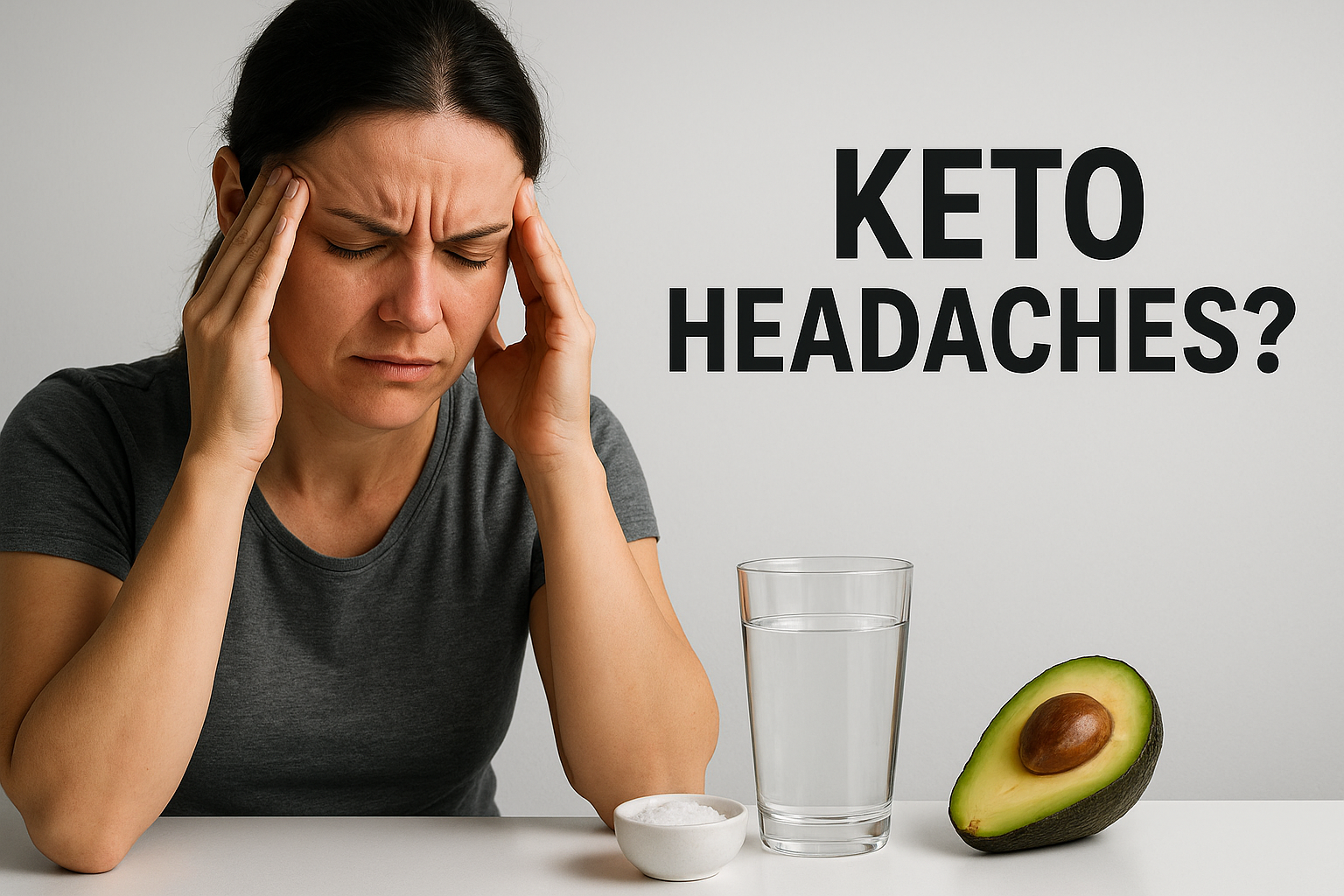
You cut carbs, and now your head feels like it got hit by a truck.
If keto headaches keep showing up, something is off. Usually it is sodium, fluids, food intake, or a messy transition.
A lot of people blame keto too fast. In real life, the headache usually points to a mistake you can fix.
That matters, because trying to push through it usually makes the whole first week worse.
You wake up, stand up, and your head starts pounding. By lunch, you are blaming keto. In real life, keto is usually exposing a mistake, not creating a random mystery problem.
Why keto headaches happen in the first place
When you lower carbs, your body drops stored glycogen. Glycogen holds water. So when carbs go down, water goes down too.
That shift sounds simple, but it changes a lot. You lose more fluid. You lose more sodium. Your meals often change fast. Your caffeine habits may change. Sometimes you are also eating less than you think.
That is why headaches on keto are common early on. But common does not mean normal enough to ignore.
If your head keeps hurting, there is usually a fixable reason behind it.
Start here:
Keto headaches cause #1: You are low on sodium and fluids
This is the biggest one.
When people start keto, they often drink plain water but forget that they are also flushing out sodium. So they end up watered down instead of actually rehydrated.
In real life, this looks like drinking bottle after bottle of water, peeing all day, and still feeling foggy, tired, or headachy. You may also feel weak, dizzy, or annoyed for no clear reason.
The common mistake is thinking hydration only means water. On keto, that is incomplete. Your body also needs enough sodium to hold onto that fluid properly.
The fix is simple. Salt your food more on purpose. Drink water steadily across the day instead of chugging huge amounts at once. If you are in the early phase of keto or sweating a lot, a sugar-free electrolyte mix can help fill the gap faster. LMNT Zero Sugar Electrolytes is one practical option if plain salted food is not enough.
This is also why a lot of early keto flu symptoms overlap with headaches. The problem is often not keto itself. It is the electrolyte drop that comes with the switch.
Keto headaches cause #2: You are under-eating without realizing it
A lot of beginners clean up their food so hard that they accidentally stop eating enough.
They cut bread, rice, snacks, sweets, and fast food. That part is fine. Then they replace all of it with tiny meals that do not have enough protein, enough calories, or enough staying power.
In real life, breakfast becomes coffee. Lunch becomes eggs or cheese. Dinner is small because they are trying to “be good.” By late afternoon, they feel drained, irritable, and headachy.
The mistake here is treating keto like a starvation plan. Keto works better when meals are solid and structured, not when you spend all day half-eating.
The fix is to build real meals. Start with protein first. Then add fat that makes the meal satisfying. Then add low-carb foods that give it more volume, like salad, broccoli, cauliflower, or zucchini.
If your meals are tiny, your body will tell you. A headache is one of the ways it does that.
This is also one reason keto can feel like it is failing. If you are eating too little early on, then over-snacking later, you create a messy cycle. That same pattern shows up in bigger troubleshooting issues covered in Keto Isn’t Working? The Real Reasons.
Keto headaches cause #3: Caffeine withdrawal is hitting at the same time
This one catches people all the time.
They start keto and suddenly decide to “get healthy” in every possible way on the same day. They cut carbs, sugar, soda, energy drinks, and coffee creamers all at once.
Then the headache shows up and keto gets blamed for all of it.
In real life, this looks like someone who used to drink two sugary coffees and a soda every day. Now they switch to black coffee, or less coffee, or no caffeine at all. Of course their head hurts.
The mistake is changing too many things at once and assuming the cause is obvious.
The fix is to be honest about your old routine. If your caffeine intake dropped hard, that may be part of the problem. You do not need to quit caffeine and start keto on the exact same morning.
Keep your caffeine more stable while your body adjusts to lower carbs. Then change one variable at a time. That way you can tell what is actually causing the issue.
Keto headaches cause #4: Hidden carbs and sweeteners are keeping you in a messy middle
Some people are not fully in. They are not fully out either. They are just stuck in a sloppy middle where carbs are lower than before, but still high enough to keep energy unstable.
That can happen when meals look keto on the surface but still include sugary sauces, flavored drinks, “low net carb” junk, or portion-heavy snack foods.
In real life, someone eats eggs and bacon for breakfast, then grabs a few bars, a “keto” dessert, and a bottled coffee drink later. They think they stayed on track. But their intake is full of little hits that keep hunger, cravings, and energy swings alive.
The mistake is trusting labels too much.
The fix is to simplify. Eat more whole foods for a few days and see what changes. Meat, eggs, fish, chicken, full-fat Greek yogurt if it fits you, non-starchy vegetables, olive oil, avocado, and basic simple foods are much easier to troubleshoot.
If you suspect label games or hidden ingredients, read this next: Keto Foods That Are Secretly High Carb.
Keto headaches cause #5: You are trying to push through poor meal structure
Even if your food is technically low carb, the way you eat it still matters.
A lot of people graze instead of eating proper meals. They nibble on cheese, nuts, jerky, and random snack foods all day. Nothing is terrible by itself, but the whole pattern is weak.
In real life, breakfast is skipped. Lunch is a handful of nuts. Midday is coffee. Later comes cheese, maybe some deli meat, then a bigger dinner when the person is already tired and depleted.
The mistake is thinking low carb automatically means well structured.
The fix is to make your day more predictable. Try two or three real meals instead of constant grazing. Make sure each meal has enough protein. Add salt on purpose. Stop relying on snack food to carry the day.
This matters because headaches often show up when your routine is sloppy, not just when your carbs are low.
Related:
Common mistakes that keep keto headaches going
Here is where most people mess up:
They wait too long to fix sodium
They keep hoping the headache will pass on its own, even though they are clearly low on fluids and salt.
They blame keto instead of their setup
Keto gets the blame, but the real issue is poor meals, weak hydration, or cutting too many things at once.
They rely on “keto snacks” instead of real food
Bars, sweet treats, and packaged low-carb foods can make the whole process harder to read and harder to fix.
They try to white-knuckle the first week
You do not need to suffer just to prove you are committed. If something feels off, troubleshoot it.
They ignore the bigger pattern
If headaches keep showing up with fatigue, cravings, or stalled progress, the problem may be part of a broader setup issue. That is why people also run into problems like not losing weight on keto even when they think they are doing everything right.
Fix this first:
Step 1: Add more sodium and fluids today. Salt your meals on purpose, and stop assuming plain water alone will solve it.
Step 2: Eat two or three real meals with enough protein. Do not try to run keto on coffee, cheese, and snack food.
Step 3: Keep caffeine stable for now. If you changed coffee or soda habits at the same time, do not ignore that.
Step 4: Cut out packaged “keto” junk for a few days. Use simple foods so you can see what your body is actually responding to.
Step 5: If headaches keep happening, look at the full pattern. Headaches usually come with another clue like fatigue, cravings, dizziness, or weak meal structure.
🔎 If this helped, here are more no-BS keto guides worth reading next:
- Keto Isn’t Working? The Real Reasons (And What Actually Fixes It)
- Keto Mistakes That Stop Weight Loss
- Why You’re Not Losing Weight on Keto (And How to Fix It)
Explore more Keto That Actually Works stories here: