
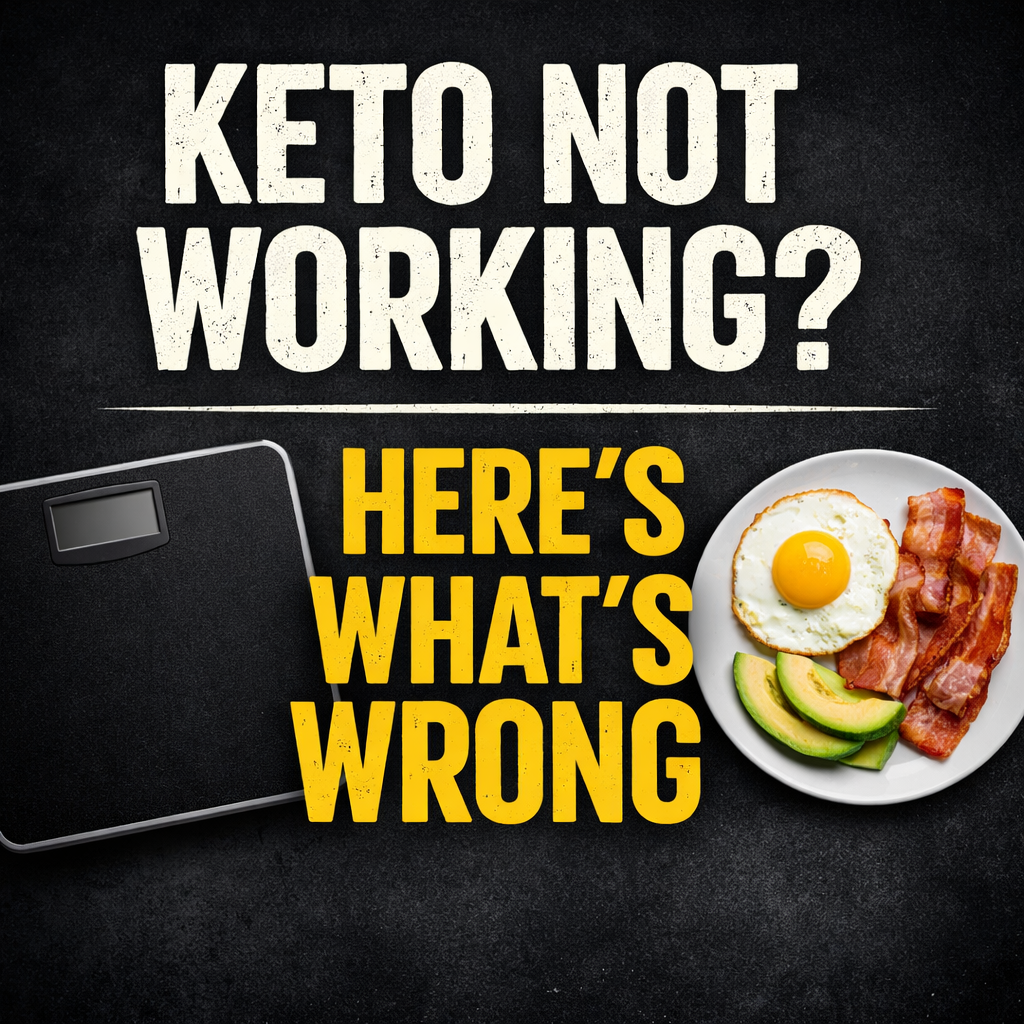
You cut carbs, cleaned up your meals, and expected keto to work.
Instead, the scale is stuck, your energy feels off, and you’re starting to think keto works for everyone except you.
Here’s the truth: when keto isn’t working, it’s usually not because your body is broken.
It’s because a few specific problems are keeping you stuck.
This is where most people mess up. They think keto failed, when really their version of keto is messy, inconsistent, and built around the wrong foods.
If you fix the real problem, keto usually gets simpler fast.
Why Keto Isn’t Working for So Many People
Keto works when carbs stay low enough, meals are solid enough to keep you full, and your routine is consistent enough to stop the constant back-and-forth.
When that does not happen, you end up in the worst middle ground.
You are eating fewer carbs than before, but not low enough. You are trying to be “good,” but still leaning on snack foods, little bites, and random convenience meals. You are following the label more than the result.
That version of keto feels frustrating because it is.
If you want keto to work, you need to stop guessing and find the real leak in the plan.
A simple way to use this page is to match your main problem to the most likely cause:
- If you are hungry all day, start with Keto Hunger Problems.
- If you keep getting pulled into sweets and random bites, read Keto Cravings Explained.
- If you feel tired, dizzy, foggy, or headachy, go to Keto Electrolyte Problems.
- If the same workdays, weekends, or evenings keep blowing up the plan, read Keto Routine Breakdowns.
- If the main issue is the scale not moving, use Keto Weight Loss Stalls.
Keto Isn’t Working? These Are the 5 Reasons That Usually Cause It
1. You’re eating more carbs than you think
This is still the biggest reason keto isn’t working.
Most people do not get knocked off track by rice or cake. They get knocked off track by small carb creep all day long. Sauce on lunch. A flavored coffee. A wrap that says low carb. A handful of nuts here, a bar there, a few bites while cooking dinner.
None of that feels huge in the moment. Together, it adds up fast.
That is why keto can feel so confusing. You think you are being careful, but your carbs are leaking in through the foods that look safe.
A common real-life version looks like this: eggs for breakfast, a salad with dressing for lunch, a protein bar in the afternoon, chicken for dinner, and a “keto” dessert at night. On paper that sounds disciplined. In real life, the dressing, bar, dessert, and extras may be enough to keep you stuck.
The mistake is assuming “low carb” and “keto” labels mean automatic progress.
The fix is to tighten the food list for a week and make it boring on purpose. Base meals around meat, eggs, fish, simple vegetables, cheese in reasonable amounts, and plain fats used for cooking instead of poured onto everything. If you need a cleaner reset, use this keto foods list for beginners and cut the guesswork.
If your usual problem foods are dressings, breads, wraps, bars, or sweet “keto” treats, this guide on keto foods that are secretly high carb will show you where carbs usually hide.
2. Your meals are too weak, so you keep chasing food later
A lot of people think keto is about avoiding carbs more than building real meals.
That is backwards.
If your meals are tiny, snacky, or mostly fat with not much protein, you will feel “off” all day. Then you start picking at food, looking for energy, and trying to white-knuckle your way to dinner.
This is what weak keto meals look like in real life: coffee with cream for breakfast, a few eggs or cheese cubes at lunch, then a desperate search for something crunchy, salty, or sweet by mid-afternoon.
People often call that a craving problem. A lot of the time, it is a weak-meal problem first.
The mistake is thinking a meal counts just because it is technically low carb.
The fix is to make each meal do a real job. Start with protein first. Then add enough food to make the meal satisfying. Chicken thighs, burger patties, tuna with eggs, ground beef bowls, rotisserie chicken, steak, salmon, and omelets are the kind of food that holds you.
If hunger keeps blowing up your day, go deeper with Keto Hunger Problems. If you keep bouncing from hunger into sweets, read Keto Cravings Explained. That combination is where a lot of “keto isn’t working” stories really start.
3. You’re relying on fake keto foods and hidden snacking
This is where a lot of stalled keto plans quietly fall apart.
Processed keto food is easy to underestimate because it looks controlled. A packaged bar, low-carb tortilla, protein cookie, keto cereal, cheese crisps, or dessert cup feels cleaner than a full meal. But many of these foods are built to keep you snacking, not to keep you full.
They also make it easier to ignore how much you are actually eating.
You grab a little something while working. A few bites after dinner. A small snack while driving. Another one because it is “still keto.” The problem is not always the carb count by itself. The problem is the whole pattern.
This pattern keeps appetite noisy. It keeps food on your mind. And it makes keto feel much harder than it should.
The mistake is treating keto snacks like a harmless background habit.
The fix is to stop making snack foods the center of your day. If you are hungry, eat a real meal. If you need something fast, use a simple emergency option that still acts like food instead of dessert in disguise.
Also be honest about the foods that trigger “just one more.” Nuts, cheese, bars, and crunchy packaged keto snacks are common trouble spots. If that sounds familiar, this is exactly why “healthy keto” foods can quietly sabotage progress.
4. Your electrolytes are off, so keto feels harder than it should
Sometimes people say keto isn’t working when the real issue is that they feel terrible doing it.
They are tired, foggy, headachy, weak, dizzy, cranky, or weirdly hungry. So they assume keto is not right for them.
In a lot of cases, electrolytes are the missing piece.
When you cut carbs, your body drops water and sodium fast. If you do not replace that well, keto starts feeling miserable. You may blame your willpower, your metabolism, or the diet itself when the problem is much simpler.
A real-life version of this looks like someone who starts keto, loses water weight quickly, then spends the next week exhausted and snacky. They keep reaching for “energy” foods, more caffeine, and little bites because they think they need carbs. Often they need sodium and a more stable routine.
The mistake is treating low energy, headaches, or random hunger like proof keto is failing.
The fix is to get your electrolyte intake under control and stop improvising. Start with Keto Electrolyte Problems so you can tell whether this is a sodium issue, a hydration issue, or a routine issue. If you want a fast, practical option, a basic electrolyte powder like LMNT Zero Sugar Electrolytes can help if you are clearly underdoing sodium. Keep it simple. You do not need a whole supplement stack.
5. Your routine is inconsistent, so your body never gets a clear signal
Keto works better when your habits repeat.
It does not have to be perfect. But it does have to be consistent enough that your body is not getting one plan on Monday, another on Friday, and total chaos on the weekend.
A lot of people do well for part of the day, then blow it up at night. Or they stay on track during the week and drift every weekend. Or they keep restarting after one off-plan meal and never build momentum.
That inconsistency is a big reason keto isn’t working even when effort feels high.
The mistake is focusing on isolated good choices instead of a repeatable pattern.
The fix is to make keto easier to repeat. Use default breakfasts. Keep backup lunches. Have two or three easy dinners that do not require motivation. Make your weekdays and weekends look more similar than different.
If your plan keeps breaking in the same places, read Keto Routine Breakdowns. If your main symptom of inconsistency is that the scale keeps pausing, jumping, or stalling, use Keto Weight Loss Stalls next.
What Most People Get Wrong When Keto Isn’t Working
Most people respond to a stalled keto plan by adding complexity.
They start chasing perfect macros, fancy products, stricter rules, or random internet hacks.
That usually makes things worse.
What actually works is getting brutally honest about the basics:
- Are your carbs really low, or just lower than before?
- Are your meals strong, or are you living on snack food and coffee?
- Are “keto” products keeping cravings and overeating alive?
- Are low electrolytes making you think keto is the problem?
- Is your routine consistent enough to work for more than two days at a time?
If you answer those honestly, the problem usually gets obvious.
Simple Fixes That Make Keto Work Better Fast
- Build meals around protein first, not around snack foods or added fat.
- Cut the fake keto products for a week and see what changes.
- Use a short default food list instead of guessing every meal.
- Fix sodium and hydration before deciding keto “doesn’t work” for you.
- Stop grading yourself meal by meal and look at the whole week.
FAQ: When Keto Isn’t Working
How long does it take for keto to start working?
Some people feel different within a few days. Fat-loss results often take longer than the early water drop. If your setup is solid, give it enough time to judge the real pattern, not just the first few days.
Why am I in ketosis but not losing weight?
Usually because the food quality, meal structure, or total intake is still off. Hidden carbs, weak meals, constant snacking, and too many calorie-dense “keto” foods are common reasons.
Can too much fat stop keto weight loss?
Yes. Keto is not a contest to add butter to everything. If you keep pouring in easy energy, your body has less reason to use stored body fat.
What should I read next if keto keeps falling apart in a specific way?
Use the problem that matches your breakdown point. Start with Keto Hunger Problems, Keto Cravings Explained, Keto Electrolyte Problems, Keto Routine Breakdowns, or Keto Weight Loss Stalls.
Fix this first:
- Cut your plan back to simple meals for the next 7 days.
- Make protein the center of each meal and stop grazing between meals.
- Drop the “keto” products that keep turning into extra bites and extra carbs.
- Fix your electrolytes and hydration so low energy does not keep derailing you.
- Repeat the same basic routine long enough to see what is actually working.
If this helped, read these next:
Explore more Keto That Actually Works guides here: