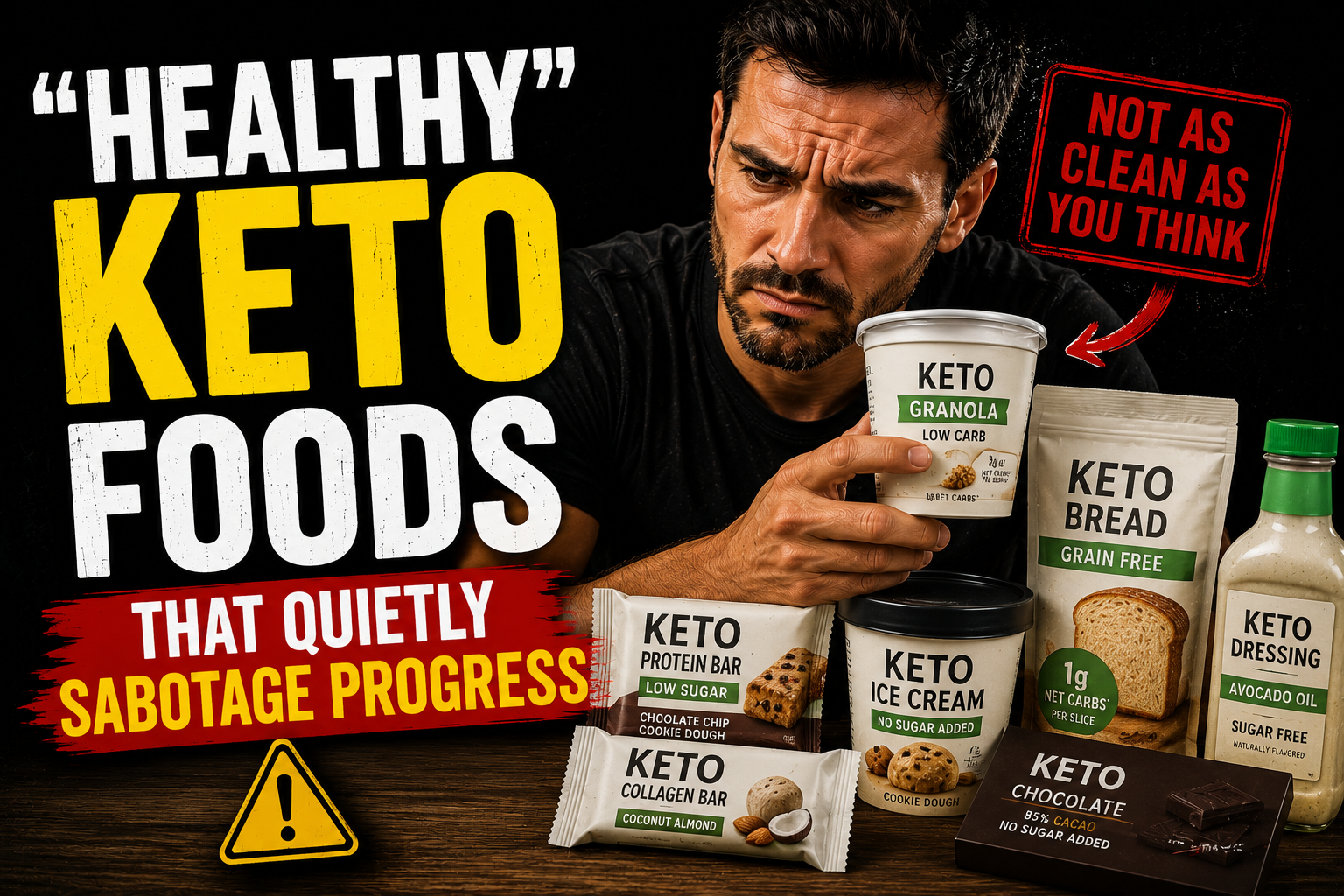
Some keto foods look clean, smart, and totally on plan.
They still keep people stuck.
That is the problem with a lot of “healthy keto” advice. It sounds responsible, but in real life it often creates more hunger, more cravings, more low-carb snacking, and slower weight loss. Not because keto is broken. Because the food is doing a different job than people think.
Here is the reality check: a food can be low carb, branded for keto, and still make the whole day worse. It can keep you underfed, over-snacky, or convinced that processed convenience food counts as a solid plan.
This page is the hub. It is here to help you spot which type of “healthy keto” trap is quietly working against you and where to fix that next.
Why “healthy keto” foods fool so many people
Most sabotage does not look like cheating. It looks like being good. A yogurt with keto on the label. A coffee routine that feels clean. A low-carb wrap that seems practical. A handful of sugar-free products that look safer than real junk food.
That is exactly why these traps matter. They do not feel risky, so people stop questioning them. Then they wonder why they are hungry by 10 AM, thinking about snacks all afternoon, or stuck even though their carbs still look controlled.
The point is not that every packaged keto food is evil. The point is that a lot of “healthy” choices solve the wrong problem. They help you feel compliant while quietly making your appetite, meals, and progress worse.
1. The first trap is food that looks healthy but does not act like a real meal
This is one of the biggest reasons keto starts feeling weird. People build days around products and tiny portions instead of meals that actually hold them.
Real life version: coffee with extras, a yogurt cup, a bar, a low-carb wrap with barely anything in it, or a breakfast that looks neat on Instagram but leaves you hunting for food two hours later.
The common mistake is judging food by labels and macros alone. But your body notices whether that meal was actually satisfying, not whether the package said keto.
Start with keto foods that look healthy but sabotage weight loss for the broad pattern. If mornings are where this starts, go straight to healthy keto breakfasts that leave you hungry by 10 AM.
2. Drinks can quietly turn all-day eating into a mess
People underestimate how much damage comes from what they sip. Sweeteners, creamers, flavored drinks, and endless low-carb beverages can keep appetite switched on without ever feeling like “real” eating.
In real life, this looks harmless. You are not eating dessert. You are just having another keto drink, another coffee add-in, another little flavored thing that supposedly fits. But the day starts feeling snacky and wired instead of stable.
The mistake is assuming that because something is not solid food, it barely counts. Sometimes drinks are what keep your brain expecting more all day.
If this sounds familiar, read why healthy keto drinks stall progress all day. If the bigger issue is your morning routine, this coffee-routine breakdown gets more specific about how hunger, energy, and fake fullness start getting tangled early.
3. Condiments and add-ons make a bad food environment feel harmless
A lot of keto sabotage comes from things people barely count: sauces, creamers, dressings, and little extras that follow them from meal to meal. One by one, they seem too small to matter. Together, they change how the whole day works.
This is especially true for people who think the main food is fine, so the extras must be irrelevant. They are not. Constant add-ons keep taste high, appetite active, and tracking fuzzy.
Here is where people mess up. They focus on bread, sweets, and obvious carbs while forgetting how much food friction comes from all the little stuff that turns every meal into a taste-chasing event.
If your food is technically low carb but still weirdly easy to overdo, read healthy keto sauces, creamers, and dressings that stack up fast. If you want the sharper version of that problem, these net-carb traps show how labels keep people relaxed right when they should be paying attention.
4. Replacement foods keep people attached to the old eating pattern
Keto bread, low-carb wraps, bars, shakes, and similar products sound like smart swaps. Sometimes they are useful. A lot of the time, they just let old food habits wear a keto costume.
That matters because progress is not only about carbs. It is also about whether your meals are becoming simpler and more filling, or more processed and more snack-like.
Real-life example: someone says keto is not working, but their daily food is wraps, bars, shakes, yogurt cups, and a few “safe” products between meals. The problem is not just one item. The whole pattern is still built around convenience foods that never quite settle hunger.
If replacement foods are the issue, start with why keto bread and low-carb wraps keep people stuck. If you rely more on packaged protein products, this breakdown of protein bars, shakes, and yogurt is the better next step.
Related:
Related:
Related:
Related:
5. Treat-style keto food keeps cravings alive even when carbs stay low
A lot of people think cravings should disappear once carbs drop. Then they keep eating keto treats, sweeteners, and dessert-style products all week and wonder why food still feels loud.
This is one of the sneakiest healthy-keto traps because it looks controlled. The label says low sugar. The serving sounds small. The product fits the plan on paper. But it keeps the whole day pointed toward snacky, reward-style eating instead of normal meals.
The mistake is expecting sweet low-carb food to act neutral. For a lot of people, it does not.
If cravings stay weirdly active, go to keto treat foods that quietly keep cravings alive. If the broader issue is that every “safe” low-carb product keeps adding up, loop back to the main healthy-keto food trap guide.
Common mistakes people make with “healthy keto” food
- They trust packaging more than real hunger signals.
- They build meals from products instead of solid food.
- They ignore drinks, extras, and sweeteners because they seem too small to matter.
- They replace old habits with keto-branded versions of the same habit.
- They stay low carb on paper while keeping their appetite and cravings switched on all day.
The fix is not perfection. It is seeing which kind of “healthy keto” choice is making your day harder than it should be.
Fix this first:
- Find the “healthy keto” product or routine you lean on most.
- Ask whether it acts like a real meal, a useful tool, or just a low-carb distraction.
- Cut the option that keeps you hungry, snacky, or weirdly dependent on labels.
- Replace it with simpler food that actually settles you.
- Open the linked child post that matches your biggest trap and fix that next.
If this helped, read these next:
- Net-carb foods that look safe and still keep people stuck
- Why keto treat foods keep cravings alive
- The bigger pattern behind healthy-looking keto sabotage
Explore more Keto Lies and Myths stories here: