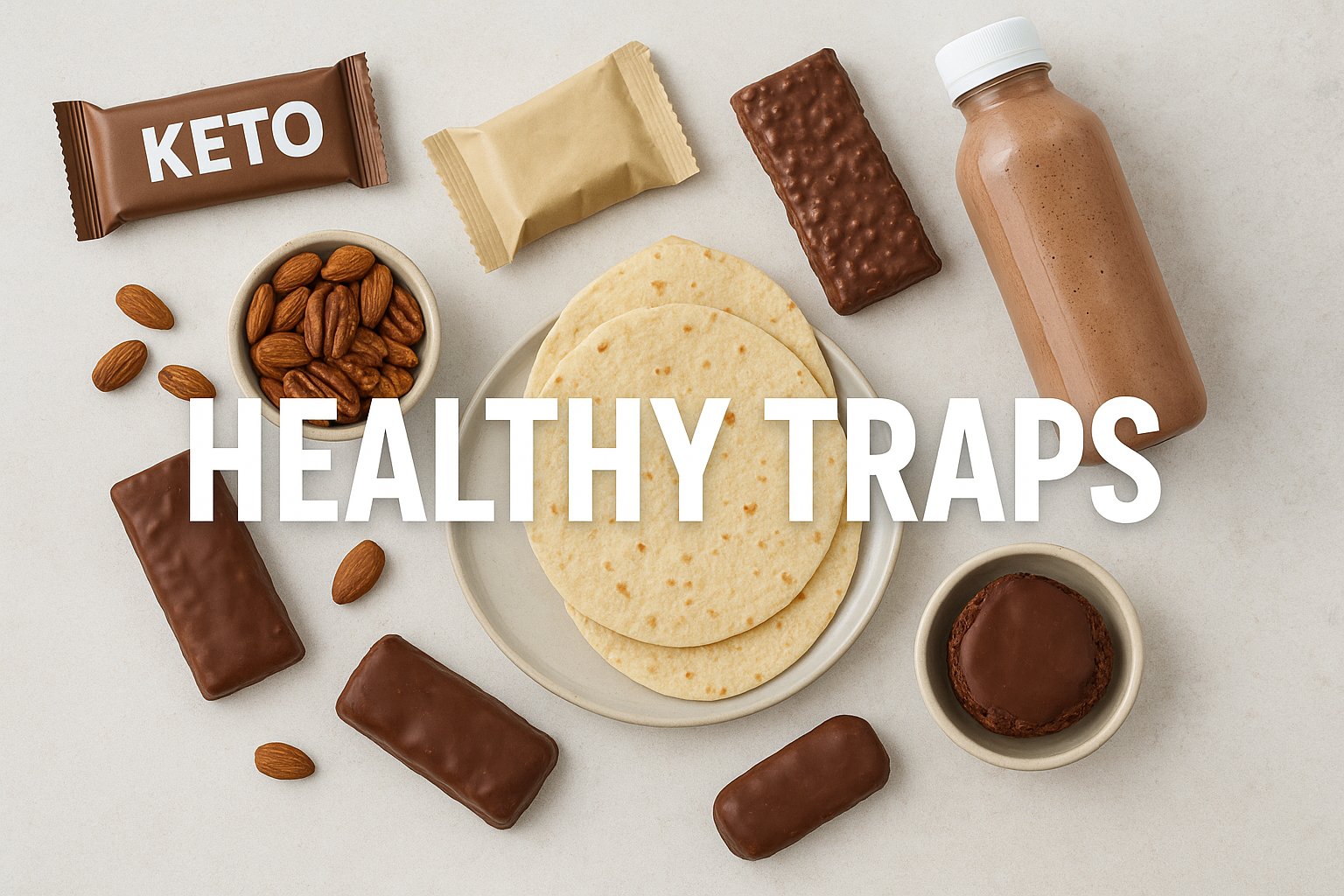
You buy the bars, yogurt cups, wraps, shakes, and low-net-carb treats that look healthy. Then keto weight loss slows down anyway.
Here’s the truth. A lot of healthy keto foods are not bad because they have a scary ingredient. They backfire because they keep you hungry, make portions slippery, or let junk wear a clean label.
That is why this problem confuses people so much. On paper, the food looks smart. In real life, it keeps turning into second snacks, bigger portions, and “why am I still stuck?”
If that sounds familiar, you usually do not need a more advanced keto plan. You need to stop letting healthy-looking convenience foods do a job they are bad at.
Why “healthy” keto foods still sabotage weight loss
Most people think keto success is just about keeping carbs low. Carbs matter, but they are not the whole job.
A food can be low carb and still cause problems if it does one of these things:
- keeps you wanting more food soon after eating
- makes it easy to eat several servings without noticing
- keeps sweet cravings alive all day
- replaces real meals with weak convenience food
That is why a product can look clean, fit your macros, and still hurt progress. If you keep ending the day hungry, snacky, or weirdly unsatisfied, the food is not working the way you think it is.
If you need the bigger troubleshooting picture, read Keto Weight Loss Troubleshooting Map. This article is the more specific version for foods that look healthy but still keep messing with fat loss.
Cause #1: Bars and “healthy treats” act like controlled snacks, but they usually keep the snack loop going
This is one of the biggest fake-health traps on keto. A bar looks organized. It has a wrapper, a label, and a macro count, so it feels safer than eating random junk.
But a lot of keto bars still behave like dessert. They are sweet, easy to chew fast, and rarely satisfying enough to replace a real meal. So instead of solving hunger, they create another eating moment.
In real life, it looks like this: you eat a “healthy” keto bar at 3 PM because dinner is still far away. By 4:30, you want cheese, nuts, or something else sweet. Then dinner still happens. The bar did not save you. It just made the day longer.
The mistake is thinking a low-carb wrapper means appetite control. It doesn’t. If a food makes you want another snack right after it, that is not a health food. That is a dressed-up craving trigger.
The fix is to treat bars like emergency backup only. If you need something portable, a more boring protein-first option usually works better. Grass-fed beef sticks make more sense than sweet bars because they act like food, not candy with keto branding.
If bars are a regular part of your week, also read Keto Convenience Food Traps. That is where a lot of this starts.
Cause #2: Yogurt bowls, shakes, and smoothies look clean, but they often turn into weak meals
This is where a lot of people fool themselves. A yogurt bowl with a few berries, keto granola, and nut butter looks healthy. A protein shake looks efficient. A smoothie feels lighter than a real meal.
The problem is that these foods often do not hold you very long, especially if the protein is weak or the sweet taste keeps your appetite switched on.
You see this all the time: coffee in the morning, a shake for lunch, maybe a yogurt bowl because it feels healthy, then by late afternoon the hunger starts getting loud. Now you are picking at nuts, cheese crisps, or a second packaged snack before dinner even starts.
The mistake is assuming clean-looking equals filling. It doesn’t. Some liquid or spoonable keto meals are basically meal cover-ups. They let you feel disciplined while your appetite keeps building in the background.
The fix is simple. Ask whether the meal actually works in real life. Does it keep you full for hours? Does it calm hunger, or just delay it? If your current shakes keep acting like sweet placeholders, pull back and build more meals around solid protein first.
If you need a convenient backup, zero carb protein powder is a cleaner option than most dessert-style replacements, but it should support real meals—not replace them all week.
This also overlaps with Sugar Alcohols on Keto because a lot of “healthy” yogurt bowls, shakes, and treats stay sweet enough to keep the whole dessert habit alive.
Cause #3: Low-net-carb wraps and breads make people eat convenience meals that feel healthier than they work
A low-net-carb wrap is one of those foods that feels like a smart compromise. It lets you keep sandwiches, breakfast wraps, quick lunches, and easy grab-and-go dinners. That sounds great.
But the trap is not just the label. It is what the wrap encourages.
A lot of people start building meals around “what can fit inside this wrap?” instead of asking whether the meal is actually satisfying. So lunch becomes a small wrap with deli meat, a little cheese, maybe sauce, then a bag of keto chips, then something else later because that lunch never really held them.
The mistake is thinking the wrap made the meal better automatically. Sometimes it just makes it easier to keep eating convenience food with a health halo.
The fix is to judge the whole meal, not the marketing line. If the wrap helps you eat a strong protein-first lunch and move on, fine. If it turns into two wraps, extra sauces, snack add-ons, and still more hunger, it is not helping.
This is exactly why Net Carb Trap Map matters. A lot of foods that look safe become a problem because people stop checking what the product does in real life.
Cause #4: Nuts, cheese crisps, and clean-looking snacks are easy to underestimate
This trap hits people who are trying to make better choices. They skip obvious junk and replace it with nuts, cheese crisps, keto trail mix, or other crunchy “better” snacks.
Yes, those foods can be lower carb. They are also ridiculously easy to overeat.
One serving is usually much smaller than people think. Real life looks more like grabbing the bag during work, driving, or after dinner and eating until the hand stops moving. By the time you are done, you may have had several servings and still not feel like you ate a real meal.
The mistake is assuming clean ingredients protect you from portion creep. They don’t. A food can be technically keto and still become a daily calorie leak.
The fix is to stop treating snack foods as harmless background eating. Portion them on purpose or make them less available. Better yet, use them as side support next to a real protein meal instead of as the plan itself.
If your snacking keeps spiraling even when the food looks compliant, read Keto Dairy Traps too. Cheese-heavy “healthy” keto eating gets messy fast when portions stop being clear.
Cause #5: “Looks clean” makes people ignore the real question: does this food actually make keto easier?
This is the bigger pattern underneath all of it. People keep buying foods that seem healthier than junk food, then never stop to ask whether those foods are actually helping them stay full, eat less often, and stick to simple meals.
That is why this problem shows up with bars, yogurt bowls, wraps, shakes, granola, keto treats, and frozen convenience stuff. The front of the package gives the food a pass before the real test even starts.
In real life, the pattern sounds like this: “I thought this was the good version.” That line shows up right before someone realizes they are still hungry at night, still wanting snacks, and still not losing weight.
The mistake is grading food by image instead of function. Healthy-looking is not the goal. Useful is the goal.
The fix is to ask four blunt questions:
- Does this actually keep me full?
- Does this make me want more sweet stuff later?
- Do I stop at one serving naturally?
- Is this replacing junk, or just helping junk look smarter?
If the answer keeps coming back bad, the product is not a healthy keto food for you. It is a stall food with better branding.
What most people get wrong about healthy keto foods
The first mistake is trusting labels more than results. If you keep eating a product and it keeps leading to hunger, that product is already giving you the answer.
The second mistake is chasing clean versions of snacks instead of building stronger meals. A fake-healthy snack usually cannot fix a weak breakfast or tiny lunch.
The third mistake is keeping sweet taste in the plan all day. That can happen with bars, shakes, yogurt bowls, candies, and “just one healthy treat” habits.
The fourth mistake is confusing better ingredients with better appetite control. Those are not the same thing.
Safer defaults when you want keto to work in real life
If your current plan is full of healthy-looking convenience food, go back to simpler defaults for a few days:
- eggs and meat instead of a bar
- leftover chicken instead of a wrap-based snack meal
- burger patties or deli meat plus a real side instead of crunchy keto snack grazing
- a protein shake only as backup, not as your whole structure
You do not need perfect food. You need food that makes the next eating decision easier, not harder.
Fix this first:
- Pick the top 3 “healthy keto” foods you keep leaning on and be honest about whether they leave you hungry, snacky, or stalled.
- For the next 3 days, replace at least one of those foods with a boring protein-first meal.
- Stop treating bars, wraps, yogurt bowls, and crunchy snacks as automatic health wins just because the label looks clean.
- If sweet keto foods keep showing up all day, cut them back hard and read Sugar Alcohols on Keto next.
- If weight loss is still stuck after that, use Keto Weight Loss Troubleshooting Map to find the next problem fast.
Read next: