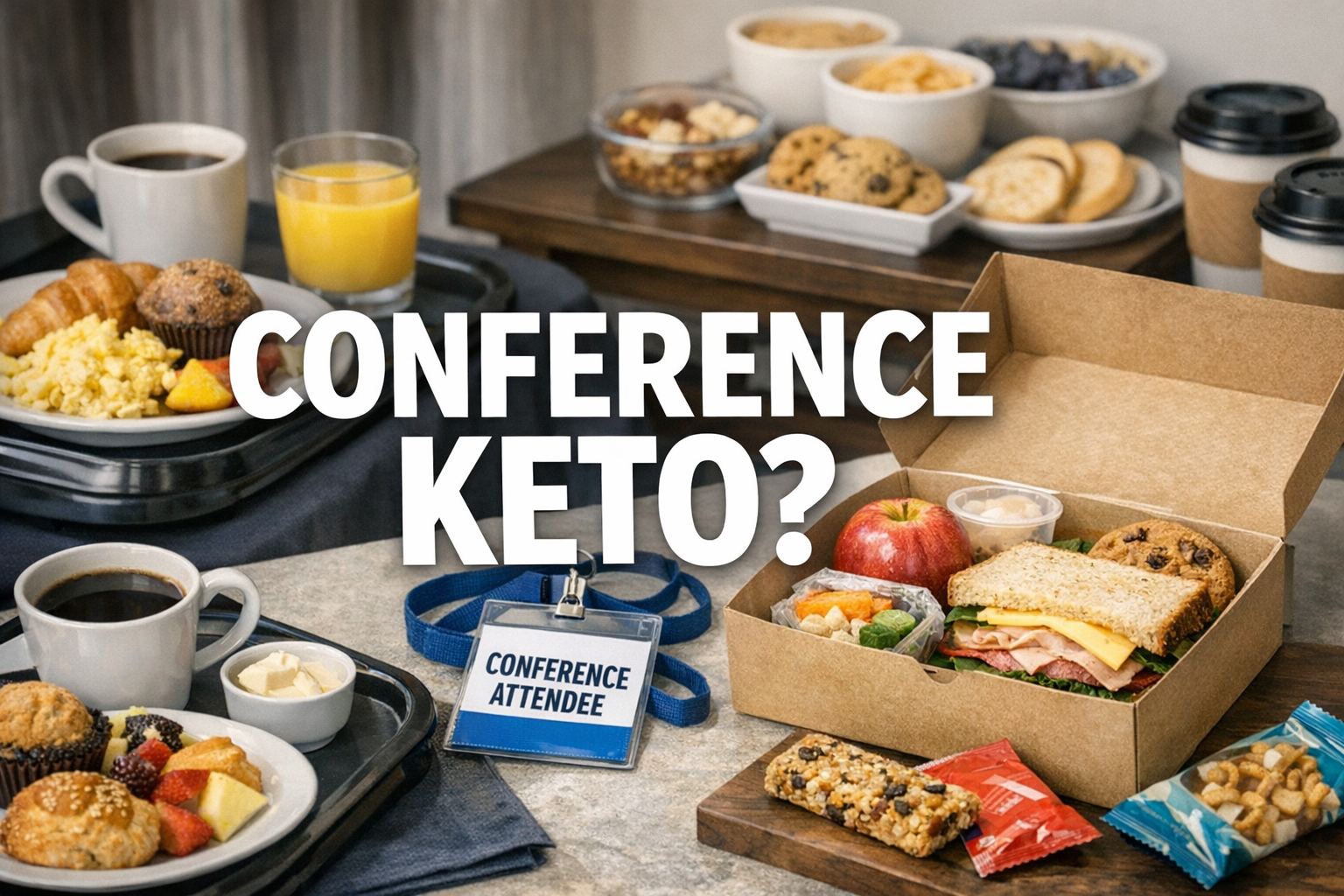
You can start a conference day with good intentions and still end it hungry, snacky, and annoyed. That’s why keto conference days can wreck momentum fast: hotel breakfasts look safe, boxed lunches look manageable, and then the whole day turns into small compromises that pile up.
You know the pattern. You grab coffee, tell yourself you’ll “figure food out later,” and by 4 PM you’re standing near stale snack trays acting like a handful of mixed nuts and half a protein bar count as a plan.
Here’s the reality check: conference food problems usually are not about one hidden carb. They’re about low control, bad timing, long sitting, social pressure, weak protein, and the fake confidence that comes from saying, “I’ll get back on track tonight.”
If these days keep ending in hunger, cravings, and a next-day stall, here’s what is usually going wrong.
Why keto conference days go sideways so fast
Conference days create a weird mix of structure and chaos. You have a schedule, but you do not control the food windows well. Breakfast is rushed. Lunch is whatever gets handed out. Breaks are short. Dinner is social. Alcohol is everywhere. And most of the day is spent sitting, which makes it easy to ignore weak meals until hunger hits hard later.
That is why this is different from normal restaurant eating. At a conference, you do not just make one meal decision. You make a long chain of them while distracted, underfed, over-caffeinated, and surrounded by snack logic.
Cause 1: You start with a weak hotel breakfast and pretend coffee is enough
This is where a lot of keto conference days start falling apart. The breakfast setup looks decent at first: scrambled eggs, sausage, maybe bacon, maybe yogurt. But in real life, the eggs are often tiny portions, the meat is skimpy, and it is easy to leave with little more than coffee and false confidence.
It looks harmless because you did not eat toast or pastries. But skipping a real breakfast still matters. If your first real protein does not show up until afternoon, you are setting up a long stretch of low energy, rising hunger, and bad decisions later.
A common version looks like this: you drink coffee, pick at two eggs, rush to the first session, then sit for three hours telling yourself you are “fine.” By the time lunch shows up, you are hungry enough to rationalize almost anything.
The mistake is thinking keto success means avoiding obvious carbs and nothing else. That is too shallow. You also need enough real food early enough to stop the late-day rebound.
The fix is simple: build breakfast around protein first, not around what feels light or convenient. If the hotel breakfast is weak, eat the best protein there and accept that you may need a backup. A shelf-stable option like grass-fed beef sticks can help when the hotel spread is all weak eggs, fruit, and pastries, but it should support breakfast, not replace a real meal every time.
Cause 2: Boxed lunches and conference buffets create fake “good enough” meals
Conference lunches are built for speed, not for fullness. That is the problem. You get a sandwich box, a salad with sweet dressing, a wrap, chips, maybe a cookie, and a vague sense that you should just make it work.
Even when there is a buffet, it often has the same problem. The protein is small, the sides are carb-heavy, the sauces are sugary, and the meal is not built to keep you full through the rest of the event.
This creates a trap. You remove the bread, skip the cookie, eat what protein you can find, and call it a keto lunch. But if the meal still ends up tiny, low-salt, and unsatisfying, you did not really solve the problem. You just avoided the most obvious carbs.
What this looks like in real life: you eat the turkey out of the sandwich, maybe a little lettuce, maybe some cheese, then spend the next two sessions thinking about coffee, snacks, or dinner. You are technically still on plan, but your appetite is now running the show.
The fix is to judge conference food by whether it actually finishes the meal. If it does not, it is incomplete. Eat the usable protein first. Skip the filler carbs. Then patch the gap on purpose instead of drifting into snack mode. This is where a simple backup from your bag matters more than “discipline.”
If eating away from home keeps turning into random half-meals, read Keto Away From Home. Then read Keto Travel Survival if you need a better backup-food system before the day even starts.
Cause 3: Networking snacks turn into all-day nibbling without ever becoming a real meal
Conference snacks are dangerous because they feel small. Nobody thinks a few nuts, a cheese cube, a protein bar sample, and a couple of “healthy” bites count as a blow-up. But that scattered eating keeps hunger alive instead of ending it.
This is where decision fatigue kicks in. You are talking, moving room to room, checking your phone, trying to pay attention, and eating whatever is easiest to hold in one hand. The result is usually a lot of low-clarity intake and not much real satisfaction.
The mistake is treating every little snack as harmless because it is not a full dessert or a giant carb meal. But random bites add up fast, especially when they come from sweetened bars, coated nuts, snack mixes, or conference table food you did not even plan to eat.
The fix is to stop calling nibbling a meal. If you missed a proper lunch or your lunch was weak, say that directly. Then solve that problem directly. Either get a real plate later or use a simple backup that gives you a clearer protein-and-salt floor.
For some people, that means carrying a no-drama option like LMNT electrolytes plus a protein backup so the afternoon does not become coffee, cravings, and expo snacks. Electrolytes will not replace food, but they can stop the shaky, flat, headache-heavy feeling that makes junk decisions easier.
Cause 4: Long sitting, low movement, and social pressure make it easy to ignore what your body actually needs
Conference days are physically strange. You may be away from home and around food all day, but you are also sitting for long stretches, drinking more caffeine than usual, and moving less than you think. That can blur hunger signals early and then make them hit hard later.
On top of that, there is social pressure everywhere. Someone wants to grab drinks. Someone offers dessert. Someone says, “Come on, just this once.” Someone books a dinner place where the safe options look weak and the bread basket shows up before the protein does.
This matters because keto often breaks down less from nutrition theory and more from social fatigue. By the end of a full conference day, you are not just hungry. You are tired of making food decisions. That is when one drink becomes two, dinner becomes a free-for-all, and the night ends with late snacks in the hotel room.
The mistake is assuming you will make sharp choices at 8 PM after a weak breakfast, weak lunch, three coffees, no salt plan, and a day of networking. Most people do not. That is not a character flaw. That is bad setup.
The fix is to lower the number of decisions you need to make when your energy is lowest. If you know there will be networking food and drinks, decide your floor in advance: real protein first, one plate before alcohol, no fake “dinner” made of random appetizers, and no finishing the night with hotel snack food because dinner never really happened.
If restaurant meals are where conference days usually collapse for you, read The Real-Life Keto Eating Out Guide. It is the practical version of how to stay on track when menus, sauces, and social pressure all get involved.
The conference-day chain reaction most people miss
This is the part that makes keto conference days so frustrating. The problem usually is not one disaster meal. It is a chain reaction.
Hotel breakfast is too light, so lunch feels urgent. Boxed lunch is incomplete, so the snack table starts looking useful. Snack-table eating keeps hunger alive, so dinner turns into reward mode. Then the next morning feels puffy, flat, and harder than it should.
Once you see that sequence clearly, the fix gets simpler. You do not need perfection. You need to break the chain earlier. A better breakfast usually makes lunch easier. A more honest lunch usually makes the snack table less tempting. A real dinner usually prevents the next-day stall from dragging on.
If the bigger pattern is that every rough food environment turns into the same scale drama, read Keto Weight Loss Troubleshooting Map. It helps separate a true stall from a short-term travel or event rebound.
Cause 5: The next-day stall is usually a recovery problem, not just a one-night problem
A lot of people think the damage is over once the conference dinner ends. Not really. The next day is usually where the problem shows up: bloating, extra hunger, bad sleep, dry mouth, cravings, low energy, and the urge to keep the mess going with more coffee and more random food.
This is why conference days can create a stall even when you tell yourself it was “not that bad.” Maybe you did not fully blow it. But if you under-ate protein, overdid drinks, got low on electrolytes, sat all day, and ended with snacky food at night, the next morning often feels worse than expected.
One common pattern is waking up tired, hungry, and puffy, then skipping breakfast because you feel off. That just restarts the cycle. Another is trying to “make up for it” by barely eating all day, which usually leads to another sloppy dinner.
The fix is to treat the next morning like recovery, not punishment. Get back to structure fast. Eat a normal protein-first meal. Rebuild fluids and sodium. Stop the all-or-nothing thinking before it turns one rough conference day into a bad conference week.
If the bigger issue is what to do after the damage, read Keto After a Cheat Meal. If you need help deciding whether this is real fat-loss trouble or just temporary event fallout, go to Keto Weight Loss Troubleshooting Map.
Common conference-day mistakes that make keto harder than it needs to be
- Trusting hotel breakfast just because eggs are present
- Calling a stripped-down boxed lunch a complete meal when it clearly is not
- Using coffee to cover a hunger problem
- Grazing on snack trays and pretending small bites do not count
- Saving all your food decisions for the hardest part of the day
- Starting drinks before you have eaten enough real food
- Trying to punish the next day instead of recovering properly
What to do instead on keto conference days
You do not need perfect food control to get through conference days well. You need a better fallback system than “I’ll wing it.”
The winning mindset is not “avoid every carb at all costs.” It is “do not let weak meals turn into a whole day of low-control eating.” If breakfast is light, fix it early. If lunch is incomplete, patch it on purpose. If dinner is social, get protein before you get casual. If the day gets messy, recover fast the next morning instead of dragging the damage forward.
A simple conference-day plan that actually works
Think in this order: protein, backup, recovery. Protein means breakfast has to do more than keep you busy until coffee break. Backup means you carry one or two simple options so boxed lunch and snack tables do not become your entire food plan. Recovery means the next morning starts with structure, not guilt.
That can be as basic as hotel eggs plus extra sausage at breakfast, usable protein from lunch first, a backup stick or shake if lunch is weak, then a normal dinner with real protein before drinks or dessert decisions. If you are flying home the next day, this matters even more because travel fatigue makes the rebound worse.
A practical setup can be boring on purpose: a simple meal container for leftovers or a protein save-from-lunch move, plus portable electrolytes for the flat, dry, headache-heavy part of the day. That is more useful than pretending conference food will somehow line up perfectly.
Fix this first:
- Stop relying on conference food to magically work. Expect weak meal windows and plan one simple backup.
- Make breakfast do real work. Protein first. Coffee does not count as a meal.
- Treat boxed lunches and snack trays honestly. If the meal does not finish hunger, it is incomplete.
- Do not let networking drinks start on an empty stomach. Eat first, then decide if alcohol is worth it.
- Recover the next morning like an adult, not like a dieter. Real food, fluids, sodium, and normal structure beat guilt every time.
🔎 If this helped, here are more no-BS keto guides worth reading next:
- Keto Away From Home: The Practical No-BS Guide to Restaurants, Parties, Travel, and Low-Control Food Days
- Keto Restaurant Survival: What Actually Keeps You on Track When Menus, Hidden Carbs, and Hunger Get Involved
- Alcohol on Keto: How Drinks, Mixers, Late-Night Hunger, and Next-Day Damage Keep Derailing Progress
Explore more Keto Problems & Side Effects guides here: