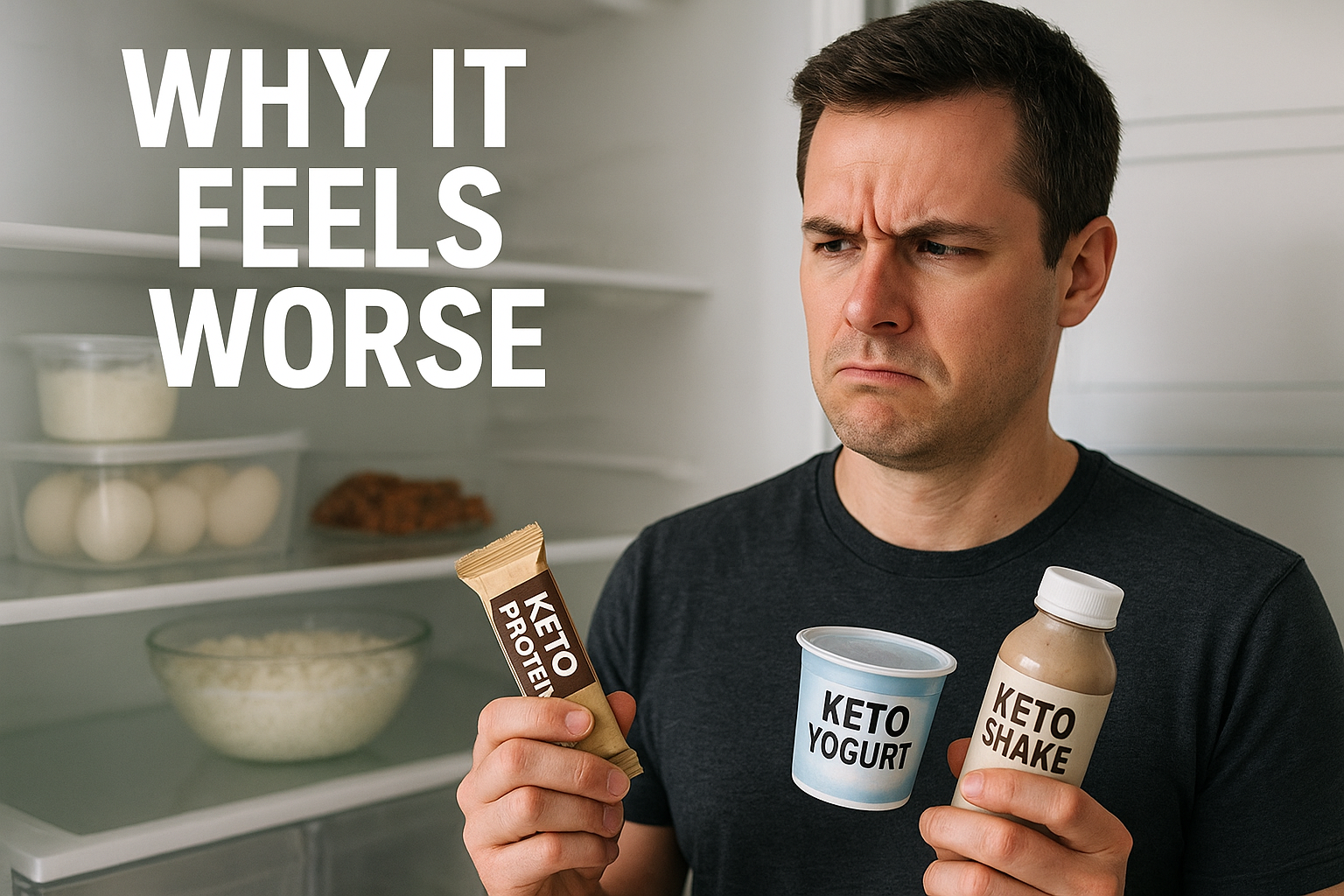
You grab a bar, shake, or yogurt because it looks like the easy answer. The label says low carb, high protein, or even keto-friendly. But after eating it, you feel hungrier, more snacky, or weirdly disappointed. That’s the real problem with keto protein bars shakes yogurt foods: they often look more helpful than they actually are.
I’ve seen this pattern a lot. Someone is trying to “be good,” grabs the clean-looking option at the store, then wonders why they’re prowling the kitchen an hour later.
Here’s the truth: a packaged protein food can fit keto on paper and still make your day harder in real life. It can keep the sweet-food loop alive, underfeed you, stack up calories fast, or trick you into thinking you ate a meal when you really ate a snack with better marketing.
Why these foods can feel worse than expected
Most people expect a protein bar, shake, or yogurt to do one of two things: keep them full or keep them on track. A lot of these products do neither. They taste dessert-like, go down fast, and don’t create much real meal satisfaction.
That doesn’t mean every single one is evil. It means they’re easy to misuse. If you’re relying on them every day, especially when you’re busy, stressed, or trying to lose weight, they can quietly become part of the problem.
This also overlaps with the bigger trap covered in “Keto” Foods That Look Healthy but Sabotage Weight Loss. The difference here is more specific: this article is about the protein-looking foods people expect to solve hunger and cravings, but that often leave them worse off.
Start here:
1. They look like a meal, but they act like a snack
This is where most people get fooled. A bar says 15 grams of protein. A shake says 30 grams. A yogurt says high protein on the front. So your brain files it under meal handled.
But in real life, a lot of these products are small, sweet, fast to eat, and low in actual staying power. They don’t have much chewing, much volume, or the kind of full-meal feeling that comes from sitting down to real food. You finish one in three minutes, then spend the next two hours thinking about what else you can have.
A common example: you drink a bottled shake in the car at 10:30, feel proud of yourself, then by noon you’re irritated, hungry, and suddenly very interested in office snacks. Or you eat one protein bar after the gym, then tell yourself you already “did protein,” so lunch gets pushed later and the whole day gets shakier.
The mistake is treating a packaged protein product like it solved the same problem as eggs, meat, leftovers, or a real plate with substance. Usually it didn’t.
The fix: start asking one blunt question – did this actually replace a meal, or did it just delay hunger? If it only buys you an hour, it’s not a meal. It’s an emergency bridge. Use it that way.
2. Sweet taste keeps the appetite loop running
A lot of bars, shakes, and flavored yogurts are technically low carb but still taste like dessert. Cookies and cream. Chocolate peanut butter. Birthday cake. Vanilla caramel. That matters more than people think.
For some readers, the issue isn’t just carbs. It’s that the sweet taste keeps the reward loop switched on. You have a protein bar, but your brain doesn’t read it as “food problem solved.” It reads it as “nice, let’s keep chasing sweet stuff.”
That’s one reason these foods can make keto feel harder instead of easier. You thought you made the disciplined choice. But now you want another bar, then a sweet coffee, then “just something small” after dinner. That pattern connects closely to “Sugar-Free” Keto Habits That Keep Your Sweet Tooth Running All Day.
The mistake here is focusing only on net carbs and ignoring how the food affects your appetite and behavior. If something fits your macros but makes you obsess about your next sweet thing, it’s not helping much.
The fix: notice which products make you calm down around food and which ones make you keep hunting. If a sweet shake turns into a snacky afternoon every time, that is useful data. Swap it for something less dessert-like and more filling. Even plain Greek yogurt with no sweet add-ins, leftover chicken, or eggs will often work better than the “healthy” sweet option.
3. The portions are small enough to underfeed you
This is a huge one. Many of these products are tiny. A little cup of yogurt. One bar. One shake bottle. They can be low enough in carbs to fit keto, but still not enough food for the situation you’re in.
If you’re stressed, busy, and already under-eating earlier in the day, a miniature protein snack doesn’t fix the problem. It just puts a nicer label on it. Then later you feel shaky, cranky, or suddenly ravenous and wonder what happened.
Real life version: breakfast is coffee. Lunch is a flavored yogurt because you’re trying to be “light.” At 3 PM you’re standing in the kitchen eating nuts, cheese, and random bites because your body is trying to make up for the weak earlier meal. That’s the same kind of rebound hunger covered in Why You’re Always Hungry on Keto (And What to Fix First).
The mistake is assuming high protein automatically means enough food. It doesn’t. Not if the total meal is weak, fast, and unsatisfying.
The fix: match the food to the job. If you truly need a meal, eat a meal. Build around real protein first. Use bars and shakes as backup tools, not the default foundation of your day. If you do use yogurt, make it work harder by choosing a plain, unsweetened version and pairing it with something more substantial instead of pretending the cup by itself solved the problem.
4. They can turn into quiet calorie stacking
People usually watch obvious junk food. They watch fast food. They watch desserts. What they often do not watch is the respectable-looking keto bar, the “better” yogurt, and the protein shake that sneaks in between actual meals.
That’s how packaged protein foods become a quiet stacking problem. One after breakfast because you were still hungry. Another in the afternoon because you were busy. Half a yogurt after dinner because you wanted something safe. Nothing felt outrageous, but all of it added up.
This is especially common when the product has a health halo. If it says keto, high protein, zero added sugar, or low net carbs, people stop counting it as a real eating event. They treat it like nutritional wallpaper. But your body still counts it.
The mistake is not deciding what role these foods are allowed to play. When there’s no rule, they slide into every gap in the day.
The fix: pick one lane. Either it is a planned backup item for days when life gets messy, or it is an intentional part of one specific meal. Not both. If you’re drinking a shake and also eating like usual, you may just be adding more intake without getting much more satisfaction.
5. The labels make people stop asking better questions
The front of the package is built to calm you down. Keto-friendly. Low sugar. High protein. Gut healthy. Zero added sugar. Those words make people stop and think, “Perfect. Safe.”
But the back of the package still matters. So does the ingredient list. So does how you feel after eating it. Some products are full of sweeteners, thickeners, fibers, and flavors that leave people bloated, gassy, or unsatisfied. Others are not terrible, but they still do not solve the real problem the person has, which is weak meal structure.
You can see the same pattern in other packaged low-carb traps, like Why Healthy Keto Drinks Stall Weight Loss All Day. The label sounds clean. The outcome is messy.
The mistake is asking, “Is this allowed?” instead of asking, “Does this help me stay full, steady, and in control?” Allowed is too low a standard if your goal is real progress.
The fix: judge these foods by outcome, not branding. If a certain bar always leaves you hungry, it failed. If a shake helps you get through travel or a slammed workday without spiraling into junk, it might deserve a place – but only as a tool, not a magic food.
Related:
Related:
Common mistakes people make with keto protein bars shakes yogurt
- Using them as everyday meal replacements when they only work as backups
- Choosing the sweetest flavors, then wondering why cravings stay loud
- Eating them on top of meals instead of in place of a planned need
- Ignoring how tiny portions affect later hunger
- Trusting the front label more than their actual results
If keto keeps feeling harder after these foods, that does not automatically mean keto is broken. It usually means your so-called safe convenience foods are not doing the job you hired them to do.
And if cravings are part of the fallout, this is a good place to keep reading: Keto Cravings Explained: Why They Happen and What Actually Stops Them.
Fix this first:
- Track which products make you feel worse. Stop guessing. Notice which bar, shake, or yogurt leaves you hungry, bloated, snacky, or craving sweet stuff.
- Replace one fake meal with one real meal. Don’t overhaul everything. Just swap one packaged protein habit each day for a more solid food-based meal.
- Stop using sweet keto products as appetite control. If they keep the sweet loop alive, they’re not helping.
- Give backup foods a clear job. Travel, emergencies, or genuinely slammed days? Fine. Random daily default? Usually not.
If this helped, here are more no-BS keto guides worth reading next:
- “Keto” Foods That Look Healthy but Sabotage Weight Loss
- “Sugar-Free” Keto Habits That Keep Your Sweet Tooth Running All Day
- Why Healthy Keto Drinks Stall Weight Loss All Day
Explore more Keto Lies & Myths stories here: