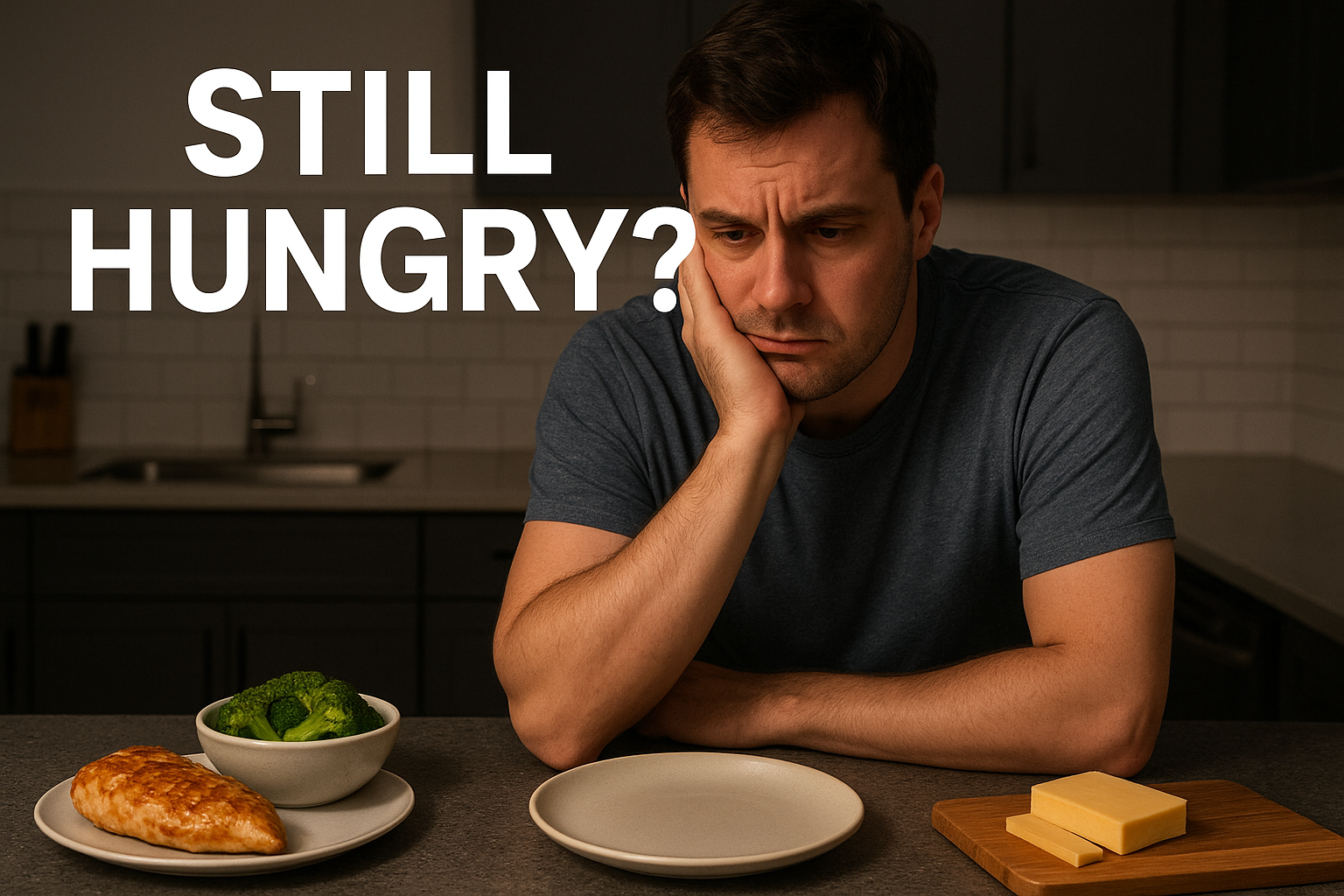
You cut carbs. You expected keto to make you less hungry. Instead, you feel like eating all day.
That usually means something in your setup is off. It is not a sign that keto cannot work for you.
If you have ever stood in the kitchen two hours after a “keto” meal wondering why you still want more food, this is that problem.
Most people who stay hungry on keto are not dealing with one big problem. They are dealing with a few smaller mistakes that keep stacking up.
Why you feel hungry on keto
Keto can lower appetite for some people, but only when meals are built the right way. If your meals are too light, too snack-based, or too processed, you will still feel hungry. Sometimes you will feel even hungrier because you cut carbs but did not replace them with enough real food.
This is where a lot of people get confused. They think eating keto means adding fat to everything and trusting keto snacks to do the rest. That is usually where hunger gets worse.
Here is what is actually going on.
1. You are not eating enough protein
This is the biggest reason many people stay hungry on keto.
Protein helps meals feel complete. It digests more slowly than carbs, which helps you stay full longer. If your plate is mostly coffee with cream, eggs only, cheese, or a small salad with a little chicken, hunger comes back fast.
Real life example: breakfast is keto coffee, lunch is a cheese stick and almonds, and by late afternoon you are standing in the kitchen looking for anything salty or sweet. That is not low willpower. That is a weak meal setup.
The common mistake is thinking fat alone will carry you. Fat matters on keto, but it does not do protein’s job. A meal with butter, cheese, and a handful of nuts can be high in calories and still leave you hunting for food.
The fix: build meals around real protein first. Think eggs plus sausage, chicken thighs, ground beef, salmon, tuna, turkey burgers, or steak. If you need a backup because life gets messy, a zero carb protein powder can help fill the gap, but it should support meals, not replace real food all day.
2. Your meals have no volume
Some keto meals are too small to feel satisfying.
People hear low carb and end up eating tiny portions: two eggs, three slices of bacon, maybe some cheese, and that is it. Technically keto. Not very filling for long.
Meal volume matters because your stomach and brain both notice how much food you actually ate. If your plate is tiny, hunger often shows up again quickly, even if the meal was high in fat.
Real life example: dinner is a burger patty with cheese and no bun. That can work. But if there is nothing else on the plate, it may not feel like a full meal. Add a side of broccoli, zucchini, cauliflower, salad, or another protein portion and it lands very differently.
The common mistake is replacing bread, rice, and potatoes with nothing. You remove the carb, but you forget to replace the volume.
The fix: use low-carb vegetables and bigger protein portions to make meals feel real. If you need ideas for simple foods that actually work, start with this keto foods list for beginners. Keto gets much easier when your plate looks like an actual meal instead of a snack plate.
3. You are living on cheese, nuts, and keto snacks
This is where a lot of keto hunger turns into all-day grazing.
Cheese, nuts, bars, and packaged keto foods look convenient. The problem is that they are easy to overeat and often not very satisfying for long. They also make it easy to keep eating without ever feeling like you had a real meal.
Real life example: you have cheese crisps at noon, almonds at two, a keto bar at four, and then wonder why you still feel weirdly hungry by dinner. You ate plenty, but not in a way that gave you structure.
The common mistake is treating snack foods like meal replacements. Even if they are low carb, they can keep you stuck in the same snack cycle that made eating hard before keto.
The fix: stop building your day around snack foods. Use them as backup only. If you need an emergency option for the car, work, or travel, a simple high-protein item like grass-fed beef sticks makes more sense than sweet fake-keto junk. And if you have been leaning hard on bars, cookies, and net carb treats, read Keto Foods That Are Secretly High Carb next. A lot of those products are not helping as much as they claim.
4. Your meal structure is a mess
Keto works better when your eating has some shape to it.
If you nibble all day, skip meals, then overeat at night, hunger gets harder to read. Some people are not truly hungry every two hours. They are just stuck in a pattern of constant decision-making and small low-satisfaction bites.
Real life example: you skip breakfast, grab a few nuts at noon, pick at deli meat in the afternoon, then hit dinner starving and overdo everything. That is not keto failing. That is poor meal structure creating a rebound effect.
The common mistake is calling random low-carb eating a plan. It is not. If your meals are inconsistent, hunger feels more intense because your body never gets a stable routine.
The fix: aim for two or three solid meals built around protein, enough volume, and foods you can repeat. That gives your hunger signals a chance to calm down. It also helps you see what is actually working. If your overall progress still feels off, read Keto Is Not Working? The Real Reasons because hunger is often only one part of a bigger setup problem.
5. You cut carbs fast, but never adjusted the rest of your eating
Some hunger on keto happens early because your old food routine is gone.
If you used to get most of your calories from toast, cereal, sandwiches, chips, or sugary snacks, cutting those foods can leave a big hole. Keto can work, but you still need enough food, enough salt, and enough consistency to get through the transition.
Real life example: someone removes bread, pasta, and snacks in two days, but their new meals are just eggs, lettuce, and coffee. Of course they are hungry. They cut energy fast and never rebuilt the plan.
The common mistake is assuming low carb automatically means low appetite from day one. Sometimes it does. Sometimes it does not, especially if meals are underpowered.
The fix: make the transition easier, not more extreme. Eat real meals. Salt your food. Give your body a week or two to settle. And stop trying to win keto by eating as little as possible.
Related:
Common mistakes that keep keto hunger going
Here is where most people mess this up:
- They fear protein and over-prioritize fat.
- They eat tiny meals and expect coffee to cover the gap.
- They rely on cheese, nuts, and bars instead of real meals.
- They snack constantly, so they never feel truly full.
- They keep buying packaged keto foods that make cravings worse.
Hunger on keto is usually not random. It usually points to a weak meal structure.
Fix this first:
- Make protein the center of every meal for the next week.
- Increase meal size with low-carb vegetables or another protein portion.
- Cut back on cheese, nuts, bars, and fake-keto snacks as daily staples.
- Stop grazing. Eat two or three real meals instead of six mini snacks.
- Give the new setup a few consistent days before changing everything again.
If keto keeps leaving you hungry, the answer is usually not more willpower. It is a better plate, better structure, and fewer fake shortcuts.
If this helped, read these next:
- Keto Is Not Working? The Real Reasons (And What Actually Fixes It)
- Why You Are Not Losing Weight on Keto (And How to Fix It)
- Keto Foods List for Beginners (What You Can Eat on Keto)
Explore more Keto That Actually Works stories here: