You cut carbs, started keto, and expected sugar cravings on keto to calm down. Instead, you still want sweets, chips, bread, or random junk all day.
That does not always mean you need more willpower. Most of the time, it means something in your setup is feeding the cravings.
Here’s the truth. Keto cravings usually keep happening for a reason. If you find the reason, they get much easier to control.
Why sugar cravings on keto keep happening
Cravings are not all the same. Some come from the early carb-withdrawal phase. Some come from weak meals. Some come from habits that are still wired into your day. And some come from fake keto foods that keep your sweet tooth switched on.
This is where people get stuck. They think cravings mean keto is failing. Usually, cravings mean the plan is sloppy, not broken.
1. You are under-eating at meals
This is one of the biggest reasons keto cravings will not stop.
If your meals are too small, too light, or too random, your body will start looking for fast energy later. That often shows up as cravings for sweets, chips, or anything easy to grab.
Real life example: breakfast is coffee with cream, lunch is a cheese stick and a handful of almonds, and by 4 PM you are thinking about cookies. That is not a mysterious keto problem. That is a weak food setup.
The common mistake is thinking low carb should also mean eating as little as possible. People cut bread, pasta, and sugar, but never replace them with enough real food. Then they wonder why their brain keeps screaming for snacks.
The fix is simple. Build meals around real protein first, then add enough food to make the meal feel finished. Eggs, chicken, beef, salmon, tuna, Greek yogurt, and burger patties work better than trying to survive on coffee, nuts, and cheese. If your meals are thin, cravings stay loud.
2. You are still in the carb-withdrawal phase
Some cravings are part of the early shift away from sugar and high-carb eating.
If you used to eat cereal, bread, fries, soda, or desserts every day, your body and brain are used to getting quick hits of easy energy. When that stops, cravings can spike for a while. This is common in the first several days or first couple of weeks.
Real life example: you stop eating sugar on Monday, and by Wednesday you suddenly want donuts, chips, and chocolate more than ever. That does not mean keto is wrong for you. It often means your old routine is still fading out.
The common mistake is panicking and deciding the craving means you need a fake keto dessert every night. That can keep the cycle going longer.
The fix is to keep meals steady, eat enough, salt your food, and give the transition a little time. If cravings show up with low energy, headaches, or that washed-out early-keto feeling, hydration and electrolytes may be part of the problem too. In that case, a simple electrolyte powder can help support the transition, but it should support real meals, not replace them. If you are dealing with those early symptoms too, read Keto Flu Explained.
3. Your habits still point you toward snack foods
A lot of cravings are routine-based, not true hunger.
You may not physically need food every time a craving hits. Sometimes your brain just learned that TV means ice cream, the drive home means fast food, or 9 PM means something sweet. Keto does not erase those patterns overnight.
Real life example: every night after dinner, you want dessert even though you are full. Or every afternoon at work, you start hunting for something crunchy because that is what you always used to do.
The common mistake is treating every craving like an emergency that needs a replacement snack. That keeps the habit alive. You stop eating the old snack, but you keep the same loop.
The fix is to notice the trigger and break the pattern on purpose. Go for a short walk after dinner. Drink water or tea when the usual afternoon craving shows up. Keep less junk within reach. And stop building your day around grazing. If you need practical food basics that make keto easier, review Keto Foods List for Beginners so your meals are stronger than your habits.
4. Fake keto foods are keeping your sweet tooth alive
This is where many people accidentally make cravings worse.
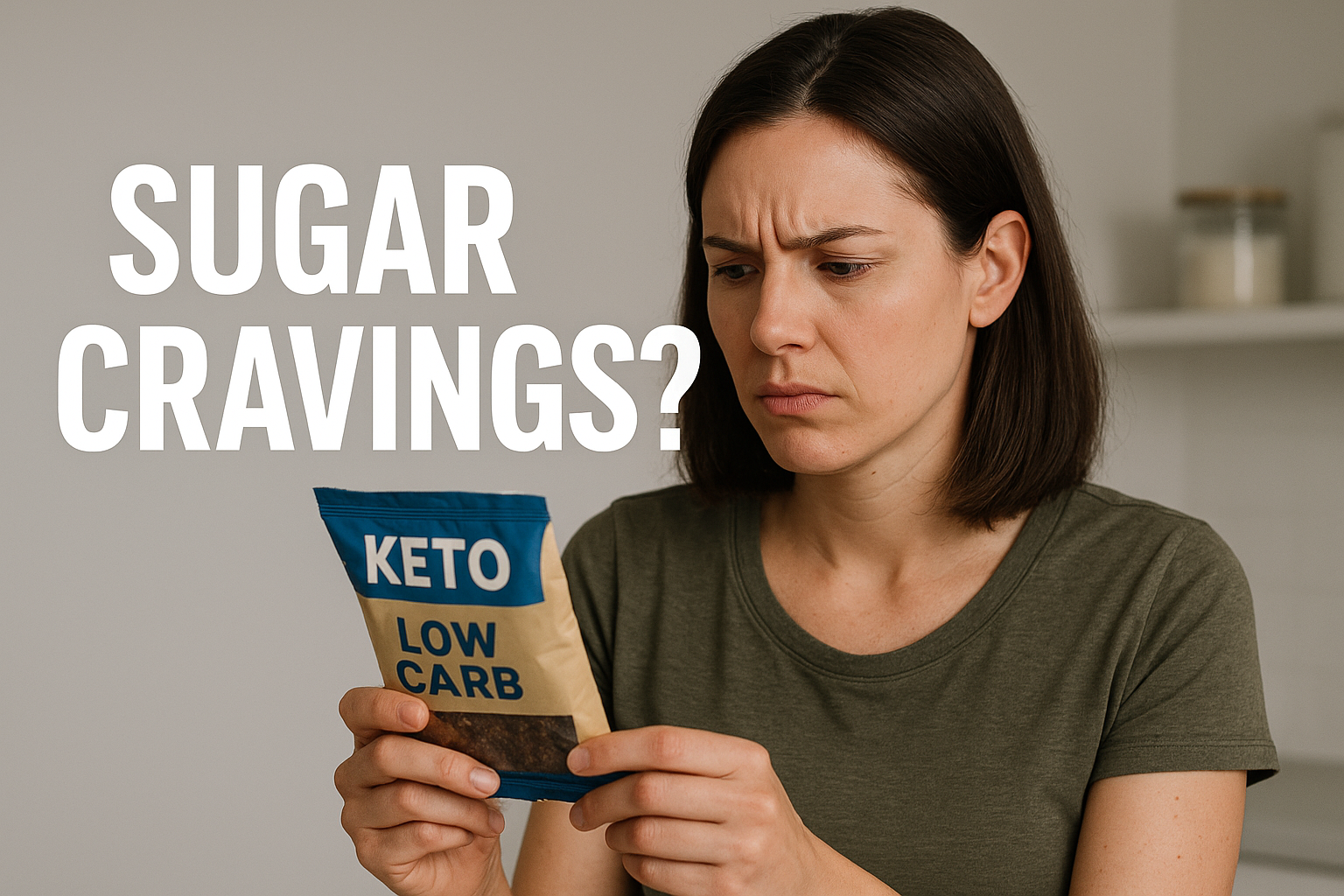
Bars, cookies, shakes, candies, and low-net-carb treats often look like a safe answer. But a lot of them keep the sweet taste, the dessert habit, and the constant snack mindset going. Some also trigger people to eat more, not less.
Real life example: you skip real lunch, eat a keto bar, then spend the rest of the day wanting more sweet stuff. The package says keto. Your appetite says otherwise.
The common mistake is trusting the front label instead of noticing how the product affects you. A food can be marketed as keto and still keep you stuck in the same cycle.
The fix is to stop treating packaged keto snacks like a daily solution. Build most of your eating around regular food. Meat, eggs, yogurt, cottage cheese, tuna, leftovers, and simple low-carb vegetables are usually more satisfying than sweetened keto products. If you think hidden ingredients may be part of the problem, read Keto Foods That Are Secretly High Carb. A lot of people are eating more sugar and starch than they realize.
5. Your cravings are emotional, bored, or stress-driven
Not every craving is about carbs. Sometimes it is about your day.
Stress, boredom, frustration, and lack of sleep can all make junk food sound louder. Keto can help with appetite for some people, but it does not magically remove emotional eating patterns.
Real life example: you have a rough day, get home tired, and suddenly want pizza or chocolate. Or you are bored at night, scrolling on your phone, and keep thinking about snacks even though dinner was an hour ago.
The common mistake is assuming you need a perfect keto substitute for every emotional craving. Most of the time, that just turns one coping habit into another.
The fix is to call the craving what it is. If you are stressed, deal with the stress. If you are tired, go to bed earlier instead of trying to eat your way out of it. If you are bored, change your environment. Cravings get easier to handle when you stop pretending they are always about hunger.
Related:
Common mistakes that keep keto cravings going
Here is where most people mess this up:
- They eat too little at meals and expect cravings to disappear on their own.
- They confuse early carb withdrawal with keto not working.
- They keep old snack routines and only swap in low-carb versions.
- They rely on sweet keto products that keep dessert habits alive.
- They treat stress cravings like food problems instead of life problems.
If your cravings keep winning, the answer is usually not more discipline. It is better meals, fewer fake shortcuts, and a more honest look at your triggers.
If keto still feels off even after cleaning this up, read Keto Isn’t Working? The Real Reasons (And What Actually Fixes It). Cravings are often one part of a bigger setup problem.
Fix this first:
- Eat two or three real meals built around protein instead of living on snacks.
- Give the first week or two time if you recently cut sugar and carbs hard.
- Identify one routine-based craving and break that pattern on purpose.
- Cut back on sweet keto bars, cookies, and desserts for a full week.
- Be honest about whether the craving is hunger, stress, boredom, or habit.
Keto cravings usually do not mean you are broken. They usually mean something needs to be cleaned up. Fix the cause, and the noise gets a lot quieter.
🔎 If this helped, here are more no-BS keto guides worth reading next: