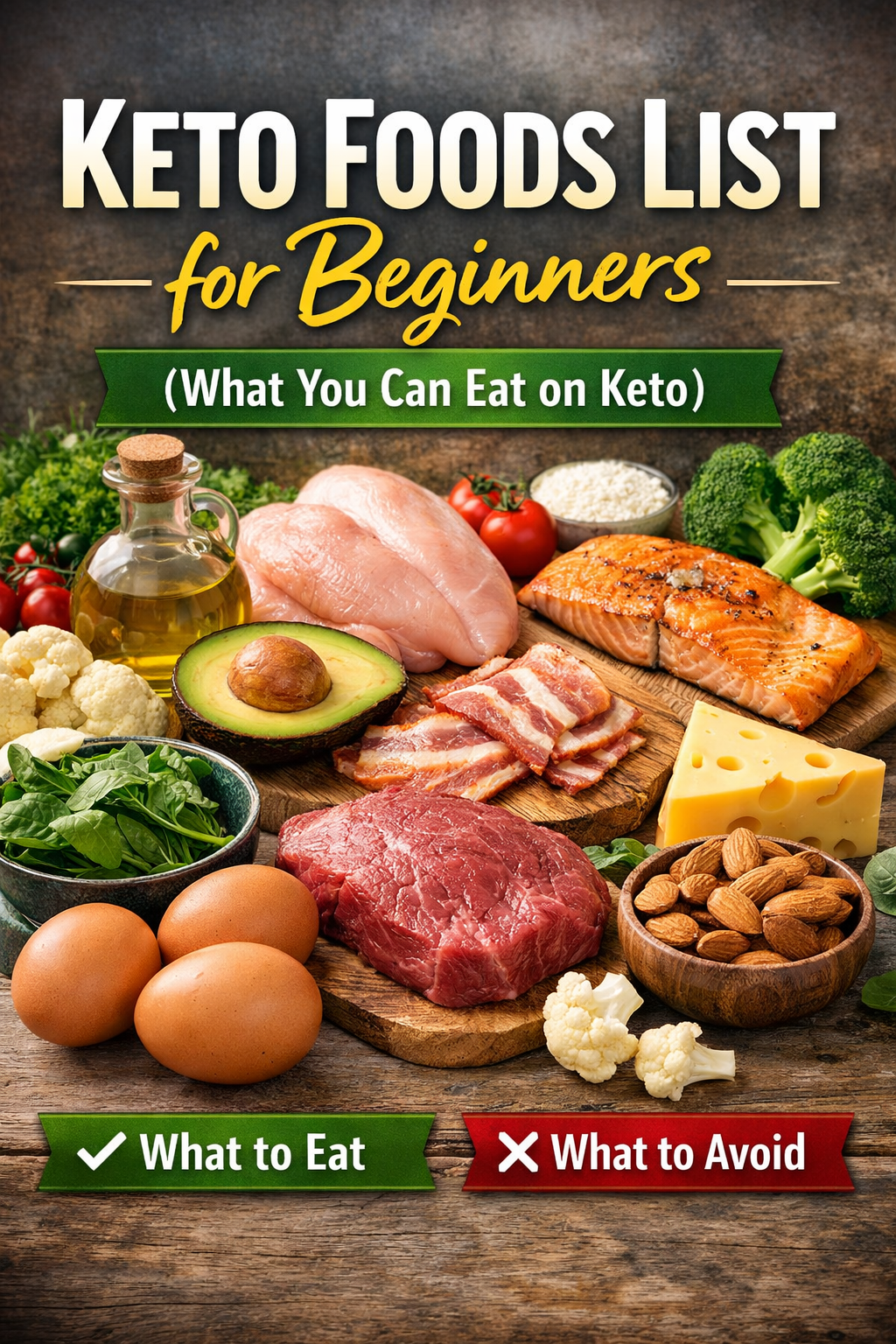
Keto Foods List for Beginners (What You Can Eat on Keto)
You start keto, cut the obvious carbs, and still end up staring into the fridge wondering what you are actually supposed to eat.
That is where beginner keto usually breaks down.
A lot of foods look keto on paper. That does not mean they make keto easier in real life.
Here is the reality check. Most people do not struggle because they forgot one magic keto food.
They struggle because they build their day around low-carb labels, snacks, and random ingredients instead of simple meals that actually hold up.
This keto foods list for beginners is built around a better question: what foods make keto easier, what foods need portion control, and what foods look safe but add up fast?
Why a beginner keto foods list needs more than an “allowed foods” list
A giant list of allowed foods is not enough.
It tells you what is technically low carb, but it does not tell you what keeps you full, what quietly pushes carbs up, or what turns into all-day nibbling.
That is the real beginner problem.
If you want keto to work, your food choices need to do four jobs:
- keep protein obvious
- make meals feel real
- control portion-sensitive foods
- keep label traps from sneaking into the day
That is the difference between “I can eat this on keto” and “this actually helps me stay on keto.”
1. The best keto foods for beginners are protein foods first
This is where most people get keto backwards.
They hear low carb and high fat, then shop like fat is the meal. So breakfast becomes coffee with cream. Lunch becomes cheese, nuts, and a bar. Dinner is whatever is left.
That is still low carb sometimes. It is just weak food structure.
The beginner keto foods that usually work best are protein foods you can build a real meal around:
- eggs
- chicken thighs or breasts
- rotisserie chicken
- ground beef or burger patties
- steak, pork, salmon, or shrimp
- tuna, salmon, or chicken pouches
- plain Greek yogurt or cottage cheese if the carbs fit
- deli meat with simple ingredients
Real-life example: someone says they are “eating keto” but their day is coffee, cheese, almonds, and a low-carb wrap. By late afternoon they are starving and looking for something sweet.
The mistake is thinking low carb automatically means satisfying.
The fix is simple: start your cart with protein foods for your next 6 to 9 meals. If a food does not help answer “what is my actual meal?” it is probably not a priority buy.
If you keep feeling hungry even when carbs are low, read Why More Protein Early in the Day Makes Keto Easier and Why You’re Always Hungry on Keto.
2. Beginner keto works better when vegetables, fats, and dairy support the meal instead of replacing it
A lot of beginners remove bread, rice, pasta, and potatoes but forget to replace the shape of the meal.
Then lunch turns into turkey slices and cheese. Dinner turns into ground beef in a bowl. Technically keto. Not very satisfying.
Low-carb vegetables help meals feel normal again. They add volume, texture, and something to eat besides protein and fat.
Good beginner vegetables include:
- broccoli
- cauliflower
- zucchini
- spinach
- salad greens
- cabbage or slaw mix
- green beans
- cucumbers
- bell peppers in sensible portions
Fats matter too, but this is where people overdo it. Olive oil, avocado oil, butter, mayo, olives, and avocado can help meals feel better. They are supports, not the whole strategy.
Dairy can fit, but it is easy to lean on it too hard. Cheese, cream, sour cream, cottage cheese, and Greek yogurt can work. The problem starts when dairy becomes constant grazing instead of part of a meal.
Real-life example: grilled chicken with salad and dressing usually holds better than “just cheese and coffee” even if both look keto.
The common mistake is treating vegetables like an optional extra and fats like the main event.
The fix is to build meals like this: protein first, one easy vegetable, then a sensible fat or dairy add-on. That looks more like a real lunch and less like a snack plate pretending to be one.
If sauces and add-ons quietly keep pushing your intake up, read Low-Carb Sauces That Add Up Fast.
3. Some keto foods for beginners are fine only if you respect the portion
This is the part beginner food lists usually blur together.
Some foods are not automatic no foods. They are portion-sensitive foods. That means small amounts may fit, but the normal real-life version gets sloppy fast.
The biggest examples are:
- berries and other fruit
- nuts and seeds
- cheese
- heavy cream
- dark chocolate
- dressings and sauces with a little sweetness
- yogurt, cottage cheese, and flavored dairy
Berries are usually easier to fit than bananas, grapes, apples, dried fruit, juice, or smoothies. Nuts and seeds can work, but handful math is fake math. Cheese can fit, but it is easy to keep slicing and stop noticing.
This is where beginners say, “But it’s keto,” while the portions keep growing.
Real-life example: a small bowl of Greek yogurt with a few berries is very different from a giant smoothie, a trail mix habit, or coffee loaded with cream twice before noon.
The mistake is assuming low carb means unlimited.
The fix is to watch the foods that are easy to pour, sip, scoop, or graze on. Those are the foods that drift.
A digital food scale can help beginners get honest fast with nuts, cheese, berries, and cream-heavy extras without turning the whole diet into a math project.
If labels and net-carb claims keep making portions look smaller than they really are, read “Net Carb” Foods That Keep You Stuck on Keto.
4. The keto foods that seem beginner-friendly are often the ones that cause the most trouble
This is where people get fooled.
The foods that seem easiest are often the foods that make keto harder: keto bars, low-carb wraps, keto bread, flavored yogurts, protein desserts, sweet coffee drinks, and sauces that look harmless because the serving size is tiny.
They are appealing because they sound familiar. That is exactly why they can become a problem.
Here are some label traps beginners run into:
- low-carb tortillas and breads: easy to build your whole day around them
- keto bars and packaged snacks: still snack behavior, just with better branding
- sweet drinks and creamers: carbs, calories, and sweet cravings can stack up fast
- BBQ sauce, ketchup, teriyaki, and glazes: small serving sizes hide how easy they are to overuse
- trail mix, nut clusters, and “healthy” toppings: low-carb enough to justify, easy enough to overeat
Real-life example: lunch is a low-carb wrap, flavored yogurt, sugar-free sauce, and a packaged keto snack. On paper it still looks clean. In real life it often leads to more hunger, more chasing, and more intake than a simple chicken-and-vegetable meal would have.
The mistake is trusting packaging more than outcomes.
The fix is to use condiments and packaged foods as helpers, not the center of the plan.
If you keep getting fooled by products that look keto, read Keto Foods That Are Secretly High Carb.
Keto drinks, sauces, and pantry foods beginners can usually use
Beginners also want to know what is practical, not just what is theoretical.
Usually easier choices:
- water, sparkling water, black coffee, unsweetened tea
- mustard, salsa, pickles, mayo, hot sauce
- olive oil, avocado oil, butter, ghee
- plain spices and seasoning blends without added sugar
- plain broth, tuna, canned salmon, and other backup proteins
Be more careful with:
- sweet creamers and dessert coffees
- ketchup and barbecue sauce
- smoothies and bottled “healthy” drinks
- sweet yogurt and flavored cottage cheese
- anything using tiny serving sizes to hide the real total
This is also where meal prep helps. If your fridge has cooked protein, a couple vegetables, and simple condiments ready to go, you are far less likely to build your whole day around snacks.
Glass meal-prep containers are a simple beginner upgrade if your main problem is having food in the house but nothing ready to eat.
What most beginners get wrong about keto foods
The biggest beginner mistake is not eating the wrong one food.
It is building a day with no structure.
- too many snacks and not enough meals
- too much dairy and not enough protein
- too many low-carb products and not enough plain food
- too many drinks, sauces, and extras that do not look like much by themselves
- too many “healthy” foods that still add up fast in the real world
If you are constantly asking “can I eat this on keto?” you may be asking the wrong question.
A better question is: does this food make my next few hours easier or harder?
A simple keto foods list for beginners that actually works
If you want the short version, think in three buckets.
- Build meals around these: eggs, chicken, beef, fish, deli meat, tuna, salad greens, broccoli, cauliflower, cucumbers, zucchini, olive oil, mustard, salsa, pickles
- Use with portion control: berries, Greek yogurt, cottage cheese, nuts, seeds, cheese, cream, dark chocolate, dressings, sauces
- Watch closely: keto bars, keto bread, low-carb wraps, smoothies, sweet coffee drinks, sugary sauces, dried fruit, trail mix, flavored yogurts, “net-carb” snacks
That filter is more useful than a giant allowed-food spreadsheet because it matches real life.
Related:
Fix this first:
- Buy protein foods for your next several meals before you buy snacks, desserts, or low-carb replacement products.
- Keep two easy vegetables and a few simple sauces around so meals feel complete without getting complicated.
- Treat berries, nuts, cheese, cream, and yogurt like portion foods, not unlimited keto freebies.
- Stop trusting “keto” packaging more than your actual results. If a food keeps leading to hunger, cravings, or overeating, it is not helping.
- Build a repeatable breakfast, lunch, dinner, and backup meal so you are not improvising your way into bad choices.