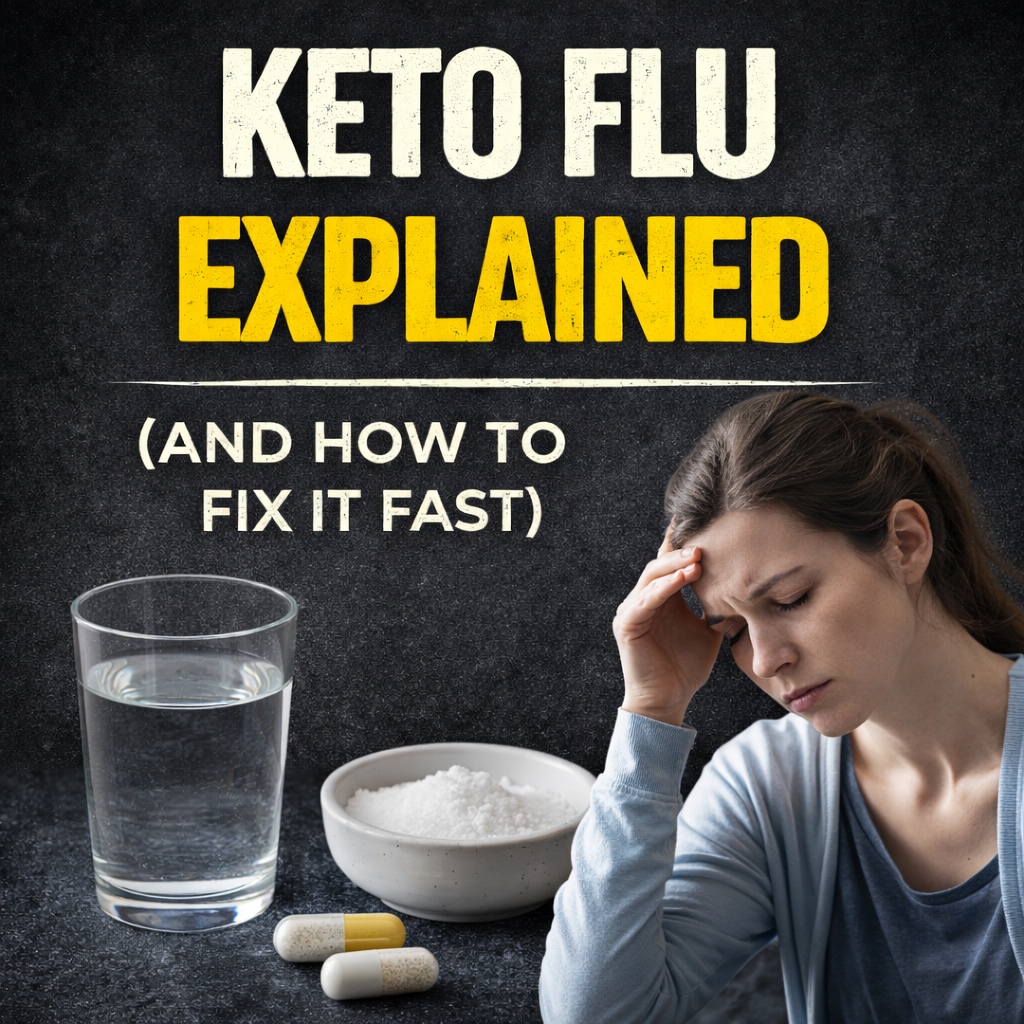
You started keto, and instead of feeling better, you feel worse.
Headaches. Low energy. Brain fog. Maybe dizziness. Maybe your legs feel weird and crampy too.
It feels like you’re getting sick. Most of the time, you aren’t.
That’s keto flu. And here’s the truth: keto flu usually is not proof that keto is failing. It’s proof that your body is adjusting badly because a few basics got missed.
The good news? This is usually temporary. More importantly, it’s usually fixable fast.
What Is Keto Flu, Really?
Keto flu is the group of symptoms people get when they cut carbs hard and their body struggles during the switch.
You’re moving away from running mostly on glucose and toward using more fat and ketones for fuel. That shift can feel rough at first.
But carbs are only part of the story. The bigger issue is what happens after carbs drop: your body releases stored water, sodium drops, and energy, digestion, and appetite can all get a little messy for a few days.
That is why keto flu feels so random. It isn’t random. There are usually a few clear causes behind it.
Start here:
Common Keto Flu Symptoms
Most people notice keto flu in the first few days, though some feel it on day one and others feel it closer to the end of week one.
- Headaches
- Low energy
- Brain fog
- Dizziness
- Muscle cramps
- Irritability
- Nausea or feeling “off”
- Workout performance dropping hard
If symptoms are severe, keep getting worse, or you have a medical condition that affects fluids, blood pressure, or blood sugar, get medical advice instead of trying to tough it out.
Why Keto Flu Happens: The 4 Biggest Causes
This is where most people mess up. They think keto flu is one mysterious thing. It usually isn’t. It is usually four boring problems happening at the same time.
1. You lose sodium fast
This is the biggest cause for most beginners.
When insulin drops on keto, your kidneys dump more sodium and water. That sounds technical, but the real-life version is simple: you pee more, and you lose more salt with it.
Then you feel terrible. Headache. Weakness. Lightheadedness. That washed-out feeling where your brain doesn’t want to work.
A common mistake is drinking more plain water while keeping salt low. That can make you feel even flatter.
Real life example: you start keto on Monday, cut bread and sugar, drink a ton of water, eat chicken and salad, and by Tuesday afternoon you feel like a zombie. That is often low sodium hitting you fast.
Fix: Salt your food on purpose. Use broth or salted meals. If you want something easy, a sugar-free electrolyte powder can make this much simpler, especially in the first week.
2. Your fluids are off, not just low
People hear “hydrate more” and think the job is done. Not quite.
Keto flu is often a fluid and electrolyte problem. If you’re underhydrated, symptoms get worse. If you keep pounding plain water without replacing minerals, symptoms can still hang around.
This is why some people say, “I’m drinking water all day and still feel awful.” Water helps, but water alone is not the whole fix.
A common mistake is waiting until you’re thirsty, then chugging a bottle at once. That is better than nothing, but steady intake works better.
Real life example: you have coffee in the morning, a busy day, not much food, then a big bottle of water at 3 p.m. Now you feel bloated, tired, and somehow still dehydrated. That’s not unusual on keto.
Fix: Drink fluids consistently through the day. Pair water with sodium-rich foods or an electrolyte drink mix instead of treating water like the only solution.
3. You’re low on potassium and magnesium too
Sodium gets most of the attention, but potassium and magnesium matter too. They help with muscle function, nerve signals, and overall energy.
When these run low, you can feel crampy, twitchy, tired, irritable, or mentally foggy. Sleep can get worse too, which makes the whole thing feel even harsher.
The mistake here is assuming a low-carb diet automatically covers everything. If your keto menu is mostly eggs, cheese, bacon, and packaged snacks, you might be missing a lot of minerals.
Real life example: you stay under your carb target, but you’re barely eating leafy greens, avocado, or other mineral-rich foods. A few days later, your calves cramp at night and your energy tanks.
Fix: Build meals around simple whole foods that bring minerals with them. Think leafy greens, avocado, salmon, mushrooms, and broth-based meals. If you want a shortcut, another solid option is an electrolyte drink mix that includes more than just sodium.
4. You’re cutting carbs and calories too hard at the same time
This is another huge beginner mistake.
Some people start keto and immediately slash carbs, calories, snacks, and meal size all at once. They think more restriction means faster results. Usually it just means they feel awful.
Your body is already adapting to a new fuel source. If you also undereat, you make that transition much harder.
What it looks like in real life: coffee for breakfast, a tiny lunch, maybe some chicken for dinner, and not much fat, salt, or potassium. By night, you’re wiped out and convinced keto is not for you.
Fix: Eat full meals during the first week or two. Prioritize protein, add enough fat to stay satisfied, and do not try to win a suffering contest. Keto works better when your body feels supported, not starved.
What Most People Get Wrong About Keto Flu
Most people blame carbs alone. That is too simplistic.
Yes, dropping carbs starts the process. But keto flu usually gets worse because people also:
- Undersalt their food
- Drink water but ignore electrolytes
- Eat too little
- Try to work out hard while feeling depleted
- Build their meals around cheese and “keto snacks” instead of real food
This is also why some people breeze through keto while others get crushed by it. The ones who feel better faster usually handle the basics better.
How to Fix Keto Flu Fast
If you want the short version, stop looking for a magic trick. Fix the obvious stuff first.
- Add more salt to meals right away
- Drink fluids steadily, not randomly
- Eat potassium- and magnesium-rich foods
- Eat enough food for the transition period
- Take it easy on intense workouts for a few days if needed
If you are also dealing with headaches, read Keto Headaches: Causes and Fixes. If digestion is getting weird too, Constipation on Keto is another common early problem.
How Long Does Keto Flu Last?
For most people, keto flu lasts a few days to about a week.
If you correct the real causes quickly, symptoms often improve within a day or two. If they drag on, there is usually still a gap somewhere. Most often that gap is sodium, total food intake, or both.
If you feel bad for more than a week and nothing improves after fixing the basics, stop assuming it’s “just keto flu.” Check for other issues and get medical advice if needed.
How to Make the Transition Easier Next Time
If you ever restart keto, don’t repeat the same sloppy setup.
- Start with a simple meal plan before day one
- Get your electrolyte strategy ready first
- Salt your food from the beginning
- Keep meals boring and easy for the first week
- Do not combine keto with crash dieting
If you’re still figuring out what to eat, this beginner keto foods list will make your first week a lot easier.
Don’t Let Keto Flu Fool You
A lot of people quit keto right here.
They feel rough for three days, assume the diet is broken, and go back to what they were doing before.
That is usually a mistake.
Keto flu does not automatically mean keto is wrong for you. Most of the time it means your setup was weak. Fix the setup, and the experience usually gets much better.
If you want the bigger picture, start with Keto for Beginners: The Simple Guide That Actually Works. That’s the best next step if you want to do this right without overcomplicating it.
Related:
FAQ: Keto Flu Questions People Ask
Is keto flu dangerous?
Usually, no. It is mostly an adjustment problem. But severe symptoms, major weakness, fainting, or symptoms that do not improve deserve real medical attention.
Can you get keto flu even if you’re doing keto correctly?
Yes, some people still feel a mild transition. But doing keto correctly usually makes it shorter and less intense.
Does everyone get keto flu?
No. Some people barely notice it. Others feel it hard. Hydration, electrolytes, food choices, and how abruptly you cut carbs all matter.
Can exercise make keto flu worse?
Yes. Hard training can feel brutal when your fluids and electrolytes are already off. A few easier days can help.
Fix this first:
- Salt your meals more aggressively for the next few days.
- Drink fluids steadily and stop relying on plain water alone.
- Eat full meals with protein, minerals, and enough calories.
- Use simple whole foods and skip junky “keto” products for now.
- Read the beginner guide above so you fix the whole setup, not just this one symptom.
If this helped, read these next:
- Keto Headaches? 5 Reasons They Keep Happening
- Why You’re Dizzy on Keto When Your Carbs Are Already Low
- Why You Feel Weak on Keto When You Cut Carbs Fast but Never Replace Sodium
Explore more Keto Problems & Side Effects here: