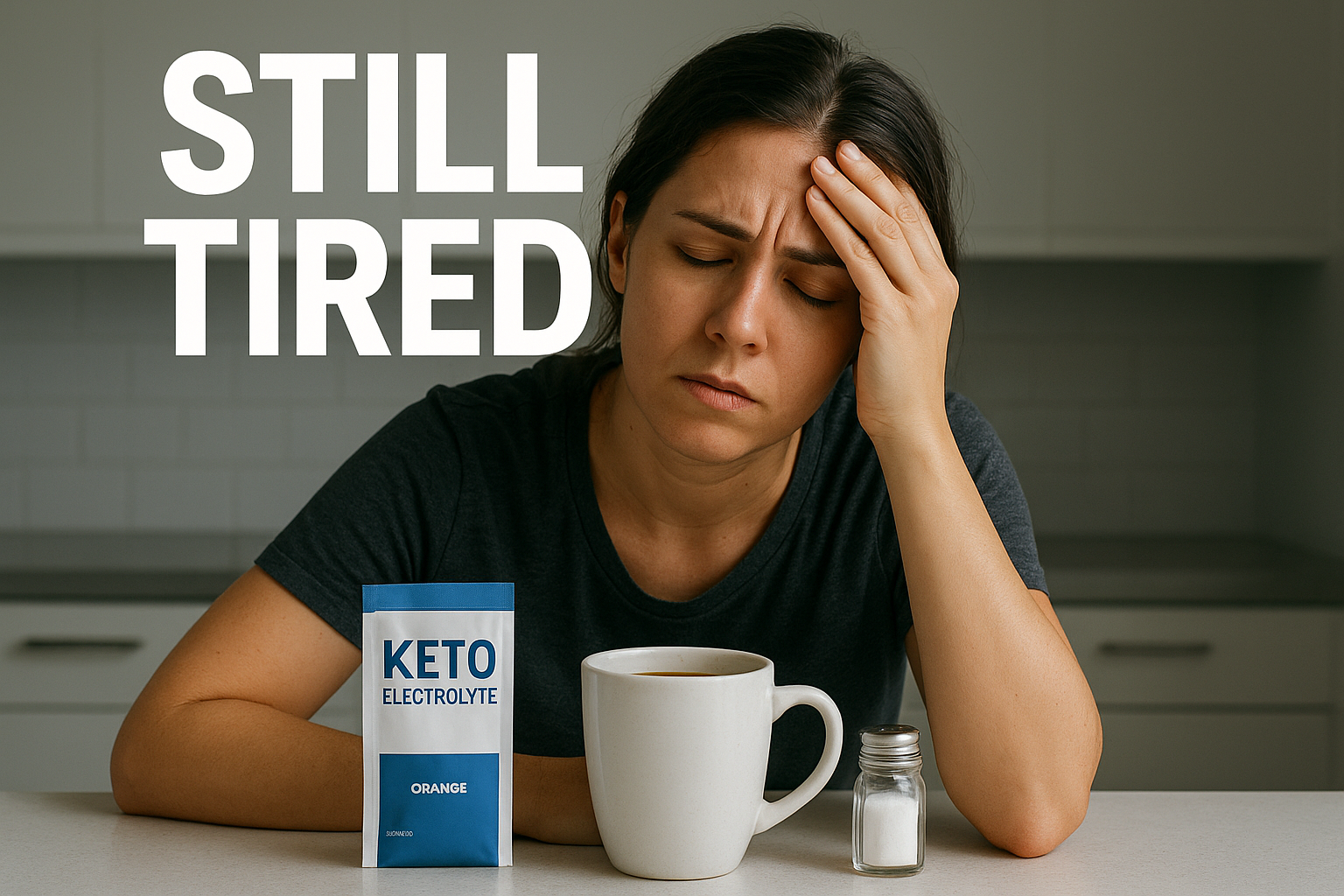
You made it past the first few days of keto, so you expected your energy to level out.
Instead, you still feel tired on keto even after the first week. That usually means something in your setup is off.
A lot of people hit this point, drink more coffee, and assume their body just needs more time. Then two more weeks pass, and they still feel flat, foggy, and weirdly drained by the afternoon.
If that sounds familiar, the problem usually is not that keto “doesn’t work.” It is usually a mix of low sodium, weak meals, low calories, bad sleep, or trying to live on fake keto foods.
Why you’re tired on keto even after the first week
If you’re tired on keto even after the first week, your body is usually still dealing with poor hydration, poor meal structure, or recovery problems. Keto can lower insulin, and that changes how your body handles water and minerals. It also exposes sloppy eating fast.
One quick example: you cut bread, pasta, and sugar, but now most of your meals are coffee, cheese, nuts, and a light dinner. That looks low carb, but it is also a great way to feel underfed and wiped out.
Here are the big reasons this keeps happening and what to fix first.
Start here:
1. You’re low on sodium and fluids
This is one of the most common reasons people stay tired on keto after the first week.
When carbs drop, your body sheds water faster. Along with that water, you also lose sodium. If you do not replace it, you can feel weak, headachy, dizzy, and tired even if your carbs are low enough.
In real life, this looks like doing “everything right” but feeling worse by late morning. You might stand up and feel off. You may crave salty food, feel unusually flat in the gym, or get that drained, empty feeling that is hard to explain.
The common mistake is thinking plain water is enough. Then you drink even more water, dilute yourself more, and feel worse.
The fix is simple: add more sodium on purpose. Salt your meals more. Use broth. If you need something easy, a sugar-free electrolyte powder can help fill the gap fast. This matters most if your fatigue comes with headaches, cramps, or that washed-out feeling.
If you want a deeper breakdown of early low-carb symptoms, read Keto Flu Explained.
2. Your meals are too light on protein
A lot of keto beginners cut carbs but never build real meals. They stop eating bread, rice, and fruit, but they do not replace that structure with enough protein.
That matters because protein helps you feel steady, full, and functional. If you live on butter coffee, snack plates, and random low-carb foods, your energy can crash hard even if ketosis is technically happening.
Here is what it looks like in real life: breakfast is coffee with cream, lunch is a few eggs or cheese, and dinner is better but still small. By afternoon, you feel tired, irritated, and hungry, but you cannot tell if it is hunger or just burnout.
The mistake is assuming more fat automatically fixes low energy. Sometimes it does the opposite if your actual meals are weak.
The fix is to make each meal protein-first. Build meals around eggs, beef, chicken, salmon, Greek yogurt if it fits your carbs, or another solid protein source. If you are slammed and meals keep falling apart, a zero carb protein powder can be a backup tool, not the foundation.
If keto keeps feeling shaky in general, this is also worth reading: Keto Isn’t Working?
3. You’re eating too little without realizing it
Some people are not tired on keto because it is “too low carb.” They are tired because they barely eat.
This happens a lot when someone starts keto and tries to be extra strict. They cut carbs, skip meals, stop snacking, and keep portions tiny because they are scared of slowing fat loss. The result is not clean keto. It is low energy with a keto label on it.
In real life, this shows up as feeling fine for a few hours, then crashing hard later in the day. Work feels harder. Workouts feel terrible. You get home exhausted and end up overeating at night because your body is trying to catch up.
The mistake is calling that “discipline.” It is usually poor setup.
The fix is to look at your full day honestly. Are you eating two real meals with enough protein? Are your portions actually solid? Are you trying to survive on coffee, eggs, and hope? If yes, increase meal size before you blame keto itself.
This connects with a bigger problem a lot of people miss: Why You’re Always Hungry on Keto.
4. Your sleep is bad, and keto is exposing it
Sometimes keto is not causing the tiredness. It is just making an existing problem harder to ignore.
If you were already sleeping badly, running on stress, and relying on sugar or constant snacking to push through the day, keto can remove that fake energy. Then what is left is the real issue: you are not recovered.
This is what it looks like in real life: you are technically eating keto, but you stay up late, wake up tired, feel wired at night, and crash during the day. Then you blame the diet when the bigger pattern is sleep debt.
The common mistake is trying to out-caffeinate the problem. More coffee can cover fatigue for a few hours, but it does not fix the reason you feel terrible.
The fix is boring, but it works. Get a consistent sleep window. Stop pushing caffeine later into the day. Eat a real dinner instead of a tiny snack plate. And if you keep feeling wrecked, look at stress, screen habits, and late-night eating before assuming your macros are the main issue.
5. You’re eating too many fake keto foods
Low-carb labels can make bad food choices look safe. That is a big reason people stay tired, hungry, and frustrated on keto.
A packaged food can be low in net carbs and still leave you feeling awful. Some are easy to overeat. Some do not give you much protein. Some are just glorified treats with better marketing.
In real life, this looks like protein bars, keto cookies, nut clusters, sweetened drinks, and “low-carb” convenience foods filling most of your day. You stay in the low-carb lane, but your energy is still unstable and your appetite is weird.
The mistake is treating keto products like a free pass. They are often better than candy or chips, but that does not make them a smart base for your day.
The fix is to go back to simple food for a week. Meat, eggs, fish, plain Greek yogurt if tolerated, cheese in normal amounts, non-starchy vegetables, olive oil, avocado when it actually fits, and real meals. If your energy improves fast, the problem was probably not keto. It was your food quality.
For another trap in this area, read Keto Foods That Are Secretly High Carb.
Related:
Common mistakes that keep this problem going
Most people do not stay tired on keto because of one dramatic mistake. It is usually a pile of smaller ones.
- Drinking more water but not increasing sodium
- Replacing meals with coffee, fat bombs, or snack foods
- Keeping calories too low for too long
- Using “net carb” convenience foods as daily staples
- Ignoring bad sleep and blaming ketosis for all of it
This is why random fixes fail. You can buy a supplement, change your carbs, or push harder in the gym, but if the real issue is weak meals plus low sodium plus poor sleep, you will still feel lousy.
Fix this first:
Step 1: Add sodium today. Salt your food more, drink broth, or use a simple electrolyte mix.
Step 2: Make your next three meals protein-first. Start with eggs, chicken, beef, salmon, or another real protein source.
Step 3: Stop building your day around keto snacks, bars, and coffee. Use real meals for one full week.
Step 4: Check whether you are simply under-eating. If you feel tired, hungry, and obsessed with food at night, that is a clue.
Step 5: Clean up sleep before blaming keto itself. A better sleep window can fix more than people expect.
If you’re tired on keto even after the first week, do not just wait it out. Fix the setup. In most cases, your energy comes back when your meals, minerals, and recovery stop fighting each other.
🔎 If this helped, here are more no-BS keto guides worth reading next:
- Keto Flu Explained: What It Is and How to Fix It Fast
- Keto Plateau After the First Few Weeks? Here’s Why Progress Slows Down
- Constipation on Keto? The Real Fixes Most People Miss
Explore more Keto Problems & Side Effects stories here: