You cut carbs, expected keto to feel better, and now you have a headache, feel dizzy, want to throw up, or keep waking up with leg cramps.
That is not random. And it usually is not a sign that keto “just doesn’t work for you.”
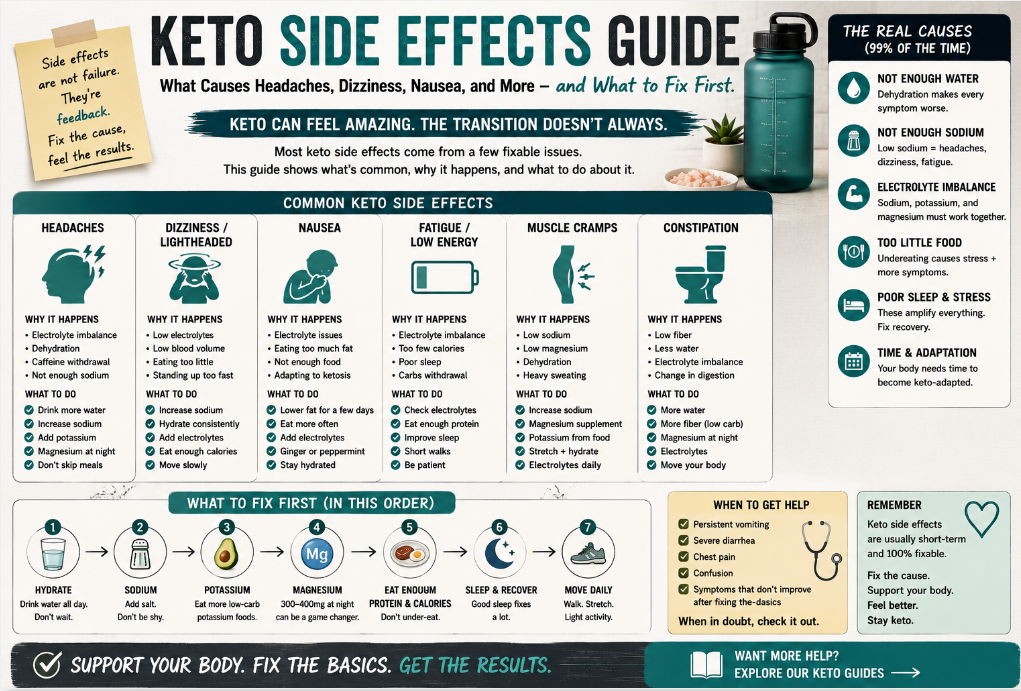
Most keto side effects happen because the switch to low carb changes your fluid balance, sodium needs, meal timing, caffeine tolerance, and how hard your body reacts when you undereat.
If your symptoms started after cutting carbs, the better question is:
what pattern is showing up? Headaches, dizziness, nausea, leg cramps, heart pounding, fatigue, and bad sleep usually point to a short list of problems. Once you match the symptom to the pattern, the fix gets much easier.
Keto side effects usually come from a few fixable problems
Here is the simple version.
When carbs drop, your body holds less water. That often means you lose more sodium too. If you also drink more coffee, skip meals, eat too little, train hard, or try to “be good” by barely eating all day, keto side effects hit harder.
This is why one person says keto gave them more energy, while another says they got headaches, felt shaky, and could not sleep. The difference is usually not willpower. It is whether the basics were handled.
If you want the deeper electrolyte piece, read
Keto Electrolyte Balance: Why It Matters and How to Get It Right. But if you just want to solve the symptom in front of you, start here.
Start here:
If your main symptom is a headache
Keto headaches usually show up when sodium drops, fluids get out of balance, or you cut carbs fast while still leaning on caffeine to carry you through the day.
In real life, this looks like coffee for breakfast, a light lunch, lots of water, and almost no salt. By midafternoon, your head feels tight, your mood gets worse, and you start blaming keto itself.
The common mistake is trying to “hydrate” by drinking more plain water while still keeping sodium too low. That can make the problem feel even worse.
The first fix is simple: eat a real meal with enough salt, stop treating coffee like food, and do not assume more water alone will solve it. If headaches keep repeating, read
Keto Headaches? 5 Reasons They Keep Happening.
If you need something easy on busy days, a simple
electrolyte powder can help you get sodium back in without turning the whole fix into a project. Just do not use it as an excuse to keep skipping meals.
If your main symptom is dizziness
Dizziness on keto usually means your system is running low on sodium, low on food, or both. Sometimes people think, “But my carbs are already low, so I should be adapted by now.” That misses the point. You can be low carb and still under-fueled, under-salted, or running on caffeine and hope.
A common version is standing up fast and feeling lightheaded. Another is feeling weird and floaty after a long gap between meals. Some people notice it after a workout or on hot days when they sweat more than usual.
The mistake here is assuming dizziness means you need even fewer carbs, more fasting, or stricter discipline. Usually you need the opposite: more structure.
Start with salt, fluids, and a real meal with protein. If you keep getting dizzy even though your carbs are already low, read
Why You’re Dizzy on Keto When Your Carbs Are Already Low.
If your main symptom is nausea
Nausea on keto is often a mix of an empty stomach, too much coffee, electrolyte imbalance, or trying to force heavy high-fat food when your body already feels off.
This is where people get trapped by bad keto advice. They hear that keto means more fat, so they drink coffee on an empty stomach, add fat on top, and wonder why their stomach turns.
In real life, it can look like this: coffee early, no real breakfast, maybe some water, maybe a supplement, then sudden waves of nausea by late morning. Or a greasy meal sounds “keto” but feels awful because you were already depleted before you ate it.
The fix is not to force more fat. The fix is to calm the pattern down. Eat something simple, salty, and not overly greasy. Back off the coffee if your stomach is already irritated. If this keeps happening, read
Why Keto Makes You Nauseous When Coffee, Electrolytes, and an Empty Stomach Collide.
If your main symptom is leg cramps
Leg cramps are one of the clearest keto side effects because they often point straight back to electrolyte imbalance, especially when sodium and magnesium intake are sloppy.
The classic pattern is feeling mostly fine during the day, then getting hit with calf or foot cramps at night. A lot of people respond by stretching harder and ignoring the bigger issue. Stretching might help in the moment, but it does not fix why the cramp keeps coming back.
The mistake is thinking cramps are just a muscle problem. On keto, they are often a signal that your overall intake and routine are off.
Fix the base first: get salt back in consistently, stop under-eating all day, and make sure your meals are not just random cheese and coffee. If your cramps keep showing up at night, read
Why You Get Leg Cramps on Keto at Night and What Actually Fixes Them.
If convenience is the reason you keep falling behind, a sugar-free
electrolyte drink mix can be a practical backup. Magnesium may also help some people, but the bigger issue is usually the whole routine, not one magic pill.
If your heart feels like it is pounding
A pounding heart on keto gets people’s attention fast, and it should. Sometimes it is the combination of low sodium, too much caffeine, not enough food, stress, or trying to push through side effects instead of fixing them.
One real-life pattern is multiple coffees, a light day of eating, then that wired, thumpy feeling in your chest later on. Another is after sweating, being under-salted, and assuming the answer is more stimulants because you feel tired.
The common mistake is pretending this is just anxiety or trying to out-hydrate it with plain water. If electrolytes are off and your intake is weak, plain water alone is not the full answer.
Start by pulling back on caffeine, eating an actual meal, and getting sodium back in. If this exact pattern sounds familiar, read
Why Your Heart Pounds on Keto When Electrolytes Are Off and Caffeine Is Too High.
If your main symptom is fatigue
Fatigue on keto is not always about needing more time to adapt. A lot of the time, it means your plan is too weak to support the day you are actually living.
If breakfast is coffee, lunch is small, dinner is delayed, and your sodium is inconsistent, of course you feel wiped out. That is not some mysterious keto curse. That is a rough setup.
This is where many people make the mistake of eating less and less because they think feeling tired means they should get stricter. But tired, flat, drained keto often means your basics are collapsing: not enough salt, not enough food, poor meal structure, and too much reliance on stimulants.
If fatigue is your main issue, read
Keto Flu Symptoms Explained: What Your Body Is Actually Missing. That page breaks down the bigger low-energy pattern in more detail.
If your sleep suddenly gets worse
Sleep problems on keto often show up when the whole day is too caffeinated, too underfed, or too chaotic. You may get through the day feeling “fine enough,” then feel wired, hungry, restless, or crampy at night.
Some people think keto caused insomnia out of nowhere. But often the real pattern is missed meals, late caffeine, poor electrolytes, and trying to white-knuckle hunger until dinner.
The mistake is treating sleep as a totally separate issue. On keto, bad sleep is often connected to everything else that went wrong earlier in the day.
If your side effects get worse after a rough night, or your nights keep getting worse because your day is sloppy, this is usually a sign to fix meal timing, caffeine, and electrolyte consistency first. If your sleep-related side effects tend to show up more when life gets messy outside your home routine, the next best read is
Keto Side Effects Outside the House: The No-BS Hub for Heat, Travel, Active Days, Restaurant Recovery, Alcohol, and Electrolyte Slipups.
What most people get wrong about keto side effects
Most people do not fail because keto is too complicated. They fail because they respond to side effects with the wrong fix.
- They drink more plain water but still do not get enough sodium.
- They drink coffee instead of eating.
- They try to fast through symptoms that are clearly getting worse.
- They force greasy food when their stomach is already irritated.
- They treat cramps, dizziness, and fatigue like separate random problems instead of one broken pattern.
That is why the best fix is not usually a trick. It is getting the basics stable again.
How to tell what to fix first
If you are not sure where to start, use this quick decision tree.
- Headache, dizziness, weakness, or heart pounding? Check sodium, fluids, caffeine, and whether you actually ate enough.
- Nausea? Look at coffee, empty-stomach habits, and whether you pushed rich food when your system already felt off.
- Leg cramps or bad sleep? Look at daily consistency, not just what you did in the last hour.
- Everything feels off at once? Start with the bigger keto flu and electrolyte pattern, not one symptom at a time.
If your symptoms keep bouncing around from one day to the next, go deeper with
Keto Electrolyte Balance: Why It Matters and How to Get It Right and
Keto Flu Symptoms Explained: What Your Body Is Actually Missing.
Bottom line: Most keto side effects are not random. They usually mean your sodium, food intake, caffeine, or daily structure is off. Fix the pattern first, then chase the symptom if it keeps coming back.
Fix this first:
- Stop guessing which symptom matters most and look for the pattern: low sodium, weak meals, too much coffee, heat, or long gaps without food.
- Eat a real meal with protein and enough salt before trying to solve everything with plain water, fasting, or supplements.
- Cut back on coffee if your stomach is off, your heart is pounding, or you are using caffeine to replace food.
- Use targeted follow-up posts for the exact symptom that keeps repeating so you fix the real cause instead of treating the same side effect over and over.
Post Views Today: 688