
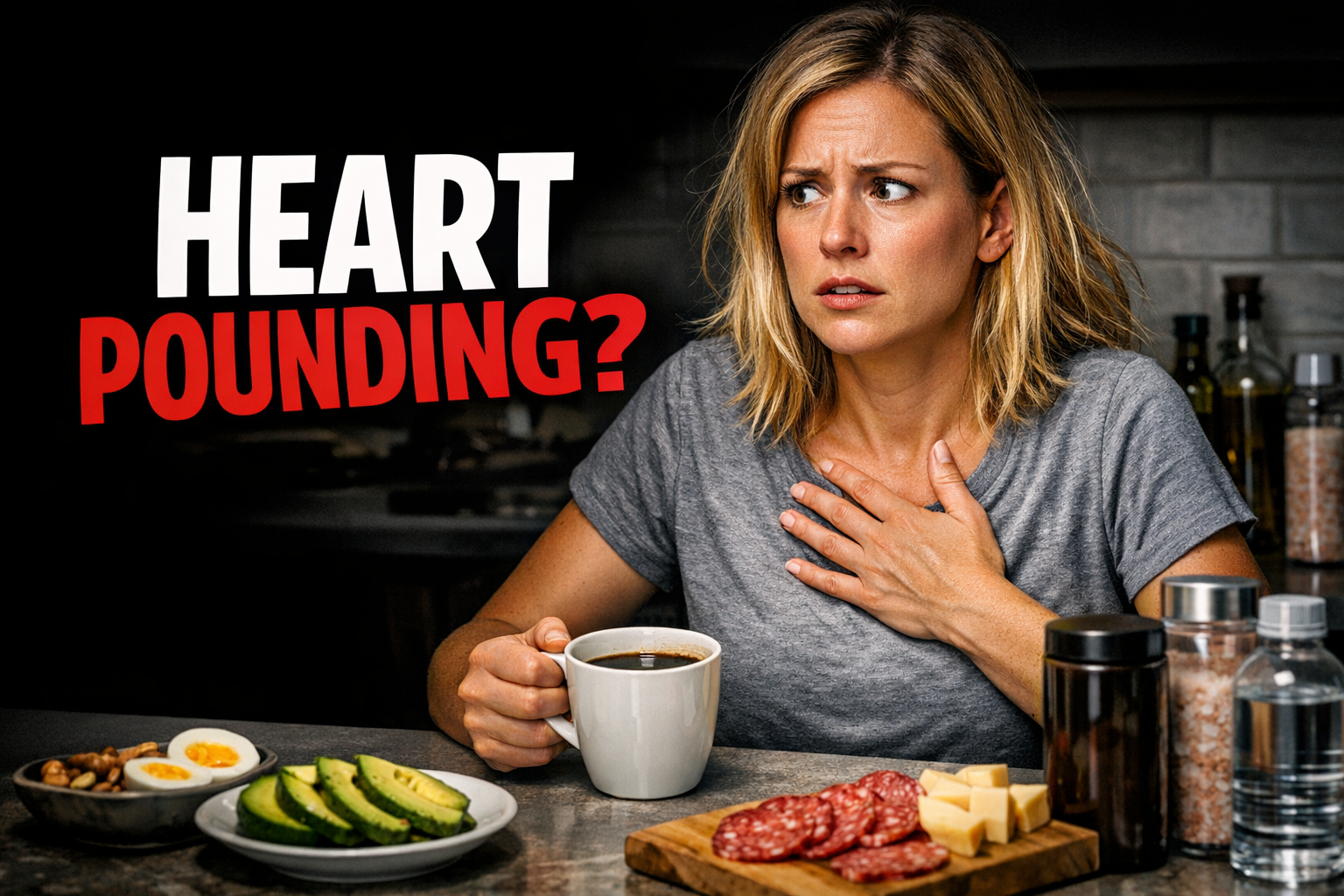
Your heart starts pounding on keto and your first thought is usually the worst one.
Something feels off. Maybe even scary. But in a lot of real-life keto situations, a pounding heart is not random. It usually shows up when electrolytes are off, caffeine is too high, meals are too weak, or the whole day has started to feel a little too much like anxiety.
Here’s the reality check: this symptom is common, but that does not mean you should ignore it. It means you should troubleshoot it fast and calmly. The goal is not to panic. The goal is to stop guessing.
If your heart pounds on keto, the pattern usually comes from a short list of problems. Once you figure out which one you are dealing with, the fix gets a lot more obvious.
Why your heart pounds on keto in the first place
When carbs drop, your body holds less water and less sodium. That changes how steady you feel. If you add extra coffee, long gaps between meals, light eating, bad sleep, or stress on top of that, your system can start feeling shaky, jumpy, or over-revved.
That is why heart pounding on keto does not always mean one dramatic problem. Sometimes it is a stack of smaller problems. You had coffee early, did not eat much, drank plain water, got behind on salt, then hit the afternoon feeling wired and weird. Now it feels like your heart is the problem when the real issue is the setup.
If you are dealing with multiple symptoms at once, read Keto Side Effects Guide: What to Fix First. If the pattern keeps repeating in different forms, go deeper with Keto Electrolyte Problems.
Cause 1: Your electrolytes are off and plain water is not fixing it
This is the first thing to check because it is one of the most common keto side-effect patterns. When insulin drops, you usually lose more water and sodium. If you replace water but not enough sodium, you can end up feeling worse instead of better.
In real life, this looks like someone trying to do everything “clean.” They drink a lot of water, eat a salad with chicken, maybe some eggs, maybe some cheese, but they do not salt food on purpose and they never build a real electrolyte routine. By late morning or late afternoon, they feel their heart pounding, their head feels off, and they get that weird shaky feeling that makes them think something is seriously wrong.
The common mistake is assuming hydration means more water. On keto, that is not always true. If sodium is low, more plain water can leave you feeling even more washed out.
The fix is to slow down and correct the basics first. Eat a real meal with enough salt. Do not keep chugging plain water while ignoring food. If you need something easy on busy days, a simple electrolyte powder can help support sodium and fluid balance without turning the whole fix into a project. Just do not use it as a substitute for eating.
If your bigger pattern includes headaches, dizziness, cramps, or nausea too, the full electrolyte guide is the next best read.
Cause 2: Your caffeine tolerance changed, but your routine did not
A lot of people can handle a certain amount of coffee before keto, then suddenly that same amount hits much harder once carbs are lower, meals are smaller, and hydration is worse. The coffee did not become evil. Your setup changed.
This is what it looks like in real life: coffee on an emptier stomach, maybe another cup because energy feels low, maybe an energy drink later, and not much actual food in between. Now your heart feels like it is pounding, your hands may feel a little shaky, and your brain starts spinning out. You blame keto, but the more accurate answer is keto plus too much stimulation on too little support.
The mistake here is pretending caffeine is harmless because it has no carbs. Zero carb does not mean zero effect. If it spikes stress, pushes appetite lower, and helps you skip real meals, it can make the whole problem worse.
The fix is simple: cut the caffeine load down before you look for fancier answers. Have less, have it later, or stop stacking coffee with energy drinks. Pair caffeine with actual food instead of using it as breakfast. If you also sleep badly, this pattern gets even messier. That is where keto sleep problems often connect to pounding heart symptoms the next day.
Cause 3: You are under-eating and your body is pushing back
This one gets missed all the time because people assume keto should kill hunger and make it easy to eat less. Sometimes it does. But if your meals get too small, too light, or too delayed, your body can start throwing out warning signs.
Heart pounding can show up when the day has turned into coffee, maybe a snack, maybe a light lunch, and a lot of “I’ll eat later.” You are technically staying low carb, but you are not feeding yourself well. By the time evening hits, you feel weak, restless, or strangely over-alert.
The common mistake is treating that feeling like proof you need more caffeine, more willpower, or a random supplement. Usually you need a better meal.
The fix is to look at meal structure. Did you actually eat enough protein? Did your meal have enough salt? Did you wait too long to eat because you were trying to be extra strict? If your appetite signals have gotten confusing, read Keto Appetite Breakdown. It helps you sort out whether this is true hunger, electrolyte drift, weak protein, or the start of a sleep-and-stress spiral.
On hectic days, some people do better when they keep a basic backup option around instead of sliding from coffee straight into a crash. A low-carb zero carb protein powder can work as a backup if the alternative is skipping food completely, but it should support real meals, not replace your whole eating routine.
Cause 4: It feels like anxiety because the symptom loop is feeding itself
This is where people get stuck. Their heart pounds, so they get nervous. Then the nervous feeling makes the heart pounding feel worse. Now they are spiraling, checking symptoms, and getting more stressed by the minute.
Sometimes the trigger was low sodium. Sometimes it was too much caffeine. Sometimes it was a long stretch without real food. But once the body feels jumpy, the mind can pile on fast.
In real life, this looks like a person sitting still, noticing every beat, wondering if keto is dangerous for them, then getting even more revved up because the sensation feels hard to ignore. That feedback loop is real. It does not mean the symptom is fake. It means you need to calm the system down and fix the obvious drivers first.
The mistake is trying to power through it while changing nothing. More coffee, no food, more plain water, more doom-scrolling, then more panic. That is how one bad hour turns into a whole bad day.
The fix is to stop the spiral. Sit down. Eat something simple and salted. Back off stimulants. Give your body a little time to settle instead of poking the symptom every five minutes. If bad sleep has been part of the picture, do not ignore that. Sleep problems make caffeine hit harder and make physical symptoms feel louder the next day.
What most people get wrong
Most people do not get into trouble from one giant mistake. They get there from a stack of small ones:
- They drink more water but not more sodium.
- They use coffee to cover up weak meals.
- They think “low carb” automatically means “well fueled.”
- They ignore how bad sleep changes the whole next day.
- They panic before checking the obvious basics.
That is why troubleshooting matters more than guessing. You are trying to figure out what pushed the system over the edge.
What to fix first when your heart pounds on keto
Start with the simple sequence below before you jump to weird conclusions.
- Check the day honestly. Did you have a lot of caffeine? Did you skip or delay meals? Did you eat lightly and drink mostly plain water?
- Eat a real salted meal. Protein, enough food, and enough salt solve more of these episodes than people expect.
- Stop adding stimulation. No more coffee or energy drinks while the symptom is happening.
- Look for repeat patterns. If it always happens after poor sleep, long gaps between meals, heavy caffeine, or sweaty days, that is your clue.
- Use the cluster pages. If the pattern is broader than one symptom, use the side-effects and electrolyte guides instead of trying to solve it from memory.
If this keeps happening, the smarter move is not to white-knuckle it. It is to build a steadier routine around sodium, meals, and caffeine so your body stops getting pushed into the same corner.
For the broader troubleshooting path, start with Keto Side Effects Guide: What to Fix First. Then use Keto Electrolyte Problems and Keto Sleep Problems if the pattern keeps branching into headaches, bad sleep, cramps, cravings, or that wired-but-tired feeling.
FAQ
Is heart pounding on keto normal?
It is common enough that a lot of keto readers deal with it, especially early on or during sloppy electrolyte and caffeine habits. But common does not mean you should ignore it. It means you should troubleshoot it fast.
Can low electrolytes really make your heart feel like it is pounding?
Yes, low sodium and fluid imbalance can make you feel shaky, washed out, or like your heart is beating harder than usual. That is one reason this symptom often shows up with headaches, dizziness, or nausea.
Can too much coffee make keto feel worse?
Absolutely. Caffeine often hits harder when carbs are lower, meals are lighter, and sleep is bad. A routine that felt fine before can start feeling rough fast.
What if it feels more like anxiety?
That can happen too. The physical symptom can trigger anxiety, and the anxiety can make the symptom feel bigger. That is why you want to correct the obvious body-level triggers first instead of spiraling.
Fix this first:
- Eat a real meal with protein and enough salt.
- Stop the extra coffee, energy drinks, and other stimulants for the rest of the day.
- Do not try to fix low sodium with plain water alone.
- Look at whether bad sleep or under-eating set the whole thing up.
- Use the side-effects and electrolyte guides if this is part of a bigger pattern.
If this helped, read these next:
- The bigger side-effects guide for figuring out what to fix first when keto suddenly feels off
- How electrolyte problems show up before they turn into a bigger mess
- Why bad sleep can make caffeine, anxiety, and keto side effects hit harder the next day
Explore more Keto Problems & Side Effects stories here: