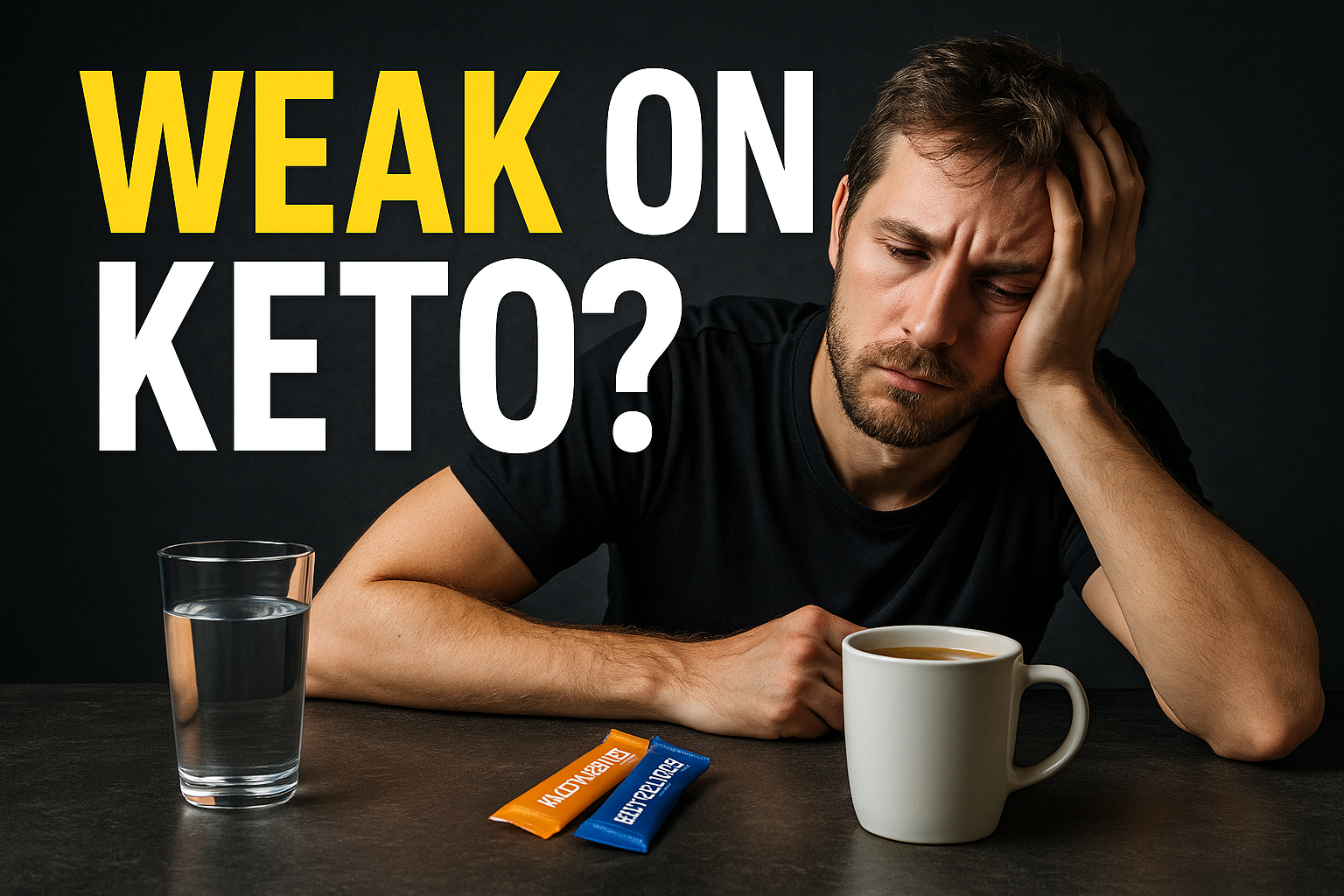
You cut carbs, the scale moves a little, and then suddenly you feel drained, shaky, foggy, or just plain off. If you feel weak on keto, sodium is usually the first thing to check.
This is not always a carb problem. A lot of the time, it is a sodium problem you created by cutting carbs fast and never replacing what your body started flushing out.
It can feel ridiculous at first. You stop eating bread and sugar, drink more water, and think you are being disciplined. Then you stand up, feel wobbly, and wonder why keto suddenly feels harder instead of better.
Here’s the simple version: when insulin drops, your kidneys dump more sodium and water. That means feel weak on keto is often your body’s way of telling you your setup is bad, not that keto itself is broken.
Why you feel weak on keto more than most beginners realize
When people start keto, they usually focus on carbs, fat, and maybe protein. Sodium barely crosses their mind.
That is a mistake. Sodium helps regulate fluid balance, blood pressure, and nerve and muscle function. When levels drop too fast, you can feel tired, lightheaded, weak, headachy, and mentally slow.
This is why so many “keto flu” complaints are really about electrolyte loss, especially sodium loss. If you want the bigger picture, read Keto Flu Explained (What It Is and How to Fix It Fast).
Start here:
1. You cut carbs fast, but you did not replace what your body lost
This is the most common reason people feel weak on keto. You slash bread, rice, soda, and snacks, your insulin drops, and your body starts releasing stored water. Sodium goes out with it.
In real life, this looks like someone who was eating a normal high-carb diet on Monday and then goes near-zero carb by Tuesday. By Wednesday or Thursday, they feel flat, tired, and weirdly fragile.
The common mistake is assuming that because keto is working, feeling weak is just part of the deal. It is not some badge of honor. If your plan makes you feel awful for no good reason, the plan is sloppy.
The fix is simple: stop treating sodium like an afterthought. Salt your food more deliberately. Drink fluids, but do not chug plain water all day while ignoring electrolytes. If you want a backup option for busy days, a simple sugar-free electrolyte powder can help fill the gap fast.
2. You are drinking more water and flushing yourself out even faster
A lot of people start keto and suddenly become obsessed with hydration. That sounds healthy, but it can backfire when all that extra water is not balanced with enough sodium.
You drink bottle after bottle because you heard keto makes you dehydrated. Then you feel weaker, not better. That is not always because you need even more water. Sometimes it is because you diluted an already low-sodium situation.
This is where people get stuck in a dumb loop: tired, so they drink more water; more washed out, so they drink even more water. Then they blame keto.
This is not a motivation problem. It is a setup problem.
The fix is to pair hydration with sodium instead of treating plain water as the entire answer. A salty meal, broth, or an electrolyte drink makes more sense than endless plain water when weakness, headaches, and dizziness show up together. If dizziness is part of the picture, this guide on why you’re dizzy on keto when your carbs are already low covers the pattern in more detail.
3. Your meals are “clean,” but they are too low in sodium to support the switch
Some people accidentally make keto harder by trying to eat ultra-clean at the same time. They cut carbs, avoid processed foods, skip sauces, skip broth, skip salty convenience foods, and end up with plain eggs, chicken, and vegetables that do not bring much sodium with them.
On paper, those meals look disciplined. In real life, they can leave you dragging through the day.
A common example is someone eating eggs with no extra salt for breakfast, grilled chicken salad for lunch, and a plain piece of salmon with broccoli for dinner. Nothing there is “bad,” but the whole day can still be too low in sodium once keto starts increasing losses.
The mistake is thinking weakness means you need more fat bombs, more coffee, or more willpower. Usually, you need a better meal setup.
The fix is not to turn every meal into junk. It is to build in sodium on purpose. Salt your eggs. Use broth. Season meat properly. Include salty foods that actually help you stay on track. Keto works better when your meals support your body instead of quietly draining it.
4. You are calling it “low energy” when it is really low sodium
People label this problem the wrong way all the time. They say they have no energy, no motivation, or no adaptation yet. Sometimes that is true. A lot of the time, though, they just feel weak on keto because sodium dropped and nobody told them that could happen.
The real-life version is someone who feels okay sitting down but rough when standing, walking, shopping, or trying to work out. They may get headaches. They may feel mentally dull. They may feel tired even after sleeping.
Then they make the wrong fix. They add more caffeine. They force a workout. They cut carbs even lower. They white-knuckle through it.
That usually makes the problem worse.
The better move is to look at the timing. Did this start soon after cutting carbs hard? Did it show up with headaches, dizziness, or fatigue? If yes, sodium should be near the top of your list. That is also why this article pairs well with Why You’re Tired on Keto Even After the First Week, because a lot of “mystery keto fatigue” is not mysterious at all.
5. You keep trying random fixes instead of solving the main problem fast
Once weakness hits, beginners start throwing nonsense at it. More MCT oil. Less food. More fasting. More supplements they do not understand. A harder workout to “push through.”
None of that is smart if sodium is the thing you ignored.
Here is the blunt truth: if you cut carbs quickly and never replace sodium, keto can feel way harder than it needs to. Not because the diet failed. Because your execution did.
The fix is to simplify. Start with sodium, fluids, and meal structure before adding extra complexity. If you want a backup tool for days when meals are rushed or you are dealing with headaches and weakness, an electrolyte mix can be useful. Just do not treat a product like magic. The main goal is still fixing the actual sodium gap.
Common mistakes that keep this problem going
- Drinking tons of plain water without adding sodium back
- Cutting carbs fast while also trying to eat ultra-low sodium
- Thinking weakness is something you just have to “push through”
- Using coffee to cover up dizziness, fatigue, or shakiness
- Trying fasting or harder workouts before basic electrolyte support is handled
If you feel weak on keto, do not overcomplicate it first. Check the obvious thing first.
Related:
How to tell if sodium is probably the issue
You do not need to turn this into a science project. If the weakness started soon after cutting carbs, especially along with headaches, dizziness, fatigue, or that washed-out feeling, sodium is a very reasonable suspect.
If a salty meal, broth, or electrolyte drink helps you feel better fairly quickly, that is another clue. It does not mean every problem on keto is sodium, but it does mean this is one of the first fixes worth trying.
If symptoms are severe, unusual, or keep happening no matter what you do, get medical advice. But for the average beginner who suddenly feels rough after cutting carbs hard, sodium is usually the boring answer that solves the drama.
Fix this first:
- Salt your meals on purpose for the next few days instead of leaving sodium to chance.
- Stop pounding plain water all day if you are also feeling weak, dizzy, or headachy.
- Use broth, salty whole foods, or an electrolyte drink as a practical short-term fix.
- Watch whether the weakness started right after a fast carb drop, because that pattern matters.
🔎 If this helped, here are more no-BS keto guides worth reading next:
- Keto Flu Explained: What It Is and How to Fix It Fast
- Why You’re Dizzy on Keto When Your Carbs Are Already Low
- Why You’re Tired on Keto Even After the First Week
Explore more Keto Problems & Side Effects stories here: