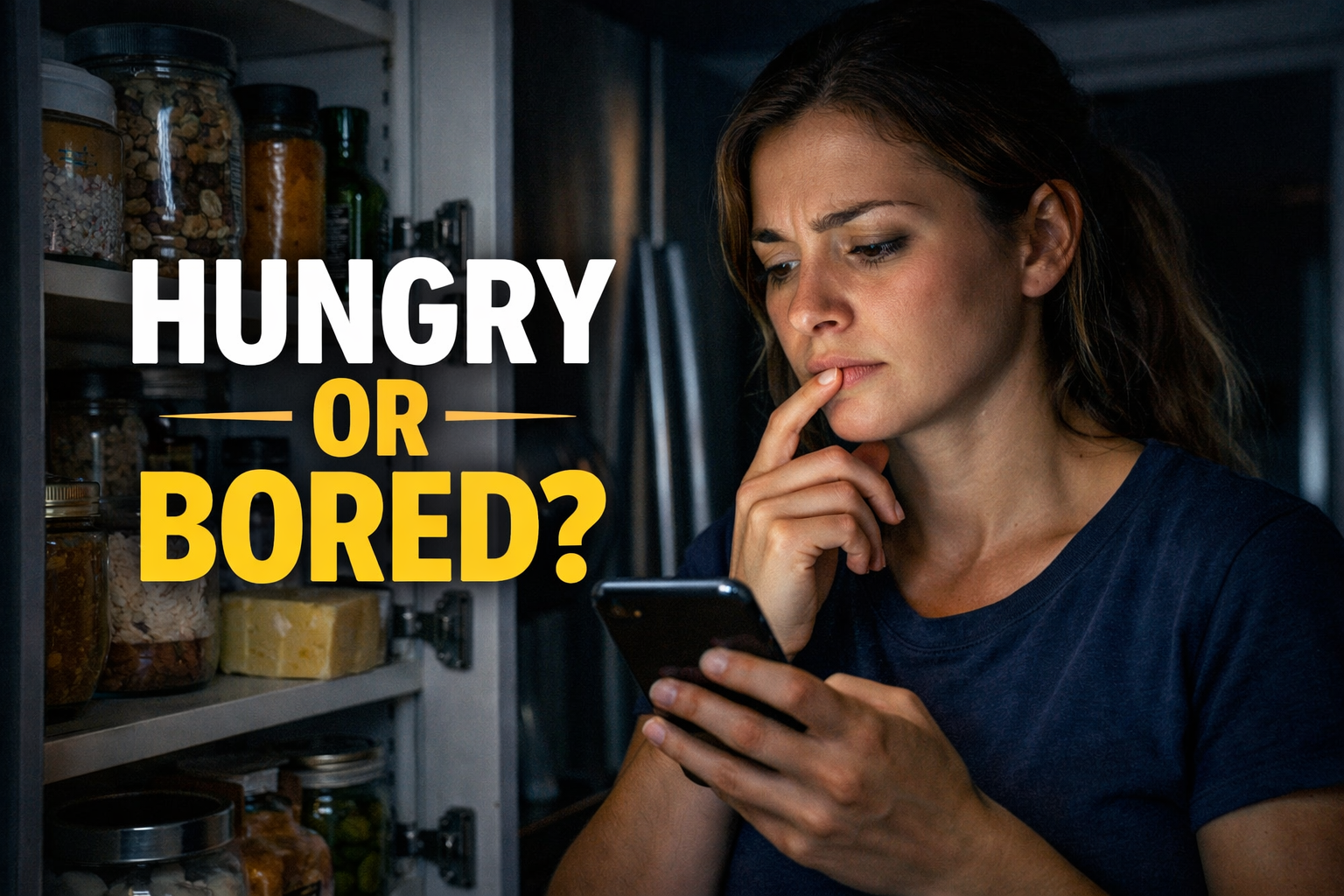
You keep thinking about food, so you assume you must be hungry.
If you keep feeling hungry on keto even when the real problem is boredom or a trigger, the issue is not always low carbs, bad ketosis, or some missing magic food. A lot of the time, it is boredom, stress, habit, or an emotional cue wearing a hunger costume.
You know that weird moment when you open the fridge, stare for ten seconds, close it, and still feel unsatisfied? That is usually not your body asking for steak and eggs. That is food noise.
Real hunger is simple. It builds, it makes a real meal sound good, and it calms down when you eat. Trigger hunger is different. It is louder, pickier, and usually shows up when your brain wants a break more than your body wants fuel.
Why hungry on keto can really mean boredom or triggers
Keto can lower cravings for a lot of people, but it does not erase every old eating pattern overnight.
If food has been your break, your reward, your distraction, or your stress valve for years, your brain can still send you toward the kitchen even when your stomach is not asking for anything. That is why someone can eat a decent meal, feel physically fine, and still go looking for nuts, cheese, or a keto treat an hour later.
The hard part is that boredom and triggers do not feel fake in the moment. They feel urgent. That is why people keep saying they are hungry when what they really mean is restless, overstimulated, lonely, annoyed, or mentally fried.
This is not a hunger problem first. It is a cue problem first.
Start here:
1. You are reacting to food cues, not body hunger
This is the most common reason the urge keeps showing up.
Your brain learns patterns fast. TV means snacks. Working means coffee and bites. Driving means something salty. Stress means the fridge. Nighttime means a “little something.” Keto does not magically delete those loops just because your carbs dropped.
Real life looks like this: you finish dinner, sit on the couch, and within twenty minutes you start thinking about cheese crisps, peanut butter, leftovers, or a keto dessert. If someone offered you plain chicken breast right then, it would sound boring. That is the giveaway. You are not really hungry. You want a familiar cue to fire.
The mistake is treating every urge like a nutrition emergency. It is not. Sometimes it is just your environment pressing an old button.
The fix is to test the urge before you feed it. Ask one blunt question: “Would I eat a real meal right now?” If the answer is no and only snacky, crunchy, or comforting foods sound good, slow down. Change rooms. Drink water. Take a short walk. Break the cue before it turns into automatic eating.
If food thoughts are already running your day, “Keto Treat” Foods That Quietly Keep Your Cravings Alive connects directly to this problem. A lot of “safe” keto treats keep the cue alive instead of calming it down.
2. Boredom makes your brain ask for stimulation and calls it hunger
Boredom eating is not about a lack of discipline. It is about your brain wanting something to do.
Food works well for that because it is easy, immediate, and rewarding. It gives your hands something to do, your mouth something to do, and your brain a quick hit of novelty. That can feel a lot like hunger when you are used to filling empty time with food.
Real life example: it is mid-afternoon, work is dragging, and you start thinking about a snack even though lunch was solid. Or it is 9 PM, you are scrolling your phone, and suddenly the kitchen starts sounding interesting. Not because your body needs dinner part two. Because your brain is under-stimulated and looking for relief.
The mistake is assuming that because the urge is real, the hunger must be real too.
The fix is to answer boredom with a different kind of input. Stand up. Reset your space. Go outside for five minutes. Put your phone down and do one annoying task you have been avoiding. Most boredom hunger fades when the boredom gets interrupted. Real hunger usually does not.
This is also why random snacking gets so messy. If your default answer to boredom is always food, the pattern gets stronger every day.
3. Stress, irritation, and emotional triggers make food feel like relief
This one hits hard because it feels justified.
You have a rough conversation, a chaotic day, or one of those evenings where everything feels loud and annoying. Suddenly the kitchen starts calling your name. That is not your body asking for fuel. That is your nervous system asking for a reward or a shutdown switch.
Real life example: dinner was fine, but after a stressful email or argument you start roaming for nuts, jerky, cheese, leftovers, or anything that feels comforting. You are not trying to build a meal. You are trying to change your state.
The common mistake is acting like this is a food choice. Most of the time it is an emotion-management choice.
You are not hungry there. You are trying to sedate the moment.
The fix is to catch the trigger earlier and name it directly. Say what is actually happening: “I am stressed,” “I am annoyed,” “I want a reward,” or “I want out of this feeling.” That sounds small, but it matters. Once the trigger is named, you can solve the real problem instead of pretending cheese or keto bars are therapy.
If cravings hit hardest after stress, Why You’re Craving Sugar on Keto (And What That Usually Means) is worth reading too. The same trigger pattern often shows up with sweet cravings, not just snack urges.
4. Your day trained you to graze, so your brain never fully leaves eating mode
Sometimes the issue is not boredom or emotion by itself. It is the way the day is built.
If you are constantly nibbling, drinking calories, eating “just a little,” or using keto snacks as filler, your brain stays in food mode all day. That makes it much harder to tell when you are truly hungry versus just hearing more food noise.
Real life version: coffee with extras in the morning, a few nuts before lunch, lunch at your desk, half a protein bar later, a couple bites while cooking dinner, then more snacking at night. None of it looks dramatic, but your body never really gets clear start-and-stop signals.
The mistake is thinking small low-carb bites do not count because they are technically keto.
The fix is to create cleaner meal boundaries. Eat a real meal. Finish it. Then stop grazing. Let your body actually experience time between eating moments. That makes real hunger easier to recognize and fake hunger easier to spot.
If this sounds familiar, Why You’re Always Hungry on Keto (And What to Fix First) helps separate real under-fueling from constant snack-mode eating.
5. Some “keto” foods keep your appetite and reward loop switched on
This part matters because a lot of people think the problem is purely emotional when the food itself is also making things worse.
Keto treats, crunchy snacks, bars, and hyper-palatable low-carb products can keep your brain expecting little hits all day. Even when carbs are lower, the pattern stays the same: chase something tasty, get a short reward, want another one later.
Real life example: you are not planning to eat much, but once you open the cheese crisps, keto candy, nuts, or snack bars, your brain keeps circling for more. Then you say you must still be hungry. Usually you are not. You are activated.
The common mistake is assuming a keto version of snack food will calm appetite just because it fits your macros.
The fix is to be more suspicious of foods that make you want more food. If a product makes your day noisier, it is not helping enough, even if it is technically low carb. A food that keeps the reward loop revved up is often a setup problem, not a solution.
How to tell real hunger from bored or triggered hunger
You do not need a perfect psychology session every time. You just need a few clean tests.
- Real hunger builds steadily. Trigger hunger often hits fast and feels specific.
- Real hunger makes a proper meal sound good. Trigger hunger usually wants something crunchy, sweet, salty, or soothing.
- Real hunger can wait a little while. Trigger hunger acts like it needs action now.
- Real hunger ends when you eat enough. Trigger hunger often stays noisy even after food.
- Real hunger is physical. Trigger hunger is usually tied to a mood, place, time, or habit loop.
The more often you run those tests, the faster you stop confusing every urge with a food problem.
Common mistakes that keep this problem alive
First, people keep answering boredom with snacks, which teaches the brain that boredom means food.
Second, they keep “treating themselves” after stress and act surprised when the trigger gets stronger.
Third, they stock too many keto snack foods and then wonder why food stays on their mind all day.
Fourth, they never pause long enough to ask whether a real meal actually sounds good.
Fifth, they call every food urge hunger, which keeps them solving the wrong problem over and over.
Related:
What actually helps when the urge hits
Use a short pattern interrupt before you eat.
- Wait ten minutes and move away from the kitchen.
- Drink water or tea.
- Ask whether steak, eggs, chicken, or leftovers sound good.
- Name the trigger out loud: bored, stressed, irritated, lonely, tired, avoiding work.
- If you are truly hungry, eat a real meal or mini-meal with protein.
The goal is not to white-knuckle everything. The goal is to stop confusing every cue with a body signal.
Once you get that difference, keto usually feels a lot calmer. Food stops acting like background entertainment and starts acting like food again.
Fix this first:
- Before you eat between meals, ask whether a real protein-based meal sounds good. If not, the urge is probably boredom or a trigger.
- Break one repeat food cue this week on purpose, especially the nighttime or scrolling-related one.
- Stop stocking multiple keto treat and snack foods if they keep your brain in reward mode all day.
- Use a 10-minute pause when stress or boredom sends you toward the kitchen.
- Make your meals more defined so you can tell the difference between real hunger and constant food noise.
If you keep thinking you are hungry on keto when you are really just bored or triggered, stop trying to fix every urge with food.
Most of the time, the real problem is not your carbs. It is that old cues, emotions, and snack patterns are still running the show.
If this helped, read these next:
- Why Keto Feels Impossible After One Bad Weekend (And How to Recover Fast)
- Why You’re Tired on Keto Even After the First Week
- Why Keto Feels Impossible at Social Events and What to Do Instead
Explore more Keto Problems & Side Effects here: