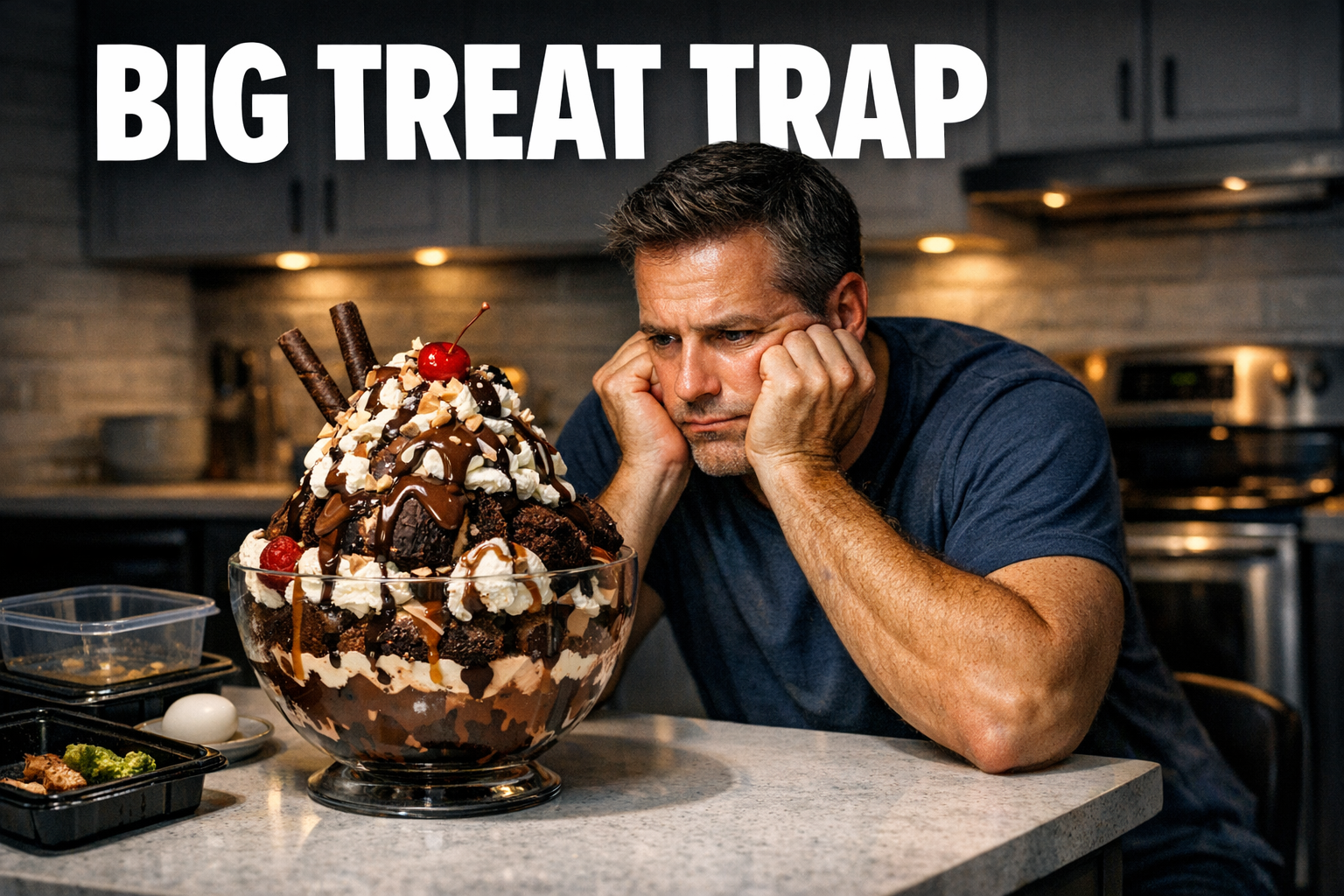
You stay low carb most of the day, then try to cash it all in on one dessert, one “cheat” snack, or one big low-carb treat at night. If saving carbs for one big treat has become part of your keto routine, that can be a real reason weight loss slows down.
That is not because one planned treat always ruins ketosis forever. It is because this habit usually keeps cravings alive, portions sloppy, and the rest of your day built around waiting for a reward instead of eating in a way that actually works.
You know that moment where you tell yourself you were “good” all day, so tonight you can finally have the keto ice cream, the cookies, or the extra low-carb wrap meal? That is the trap.
A lot of people think this is smart keto math. Keep breakfast light. Keep lunch clean. Be strict all day. Then spend the carbs later on something fun.
Sounds controlled. Usually it is not.
The problem is that keto works best when your appetite gets quieter and your meals get simpler. Saving your carbs for one big treat often does the opposite. It keeps your brain focused on the payoff that is coming later, which makes the whole day feel like a countdown.
This is not a carb-budget problem. It is a craving-budget problem.
If your overall keto setup already feels shaky, read Why You’re Not Losing Weight on Keto (And How to Fix It). This article drills into one very specific habit that quietly makes that bigger problem worse.
Why saving carbs for one big treat backfires on keto
On paper, you might still stay “within your carbs.” But real life is messier than paper.
Big treat thinking changes how you eat before the treat, how hungry you are when the treat shows up, and how likely you are to stop once you start. It also keeps the emotional reward system of old dieting alive: be strict now, get something exciting later.
That sounds disciplined, but it often turns keto into a daily tug-of-war. Instead of food getting quieter, food stays center stage all day.
Start here:
1. You spend the whole day waiting for the reward
This is one of the biggest reasons the habit goes bad fast.
When you save carbs for one big treat, the treat does not stay a small part of the day. It becomes the point of the day. That keeps your attention locked on food even when you are technically staying on plan.
Real life example: breakfast is eggs, lunch is a salad with some protein, and all afternoon you keep thinking about the keto brownies or pint of low-carb ice cream waiting in the freezer. You are not just eating. You are holding out for the payoff.
The mistake is thinking anticipation is harmless because you have not eaten the treat yet. But anticipation changes behavior. It makes normal meals feel less satisfying because they are not the thing you really want.
The fix is to stop making food more exciting later than it is earlier. Keto gets easier when meals are built to settle you down, not when the whole day is a runway for dessert.
2. You usually under-eat earlier, then hit the treat too hungry
A lot of people do not just save carbs. They also save calories, portions, or satisfaction so they can “make room.”
That is where the wheels come off.
If breakfast is tiny and lunch is weak because you are trying to leave room for something later, by evening you are not making calm decisions anymore. You are hungry, tired, and ready for relief. That makes one planned treat much harder to keep small.
Real life looks like coffee in the morning, a light lunch, maybe a few bites of something in the afternoon, and then a big low-carb dessert after dinner that somehow turns into more snacks after that. People blame the dessert. The real setup started hours earlier.
The mistake is acting like the evening was the only issue. It was not. A weak first half of the day made the second half sloppy.
The fix is to make your daytime meals strong enough that you are not walking into the evening like a starved person with a permission slip. If weak meals keep causing rebounds, The Easy Keto Lunch Mistakes That Wreck the Rest of Your Day connects directly to this problem.
3. The treat keeps your sweet-or-reward loop alive
This is the part people hate hearing, but it matters.
Some people do fine with occasional treats. A lot of people who are struggling on keto do not. They say they want fewer cravings, but they still train their brain every day to expect a big rewarding food event later on.
That makes it harder for cravings to calm down. Even if the product is technically low carb, the pattern can still feel exactly like the old cycle: be good, earn treat, start over tomorrow.
Real life example: dinner ends, and now your brain expects the nightly “safe” dessert. Maybe it is keto ice cream. Maybe it is a low-carb cookie, bar, or sweet snack. If it is missing, you feel deprived. That is a clue. The food is not acting like a neutral extra anymore. It is acting like a ritual.
The mistake is judging a treat only by carbs. The better question is whether it makes the next day quieter or louder.
The fix is to pay attention to what the treat does after you eat it. If it keeps you wanting more sweet stuff, more “little” exceptions, or more food drama tomorrow, it is costing more than it looks. If that pattern sounds familiar, read Sugar Cravings on Keto: What They Usually Mean.
4. “Technically within carbs” still turns portions into a mess
This is where a lot of weight-loss stalls happen.
People assume that if the big treat fits the carb budget, the rest does not matter much. But those treat foods are often easy to overeat, easy to justify, and easy to stack with other food. A planned bowl of keto ice cream turns into ice cream plus peanut butter plus whipped cream. A low-carb dessert turns into dessert plus some nuts plus a few bites of something else because the floodgates are already open.
Real life example: you tell yourself you saved enough carbs for one keto dessert after dinner. Then dinner runs light, the dessert is bigger than planned, and because you already “spent the carbs,” you stop paying attention to everything else. By the end of the night, the issue is not just carbs. It is that the whole eating window got loose.
The mistake is trusting a highly tempting food to behave like a measured nutrition tool. It usually does not.
The fix is to stop hiding behind the phrase “it fits my carbs” if results say otherwise. A food can fit on paper and still wreck your appetite control in real life. Weight loss does not care that the excuse sounded organized.
5. It trains you to use keto like a loophole instead of a system
This is the deeper issue underneath all of it.
Keto usually works better when meals are boring enough to be repeatable and satisfying enough to stop the mental chase. Saving carbs for one big treat keeps you in loophole mode. You are still asking, “How much fun food can I squeeze in?” instead of, “What makes this way of eating easier?”
That mindset pushes people toward bars, desserts, low-carb bakery foods, and nightly bargaining instead of simple meals that actually calm things down.
Real life example: someone says keto is not working, but most days are built around finding room for wraps, sweets, treats, or snacks that feel close to the old way of eating. The carbs may be lower. The food drama is not.
The mistake is thinking keto succeeds when it looks as normal and indulgent as possible. For a lot of struggling beginners, keto works better when it is simpler than that.
The fix is to use keto as a structure, not a loophole hunt. Eat meals that solve hunger. Build days that do not need a nightly prize. If “small exceptions” already keep blurring the line, Why Keto Stops Working When You Start “Cheating Just a Little” is the next thing to read.
When a treat is probably a problem, not just a treat
You do not need a dramatic rule for every person forever. But you do need honesty.
Your one big treat is probably hurting more than helping if:
- you think about it most of the day
- you eat lighter earlier just to make room for it
- one serving rarely stays one serving
- it makes you want more snacky or sweet food later
- your weight loss has stalled and this habit keeps showing up anyway
If two or three of those are true, the issue is probably not mystery metabolism. The issue is the pattern.
Common mistakes people make with the “save carbs for later” idea
First, they act like carbs are the only thing that matters, while appetite and overeating get ignored.
Second, they under-eat protein and real meals earlier in the day so they can “earn” something later.
Third, they use low-carb treats as a nightly reward and then wonder why cravings never calm down.
Fourth, they excuse portion creep because the food was technically keto.
Fifth, they keep calling the habit flexible when it is really just old treat behavior wearing a keto label.
Related:
What works better instead
Build meals that make later food less dramatic.
That means enough protein, enough actual food volume, and fewer engineered “reward” moments. If you want something sweet once in a while and it truly stays occasional, fine. But if weight loss has slowed down and you are doing this most days, the experiment is already done.
The habit is not helping.
Fix this first:
- Stop saving carbs for a nightly treat for the next 7 days and watch what happens to cravings and portions.
- Make breakfast and lunch more solid so evening decisions are not being made from hunger and anticipation.
- Pay attention to whether your “treat” makes the next few hours calmer or messier. That tells you more than the label does.
- Drop any low-carb dessert or snack that turns into a ritual you feel weird without.
- Use keto to make food quieter, not to build a better excuse for chasing rewards.
If keto weight loss slows down when you keep saving carbs for one big treat, stop treating that like harmless strategy. For a lot of people, it is just old diet-reward behavior with better branding.
And once you see that clearly, the fix gets a lot simpler.
If this helped, read these next:
- Why You’re Not Losing Weight on Keto (And How to Fix It)
- Why Keto Stops Working When You Start “Cheating Just a Little”
- Keto Mistakes That Stop Weight Loss
Explore more Keto That Actually Works here: