You cut carbs, bought the sugar-free stuff, and expected keto to feel easier.
Instead, you are bloated, snacky, and still thinking about sweet food all day.
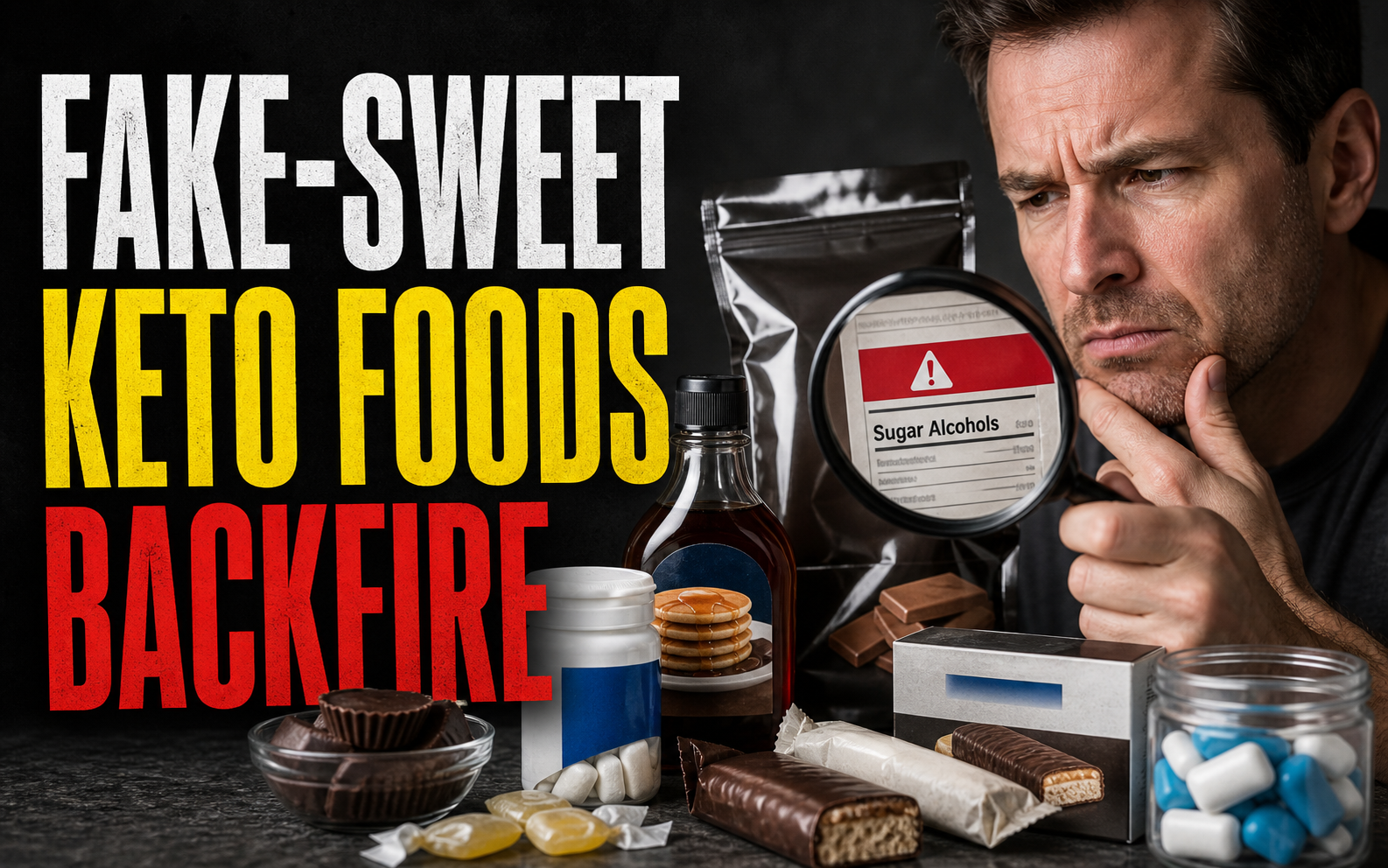
Here is the truth. A lot of fake-sweet keto foods are technically low carb but still terrible at helping you feel done eating. This is the hub for sorting out what is actually going wrong and which post to read next.
Why this keeps backfiring
Most people think the only question is whether a product fits their carb limit. That is too simple.
Bars, candy, syrups, gum, cough drops, and other sugar-free extras can all stay inside the rules on paper while still making keto feel harder in real life. They can upset your stomach, keep your sweet tooth switched on, blur the line between a meal and a treat, and turn low-net-carb labels into an excuse to keep grazing.
If you already know fake-sweet keto foods are a problem, start with
the trap map for sugar-free keto foods that still keep cravings running. If your main issue is stomach problems, go straight to
why sugar alcohols on keto can leave you bloated, hungry, and still snacking.
Problem 1: You are treating fake-sweet foods like neutral swaps
This is where a lot of people get fooled. They swap sugar for erythritol, maltitol, xylitol, or a sweet syrup and assume the problem is solved.
But your body does not always experience that as a clean swap. Some sugar alcohols hit your stomach hard. Some leave you hungry again fast. Some products are low in net carbs but still act like dessert, which means they keep the appetite loop alive.
In real life, that looks like this: you eat a low-carb candy, then you want another one. Or you drink a syrup-heavy coffee that is technically allowed, then you spend the rest of the afternoon wanting something sweet. The label says keto. Your appetite says otherwise.
The common mistake is asking only, “Can I fit this in?” The better question is, “What happens after I eat it?” If the answer is bloating, more snacking, or nonstop food thoughts, it is not helping.
Read
this sugar alcohol breakdown if your main problem is bloating, bathroom issues, or hunger rebound after sugar-free treats.
Problem 2: Dessert-texture foods keep teaching your brain to expect more
Keto gets messy when every “fix” still feels like dessert.
That includes bars, cookies, shakes, ice cream, and candy-style products that are sold as tools but behave like rewards. Even when the carb count looks decent, they often keep the sweet-food habit alive. You do not feel fed. You feel teased.
A lot of readers are not overeating because they are weak. They are overeating because they built a low-carb version of a high-reward food routine. A sweet bar after lunch, a keto dessert after dinner, a little candy in the car, then gum to keep the flavor going. Nothing looks huge by itself. Together, it becomes an all-day appetite problem.
This is also why some people say keto works until night. They kept sweet taste in the picture all day, so the brain never fully got the message that the eating window is over.
If this sounds familiar, go to
the guide to keto convenience food traps. It is the better next step when the real issue is not one ingredient but a whole pattern of fake-meal foods.
Problem 3: Low-net-carb logic makes it easy to ignore what the food is actually doing
This is where keto turns into label math instead of problem solving.
A product says low net carbs, high fiber, or sugar free, so you assume it belongs in the plan. Then the serving size gets weird, portions drift, and you end up eating a pile of foods that are technically compliant but still leave you unsatisfied.
A common version is the “I stayed keto” day that still feels terrible. You had a bar, a sweetened yogurt, a wrap, and a drink with sugar-free syrup. None of them looked that bad. But you were hungry all day, and by night you were hunting for more food.
The mistake is thinking low net carbs automatically means low risk. It does not. Some foods are a carb problem. Others are a hunger problem. Others are a cravings problem. Some are all three.
Read
the net carb trap map when the labels look clean but your results keep getting worse.
Problem 4: Sweet drinks and coffee orders slide past fullness fast
Drinks deserve their own category because they cause problems differently.
A sugar-free coffee, flavored energy drink, or creamy keto drink can feel small. But if it is sweet, easy to sip, and not very filling, it can keep appetite hanging open instead of shutting it down. That matters even more when the drink replaces a real meal or gets stacked on top of weak food.
Here is a real-life example. Someone skips breakfast, grabs a coffee loaded with sugar-free syrup and cream, then wonders why they are shaky, hungry, and thinking about food by late morning. The drink was not enough to count as a solid meal, but it was enough to keep sweet taste driving the bus.
The common mistake is treating these drinks like harmless helpers. For a lot of people, they are not harmless. They are liquid dessert with better marketing.
If your cravings get louder after cafe drinks or flavored convenience drinks, read
why sugar-free coffee shop orders keep hunger and sweet cravings running.
Problem 5: The tiny sugar-free extras still add up
Not every fake-sweet food problem comes from bars and desserts. Sometimes the issue is the small stuff you barely count.
Gum after lunch. A few mints in the car. Sugar-free cough drops when you are sick. Breath-freshening habits that quietly become flavor habits. None of that sounds dramatic, which is exactly why people miss it.
The real problem is repetition. A sweet taste repeated all day can keep the brain waiting for the next hit. It can also keep you from noticing that your actual meals are too weak, because you are constantly patching the day with little sweet fixes.
That is why this cluster matters. The point is not moral panic about gum. The point is seeing the whole system. If you are using fake-sweet mini products all day, they can keep the exact same loop running that you were trying to escape.
If you want one specific example, read
how sugar-free cough drops can keep cravings running longer than you think.
Common mistakes that keep this cluster confusing
The first mistake is treating every sugar-free product like the same problem. They are not the same. One product may wreck your stomach. Another may keep cravings alive. Another may just be an easy way to under-eat real food and then over-snack later.
The second mistake is trying to solve hunger with products that were built to feel like treats. If you are truly hungry, a candy-style bar is usually a weak fix. Real protein and a real meal structure do more work.
The third mistake is defending foods because they are “allowed.” Allowed is not the goal. Working is the goal.
The fourth mistake is reading one label and ignoring the rest of the day. This stuff stacks. A syrup in the morning, gum in the afternoon, a low-net-carb snack after work, and a sugar-free dessert at night can create a very different day than any one item would suggest.
How to use this hub without getting overwhelmed
If your main issue is stomach blowback, start with sugar alcohols.
If your main issue is sweet cravings that never fully calm down, start with the sugar-free trap map.
If your main issue is drink-based appetite drift, start with the coffee shop order post.
If your main issue is low-net-carb packaging that keeps fooling you, start with the net carb trap map.
If your main issue is that your whole keto day now depends on bars, shakes, wraps, and desserts, start with the convenience-food traps guide.
This hub is here to help you pick the right lane fast instead of reading ten overlapping posts with no plan.
What usually fixes this fastest
The fastest fix is not hunting for a cleaner candy. It is rebuilding more of the day around boring food that actually works.
That means meals with enough protein, fewer dessert-texture backups, and fewer fake-sweet products floating around between meals. Some people can handle a few of these foods fine. Some cannot. The answer comes from results, not wishful thinking.
If keto feels harder every time sugar-free products become a bigger part of the plan, believe that signal. Your issue may not be carbs alone. It may be the fake-sweet food system itself.
Fix this first:
- Pick the one fake-sweet product type causing the biggest problem right now: bars, candy, syrups, gum, or cough drops.
- Remove that one category for a few days and replace it with a real-food fallback that actually fills you up.
- Notice what changes first: bloating, hunger, sweet cravings, night snacking, or random food thoughts.
- If labels keep fooling you, use the net carb and convenience-food posts next instead of guessing.
If this helped, read these next:
Explore more Keto Lies & Myths stories here:
View all Keto Lies & Myths stories
Post Views Today: 268