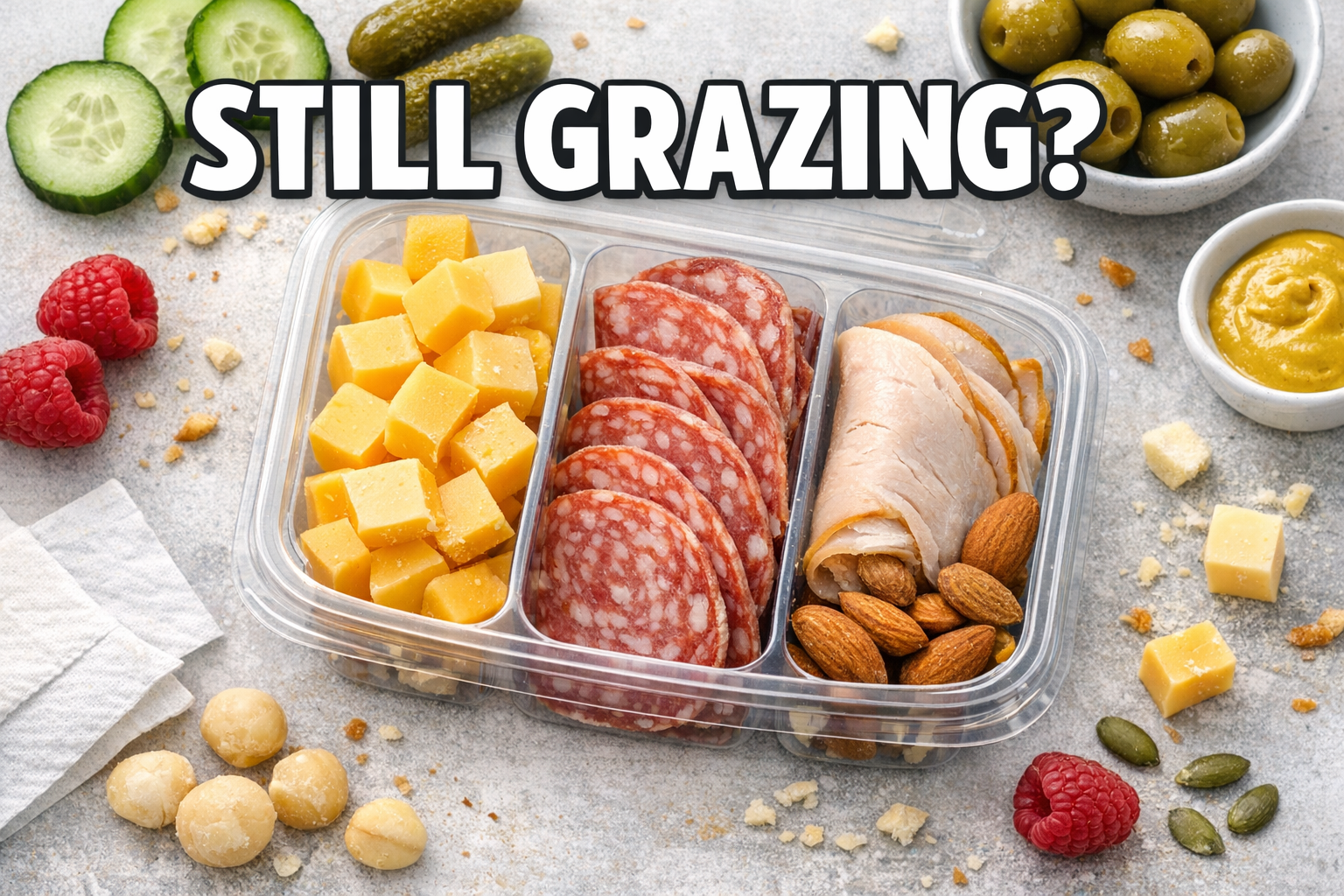
If keto snack packs keep turning into an all-day grazing habit, the problem usually is not carbs. It is that these little meat-and-cheese packs look like a smart protein fix, but they still behave like snack food.
That is why people buy them at Costco, grab them at the gas station, throw them in a work bag, and then wonder why they are still picking at food two hours later.
You have probably had one of those days where you eat a “safe” snack pack at your desk, feel weirdly unsatisfied, and then start circling the fridge again by late afternoon.
Here is the reality check: a low-carb label does not magically turn convenience food into a real meal. A pack with some deli meat, a few cheese cubes, and maybe a handful of nuts can be keto on paper while still keeping you stuck in snack mode.
The biggest issue is not that these foods are evil. It is that they train you to think tiny, pieced-together bites count as meal structure. That works for maybe an hour. Then hunger shows back up, portions creep, and the whole day gets sloppier.
Why keto snack packs still keep hunger running
Most meat-and-cheese snack packs fail for the same reason a lot of packaged keto foods fail: they look high protein, but they do not fully solve hunger. They are convenient, portable, and easy to justify. That makes them dangerous in a very boring way.
If you already rely on crunchy protein snacks, read Why “Keto Friendly” Protein Puffs, Crisps, and Crunchy Snack Bags Still Keep Hunger Running. It is the same fake-fullness pattern in a different package.
With snack packs, the trap is even sneakier because they look more like real food. Meat. Cheese. Sometimes nuts. Maybe olives. That feels responsible. But if the portion is tiny, the protein is weak, and you keep eating other small things around it, you are still building a snack day instead of a meal day.
1. They look like protein, but the amount is usually too small
This is where most people get fooled. The front of the pack says protein, so your brain files it under “good keto choice.” But a few slices of meat and some cheese cubes are often just enough food to quiet you down, not enough to actually finish the job.
Real life version: you grab one at the gas station because you do not want chips. Or you eat one at your desk because lunch got delayed. It feels better than grabbing candy, but by 3 PM you are staring at nuts, jerky, or whatever else is around.
The common mistake is treating a bridge snack like a meal replacement. Then you blame yourself for having no willpower later.
The fix is simple: stop asking a tiny package to do a full meal’s job. If you are truly replacing lunch, you need more than a couple bites of protein and fat. A better pattern is a real meal with a clear stopping point. If this whole problem sounds familiar, Keto Protein Fix Map breaks down how to build meals that actually end hunger instead of teasing it.
2. They keep you in snack logic instead of meal logic
Snack packs are built to be picked at. Open. Nibble. Close. Reopen. That matters more than people think.
When food comes in a form that feels casual, your brain rarely treats it like a real eating event. That makes it easier to pair the pack with “just a few” almonds, a cheese crisp bag, another coffee, or half of someone else’s leftovers later.
This is why adult lunchables can backfire. They look organized, but they still feel like finger food. They do not create the same sense of meal completion that comes from sitting down, eating enough protein, and being done.
A Costco grab, a desk lunch, or a soccer-practice pickup stop can all turn into the same pattern: one snack pack now, one more thing later, and dinner arrives with you already half-fed but still hungry. That half-fed state is one of the fastest ways to drift into all-day grazing.
The fix is to use convenience food as backup, not as your whole system. If you need food away from home, think in terms of “What finishes this meal?” not “What is the safest thing in the cooler case?” That same mistake shows up in Why High Protein Keto Still Fails When Every Meal Is Basically Snack Food.
3. Cheese-heavy packs make it easy to overeat without feeling satisfied
Cheese is one of the most obvious keto foods, but it is also one of the easiest foods to keep eating past the point where it is helping.
In a snack pack, cheese adds convenience and makes the pack feel rich enough to count as food. But cheese is also easy to nibble fast, easy to pair with more snack food, and easy to treat as unlimited because it looks low carb. That is how one snack pack quietly turns into cheese crisps, nuts, deli meat, and “just one more thing” later.
Late-afternoon fridge grazing is the perfect example. You start with a meat-and-cheese pack because it feels like a disciplined choice. Then you add a few slices of turkey, grab a couple pickles, maybe some more cheese, and now you have built a messy snack chain instead of a clean meal.
The common mistake is assuming fat and dairy automatically mean fullness. Sometimes they do. A lot of times they just mean food keeps going down easily.
The fix is to stop using cheese as the main structure. Use it as an extra, not the whole plan. If cheese and nuts already tend to turn into accidental overeating for you, read Why “Just a Handful” of Nuts and Cheese Can Stall Keto Weight Loss.
4. Convenience packs hide weak meal planning
A lot of people think the problem is the snack pack itself. Usually the bigger problem is the routine behind it.
If gas station stops, desk lunches, Costco convenience food, or practice-night pickups keep becoming your main food plan, then the snack pack is not the cause. It is just the emergency patch showing you the system is weak.
That matters because you can keep upgrading the snack pack forever and still stay stuck. More protein. Better ingredients. Fancier packaging. None of that fixes the real issue if you still do not have a repeatable meal structure.
One of the most common real-life versions is the person who buys “good” keto food but not actual meals. Their fridge is full of slices, sticks, cups, packs, and bags. Everything is low carb. Nothing really ends hunger. So every day becomes a chain of safe-looking convenience bites.
The fix is not to find the perfect snack pack. The fix is to build 2 or 3 default meals you can repeat without thinking. That gives you something stronger than convenience food to fall back on. If your whole week keeps drifting into random low-carb grazing, Lazy Keto Meal Systems is worth reading next.
5. They make portion drift feel harmless
Snack packs create one more problem: they are small enough to feel innocent. That makes it easy to have one, then another, then something else, without ever feeling like you had a real meal or a real overeating moment.
This is different from sitting down with a giant takeout order. Big meals are obvious. Grazing is sneaky. Four or five small food decisions can add up fast, and because none of them felt dramatic, you barely register the pattern.
That is why this post is not just about macros. It is about how food format changes behavior. A package designed for picking at keeps your appetite mentally switched on. That is the same reason crunchy low-carb foods often backfire. If you want another version of this pattern, read High-Protein Keto Chips: Why They Still Turn Into All-Day Snacking.
The fix is to notice the chain earlier. If a snack pack makes you want more food instead of ending the issue, it failed. Do not keep defending it because it was technically low carb.
Related:
Common mistakes people make with meat-and-cheese snack packs
- Using them as lunch when they are only big enough to be a stopgap
- Pairing them with other snack foods and calling the whole pile a meal
- Assuming cheese equals fullness
- Buying them for every busy day instead of fixing meal planning
- Thinking low carb automatically means low impact
Here is the no-BS version: if the food keeps you in a picking, grazing, snacky state, it is probably not helping keto work better for you. It may still be a better option than crackers or candy. But “better than junk food” is not the same as “good enough to build your day around.”
What to do instead
If you are stuck in the meat-and-cheese snack pack cycle, aim for meals that are boring but complete. A real lunch in a container beats a fancy little protein pack almost every time. A simple dinner with a clear endpoint beats standing at the fridge eating “safe” bites. Prepared food is not the enemy. Incomplete food is.
Snack packs can still have a place. They are fine as emergency backup on a long errand day, a rough commute, or a delayed afternoon. They just should not become your default answer to hunger.
If they do, you usually end up with one of two outcomes: either you keep snacking because you are not satisfied, or you eat enough little add-ons around the pack that the whole day gets messy anyway.
Fix this first:
- Stop calling a tiny keto snack pack a full meal. If it is replacing lunch, upgrade to real protein with a clear stopping point.
- Use meat-and-cheese packs as backup food only, not as your daily structure.
- Watch what happens after you eat one. If it leads to more picking, treat that as a failed food choice even if it was low carb.
- Build 2 or 3 repeat meals for workdays, errands, and busy afternoons so convenience snacks stop running the whole plan.
🔎 If this helped, here are more no-BS keto guides worth reading next:
- Why “Keto Friendly” Protein Puffs, Crisps, and Crunchy Snack Bags Still Keep Hunger Running
- High-Protein Keto Chips: Why They Still Turn Into All-Day Snacking
- Why “Keto” Protein Treats Keep Turning Into a Second Craving Instead of a Real Meal
Explore more Keto Lies & Myths guides here: