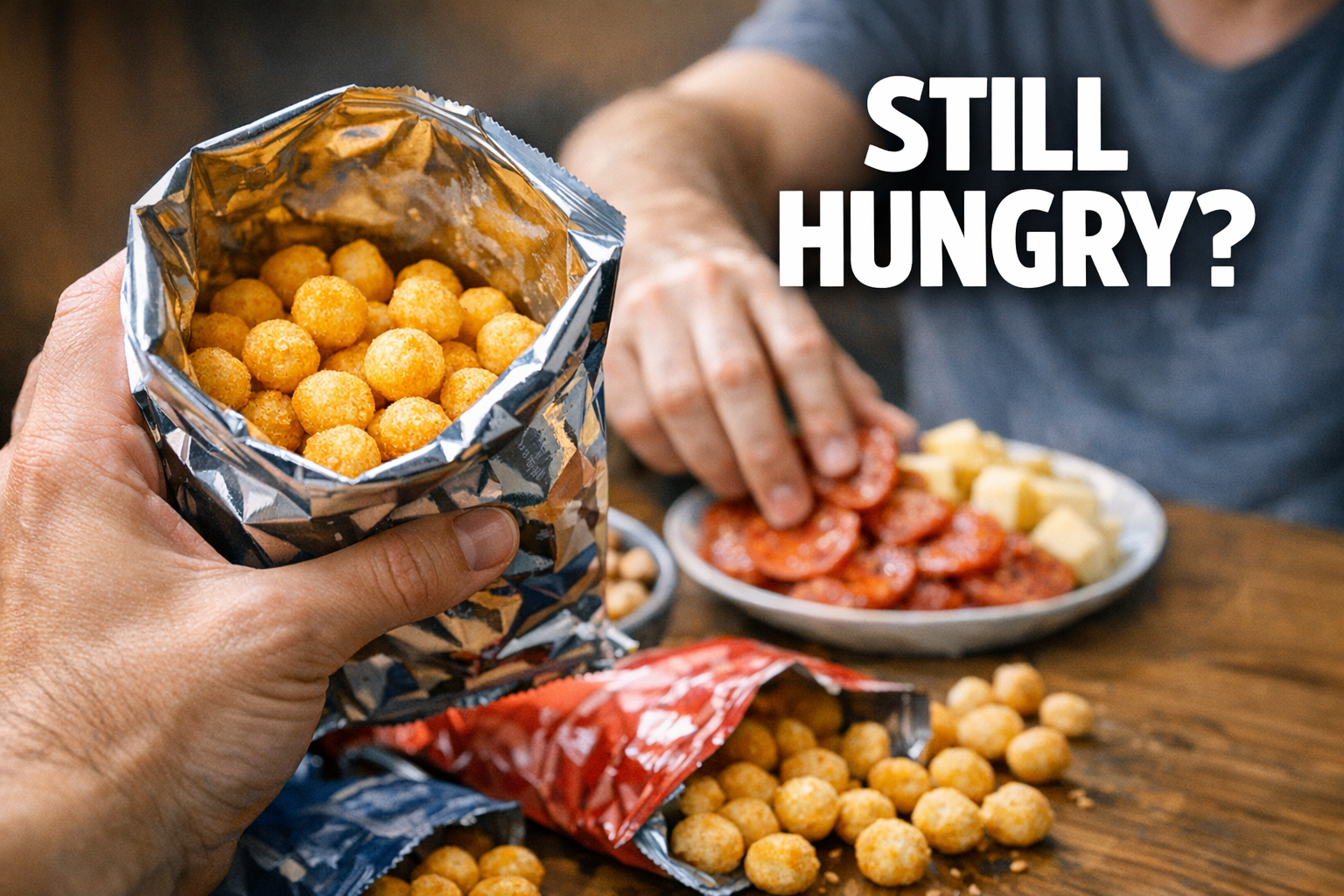
“Keto friendly” protein puffs, crisps, and crunchy snack bags sound like the fix.
They look low carb. They say high protein. They feel safer than chips.
But if keto friendly protein puffs still leave you hungry, snacky, and looking for something else an hour later, that is not bad luck. It usually means you ate a food that acts like a snack, not a real meal.
You rip open a bag because it seems smarter than junk food. Then somehow you still end up poking around the kitchen later, annoyed that your “good” choice did not actually solve anything.
Here’s the real problem with keto friendly protein puffs
Most of these foods win on label math, not on real-life fullness.
They may have protein. They may be lower carb than regular chips. But that does not automatically make them filling, stable, or useful as a meal replacement.
Crunchy protein snacks are easy to overrate because they feel disciplined. You see “high protein” on the front and assume they should hold you over the same way chicken, eggs, beef, or a real plate of food would.
That is where people get burned.
The problem is usually not one ingredient. It is the whole setup: low food volume, weak meal structure, easy overeating, and a snack texture that keeps appetite turned on instead of settled down.
If you have already fallen for high-protein keto chips, this is the same basic trap with different branding. The bag looks smarter than junk food, but it still behaves like crunchy snack food.
Why keto friendly protein puffs still backfire
1. They are still snack-shaped food, not meal-shaped food
This is the biggest issue.
A bag of protein puffs can have decent macros on paper and still fail in real life because it does not land like a meal. It is light, fast, crunchy, and easy to eat without ever feeling like you actually sat down and handled your hunger.
That matters because fullness is not just about a number on a label. It is also about how complete the eating experience feels. Real meals usually give you a clearer stopping point. Snack bags usually do the opposite.
You eat the bag in ten minutes, tell yourself you got your protein, and then by mid-afternoon you are grabbing cheese, nuts, deli meat, or another “safe” snack because the first thing never really closed the loop.
A common mistake is treating a crunchy packaged protein snack like lunch. It looks efficient. It feels controlled. But it is often too small, too easy, and too snack-like to actually carry you.
The fix: stop using these bags as stand-alone meals. If you eat them at all, use them as a side or backup, not the main event. Build around real food first. Think leftovers, eggs, burger patties, rotisserie chicken, tuna, Greek yogurt if it works for you, or a simple plate with enough protein to feel finished. If you need portable help, a pack of grass-fed beef sticks works better when paired with an actual meal or as a more solid emergency option than airy protein crisps pretending to be lunch.
2. The crunch keeps appetite running
Crunchy foods have a weird way of making people want more, even when the bag is technically portioned.
This is why protein puffs, crisps, and crunchy snack mixes can turn into a second bag problem. They scratch the same itch as chips. The branding is different, but the eating pattern often is not.
You start because you are a little hungry. Then the texture pulls you into that “just a little more” mode. Instead of calming appetite, it can keep you mentally in snack mode.
In real life, this looks like eating protein puffs during work, in the car, while making dinner, or during that stretch between lunch and dinner when you are already tired. You are not sitting down to solve hunger. You are hand-to-mouth eating while doing something else.
That is where the trouble starts. Even low-carb foods can keep appetite revved up if they act like nibbling food.
The mistake here is thinking the bag is harmless because the carbs are low. But low carb does not mean low trigger.
The fix: use crunchy packaged foods only when you are clear on the job. Is it a small add-on? Is it a true emergency backup? Fine. But if you are already snacky, stressed, or half-hungry, skip the bag and eat a real meal instead. If you need a portable protein choice with a stronger stopping point, zero sugar jerky is usually less likely to turn into mindless handful behavior than a puffed, chip-like snack.
3. The protein number looks impressive, but the meal is still weak
This is where label logic fools people.
Yes, some of these snacks have more protein than regular chips. That does not mean they have enough protein, enough food volume, or enough staying power for the moment you are using them in.
If your breakfast was coffee, your lunch was random, and now it is 4 PM, a bag with a decent protein number may still be nowhere near enough to stop the hunger rebound that is coming later.
This is why people say things like, “I hit my protein and I’m still hungry.” What they often mean is they ate some protein. They did not build a real meal.
A real-life version of this: you eat protein crisps at your desk because dinner is far away. The bag buys you maybe 30 minutes. Then the cravings kick up, dinner portions get bigger, and the night turns into picking at leftovers, dessert substitutes, or another packaged snack.
The mistake is using “higher protein” as if it means “problem solved.” It does not. Higher than chips is not the same thing as enough to keep you full.
The fix: judge the food by what happens two to three hours later, not by the front label. If it regularly leads to bigger dinners, extra snacking, or a second food decision soon after, it is not doing the job you think it is. Use the protein target from Keto Protein Fix Map as the standard, not the snack aisle’s idea of “high protein.” If you are not sure whether it is true hunger or just snack momentum, run it through the questions in Keto Hunger Decision Tree.
4. They make portion creep feel invisible
Another problem with protein puffs and crisps is that they look light.
That sounds good until you realize light, airy foods are easy to underestimate. You can finish one bag, decide it was “not much food,” and go right into another snack because it did not feel substantial.
That is how portions creep without much drama. Nothing feels huge. Nothing feels like a blowout. But the day becomes a string of small low-carb choices that never fully satisfy you.
This is especially common when people are trying to be “good” after a slip, trying not to eat a full meal, or trying to save dinner calories. They nibble their way through the afternoon and then wonder why hunger stays loud.
The mistake is believing small-looking food means small impact. If it keeps you eating all day, the impact is bigger than it looks.
The fix: stop counting on airy snack foods to control appetite. If you want something crunchy, make it a deliberate part of a meal instead of a floating standalone food. Better yet, ask whether you really want crunch or whether you actually need enough real food. This is also why the broader warning in Why High Protein Keto Still Fails When Every Meal Is Basically Snack Food matters so much. Once your day becomes snack-built, fullness gets shaky fast.
5. They keep you in packaged-food problem solving
There is a bigger pattern here.
People reach for protein puffs because they want keto to feel easy. No prep. No cleanup. No thinking. That part makes sense.
But when too many of your fixes come from packaged food, you stay stuck solving hunger with convenience instead of structure. Then you end up bouncing between bars, puffs, jerky, yogurt cups, cheese snacks, and “low-carb” treats while wondering why keto still feels harder than it should.
In real life, this can look very responsible on paper. The cart is full of low-carb products. The labels look fine. But meals are weak, dinner keeps getting delayed, and every day needs another emergency rescue.
The mistake is believing better products will fix a broken eating pattern. Usually they do not.
The fix: build three or four repeat meals that handle your busiest days. Keep backup food, but make sure backup food is backing up a system instead of replacing one. If you need help sorting that out, read Keto Protein Problems: Why You’re Hungry, Snacky, and Stuck and tighten the meal structure first.
What to eat instead when crunchy protein snacks keep failing
You do not need to ban every crunchy keto snack forever.
You just need to stop expecting them to do a real meal’s job.
Better alternatives depend on the situation:
- If you need a true meal: eat actual protein plus enough food volume to feel done.
- If you need an emergency car or desk backup: pick something more solid and less chip-like.
- If you need convenience: prep fewer fancy foods and more repeatable basics.
Simple examples work better than clever snack products:
- leftover chicken and cheese rolled up in lettuce
- burger patties and a side salad
- eggs plus sausage
- Greek yogurt with a clear protein purpose instead of dessert-style toppings
- deli turkey, pickles, and a real lunch instead of a snack bag lunch
If you want a backup snack because life gets messy, fine. Just choose one that solves a real problem instead of extending snack mode. That is the difference.
If your bigger issue is that every crunchy, sweet, or portable protein food keeps turning into a second round of eating, read Why “Keto” Protein Treats Keep Turning Into a Second Craving Instead of a Real Meal next. It covers the same problem from the dessert side instead of the chip side.
Common mistakes people make with keto friendly protein puffs
- Using them as lunch because the protein number looks decent
- Eating them while distracted and not noticing they did not satisfy anything
- Buying multiple flavors and turning them into daily default food
- Calling them better than chips, then assuming that means they are actually helpful
- Trying to out-snack hunger instead of fixing meal structure
Here’s the truth: if a food keeps showing up right before a later binge, bigger dinner, or all-night picking session, it is not helping just because the label says keto.
So are protein puffs bad for keto?
Not automatically.
But they are easy to misuse.
If you eat them once in a while as a deliberate side, no big deal. If you keep using them as fake meals, fake control, or fake appetite insurance, they will keep disappointing you.
That is the real issue with keto friendly protein puffs. They often look like a fix while quietly keeping the same snack cycle alive.
If your day is built on crunchy “better choice” foods and you are still hungry later, the problem is probably not willpower. The problem is that your food never fully handled the job.
Fix this first:
- Stop using protein puffs, crisps, or crunchy snack bags as full meals for the next week.
- Track when you eat them and what happens two to three hours later. Bigger dinner, cravings, and more snacking mean the food is failing.
- Replace one daily snack-bag moment with a real protein-based meal or a more solid backup option.
- Keep crunchy keto snacks as occasional support only, not your main appetite strategy.
🔎 If this helped, here are more no-BS keto guides worth reading next:
- Keto Protein Fix Map: How to Stop Weak Meals, Snack Dinners, Fake Fullness, and All-Day Hunger
- Why “Keto” Protein Treats Keep Turning Into a Second Craving Instead of a Real Meal
- Why High Protein Keto Still Fails When Every Meal Is Basically Snack Food
Explore more Keto Lies & Myths guides here: