You go low carb, cut the obvious junk, and expect your body to calm down.
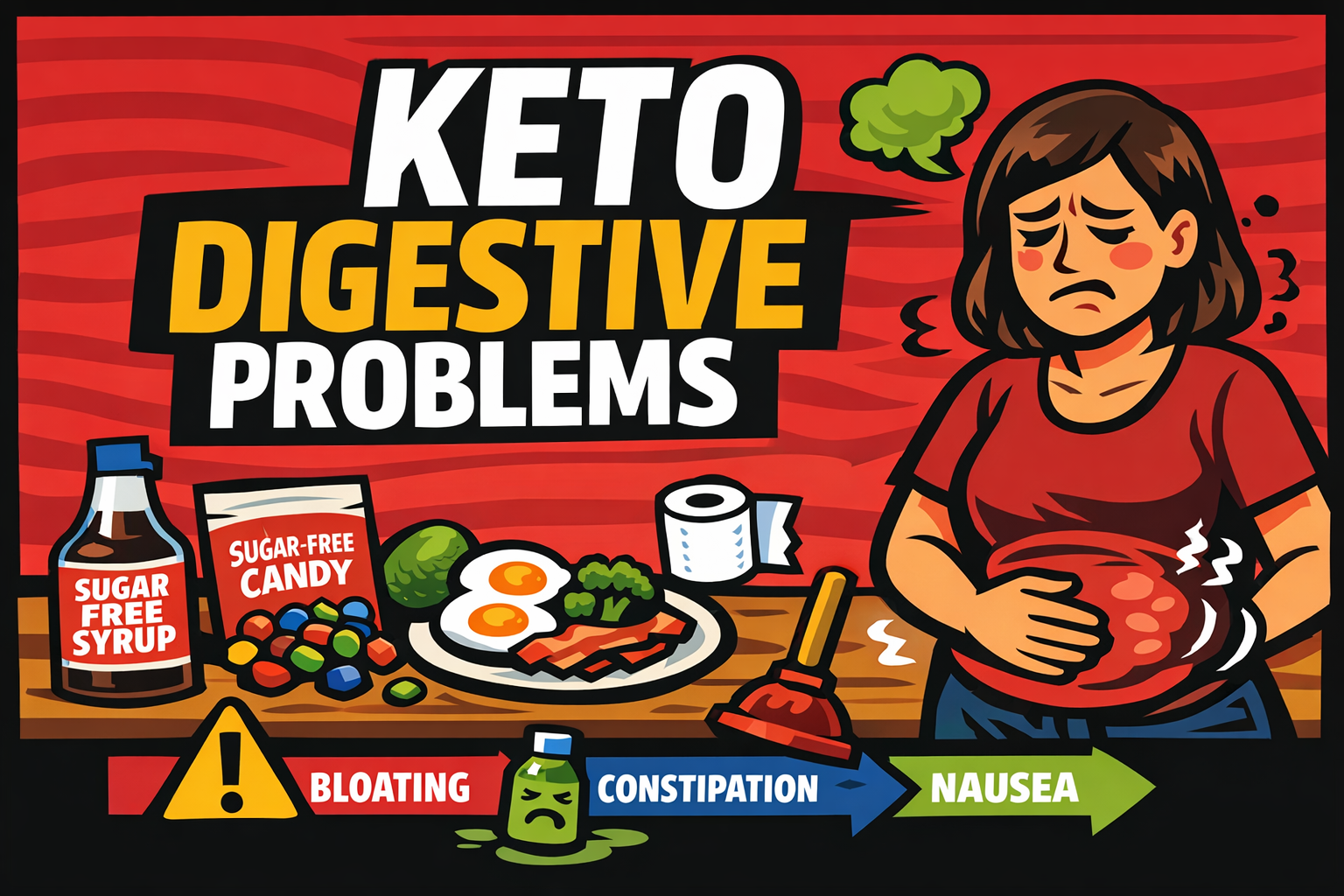
Instead, now you are constipated, bloated, running to the bathroom, or feeling sick after food that was supposed to help.
That is not random. It usually means your keto setup is solving one problem while creating another.
Most people treat digestive keto problems like separate emergencies.
Constipation gets one fix. Bloating gets another. Nausea gets blamed on electrolytes. Diarrhea gets blamed on fat. Sugar-free junk gets waved off because the label says low carb.
That is how people stay stuck.
The better way is to stop asking, “Which symptom do I have?” and start asking, “What pattern created it?”
This page is your start-here map for that. If you need a broad first-pass check before you chase one symptom, use the keto side effects guide that helps you sort out what to fix first.
The five digestive patterns that keep showing up on keto
Digestive problems on keto usually come from one of five patterns.
First, your intake gets too small and too dry. Second, fat goes up faster than your body can handle. Third, dairy and fake sweet foods create a low-carb mess. Fourth, coffee and empty-stomach mornings throw off the whole day. Fifth, real life turns your routine into grab-and-go damage control.
If you are badly backed up already, start with what causes constipation on keto and how to fix it fast. If your bigger issue is the overall pattern of side effects showing up together, the side effects outside the house hub helps when travel, long days, and messy routines are part of the problem.
Start here:
Pattern 1: Meals got smaller, drier, and easier to ignore
This is one of the biggest constipation setups on keto.
People cut bread, pasta, and random snacks, but they do not replace them with a steady meal structure. They end up on coffee, cheese, deli meat, eggs, a few bites here and there, and a dinner that shows up too late. The carbs are lower, but so is total food volume, water-rich food, and basic routine.
In real life this looks like a coffee-only morning, a tiny lunch because you are “not that hungry,” and then a heavy dinner when your body is already behind. Or it looks like a stressful workday where you technically stayed keto but barely ate anything with structure.
The mistake is assuming less food means cleaner progress. Sometimes it just means your gut has less movement, less fluid, and less consistency.
The fix is not to panic-buy fiber gimmicks. Start by making your meals more real and more repeatable. If this is your pattern, the best next step is the constipation fix map for travel, desk days, small meals, and coffee-only mornings. If your specific problem is tiny low-effort meals, read why constipation gets worse from small meals and coffee-only days.
Pattern 2: You pushed fat harder than your body was ready for
Not every digestive problem on keto comes from eating too little. Some come from forcing your body through a fake version of keto that is way too rich, too sudden, and too hard to manage.
This is where people go from normal eating to butter-loaded coffee, greasy takeout, heavy cream, cheese piles, bacon everything, and “fat bombs” because they think more fat automatically means better keto.
For some people, that turns into urgent bathroom trips. For others, it means nausea after meals, weird heaviness, or a day where food sounds gross by noon and then cravings hit later.
The common mistake is trying to fix diarrhea or nausea by slashing all food or quitting keto entirely, when the real issue is the way fat was added and stacked.
The direct fix is to simplify meals, stop forcing richness, and let digestion calm down. If loose stools are the main problem, read why keto causes diarrhea for some people and how to stop it. If the richer-food version shows up more like a sick stomach, use this guide to keto nausea from coffee, electrolytes, and an empty stomach.
Pattern 3: Dairy and fake sweet foods are acting like a low-carb trap
A lot of “allowed” keto foods are rough on digestion even when they fit the carb count.
That is why people get confused. They are technically staying low carb, but their body is fighting the way they are doing it.
This shows up with cheese-as-a-meal dinners, yogurt bowls that turn into dessert logic, protein ice cream at night, sugar-free candy, syrups, gums, cough drops, and bars that promise low net carbs but deliver bloat, gas, bathroom chaos, and more snacking.
The mistake is treating low carb as the only thing that matters. It does not. If a food leaves you bloated, hungrier, or weirdly reactive, it is still a problem.
Start by pulling back on the foods most likely to create gut blowback. If you feel swollen and uncomfortable even when you swear you are doing keto right, read why keto bloating happens even when you think your plan looks clean. If fake sweet foods are part of the cycle, go straight to why sugar alcohols on keto leave you bloated, hungry, and still snacking.
Pattern 4: Coffee-first mornings create digestive whiplash later
People think digestive trouble starts with lunch or dinner because that is when they feel it. A lot of the damage actually starts much earlier.
Coffee on an empty stomach, not enough actual food, not enough fluid, and rushing out the door can create a day that feels jittery, flat, and off before noon. Then by afternoon you either feel backed up and dry or you start throwing richer convenience food on top of a shaky base.
This is common in people who say, “I am not hungry in the morning,” but then end up nauseous, bloated, or overeating later. It is also common when you use coffee and sweet creamers as a fake breakfast.
The mistake is blaming dinner for a setup that started at 7 AM.
The fix is to stop treating mornings like they do not count. If your stomach gets weird after caffeine, use the guide to the healthy keto coffee routine that backfires by noon. If your appetite disappears early and your side effects get worse later, read why low appetite side effects on keto often start with coffee-only mornings.
Pattern 5: Real life turns your digestion into backup-plan food
Keto digestive problems get worse fast when routine disappears.
Travel weeks, desk days, long car days, conference days, takeout stretches, and busy-family chaos all push people toward the same pattern: too little structure, not enough water, more dairy, more packaged low-carb food, and a lot of “I will deal with it later.”
That is how someone ends up constipated after three days of hotel breakfast, jerky, cheese, coffee, and one giant dinner. Or bloated after a week of protein bars, sugar-free drinks, and drive-thru salads with too much dressing.
The mistake is thinking the problem is your willpower. Usually the environment changed and your digestion took the hit first.
The fix is to match the guide to the version of real life you are actually living. If you are dealing with travel or restaurant fallout, start with the practical keto away-from-home guide for restaurants, travel days, alcohol, and recovery. If fast-food weeks are the trigger for getting backed up, read why keto constipation gets worse on fast-food and takeout weeks.
How to tell which digestive lane you are actually in
Here is the practical shortcut.
If you feel dry, stalled, heavy, and like food volume disappeared, think small meals and weak structure first.
If you feel urgent, greasy, and worse after rich food, think fat overload and convenience-food stacking.
If you feel swollen, gassy, and weirdly hungry after “safe” treats, think dairy and sugar alcohols.
If your stomach goes sideways after caffeine and the day gets worse from there, think coffee-only mornings and low intake early.
If the problem keeps showing up on travel, work, or social weeks, think environment before you think discipline.
This matters because the wrong fix wastes time. Throwing magnesium at a sugar-alcohol problem will not solve it. Cutting vegetables harder during a tiny-meals constipation week will not solve it. Pushing more butter into a nausea problem will definitely not solve it.
What people get wrong when they try to fix keto digestive problems
The first mistake is chasing single symptoms without looking at the pattern around them.
The second is assuming low carb means low problem. Some of the worst digestive chaos comes from foods that technically fit keto but wreck appetite, digestion, or meal structure.
The third is trying to out-supplement a bad routine. Supplements can help, but they are not magic if the actual issue is coffee for breakfast, cheese for lunch, and convenience food at night.
The fourth is waiting too long to simplify. When your gut is already irritated, this is not the time to get clever with bars, desserts, syrups, and fake treats. Pull the plan back to basics and let your body settle.
The no-BS digestive reset framework
When digestion goes bad on keto, use this order.
First, cut the obvious fake-help foods: sugar-free candy, bars, syrups, weird dessert products, and any “high-protein” treat that keeps ending in more hunger.
Second, make meals more real: protein, a normal portion, enough fluid, and less random grazing.
Third, stop forcing giant fat loads just because keto internet told you to.
Fourth, look hard at your morning setup, because coffee-only starts create a lot of downstream digestive nonsense.
Fifth, match the fix to the environment. A home-week problem and a travel-week problem are not the same even if the symptom is.
The good news is that digestive keto problems are usually more fixable than they feel.
The annoying part is that the fix is often less glamorous than people want. It is usually not a magic product. It is better meal structure, fewer fake foods, less low-carb chaos, and a more honest read on what your body is reacting to.
If you only remember one thing, remember this: the symptom matters, but the setup matters more. Constipation, diarrhea, bloating, and nausea often look different while coming from the same sloppy pattern of coffee-first mornings, weak meals, fake keto treats, and reactive damage-control eating.
That is why the fastest progress usually comes from simplifying first, then getting more specific. Strip out the obvious gut irritants, eat real meals again, stop trying to force richness, and use the deeper guides only after you know which lane you are actually in.
If this helped, start with these next:
- Use this constipation fix map when the problem changes with travel, desk days, or coffee-only mornings
- See why sugar alcohols keep turning low-carb treats into bloat and snacky rebound hunger
- Start with the side-effects guide if you are not even sure which fix matters first
Explore more Keto Problems & Side Effects stories here: