You can eat low carb all day and still feel hungry, snacky, and weirdly unsatisfied.
That usually is not a carb-counting problem. It is a protein setup problem.
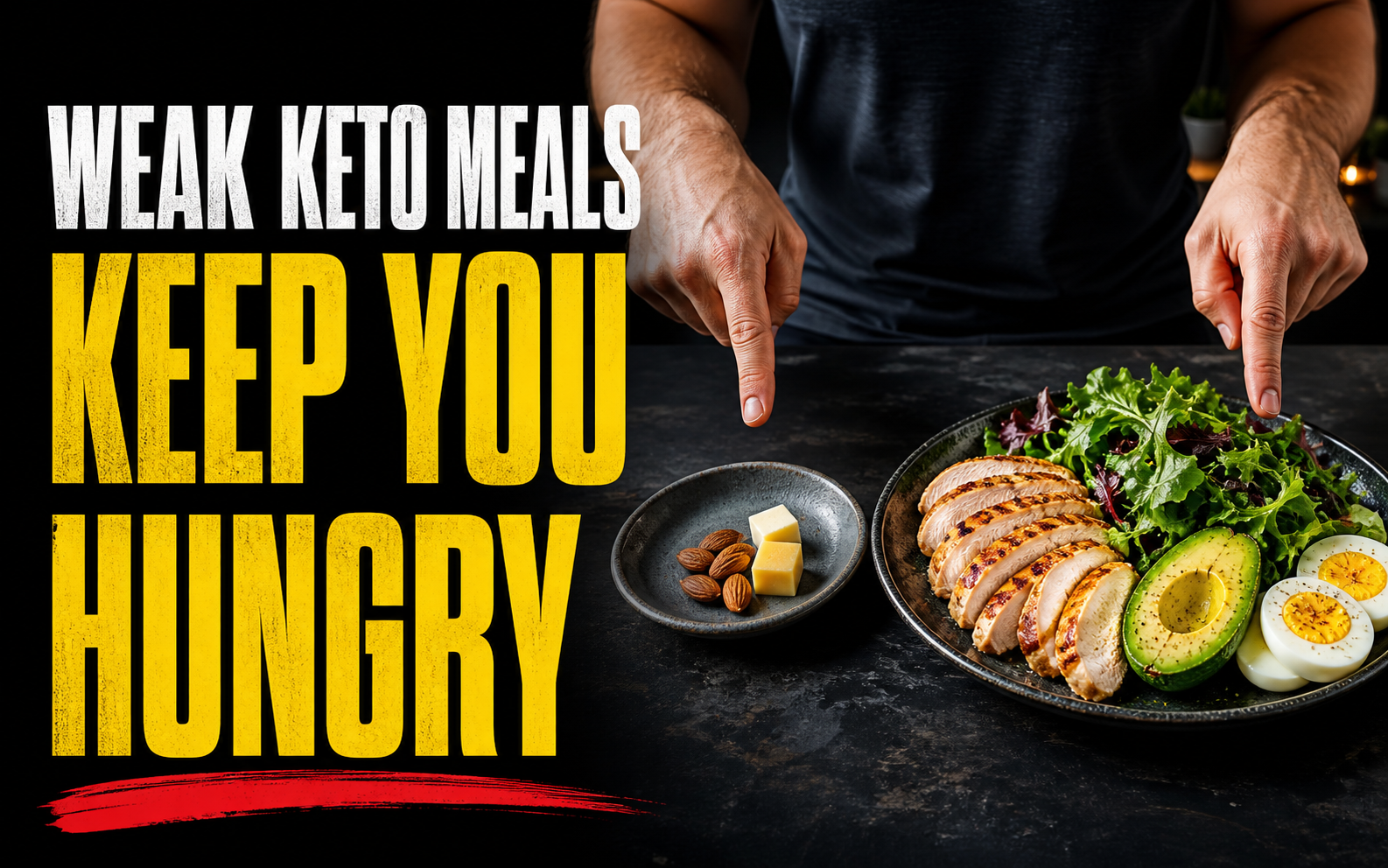
A lot of keto meals look fine on paper but fail in real life because they are too light, too snacky, too sweet, or too random to hold you.
This page is a fix map. It is not here to dump every protein article on you. It is here to help you spot the kind of protein mistake you are making and send you to the next best fix.
The real problem is not just grams – it is what your meals are doing
Most people hear “eat more protein” and picture one number. But protein problems on keto are not only about hitting a target. They are about meal shape, timing, food quality, and whether your food acts like a meal or like a dressed-up snack.
If you already know protein is part of the issue, start with this full protein troubleshooting guide. It is the best starting point when hunger, weak meals, and fake fullness keep blending together.
Start here:
Problem one: your meals are too weak to finish the job
This is one of the most common keto mistakes. Breakfast is coffee and something tiny. Lunch is a salad that sounds healthy but does not hold you. Dinner looks low carb but still feels unfinished half an hour later.
In real life, this looks like someone doing everything “right” and still prowling the kitchen later. They are not always craving junk because they are out of control. Sometimes they are just underfed in a cleaner-looking way.
If that sounds familiar, go straight to keto meal structure that actually keeps you full and why healthy keto salads still blow up hunger. Those two posts show why a meal can look disciplined and still fail.
Common mistake: thinking low carb automatically means filling. Fix: make sure each meal has a real protein center, not just protein sprinkled around the edges.
A simple test helps here: if you finish eating and the meal already feels like it needs a little something extra, it probably was not built strongly enough. That extra something is where a lot of keto drift starts.
Problem two: your day is built out of snack food, not meals
A lot of people move into keto and accidentally build a whole menu out of bars, bites, shakes, cheese, deli meat, and handful foods. None of that looks dramatic. Together, it creates fake fullness all day.
That is why some people are always eating but never feel settled. They are getting food, but not enough real meal friction to turn hunger off.
If your keto routine keeps turning into nibbling, read why high protein keto still fails when every meal is basically snack food. That one article usually catches the whole pattern fast.
Common mistake: calling convenience protein a meal. Fix: use snack-style foods as backup tools, not as the whole structure of the day.
That difference matters more than people think. A backup tool can save a rushed afternoon. A whole day built from backup tools usually leaves you half-fed and still mentally circling food.
Problem three: sweet keto protein foods keep your appetite running
This is where fake fullness gets sneaky. A protein treat, keto cereal, sweet yogurt bowl, or dessert-style shake can look useful because it says low carb and high protein. But it can still leave you wanting more.
The problem is not that all sweet protein food is evil. The problem is that many of these products act more like appetite teasers than meal anchors.
If that is your pattern, the next stops are why keto protein treats turn into a second craving and why high-protein keto ice cream still ends in hunger and second-dinner snacking.
Common mistake: replacing a meal with a dessert-shaped protein product. Fix: use sweet keto foods carefully, and do not confuse them with a real plate of food.
A good rule is this: if the food makes you want more sweet, more crunch, or another little treat afterward, it is probably not closing the hunger loop the way a real meal would.
Problem four: you wait too long to eat real protein
Some people technically eat enough protein by the end of the day and still feel awful through most of it. That is usually a timing issue. Coffee first, protein later, and then the day gets louder before the first real meal happens.
What it looks like in real life: you feel fine at first, then shaky, snacky, or way too interested in anything easy by mid-morning or late afternoon.
That is why not eating enough protein early in the day matters so much. It shows why catch-up eating later does not always rescue a shaky day.
Common mistake: assuming late catch-up protein fixes an unstable day. Fix: move real protein earlier so the day is not already slipping before lunch.
This does not mean forcing a huge breakfast if that makes no sense for you. It means making sure the first serious food decision of the day includes enough protein to steady the next few hours.
Problem five: you are blaming protein when the whole appetite system is messy
Sometimes protein is part of the story, but not the whole story. Sleep, electrolytes, fake keto food, weak meals, and long food gaps can all make protein feel like it is not working.
That is why people get frustrated. They try adding chicken, yogurt, or a shake, and nothing changes because the real issue was bigger than one macro.
If your hunger still feels confusing after the basics, use the main hunger guide to work through the bigger picture.
This matters because the fix is not always “more.” Sometimes the fix is better meals, less snacking, or fewer fake keto foods pretending to help.
That is why a map matters. It keeps you from solving the wrong version of the problem just because “eat more protein” was the last thing you heard.
Easy fixes when life is busy
Protein gets harder when the day is rushed. That is where practical backup tools matter. A plain protein powder with minimal additives can help on a rough day. A shaker bottle can keep a backup option usable instead of theoretical. Canned fish, canned chicken, or simple pantry meat can save a weak dinner before it turns into snack cleanup.
Those are support tools, not magic. The point is to make real meals easier to build when energy is low.
Related:
How to use this hub without overwhelming yourself
Do not read everything because protein is vaguely interesting. Pick the version of the problem that keeps repeating.
- If your meals never feel finished, start with meal structure.
- If your food is mostly bites and convenience protein, start with snack-food protein problems.
- If sweet keto foods keep the hunger going, start with protein treats or protein ice cream.
- If the day goes bad before lunch, start with protein earlier in the day.
This is a map, not a homework pile. Fix the pattern you actually live in.
Fix this first
- Make sure each meal has a real protein center, not just a little protein on the side.
- Stop building full days out of bars, bites, shakes, and handful foods.
- Do not treat sweet keto protein foods like they are the same as a real meal.
- Move real protein earlier if your day keeps getting shaky or snacky before lunch.
- If hunger still feels messy, use the appetite breakdown and hunger guide before guessing.
If this helped, read these next:
- Start with the full guide to protein problems on keto
- See how to build keto meals that actually keep you full
- Use the bigger hunger guide if protein is only part of the mess
Explore more Keto That Actually Works stories here: