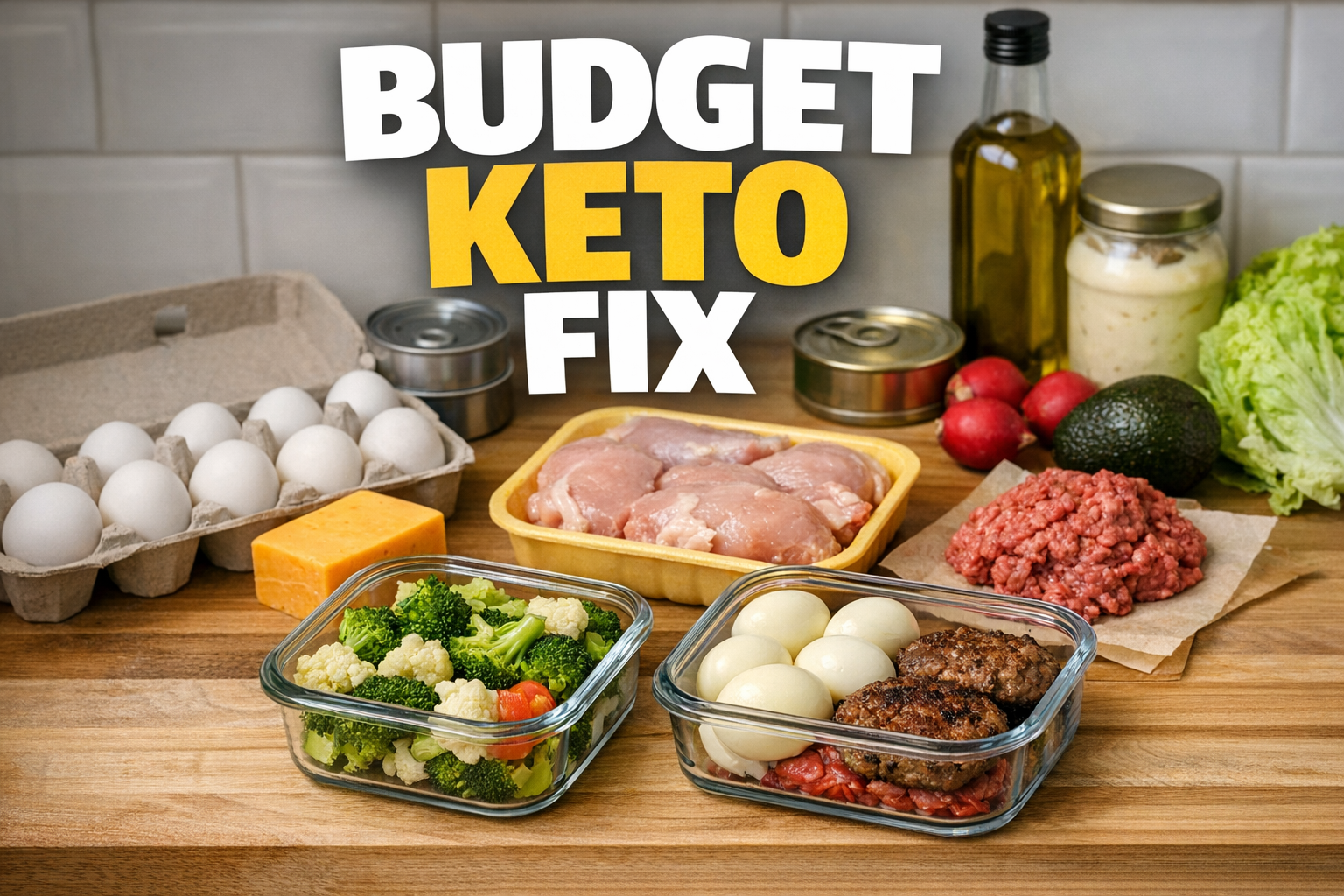
Budget keto does not usually fail because meat costs money.
It fails because cheap weeks create sloppy meal gaps, random convenience decisions, and backup-food panic right when energy is lowest.
That is why some people can stay keto when the fridge is full, then fall apart the week before payday or the last stretch before the next grocery run.
This page is a troubleshooting hub for that cycle. It is here to show you which budget problem you are actually dealing with so you can fix the leak instead of restarting again next week.
The real budget keto problem is not price alone – it is how cheap weeks change your decisions
A lot of people think budget keto means finding the cheapest possible low-carb items. That matters, but it is not the whole story. The bigger issue is what happens when your food plan gets thin. You start stretching meals, skipping protein, living on bits and leftovers, or grabbing convenience food because the house stopped making clear decisions easy.
If you need the main survival version first, go to budget keto survival. If you are trying to build a cleaner low-cost system from the ground up, lazy keto on a real budget is a strong second stop.
Problem one: grocery week runs out before the calendar does
This is the classic end-of-week slide. The first grocery days feel solid. Then protein runs low, produce gets weird, and the fridge turns into half-useful leftovers that do not add up to a real meal.
In real life, this looks like cheese, eggs, a few random condiments, maybe some lunch meat, and a lot of hoping dinner figures itself out.
If that is your pattern, read why lazy keto gets harder at the end of the grocery week. It shows exactly how a low-food fridge turns into random low-carb leftovers and weak dinners.
Common mistake: buying low-carb food without buying a week structure. Fix: protect a few default proteins and backup meals for the last third of the grocery cycle.
That last-third planning is what separates a cheap week from a chaos week. If the final few days have no plan, the easiest food in the house starts acting like the only food in the house.
Problem two: the week before payday turns convenience food into the plan
This is different from a simple low-food week. Payday weeks often create a tired, cornered feeling. The budget is tight, fresh groceries are low, and cheap convenience food starts looking like the easiest answer.
That is when people tell themselves they will just get through the week, but the week turns into all-day snack logic and another reset.
If that is the trap, go straight to why lazy keto falls apart before payday and then back to budget keto survival for the repair side.
Common mistake: treating cheap convenience food like a temporary exception. Fix: keep one low-cost protein fallback and one cheap emergency meal that still acts like a meal.
The point is not to win the week with creativity. The point is to make sure a low-budget stretch still has one boring, reliable answer when willpower is tired.
Problem three: cheap food turns into snack food
Budget pressure makes people buy what feels efficient: bars, snack packs, little low-carb treats, or random sale foods that do not build a full plate.
The problem is not only money. It is that cheap snack-style keto food can keep you eating without ever making you feel fed.
That is why cheap keto foods that keep beginners full matters so much. And if your pantry is full of “keto” items but meals still never happen, this lazy keto grocery list shows the difference between buying products and buying food you can actually use.
Common mistake: chasing low-carb deals that do not solve hunger. Fix: spend the limited budget on plain filling basics first.
A cheaper product is not a bargain if it still leaves you hunting for more food an hour later. Budget keto works better when fullness matters as much as price.
Problem four: big discount runs still come home with no plan
A lot of people try to solve budget keto with one heroic Costco or warehouse run. Sometimes that helps. Sometimes it just creates a bigger pile of random food.
In real life, this looks like buying a lot, spending a lot, and still ending up with snack trays, sauce bottles, and too few ready-to-use meals by midweek.
If that sounds familiar, read what to actually buy at Costco and why big grocery runs turn into random keto junk.
Common mistake: assuming bulk equals strategy. Fix: buy around repeatable meals, not around the thrill of a large cart.
If you cannot picture how the food becomes three or four easy meals, it is probably not solving your real budget problem. It is just making the pantry look busy.
Problem five: your backup system is too weak for a rough week
Cheap keto gets easier when a rough day does not force a brand-new decision. But a lot of people have no backup system. When work runs late or food runs low, the whole plan gets rebuilt by stress.
That is why budget problems often connect to routine problems. You are not only short on money. You are short on default moves.
If your food plan keeps breaking under pressure, this meal rescue guide helps you build something sturdier without turning cheap keto into a full-time job.
Common mistake: depending on motivation during low-budget weeks. Fix: create one cheap emergency dinner, one freezer fallback, and one lunch backup before the week gets ugly.
That is what turns a budget plan into a real system. You are not hoping to stay on track. You are reducing how often a rough week gets to surprise you.
Easy fixes that do not feel gimmicky
This is where simple tools can help. Freezer containers make leftovers usable instead of forgettable. Bulk pantry staples work when they support repeat meals, not random snack piles. Budget-friendly protein options only help if they are easy to turn into dinner when you are tired.
The point is not budget hacks. The point is fewer bad decisions when the week gets tight.
How to use this hub without overcomplicating cheap keto
Pick the version of the problem you live in most often.
- If the fridge falls apart late in the week, start with grocery week gaps.
- If the week before payday is the danger zone, start with before-payday breakdowns.
- If you keep buying keto products but still have nothing to eat, start with the grocery list fix.
- If big warehouse trips still leave you stuck, start with Costco planning.
You do not need a perfect low-cost lifestyle. You need a cheap system that still works on tired days.
Fix this first
- Protect a few cheap protein staples for the last third of the grocery week.
- Stop using snack food and keto treats as the core of a low-budget plan.
- Build one before-payday fallback meal so convenience food does not take over.
- Shop around repeat meals, not around random deals or bulk excitement.
- Create one freezer or pantry backup for rough nights before the week gets thin.
If this helped, read these next:
- Start with the main survival guide for low-budget keto weeks
- See how to build cheap keto meals and backup food that actually work
- Use these cheap keto foods to stay full without living on snacks
Explore more Lazy Keto stories here: