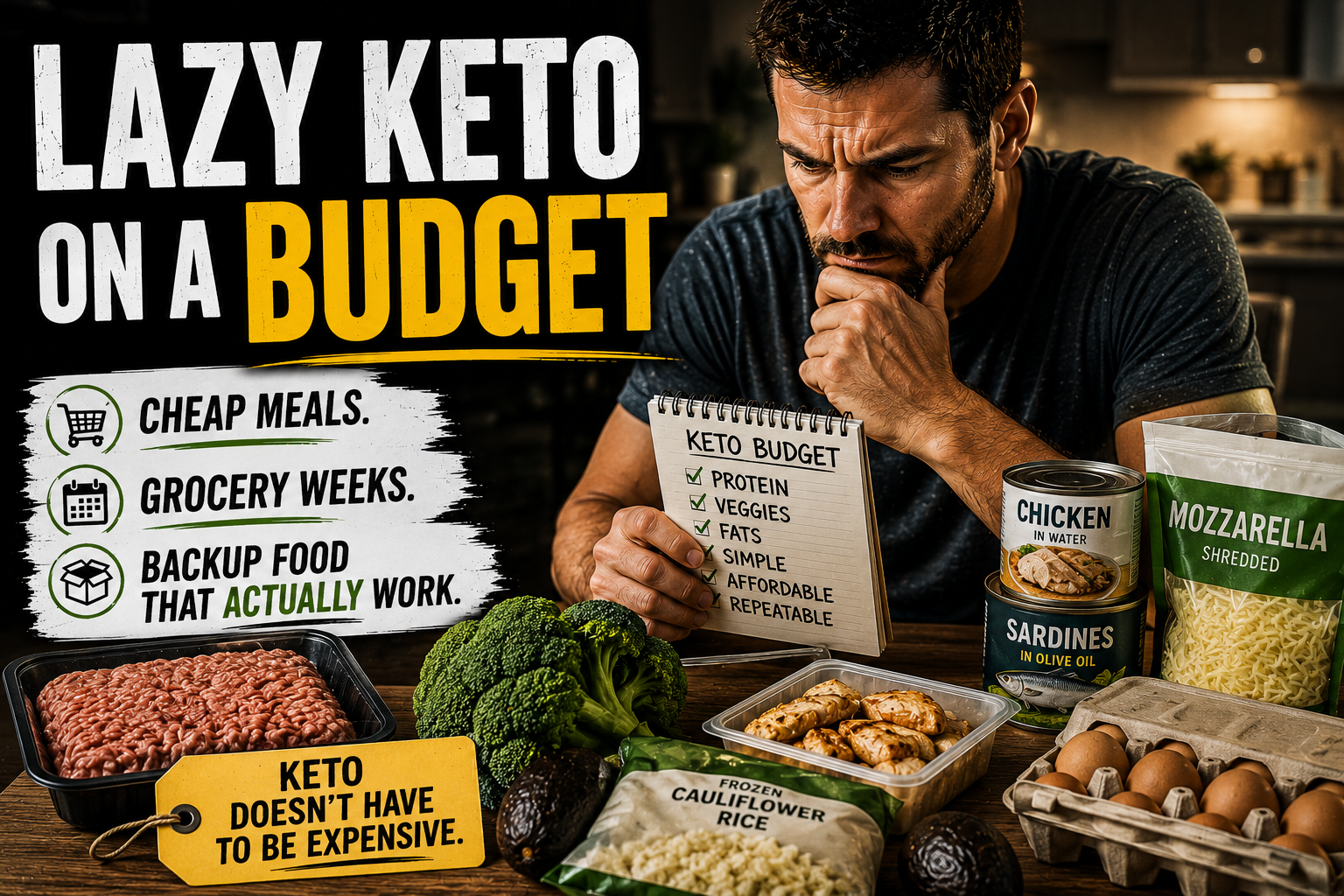
A lot of people think budget keto means buying the cheapest low-carb items they can find and hoping it all adds up. That is how you end up with cheese, deli meat, eggs, maybe a few frozen things, and somehow still no clear dinner by Thursday night. That is the real problem here. The issue is not just price. It is food structure. Lazy keto on a budget works better when your week is organized around repeatable meals, backup options, and fewer panic purchases. The goal is not gourmet. The goal is staying full, staying low carb, and not turning every rough day into an expensive convenience-food day.
The budget problem is usually not carbs. It is how the food fits together.
People blame the grocery bill, but the bigger issue is usually that the food they buy does not connect. They have ingredients, snacks, deals, and random low-carb products. They do not have an actual week. That is why you can spend plenty on keto and still have nothing easy to eat by Wednesday. This grocery-list post explains why buying low-carb food is not the same as building useful meals. This meal-systems guide helps if your kitchen keeps filling up with food that never becomes a plan. The fix is to think in systems, not single products: cheap meals, default lunches, backup dinners, and emergency out-of-house food.Start here:
Cheap keto gets easier when you stop shopping for variety first
This part is not glamorous, but it saves money. Budget keto usually works better when you repeat more, not less. Most people overspend because every trip turns into a fresh attempt at motivation. New snacks. New sauces. New low-carb extras. None of that matters if the basics are weak. Repetition protects the budget because it makes your shopping list tighter and your meals easier to repeat. This cheap-keto foods page helps if you need to strip things back to affordable basics. This defaults article matters because default foods beat willpower almost every time. The mistake is assuming repetition is boring and variety is better. On a budget, variety is often what blows up both the grocery bill and the food plan.The week usually falls apart when there is no cheap default dinner left
This is the Thursday night fridge problem. You open the door and see half a package of cheese, some leftover meat that does not make a full meal, a few condiments, maybe eggs, and not much else. Then the easy answer becomes takeout, delivery, or random grazing. That is not a discipline problem. It is a planning gap. This emergency-meals post is useful for nights when the house has no clear plan. This freezer-meals article helps if dinner keeps collapsing at the same point every week. The fix is to protect one low-cost fallback dinner on purpose. It can be boring. Boring is fine. It exists to stop an expensive collapse.Convenience food is expensive because it keeps solving the same system failure
Convenience food is not just expensive because of the price tag. It is expensive because you keep needing it when the rest of the system is weak. If lunch was flimsy, dinner was undefined, and you left the house with no backup, the pricey convenience choice starts looking reasonable. That is how small budget leaks become the whole pattern. This convenience-food article shows why those purchases rarely solve the real issue. This backup-food post explains how a few deliberate emergency foods can stop the bigger money drain. The fix is not promising to do better tomorrow. It is making sure the next rushed day still has a cheap enough answer.Budget keto fails when snacks start replacing meals
Snack foods feel cheaper in the moment. A cheese stick here. Some nuts there. Jerky in the car. A low-carb bar because it was on sale. But snack-based keto often costs more and satisfies less. You keep buying little fixes because none of them hold you long enough. Then you still need dinner. Then you still want something after dinner. Suddenly the cheap day was not cheap at all. This snacks-not-meals post gets right to the problem. This quick-bites article helps if the whole day is turning into mini meals you barely notice. The fix is to make the cheapest foods do the hardest jobs. Full meals come first. Snacks are backup, not the main architecture.Family life and real schedules matter more than ideal grocery lists
Budget keto advice gets dumb fast when it ignores the people in your house, your real work schedule, and the fact that some days are not built for scratch cooking. A cheap plan that only works in silence and perfect routines is not a real plan. This matters a lot in families because shared meals, kids food, schedule changes, and split grocery priorities can wreck a budget fast if your keto food has no clear role. This family-meals post helps if you are not feeding only yourself. This backup-plan guide helps if the week keeps getting derailed by normal life instead of dramatic mistakes. The fix is not separate perfect meals for everybody. It is a simpler overlap between what the house eats and what reliably keeps you on track.Meal prep does not need to be a giant project to save money
A lot of people hear meal prep and picture a full Sunday production line. That is not required. Budget keto only needs enough prep to stop repeated expensive decisions. For one person that might mean browning extra meat once. For someone else it means boiling eggs, portioning leftovers, or keeping two lunches ready before the week gets stupid. Small prep still counts if it prevents a convenience-food chain reaction. The mistake is making meal prep so ambitious that you quit doing it. The better move is low-drag prep aimed at the exact place your week usually breaks.Out-of-house budget problems are still food-system problems
A lot of people overspend on keto outside the house because they leave with no plan, no backup food, and no idea what the cheapest decent option will be if the day runs long. That turns gas stations, coffee shops, and drive-thrus into routine budget damage. The pattern is predictable: under-eat, get hungry at the wrong time, buy something overpriced and not very filling, then still need more food later. That is not bad luck. It is an avoidable setup problem. The fix is to decide in advance what your cheap emergency move is. A packed lunch. A backup container in the car. A boring store option that is still better than a full panic spiral.Use flexible cheap foods, not narrow-use keto products
One of the easiest ways to waste money is buying foods that only make sense in one very specific situation. A special low-carb wrap, a pricey snack box, or a trendy keto dessert might sound useful, but if it only solves one tiny problem, it usually does not help much. Cheap keto works better when your core foods can do several jobs. Ground beef can become dinner, leftovers, lunch bowls, or a fast backup meal. Eggs can cover breakfast, emergency dinners, and cheap add-on protein. Rotisserie chicken can fill multiple meals without needing a lot of thought. The more jobs your basic foods can do, the less often you need another emergency purchase. The mistake is buying a cart full of narrow-use items and then wondering why nothing connects by midweek. The fix is to ask one simple question while shopping: can this help build more than one real meal, or is it only a patch?A simple lazy keto budget framework that actually works
If you want lazy keto on a real budget to work, build the week in layers. Start with two or three cheap main proteins you will actually eat. Add a few repeatable meal formats so the groceries connect instead of sitting there as separate ingredients. Protect one late-week dinner backup. Keep one emergency out-of-house option. And stop letting snacks do the job of meals. That is the whole system. It is not flashy, but it is how you spend less while making keto easier.Reality check
Expensive keto products are often covering for a weak plan. The better question is not what budget keto product should I buy next. It is which cheap foods and routines solve my repeat problems without needing motivation every day. That is the question that actually saves money.Related:
Where most grocery weeks quietly go wrong
A lot of people do fine at the start of the week, then drift into sloppy choices because the food stops making sense by day three or four. Lunch ingredients disappear first. Dinner starts depending on mood. The easy proteins get used up too early. Then the rest of the week gets patched together with snacks, takeout, and one more store run. The common mistake is treating every day like it should have equal energy and equal food options. That is not real life. Most people need the most support on the busiest days and the most boring fallback options at the end of the week. If those two spots are weak, the budget leaks start fast. The fix is to plan for the predictable low-energy part of the week instead of shopping like every night will be a full-effort cooking night. That one shift saves more money than another cart full of keto extras, because it changes how the whole week behaves.Conclusion
Lazy keto on a budget is not about squeezing into the cheapest version of every meal. It is about building a food system that keeps you fed, keeps you consistent, and stops expensive emergency choices from running the week. If the budget keeps getting blown, look for the breakdown point. It is usually not one expensive item. It is the missing structure that made the expensive choice feel necessary. Fix this first:- Choose a short list of cheap default meals instead of shopping for endless variety.
- Keep one protected late-week dinner backup so Thursday does not turn into takeout.
- Use backup foods to stop emergencies, not to replace real meals all day.
- Cut convenience-food leaks by planning one cheap out-of-house option in advance.
- Build the week around meals that connect, not random low-carb ingredients that never become dinner.
If this helped, start with these next:Explore more Lazy Keto stories here: View all Lazy Keto stories ->
- Build a cheap meal system that stops random grocery weeks
- Set up backup food before the next out-of-house crash
- Use the cheapest filling keto foods as your foundation