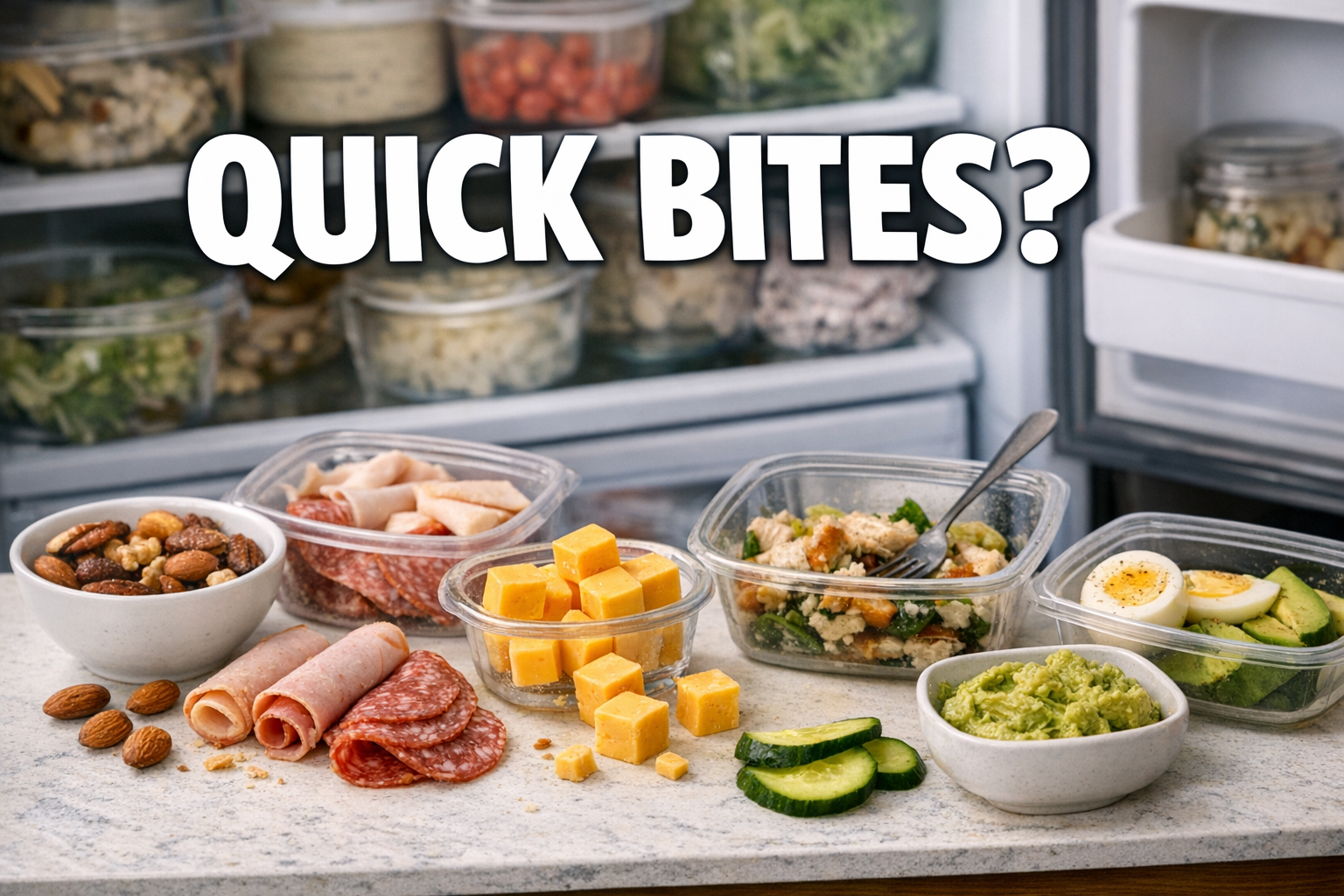
quick bites on keto sound harmless because each one looks tiny. A deli meat roll here, a handful of nuts there, a cube of cheese while you open the fridge. But when “just something small” keeps happening all day, keto stops feeling simple for a reason.
That is usually not a carb problem first. It is a structure problem. You are technically staying low carb, but your appetite never settles because eating never really stops.
If you have ever stood in the kitchen telling yourself it was not a real meal because you never sat down, this is probably the loop you are in.
Why quick bites on keto turn into a real problem
Here is the truth. A lot of low-carb foods are easy to grab, easy to justify, and easy to underestimate. That makes them perfect for lazy keto when you need a backup, but terrible when they replace actual meals.
The problem is not one cheese cube or one bite of leftovers. The problem is the pattern. Small bites stack into mini meals, mini meals blur together, and then you wonder why hunger, cravings, and weight loss all feel weird.
If this sounds familiar, it usually comes down to four things.
Start here:
1. You are using quick bites to patch weak meals
This is where most people mess up. Breakfast is coffee. Lunch is maybe some eggs, maybe a yogurt, maybe nothing serious. By mid-afternoon, you are looking for little things to take the edge off.
In real life, that can mean two slices of deli meat at 11, a string cheese at 1, a few nuts at 3, and a spoonful of chicken salad while dinner is cooking. None of that feels dramatic. Together, it means you have been half-eating for hours.
The common mistake is treating those bites like they do not count because they are low carb. But weak meals create unstable hunger. Then the day gets built around patching the weakness instead of fixing it. If you keep doing that, snacking starts wrecking your progress even when every individual choice looks keto enough.
The fix is boring, which is why it works: make your main meals stronger. That means real protein, enough food volume, and an actual stopping point. If lunch is solid, you need fewer emergency bites later.
2. “Quick” food keeps you mentally in eating mode all day
When meals have no clear start or finish, your brain never gets the message that eating is over. You stay in this low-level food-seeking mode where every pass through the kitchen turns into another tiny decision.
This is why people say they are not that hungry but somehow keep grabbing food. A few olives while cleaning up. Half an avocado while checking email. A handful of almonds in the car. You are not sitting down for a meal, but your appetite also never gets a real break.
The mistake is assuming that low-carb grazing is safer than a full meal. Usually it is the opposite. A full meal gives closure. Random bites keep the loop open. This is one reason default foods and repeat systems work better than improvising all day.
The fix is to give your day clearer edges. Eat a real meal. Plate it. Sit down if you can. Then make a rule that food stays off until the next planned meal or snack. Lazy keto gets much easier when eating happens on purpose instead of by drift.
3. Your “small” bites are more filling than they look, but not in a useful way
Quick bites often come from calorie-dense foods: nuts, cheese, leftovers, nut butter, pepperoni, spoonfuls of creamy stuff. They are easy to overdo because they are compact, and they do not always create the kind of full, satisfied feeling you would get from a proper meal.
That is why you can eat several mini bites and still feel oddly unsettled by dinner. You took in enough food to blur your hunger signals, but not enough structure to feel done. Then dinner gets delayed, portions get random, and the whole day feels messy.
A common mistake here is telling yourself you are being “good” because you skipped a bigger meal and only had little keto things. Usually that backfires. You end up eating more total food, with less satisfaction, and then chasing something else later.
The fix is to stop using rich little foods as your main eating system. Save them for a planned role. If nuts or cheese are part of a meal, fine. If they keep replacing meals, that is the problem. When you need backup food, make it protein-first and defined. For some people, a shelf-stable option like zero sugar beef jerky works better than endless handfuls because it is easier to treat as a bridge instead of a free-for-all.
4. Quick bites make dinner harder, not easier
People often grab little things because they think it will help them stay in control until dinner. But if you spend the whole afternoon pecking at food, dinner usually gets sloppier.
You get to 6 PM not fully hungry, not fully satisfied, and not motivated to cook. That is how dinner turns into random eggs, leftover bites, or grazing in front of the fridge. Or you decide you are “not that hungry” and then start picking again an hour later.
This is especially common when the house has no clear backup plan. If dinner is weak and the day already got messy, fast emergency meals matter a lot more than good intentions. So do simple workday defaults like the ones in these lazy keto lunches for work, because a stronger middle of the day usually means less random damage at night.
The fix is to treat dinner as part of the system, not a separate event. If you know your weak spot is late afternoon drifting, decide dinner earlier. Pick the protein. Know the side. Remove the last-minute friction.
Common mistakes that keep this loop going
- Calling repeated bites “not real food” because they were small
- Using coffee to delay meals, then patching hunger with snacky foods
- Keeping lots of easy nibbles around but no real meal defaults
- Letting leftovers turn into all-day picking instead of one actual meal
- Trying to fix unstable hunger with more tiny foods instead of better meals
Notice what is missing from that list: carbs. The issue here is usually not that keto is broken. It is that your eating pattern is too scattered to feel stable.
What works better than all-day quick bites
You do not need a perfect meal-prep life. You need fewer eating decisions and stronger defaults. Build two or three meals that are easy enough to repeat. Keep one backup protein ready. Keep one emergency dinner in the freezer. Then let quick bites go back to being occasional support instead of the main event.
If you want lazy keto to feel simple again, the goal is not to become stricter for the sake of it. The goal is to stop living in the gray zone between meals where you are always kind of eating and never really fed.
Fix this first:
- Pick one weak meal today and make it bigger, especially protein.
- Stop calling repeated fridge grabs “nothing.” If you eat it, count it as part of the pattern.
- Create a rule for the next 3 days: meals happen on purpose, not while standing in the kitchen.
- Keep one defined backup food and one emergency dinner so you do not live on bites.
- Use quick bites as backup only, not as your main lazy keto system.
If this pattern keeps showing up, start with Lazy Keto That Actually Works. It helps you build a day that does not depend on willpower and random grabbing.
🔎 If this helped, here are more no-BS keto guides worth reading next:
- Lazy Keto Snacking Is Wrecking Your Progress (And You Barely Notice)
- Lazy Keto Meal Systems: What to Keep at Home So You Stop Falling Back on Random Low-Carb Junk
- Lazy Keto Falls Apart When Your House Has No Fast Emergency Meals
Explore more Lazy Keto stories here: