You do not need more keto motivation. You need fewer food decisions.
If lazy keto feels easy at breakfast but messy by 3 PM, the problem is usually not carbs alone. It is that you keep making choices from scratch all day.
Maybe you have done this: you open the fridge, stare at random leftovers, grab a cheese stick, then snack again an hour later because that was not really a meal. That is not a discipline problem. It is a default-food problem.
Lazy keto gets easier when you pick a small list of foods you trust and repeat them without overthinking. That is what default foods do. They remove guesswork, cut down bad convenience choices, and make it much harder for hunger, stress, or laziness to push you into grazing all day.
Why lazy keto default foods work better than willpower
Most people think they fail lazy keto because they need more self-control. That is usually wrong.
They fail because every meal becomes a fresh little debate. What should I eat? Is this low enough? Do I cook? Do I snack? Do I wait? Those tiny decisions wear you down fast.
Default foods fix that. You already know what breakfast looks like. You already know your backup lunch. You already know what sits in the house for rough days. That means fewer weak choices and fewer “I’ll figure it out later” moments.
If you are still building your basics, start with Lazy Keto: The Simplest Way to Start. It lays out the simple version first. This article is about making it sustainable in real life.
Start here:
Cause #1: You keep improvising meals when you are already hungry
This is where a lot of lazy keto falls apart. You wait until you are starving, then try to invent a decent meal in the moment. That is when “quick and low carb” turns into a handful of nuts, some deli meat, half a bar, and a few bites of whatever else is around.
Technically, some of those foods may fit keto. In real life, that kind of eating is sloppy. It rarely fills you up, portions get fuzzy, and the whole day starts turning into snack math.
One of the biggest mistakes is assuming lazy keto means random keto-ish food. It does not. Lazy keto still works best when meals look like meals.
This is not a carb problem. It is a setup problem.
The fix is to stop asking, “What do I feel like eating right now?” and start asking, “What are my automatic foods?” Pick defaults you can repeat without thought.
Good breakfast defaults
- Eggs with cheese and a side of sausage
- Greek yogurt that fits your carb target plus nuts in a measured portion
- Leftover chicken or burger patties if you do better with savory food early
- A ready-to-drink protein shake as a backup when breakfast goes sideways
The goal is not variety. The goal is reliability.
Cause #2: Your house has keto snacks, but not real default meals
A lot of beginners shop for lazy keto the wrong way. They buy snack food, a few “treat” items, and maybe some low-carb wraps. Then they wonder why the day never feels stable.
Snacks help in emergencies. They are a terrible foundation if they replace actual meals.
Here is what that looks like in real life: cheese crisps in the car, bars in the pantry, nut packs in your bag, maybe beef jerky in a drawer. Convenient? Sure. But if breakfast, lunch, and dinner are still unclear, you end up eating backup food as your main plan.
That is backwards.
Your house should have default meal foods first, then emergency foods second. Think in layers:
- Main proteins: eggs, chicken thighs, ground beef, burger patties, rotisserie chicken, tuna, salmon
- Easy sides: bagged salad, broccoli, cauliflower rice, cucumbers, pickles
- Simple fats: cheese, butter, olive oil, avocado if you actually use it
- Emergency backups: jerky, protein shakes, cheese crisps, canned fish
If your house is full of keto-friendly nibbling but short on real meal pieces, lazy keto will feel messy no matter how motivated you are.
That is also why so many people drift into the exact problem behind Why Lazy Keto Stops Working When You Start Snacking Too Much. Snacking usually takes over when meal structure is weak.
Cause #3: You have too many options, so you make worse choices
People love the idea of food freedom. In practice, too many options can wreck consistency.
If every grocery run is different, every meal is different, and every day depends on what sounds good in the moment, your lazy keto plan has no spine. You are not running a system. You are reacting all day.
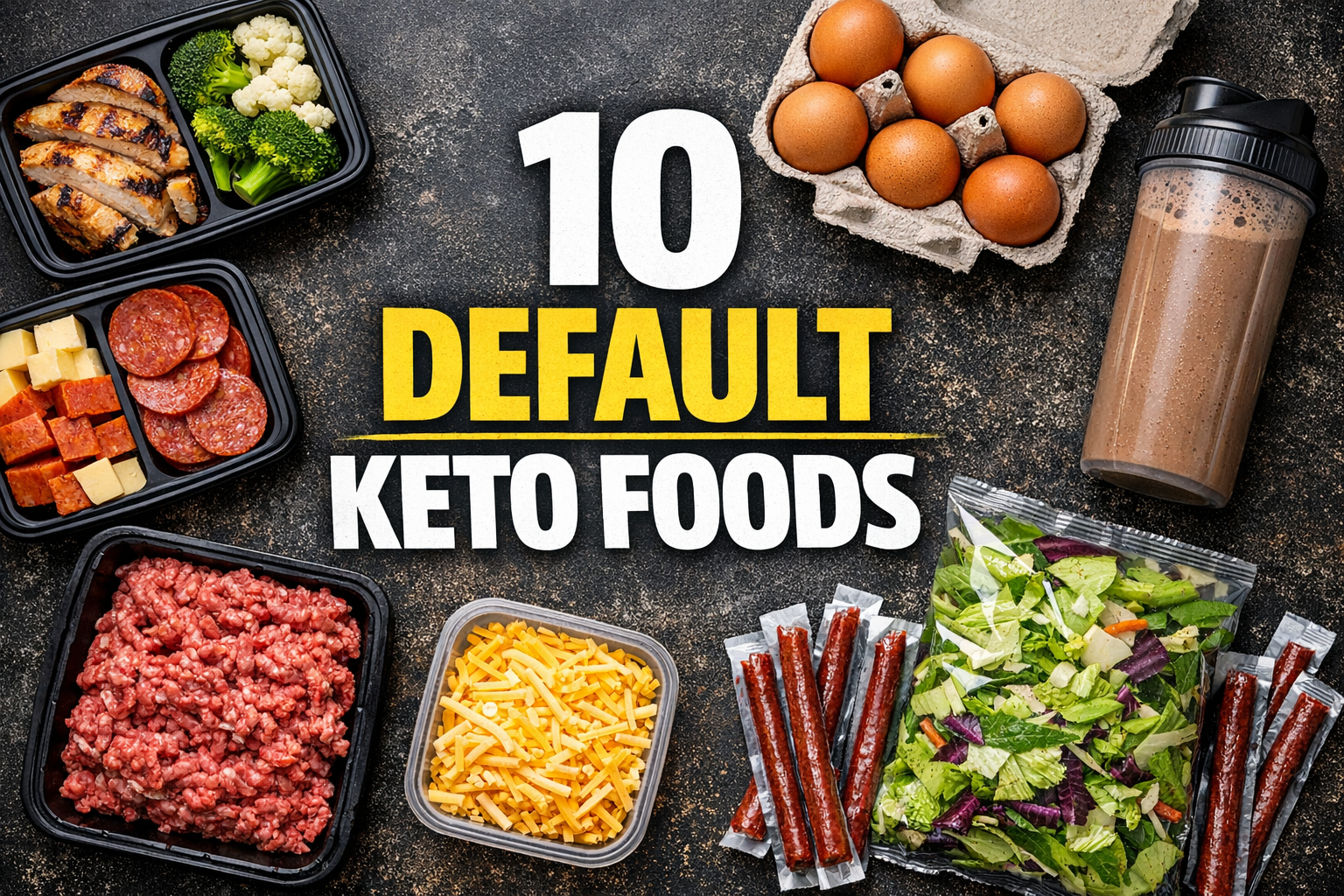
Default foods solve decision fatigue. You pick about 10 foods you genuinely like, tolerate well, and can turn into easy meals. Not 50. Not a Pinterest board. Ten.
A simple 10-food lazy keto default list
- Eggs
- Ground beef
- Chicken thighs or rotisserie chicken
- Shredded cheese
- Greek yogurt or cottage cheese if it fits your carbs
- Bagged salad
- Frozen broccoli or cauliflower rice
- Bacon or sausage
- Olive oil or butter
- One emergency protein option like grass-fed beef sticks or a protein shake
That list is not magic. Your version can change. The point is to stop rebuilding your food life every morning.
Common mistake: people treat default foods like boring punishment, then keep chasing novelty with packaged low-carb stuff. But boring food is not the enemy. Unreliable food is.
If something simple keeps you full and keeps you on track, that is a win.
Cause #4: You do not have category-based defaults for real life
The smartest default-food system is not just one list. It is a list broken into situations.
Because the truth is, lazy keto does not usually fail when life is calm. It fails when you are rushed, tired, busy, or too annoyed to cook. If your default foods only work on your best days, they are not real defaults.
Build defaults by moment, not just by ingredient
Breakfast defaults:
Eggs and sausage, leftover burger patties, yogurt plus measured nuts, or a protein shake if mornings are chaos.
Lunch defaults:
Rotisserie chicken salad, tuna with mayo and pickles, cheeseburger bowl, or leftovers you already expect to eat.
Dinner defaults:
Ground beef with broccoli, chicken thighs with salad, salmon with buttered vegetables, or taco bowls without the shell.
Emergency snack defaults:
Jerky, cheese crisps, hard-boiled eggs, olives, or a controlled protein option. These are there to stop bad decisions, not to become a second lunch.
Travel or work defaults:
Beef sticks, single-serve nuts if you portion them, tuna packets, protein shakes, and something salty if you tend to crash.
This is how you stop using willpower as your meal plan.
If you need more backup meal ideas for ugly days, read Lazy Keto Meals for People Who Are Too Busy to Cook. That is the practical next step once your defaults are chosen.
What most people get wrong about default foods
They think default foods are supposed to be exciting.
They are not. They are supposed to make success easier.
Another common mistake is building defaults around high-fat snack foods instead of protein-based meals. A coffee with fat, a few nuts, and some cheese cubes can look keto enough on paper. But it often leaves you underfed, still snacky, and weirdly obsessed with food later.
That is why your best default foods should usually start with protein first, not just fat first.
People also mess this up by buying too many convenience products. Some are useful. Most should stay in the backup lane. If a packaged keto product makes your life easier once in a while, fine. If it becomes your entire plan, lazy keto starts drifting fast.
Related:
Related:
How to build your 10 default foods this week
Do not overcomplicate this. Open your fridge, freezer, and pantry and ask four basic questions:
- What protein do I actually eat consistently?
- What vegetables or sides are easy enough to repeat?
- What emergency foods help without turning into grazing?
- What foods keep showing up but never really solve anything?
Then make one short list you can use for the next two weeks.
A good default-food setup might look like this:
- 3 breakfast options
- 3 lunch or dinner proteins
- 2 simple vegetable sides
- 2 emergency backup foods
That is enough. You are not designing a forever menu. You are building a system that holds up when life gets sloppy.
And if your current grocery cart keeps filling up with bars, sweeteners, and crunchy “safe” foods, it is worth reading The Biggest Lazy Keto Grocery Mistakes Beginners Make. A lot of food problems start before you even get home.
Fix this first:
- Pick 10 lazy keto default foods you already like and can buy this week.
- Make sure at least half of them are real meal builders, not snack foods.
- Create one automatic breakfast, one automatic lunch, and two automatic dinners.
- Add 2 emergency backups for rushed days, but keep them as backup only.
- Repeat the system for two weeks before changing everything again.
🔎 If this helped, here are more no-BS keto guides worth reading next:
- Why Lazy Keto Stops Working When You Start Snacking Too Much
- Lazy Keto Meals for People Who Are Too Busy to Cook
- The Biggest Lazy Keto Grocery Mistakes Beginners Make
Explore more Lazy Keto stories here: