You can stay under your carbs all day and still wreck your progress with lazy keto snacking.
That’s the part a lot of people miss. If your version of keto has turned into handfuls of nuts, cheese cubes, keto bars, and random bites between meals, the problem is not that keto “stopped working.” The problem is that your eating got loose.
Most people have had that day where breakfast was small, lunch was weak, and then the whole afternoon became “just one more snack.” By evening, it feels like you barely ate a real meal – but somehow you still ate too much.
Why lazy keto snacking becomes a problem fast
Lazy keto can work well when it stays simple. You keep carbs low, eat real meals, and avoid turning food into a full-time hobby.
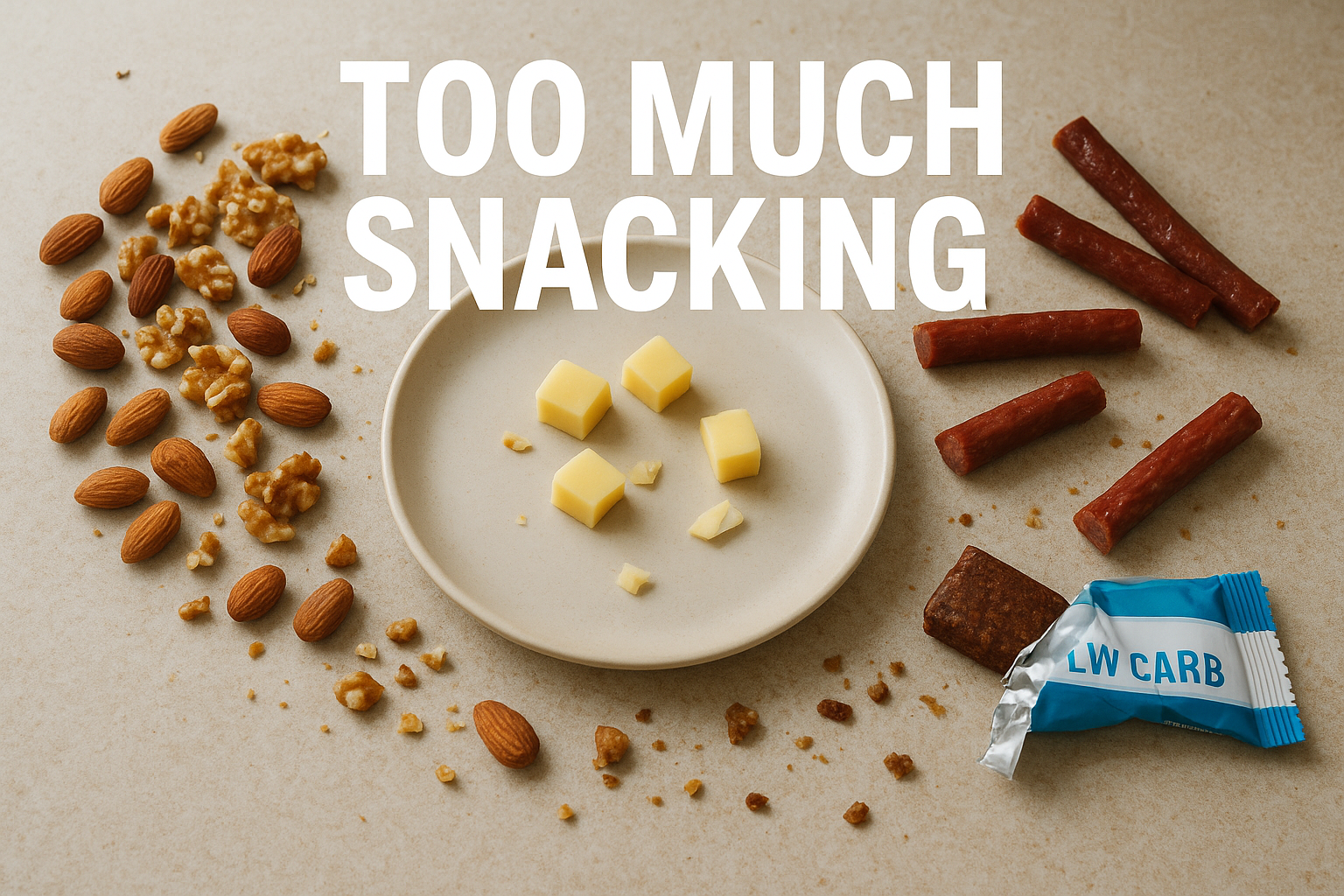
But lazy keto falls apart when “easy” turns into “constant.” Snacking feels harmless because each food looks low carb on its own. A cheese stick here. A handful of almonds there. A low-carb bar because you were busy. None of that feels like a big decision. Together, it becomes a pattern that keeps you hungry, overshoots your calories, and makes weight loss slower than it should be.
This is not a willpower problem. It’s a structure problem.
1. You’re calling fake hunger real hunger
A lot of snacking is not hunger. It’s boredom, stress, habit, or just being near food.
Real hunger usually builds. It feels steady. You would eat an actual meal. Fake hunger is different. It shows up right after lunch when someone opens a bag at work. It hits at night when you want something crunchy. It appears when you feel tired and want a reward.
On lazy keto, this gets confusing because low-carb snacks feel “allowed.” So instead of asking whether you need food, you ask whether the snack fits keto. That is the wrong question.
A real-life version looks like this: you eat eggs and bacon in the morning, grab a light lunch, then start picking at nuts, jerky, and cheese all afternoon. By dinner, you’re not fully hungry, but you’re also not satisfied. So you snack again later.
The common mistake is treating every urge to eat like an emergency. The fix is simple: pause and ask, “Would I eat chicken and broccoli right now?” If the answer is no, you probably do not need food. You need a break, water, a walk, or a better routine.
2. Your meals are too weak, so snacks take over
This is one of the biggest lazy keto mistakes. People keep carbs low, but their meals are too small or too light to carry them.
A salad with a little shredded cheese is not a strong keto meal. Neither is coffee plus cream and a few deli slices. Neither is a plate built mostly around fat without enough protein.
If your meal does not have enough protein and enough actual food volume, you will keep hunting for something later. That is why so many people feel like they need snacks on keto. What they really need is a better meal.
You can see this problem all over the place. Someone eats a “clean” keto lunch that sounds healthy, but it barely has substance. Two hours later they are digging through the pantry. Then they blame cravings. Then they blame keto.
Here’s the truth: a lot of snacking starts at the last meal.
The fix is to build meals that do some real work. Center them around protein first. Chicken thighs, ground beef, salmon, eggs, burger patties, rotisserie chicken, tuna, or steak. Add something simple on the side, like broccoli, salad, cauliflower, or green beans. If you need help with stronger meal ideas, these lazy keto meals for busy people are a much better base than living on snack food.
3. You’re snack stacking without noticing
This is where lazy keto gets sneaky.
No single snack seems like a big deal. A handful of almonds is small. A few slices of cheese are small. A beef stick is small. A keto bar is small. But if you keep doing that every few hours, you are no longer “having a snack.” You are building an extra meal out of random parts.
And random food is easy to underestimate.
This is especially true with calorie-dense foods like nuts, cheese, nut butter, heavy cream drinks, and packaged keto treats. They disappear fast, barely create fullness, and make it easy to eat far more than you think. That’s one reason weight loss slows down on keto even when carbs look fine.
A common real-life pattern is eating a normal breakfast, then grabbing almonds in the car, cheese in the afternoon, a low-carb snack bar after work, and pepperoni while making dinner. Nothing felt extreme. But the day turned into constant eating.
The mistake is thinking low carb automatically means low impact. It does not. The fix is to stop grazing and make a rule: if you eat between meals, it needs a reason and a portion. Not a handful from the bag. Not three different little snacks because each one “doesn’t count.”
If you want a fallback option for genuinely busy days, keep one practical protein-heavy option around instead of a full snack collection. A pack of grass-fed beef sticks works better as an emergency backup than turning your desk or kitchen into a snack zone.
4. You’re using “it fits my carbs” logic to justify bad eating
This is the lazy keto trap that hits hardest.
People start with a simple rule: keep carbs low. Good start. Then that rule slowly becomes the only rule. If something fits the carb count, it gets approved. Never mind the protein. Never mind the calories. Never mind whether it keeps you full. Never mind whether it makes the next meal harder to control.
That mindset is how people end up building a whole day around keto snack bars, processed wraps, cheese crisps, and little “treats” that technically fit. Yes, they may be low carb. No, that does not make them smart daily staples.
This is not a carb math problem. It’s a food quality problem.
Real food is usually easier to control than hyper-palatable packaged food. A burger patty and eggs do not create the same overeating spiral as sweet bars and crunchy keto snacks that make you want another one right away.
The common mistake is trying to win keto with loopholes. The fix is to use carbs as a guardrail, not as a permission slip. If a food keeps showing up in your snack cycle, making you hungrier, or replacing real meals, it is probably hurting more than helping.
If you rely on convenience too much, you also need to know which products are worth avoiding. These lazy keto grocery mistakes explain why so many “easy” foods make the whole plan worse.
5. You never replaced snacky eating with a simple meal structure
Many people bring their old eating style into keto. They used to snack on crackers, chips, granola bars, and candy. Now they snack on keto versions of the same behavior.
That means the food changed, but the pattern did not.
If your old habit was eating every time you felt an urge, keto will not automatically fix that. You still need a structure. Otherwise, low-carb snacking becomes the new version of the old mess.
A better lazy keto setup is boring in the best way. Two or three real meals. A few repeat foods you trust. One backup option for hectic days. Fewer decisions. Less nibbling. More consistency.
That might look like eggs and sausage for breakfast, burger bowls for lunch, and chicken with vegetables for dinner. Or skipping breakfast if you are genuinely not hungry, then eating two strong meals instead of six little food events.
The mistake is leaving everything open-ended. The fix is to decide your rhythm before the day starts. Know what your next real meal is. Know what counts as an emergency backup. If you need one, a ready-to-drink protein shake is better than piecing together random snacks for half the day.
Related:
Common lazy keto snacking mistakes that keep showing up
Some mistakes are so common they deserve to be called out directly.
- Keeping too many snack foods in reach: If it is easy to grab, you will grab it more often.
- Eating low-protein meals: This almost always comes back as afternoon snacking.
- Using keto treats as daily food: A backup item is not the same as a staple.
- Snacking while distracted: Car rides, screens, and kitchen hovering all make intake invisible.
- Trying to feel in control with carb numbers alone: You can hit the carb goal and still eat in a messy way.
If any of that sounds familiar, good. That means you can fix it. Most lazy keto problems are not mysterious. They are patterns hiding in plain sight.
Fix this first:
- Build stronger meals. Start with protein, then add simple sides. Stop calling light snack plates full meals.
- Cut random grazing. If you eat between meals, give it a reason, a portion, and a stop point.
- Remove your biggest trigger snacks. If a food makes you keep circling back, stop buying it for now.
- Use one emergency backup, not five. Keep one practical option for busy days instead of stocking a whole snack buffet.
- Follow a basic daily structure. Two or three real meals will beat all-day nibbling almost every time.
Lazy keto works best when it stays simple. The more your day turns into constant snacking, the less simple it becomes – and the worse your results usually get.
🔎 If this helped, here are more no-BS keto guides worth reading next:
- Best Keto Snacks (That Won’t Kick You Out of Ketosis)
- Lazy Keto Meals for People Who Are Too Busy to Cook
- The Biggest Lazy Keto Grocery Mistakes Beginners Make
Explore more Lazy Keto stories here: