
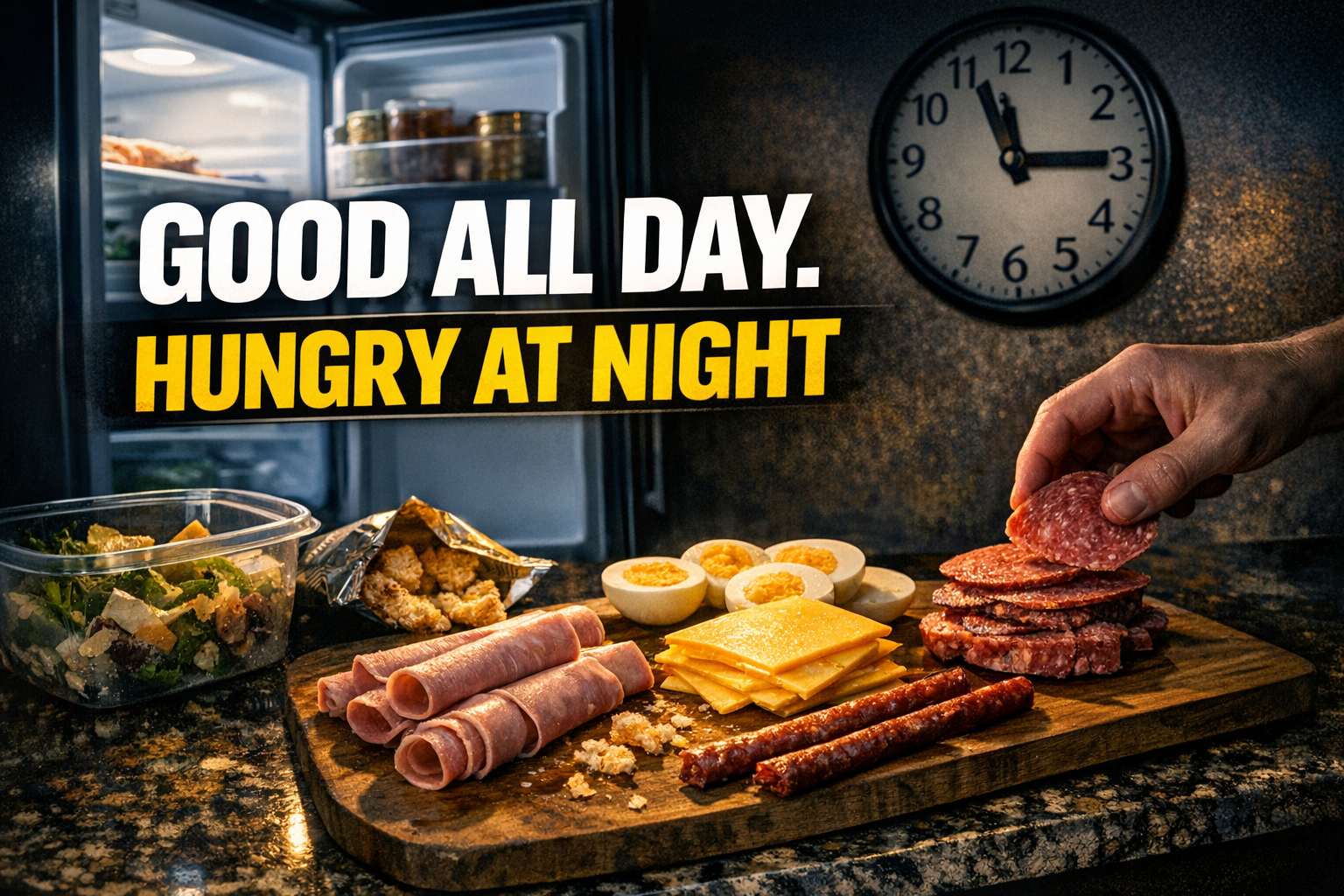
Then you step on the scale the next morning and wonder how you can be so “good” all day and still feel out of control at night. That usually does not mean keto stopped working. It means your day was built in a way that set up nighttime hunger, stress eating, or reward eating later on. Maybe you made it through breakfast on coffee, ate a sad lunch, stayed busy, and felt proud by 6 PM. Then 9 PM shows up, the house gets quiet, and suddenly your brain wants everything crunchy, salty, sweet, or comforting. That is a real pattern. And it has real causes.
Why keto impossible at night happens even when your daytime meals look “clean”
Night eating on keto usually is not about willpower. It is usually about what your body and brain have been missing all day. Most people assume the problem starts when they open the pantry at night. It usually starts hours earlier. Here is the hard truth: this is not a nighttime discipline problem. It is a daytime setup problem. If your meals are too light, your protein is too low, your routine is stressful, or you treat nighttime food like a reward, you can feel fine for a while and then crash later. That is why this pattern overlaps with problems in weak keto lunches that wreck the rest of the day and not eating enough protein early in the day. The day might look controlled on the surface while quietly setting you up to overeat later.Start here:
Your daytime meals are too light to carry you into the evening
A lot of people call a day “good” because it was low carb. But low carb is not the same as satisfying. If breakfast was coffee with fat, lunch was a few eggs, and dinner was smaller than you needed, your body may spend the whole day underfed while you mistake it for discipline. In real life, this looks like someone eating a tiny salad with chicken at lunch, skipping any real afternoon meal, and then roaming the kitchen after dinner looking for nuts, cheese crisps, jerky, or spoonfuls of peanut butter. The common mistake is thinking nighttime hunger means you should just “be stronger.” That misses the point. If your meals did not hold you, nighttime appetite is not random. The fix is to make earlier meals heavier on actual food. Build lunch and dinner around real protein first. Add enough volume from vegetables or other low-carb foods so the meal feels finished. Stop calling tiny meals successful just because they kept carbs low. If you know your evenings are rough, plan for that before it gets rough. A real afternoon meal or solid afternoon bridge can cut a lot of damage off before it starts.You are under-eating protein, so your body keeps asking for more food
Keto gets blamed for a lot of hunger that is really a protein problem. When protein is too low, people often end up chasing fullness with snack foods. They eat cheese, nuts, keto bars, or random leftovers, but still feel like something is missing. That is because something is missing. You see this all the time with people who keep carbs low but never build meals around enough meat, fish, eggs, Greek yogurt, or another solid protein source. One very common pattern is doing “pretty good” all day on convenience food, then getting hit with a weird mix of hunger and cravings late at night. It feels emotional, but part of it is often physical. The mistake here is trying to fix a protein gap with fat-heavy snack foods. That can turn into a lot of calories without much real satisfaction. The fix is simple and not glamorous: make protein obvious in every meal. If dinner is light, have a backup protein option ready before the night starts. That might be leftover chicken, hard-boiled eggs, plain Greek yogurt, or a quick shake if you truly need convenience. If you need a fast emergency option, a zero-carb protein powder like Isopure Zero Carb Protein Powder can work as a backup instead of turning the night into random grazing. It should not replace real meals all the time, but it is better than pretending a handful of nuts solved the problem.Stress rebound eating is hitting after the day finally slows down
Some nighttime keto struggles are not about physical hunger first. They are about your nervous system finally catching up with the day. You can stay “on plan” while you are busy, working, driving, or taking care of other people. Then the second the house gets quiet, all the pressure shows up with it. Food becomes the break, the reward, or the shut-off switch. That is why someone can finish dinner and still start picking. A few bites while cleaning the kitchen turns into cheese, then jerky, then something sweet, then another trip back to the fridge. The mistake is assuming this means you are broken or addicted to keto snacks. Sometimes the food is really being used as relief. The fix is not to lecture yourself. The fix is to interrupt the pattern earlier. Ask a better question: am I actually hungry, or am I finally tired, angry, overstimulated, lonely, or done for the day? If it is stress rebound, food alone will not solve it. You may need a clear evening cutoff, a walk after dinner, tea, a shower, brushing your teeth, or just leaving the kitchen. The goal is to stop turning the kitchen into your recovery plan. This also connects with why some people think they are hungry when they are really triggered, bored, or wound up. Night makes that blur worse.You have trained yourself to “earn” food at night
This one is sneaky because it sounds harmless. You tell yourself you were good all day. You skipped the carbs. You passed on office junk. You kept lunch small. So now you deserve something. That reward mindset can turn keto impossible at night into a daily script. The whole day becomes a buildup to a private food payoff. In real life, it sounds like this: “I stayed on track, so I can have some keto treats.” Then the treat turns into grazing. Or you start with a small “safe” snack, but because the reward is emotional, the stop point keeps moving. The common mistake is believing keto-approved foods cannot drive this problem. They can. You can absolutely overdo foods that fit the carb rules if you are using them like a nightly prize. The fix is to stop treating nighttime eating like a medal ceremony. If you want something after dinner, make it planned, portioned, and boring enough that it does not become an event. Better yet, build dinner strong enough that you do not need a food reward at all. This is where products can help or hurt. A portable protein option like Chomps beef sticks can be useful if you truly need a pre-planned backup. But if every night becomes a snack occasion, you are not solving the pattern. You are just decorating it.Your evening environment makes overeating too easy
Even when hunger is real, your setup still matters. If the kitchen stays open all night, snack foods are visible, leftovers are easy to grab, and there is no line between dinner and random eating, you will make more food decisions than you think. This is why some people do fine until 8 PM, then start circling the kitchen without even deciding to. The food is there, the day is done, and nothing is stopping the drift. The mistake is trying to rely on motivation inside a bad setup. That usually fails, especially when you are tired. The fix is environmental. Put trigger foods out of sight. Pre-decide what happens after dinner. If you need a planned evening option, choose one thing and close the loop. Do not leave five “keto” snacks available and hope discipline handles the rest. If sugar cravings also show up with the nighttime pattern, it helps to read what sugar cravings on keto usually mean. Sometimes the night spiral is part hunger, part habit, and part wanting a reward.Common mistakes that make nights worse
- Calling coffee and snacks a real breakfast or lunch
- Saving most of your calories for later without meaning to
- Trying to fix low protein with cheese, nuts, and keto treats
- Using food as the only way to come down from stress
- Keeping too many easy snack foods within reach after dinner
- Thinking the problem starts at night instead of earlier in the day
Related:
What to do when keto impossible at night keeps repeating
If this happens once in a while, it is just life. If it happens most nights, it is a system problem. Start by looking backward instead of blaming the moment itself. Was lunch too small? Did protein stay low all day? Did dinner leave you half-fed? Were you stressed out and using food as a shutdown button? Most people do not need more keto rules here. They need a better food structure before night shows up.Fix this first:
- Make lunch and dinner bigger on purpose. Stop grading meals by carbs alone. Build them around enough protein and enough food to actually feel done.
- Add a planned backup before the night spiral starts. If evenings are your weak spot, decide on one real protein option in advance instead of grazing through five snacks.
- Separate real hunger from stress rebound. If you already ate dinner, pause and ask what you actually need before opening the fridge again.
- Kill the reward script. Being “good” all day does not mean you need a nighttime food prize.
- Close the kitchen loop. Put obvious snack foods away, plan your cutoff, and make random eating harder than sticking to the plan.
If this helped, here are more no-BS keto guides worth reading next:Explore more Keto That Actually Works stories here: View all Keto That Actually Works stories
- Why Keto Feels Easy All Day Then Falls Apart at Dinner
- Why Keto Falls Apart When You Keep Skipping Meals Then Overeating at Night
- Why You’re Always Hungry on Keto (And What to Fix First)