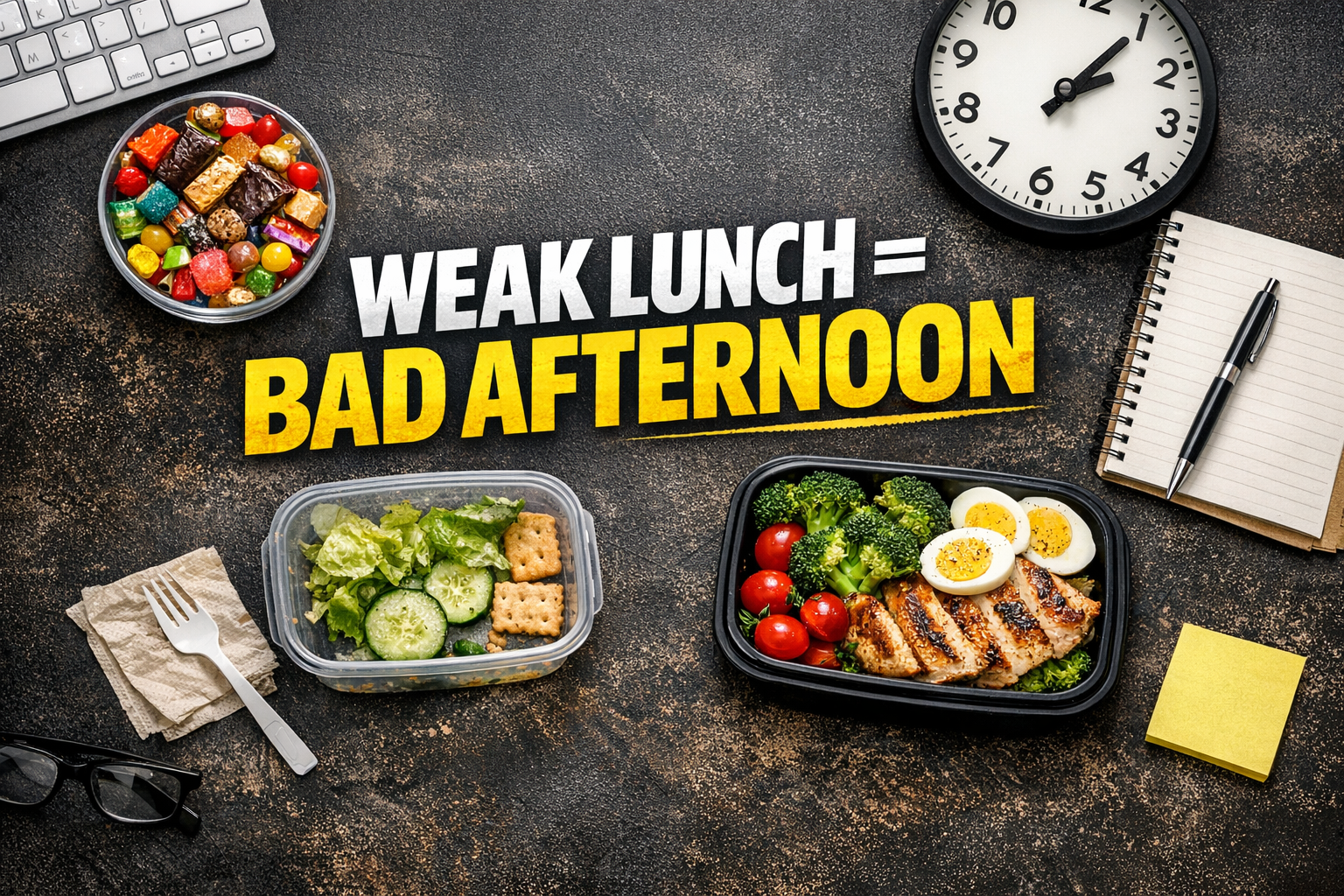
You get through the morning feeling fine, then by 2 PM your brain is shot, the office snacks start calling your name, and dinner turns into damage control. If keto falls apart at work, lunch is usually where the trouble started.
That is not bad discipline. It is usually a weak setup.
A lot of people eat a lunch that looks keto on paper but does almost nothing to carry them through a real workday. Then they spend the afternoon chasing energy, fighting cravings, and pretending a handful of random snack foods does not count.
You have probably had that moment where you open your desk drawer at 3 PM, stare at whatever is in there, and realize lunch never really did the job.
Why keto falls apart at work even when breakfast and dinner seem fine
Workdays create a very specific kind of keto problem. You are busy, distracted, and usually not making food decisions in a calm kitchen. You are making them between emails, meetings, deadlines, and whatever junk food is easiest to grab.
That changes the job lunch has to do. A decent work lunch is not just supposed to be low carb. It needs to buy you a stable afternoon.
If lunch is too light, too snacky, too low in protein, or too easy to rush through, the whole second half of the day gets sloppy fast. That is why some people feel strict and “on plan” at noon, then eat like a different person by dinner.
Cause #1: Your lunch is keto in name, but not strong enough in real life
This is the most common workday mistake. People pack a lunch that sounds clean, but it is not built to last. A little salad with cheese. Some deli meat. Coffee with fat. A few nuts. Maybe a protein bar that barely feels like lunch.
Technically, that can still be low carb. But low carb is not the same thing as filling.
In real life, this looks like eating a tiny lunch at noon and feeling proud because you “kept it light.” Then around 2:30, your focus drops, you start thinking about crunchy snacks, and by the time work ends you are ready to inhale anything in sight.
The common mistake is treating lunch like a carb-avoidance exercise instead of a stability meal. If the meal does not have enough real protein and enough substance, it will not carry you.
The fix is to make lunch heavier on protein and simpler on purpose. Think chicken thighs, burger patties, tuna salad, eggs, leftover steak, salmon, or a full portion of ground beef with low-carb sides. Add something easy like cucumbers, broccoli, salad, cheese, or olives, but let the protein do the real work.
If you keep building sad little “healthy” keto lunches, read The Easy Keto Lunch Mistakes That Wreck the Rest of Your Day. A lot of work problems start there.
Cause #2: The gap between lunch and dinner is too long for the way you actually work
Some people eat lunch at 11:30, leave work at 5:30, get home at 6:30, and do not eat dinner until 7. That is a long stretch to stay sharp if lunch was only halfway decent.
This is where keto workdays break down. Not because keto stopped working, but because your schedule quietly outruns your food.
You can see the pattern: lunch was small, the afternoon drags, somebody brings in cookies, the vending machine suddenly looks reasonable, and now you are negotiating with yourself over junk you were not even thinking about that morning.
The mistake is assuming that if lunch was keto, it should automatically hold you until dinner. That only works if the meal was strong enough and the gap is realistic.
The fix is to respect the timeline. If you regularly have a six- or seven-hour gap, you need a planned bridge. Not a random snack attack. A planned bridge.
That could mean eating lunch later, making lunch bigger, or keeping one backup option for late afternoons. A simple emergency move is a ready-to-drink protein shake or another low-carb protein option in the fridge at work. That is not your main lunch. It is your damage-control tool for days when meetings run long and dinner is far away.
This is not an afternoon willpower problem. It is a gap problem.
Cause #3: Your office is full of “small” food decisions that add up fast
At home, you can control the environment. At work, food keeps showing up. Break room pastries. Candy bowls. Birthday cake. Leftover pizza. Chips near the copier for some reason. It is ridiculous, but it is real.
If lunch was weak, those foods get louder.
One real-life version looks like this: you skip a proper lunch because you are busy, eat some cheese cubes or nuts at your desk, then grab a few crackers from the break room, then a couple bites of birthday cake “just to be social,” then tell yourself dinner will be clean. By dinner, you feel off, hungry, and annoyed, but you also act like the workday food barely counted.
The common mistake is acting like the office snacks are random exceptions. They are not. They are predictable traps.
The fix is to remove the decision at the moment you are weak. Bring lunch. Bring water. Keep one backup item at work that actually helps. If jerky fits better than a shake for your setup, something like grass-fed beef sticks works as a better emergency option than whatever is sitting in the vending machine. Use it as a backup, not as your daily lunch.
If packaged “keto” snack foods are already muddying the waters, “Keto” Foods That Look Healthy but Sabotage Weight Loss is worth reading too.
Cause #4: You under-eat during the day, then overcorrect at night
A weak work lunch rarely stays a lunch problem. It usually becomes a dinner problem.
People do this all the time: they keep the day “good” with light meals, coffee, and a few low-carb snacks, then hit the evening completely drained. At that point they do not want a reasonable dinner. They want relief.
That is how one weak lunch turns into overeating at dinner, extra snacking after dinner, or a takeout order that looked avoidable at noon.
In real life, it sounds like: “I was perfect all day, so I do not know why I lost control tonight.” Usually the answer is simple. You were not fueled. You were surviving.
The mistake is thinking the day went well because carbs stayed low. But if the workday leaves you wrecked, the system is broken even if the macros look clean on paper.
The fix is to judge lunch by what happens after it. If dinner keeps collapsing, lunch needs to change. Make it bigger. Make it more protein-heavy. Stop pretending a few bites of easy food count as a real meal.
If your evenings keep turning messy, read Why Keto Feels Easy All Day Then Falls Apart at Dinner. The connection is not subtle.
Cause #5: You rely on convenience, but you never built a smart workday convenience system
Convenience is not the enemy. Bad convenience is.
A lot of people want keto to work in an office without doing much prep, which is fair. But then they leave themselves with weak options: a tiny yogurt, a snack tray, nuts, cheese, maybe a keto bar, and pure optimism.
That setup works until the day gets hard. Then it falls apart immediately.
The common mistake is thinking convenience means grabbing anything labeled keto or low carb. A lot of those foods are too small, too snacky, or too easy to overeat without ever feeling satisfied.
The fix is to create three repeatable work lunches you can rotate without thinking:
- Leftover meat plus a simple vegetable side
- Eggs or egg salad with cheese, pickles, and cucumbers
- Tuna or chicken salad with a side salad or roasted vegetables
Then keep one emergency backup at work for the days your plan gets hit by meetings, errands, or pure chaos. That is how convenience actually helps keto instead of quietly wrecking it.
What a stronger keto work lunch actually looks like
You do not need a fancy meal-prep life. You need a lunch that solves the afternoon.
A solid work lunch usually has:
- A full serving of protein, not just “some protein”
- Enough volume to feel like a meal
- Low-carb sides that support the meal instead of replacing it
- A plan for long gaps before dinner
Better examples:
- Chicken thighs with broccoli and butter
- Burger patties with cheese and a side salad
- Leftover taco meat in a bowl with lettuce, sour cream, and shredded cheese
- Tuna salad with cucumbers, olives, and boiled eggs
- Rotisserie chicken with green beans and a simple dressing
Weak examples:
- Coffee plus fat and no real food
- A few slices of deli meat and nuts
- A bar that feels like a snack pretending to be lunch
- A small salad with barely any protein
- Random grazing at your desk instead of one real meal
Related:
Related:
The biggest workday keto mistake
Trying to be “good” at lunch instead of trying to be stable.
That mindset sounds disciplined, but it backfires hard. A weak lunch can make the whole day harder, and then people blame themselves for the crash that came later.
Lunch should make the afternoon easier. If it does not, it is not working.
Fix this first:
- Make lunch a real meal with a full protein serving, not a pile of snacks that happens to be low carb.
- Look at the time gap between lunch and dinner. If it is too long, build a planned backup instead of waiting for a snack emergency.
- Keep one work-safe emergency option on hand so the break room and vending machine stop deciding for you.
- Judge your lunch by your afternoon focus and your dinner behavior, not just by whether the carbs looked low at noon.
- Rotate two or three simple work lunches every week so keto does not fall apart the second work gets busy.
If this helped, here are more no-BS keto guides worth reading next:
- The Easy Keto Lunch Mistakes That Wreck the Rest of Your Day
- Why Keto Feels Easy All Day Then Falls Apart at Dinner
- Why Keto Falls Apart on the Weekend Even When You’re Strict All Week
Explore more Keto That Actually Works stories here: