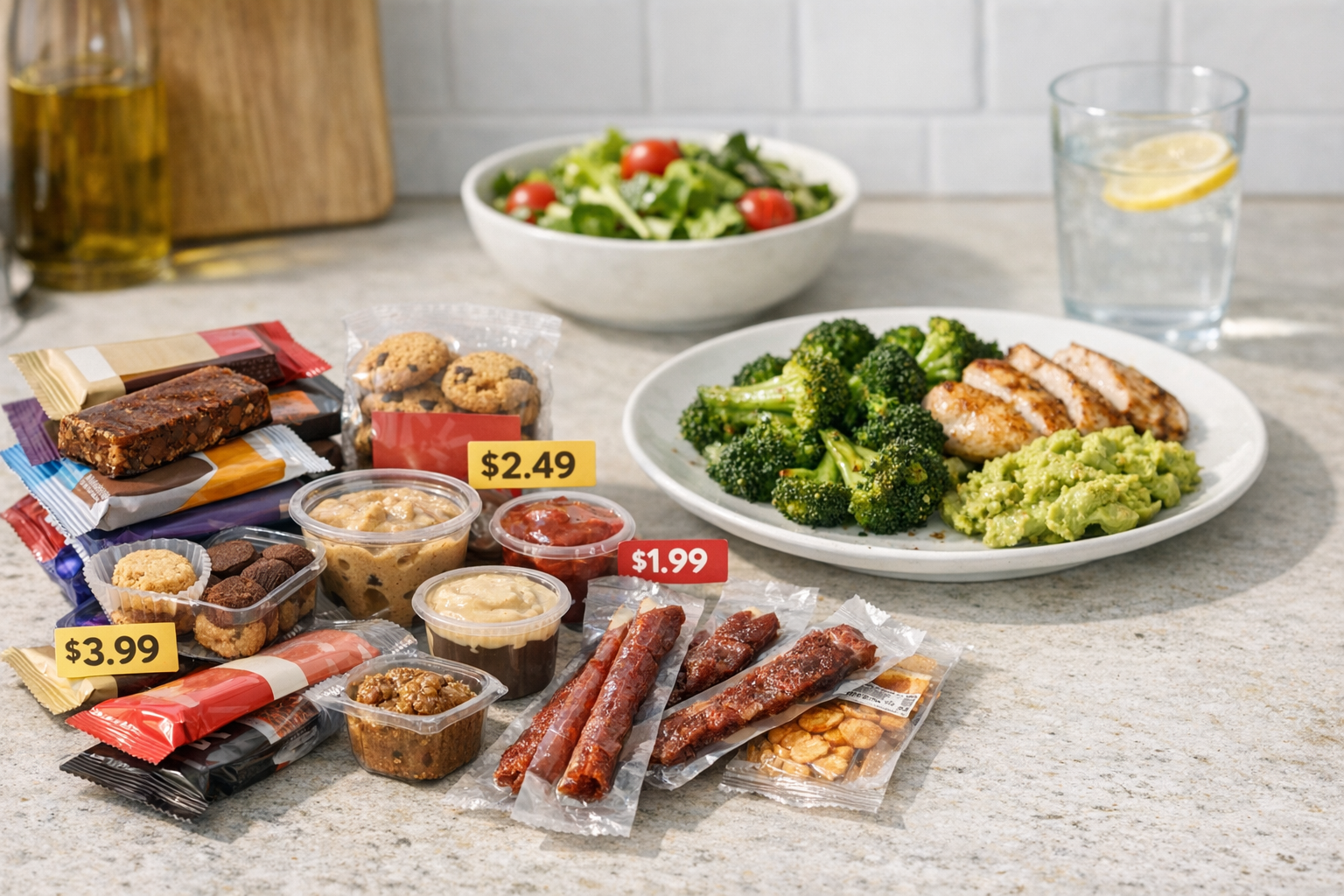
You buy the low-carb bar. The keto wrap. The cheese crisps. The little single-serve treat. It all feels easier, so it should make lazy keto easier too.
But lazy keto convenience food becomes a money trap when those foods cost more, fill you up less, and leave you hunting for more food an hour later.
I’ve seen this pattern a lot: the cart looks “keto,” the receipt looks painful, and dinner still turns into random snacking because none of the quick food actually held you over.
Here’s the truth. Lazy keto does not get expensive because keto itself is impossible. It gets expensive when convenience food replaces real meals.
Why lazy keto convenience food becomes a problem so fast
Convenience food sells speed. It does not always deliver satiety.
Most packaged keto foods are small, easy to overeat, and built more like a backup than a full meal. That matters because lazy keto only works when your easy choices still keep you full enough to stop picking at food all day.
If your “quick fix” meal is a bar, a handful of something crunchy, and coffee, you did not solve lunch. You just delayed real hunger.
Start here:
Cause 1: You’re paying meal prices for snack-sized food
This is where most people get burned first. A convenience keto item often costs as much as a simple real-food meal, but gives you way less staying power.
A single packaged wrap, snack pack, or keto dessert can disappear in five minutes. Then you still need more food. Now you have spent money twice.
Real life example: you grab a keto bar and a tiny bag of cheese crisps because you are busy. It feels controlled and low carb. By mid-afternoon, you are raiding the fridge because that “meal” never really landed.
The common mistake is judging food by carbs alone. Yes, the label may fit keto. But if the portion is tiny and the protein is weak, you are buying convenience without enough substance.
The fix is to compare every convenience buy against a simple cheap meal. Could the same money buy eggs, ground beef, rotisserie chicken, tuna, burgers without buns, or leftovers that actually keep you full? Most of the time, yes.
If you need a practical reset, start with foods like the ones in The Cheap Keto Foods That Keep Beginners Full Without Living on Snacks. That is the better benchmark, not the shiny low-carb aisle.
Cause 2: The food is easy, but it’s not built to satisfy hunger
A lot of convenience keto foods are designed to be portable and shelf-stable. That usually means smaller portions, softer hunger control, and a weird gap between what the label says and what your stomach says.
People think they are failing because they have “no willpower.” Usually it is simpler than that. The food was too light, too snacky, or too easy to keep nibbling.
You see this with tiny keto sweets, mini packs of nuts, low-carb tortillas stuffed with almost nothing, and frozen meals that look decent until you actually eat one. They do not always create the kind of full, done-eating feeling that makes lazy keto easy.
The mistake here is treating convenience foods like a full replacement for protein-first meals. That works for a day here and there. It works badly when it becomes the default.
The fix is to build convenience around satiety, not just speed. If you need fast food at home, anchor it with enough protein first. That might mean leftover chicken, deli meat, eggs, burger patties, cottage cheese, or another real base before you add the packaged extra.
This is also why Lazy Keto Falls Apart When Your House Has No Fast Emergency Meals matters so much. Your easiest option should still feel like a real meal, not just a controlled snack.
Cause 3: Small packaged treats create second eating
One expensive mistake on lazy keto is buying lots of “just in case” foods that quietly turn into extra eating. A bar after lunch. A treat after dinner. Another low-carb snack because the first one was technically tiny.
None of that sounds huge on its own. Together, it turns one eating event into two or three.
Real life example: you eat a frozen keto bowl at noon. It was fine, but not enough. Then you add a snack bar. Then later you want something salty. Suddenly your simple lunch cost a lot and still created more decisions.
The common mistake is thinking packaged keto food is safer because it is portioned. Portion-controlled does not mean appetite-controlled.
The fix is to watch for foods that trigger follow-up eating. If a product regularly makes you want something sweet, salty, crunchy, or “just a little more,” it is costing more than the sticker price. It is also increasing the odds that your day drifts into the kind of random eating covered in Why Lazy Keto Stops Working When You Start Snacking Too Much.
Cause 4: Convenience shopping hides the real budget leak
Most people assume keto is expensive because meat costs money. In real life, the bigger leak is usually repeated convenience spending.
Single-serve foods, low-carb desserts, grab-and-go packs, and branded keto substitutes add up fast because they feel harmless in the moment. One item here, two items there, and suddenly the cart is full of expensive backups instead of actual meals.
This gets worse when you shop without defaults. If every store trip is improvising, convenience brands win because they promise easy answers.
The mistake is walking into the store without a short list of repeat buys. That is how you end up paying premium prices for foods that are only solving ten minutes of your day.
The fix is to keep a boring, reliable base. Pick a few default proteins, a few default sides, and a few true emergencies. Lazy Keto Is Easier When You Pick 10 Default Foods and Stop Improvising All Day is the exact mindset shift that cuts both stress and spending.
Common mistakes that make lazy keto convenience food even more expensive
- Buying snacks instead of buying meal parts
- Using low-carb desserts as daily staples
- Paying for tiny single-serve items instead of meal-prepping two or three basics
- Calling a bar and coffee “lunch”
- Stocking emergency foods that do not actually stop hunger
If you want lazy keto to stay simple, convenience food should support your routine, not become your routine.
What to buy instead when you need something fast
The better move is not to swear off every packaged product. It is to demote them.
Use convenience foods as backup support, not the center of your day. A beef stick can save you when you are stuck in traffic or between errands. It should not be the thing carrying your whole diet.
If you want one backup that makes more sense than a sugary “keto treat,” something like Chomps grass-fed beef sticks fits better because it is portable, higher in protein, and easier to pair with a real meal later. That works as an emergency option, not as a magic fix.
For the bigger picture, pair fast backup foods with a simple home system. Keep cooked protein ready. Keep eggs around. Keep leftovers visible. Keep one or two repeat meal ideas so you do not need a brand to rescue every busy day.
And if your schedule is the real problem, Keto Meal Prep Ideas for Busy People Who Need a Simple Weekly System helps you set up easier wins before you get hungry and impulsive.
Related:
The real fix: make convenience cheaper by using less of it
This is the part most people miss. You do not beat expensive lazy keto by finding better expensive keto snacks. You beat it by needing fewer of them.
When your base meals are filling, convenience food stops acting like a daily crutch. It becomes what it should have been all along: a backup.
That also makes it easier to live with other people, work odd hours, or deal with messy schedules without buying your way through every weak moment. If that is your struggle, Lazy Keto for People Who Live With Non-Keto Family Meals is worth reading next.
Fix this first:
- Cut one week of snack-bar and treat spending, and use that money on real protein instead.
- Choose three cheap, filling fallback meals you can repeat without thinking.
- Keep only one or two true emergency convenience foods, not a whole shelf of them.
- Notice which packaged foods lead to second eating, and stop calling them helpful.
🔎 If this helped, here are more no-BS keto guides worth reading next:
- Lazy Keto Falls Apart When Your House Has No Fast Emergency Meals
- Keto Meal Prep Ideas for Busy People Who Need a Simple Weekly System
- Lazy Keto Is Easier When You Pick 10 Default Foods and Stop Improvising All Day
Explore more Lazy Keto stories here: