Healthy keto salads sound safe. That is exactly why they trip people up.
You order the big salad, skip the bread, pick the “good” toppings, and still end up hungry, snacky, and annoyed two hours later. That usually is not a willpower problem. It is a weak meal pretending to be a strong one.
It happens fast. You finish a giant bowl, tell yourself you were disciplined, then start wandering back into the kitchen because dinner never really felt finished.
Here’s the truth: a lot of healthy keto salads fail because they look clean on paper but miss the stuff that actually keeps you full. If keto keeps feeling harder after meals like this, the bowl is not helping as much as you think.
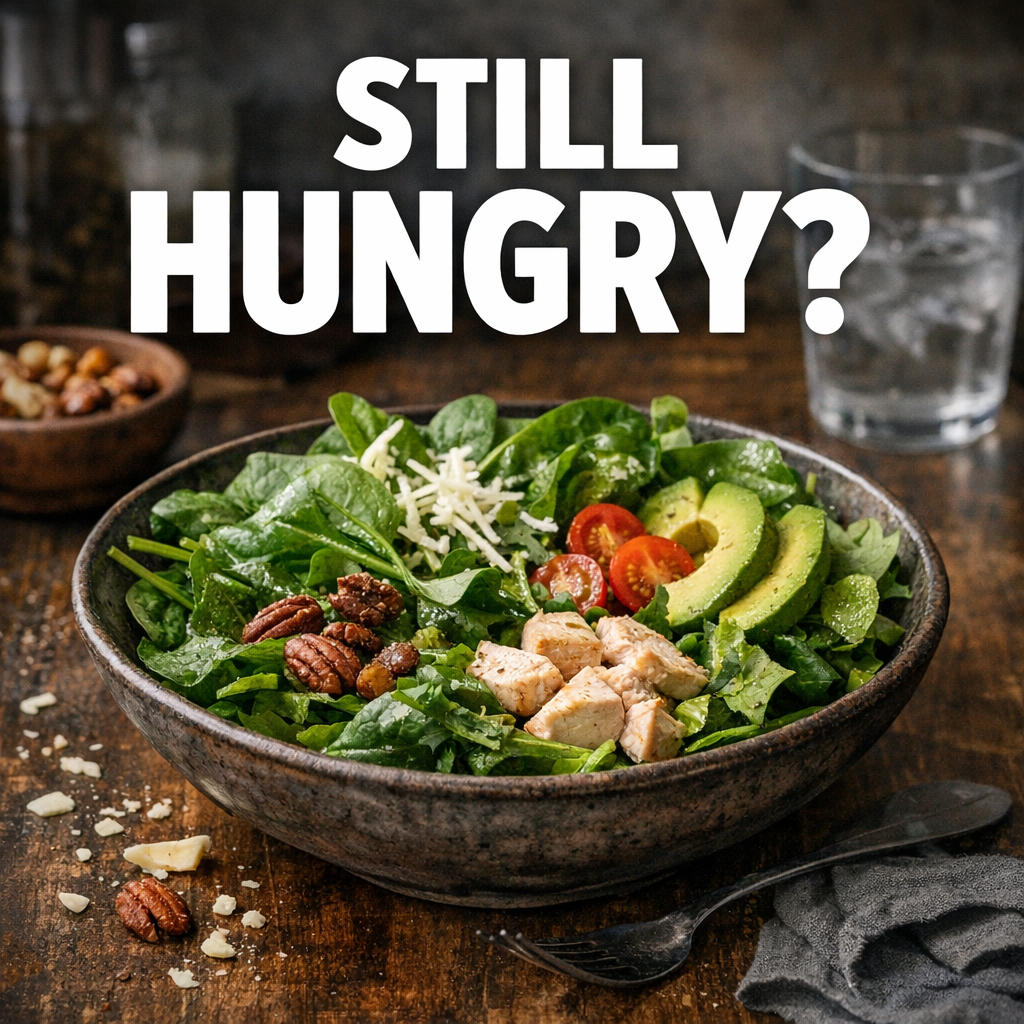
The big myth is that low-carb volume automatically creates fullness. It doesn’t. A giant bowl of greens, cucumbers, and keto-friendly extras can look impressive while still feeding you like a side dish. If the protein is weak, the salad is just taking up space, not actually shutting hunger down.
Why healthy keto salads can still backfire
A salad can be low carb and still be a lousy keto meal.
Keto works better when meals handle two jobs at the same time: keep carbs under control and keep hunger under control. A lot of salad-style meals only do the first part. They cut obvious carbs, but they do not build enough protein, enough staying power, or enough structure to stop the next round of cravings.
That is why this problem confuses people. The meal looks healthy. The bowl is huge. The toppings say keto-friendly. But if the protein is weak, the dressing gets sneakier than people realize, or the whole thing eats like a side dish instead of a real meal, you end up right back in snack mode.
Low-carb volume is not the same thing as actual fullness. Lettuce and chopped vegetables can make a container look packed, but they do not do the same job as a real protein-first meal. That is the gap a lot of people miss when they assume salad equals appetite control.
If this pattern sounds familiar, start with Keto Meal Structure That Actually Keeps You Full. It explains the bigger rule this article is zooming in on.
Protein-first reality check: if the salad would not look like enough food once the greens disappear, it was never a strong meal. If this keeps happening, read Keto Protein Problems next.
Start here:
Cause #1: The protein looks decent, but it is not enough to finish the job
This is where most healthy keto salads fall apart.
A lot of bowls have a little grilled chicken, a few bacon bits, maybe some shredded cheese, and that is supposed to count as a full meal. It looks balanced because the bowl is large. But a lot of that size comes from lettuce, watery vegetables, and volume that does not do much for fullness.
Real life example: you get a Cobb-style salad with greens, cucumber, half an egg, some cheese, and a few slices of chicken. It looks huge. But the actual protein is light, and by mid-afternoon you are thinking about nuts, bars, jerky, or whatever is easiest to grab.
The mistake is assuming the bowl size matters more than the protein load. It doesn’t. A large weak meal is still a weak meal.
The fix is simple: make the protein obvious before you worry about the rest. If the main protein would look small on a plate by itself, it is probably too small in a salad too. Build the meal around chicken, steak, salmon, burger patties, turkey, eggs, or another real protein first. Then let the salad stuff support it instead of pretending to be the meal.
If weak lunch protein is a repeat problem, keeping a simple zero-carb protein powder or a ready-to-drink protein shake around can help when your salad clearly is not enough and you need an easy protein add-on instead of another snack spiral.
If you keep running into all-day hunger on keto, read Why You’re Still Hungry on Keto. Weak protein early in the day often shows up later as random cravings, snack decisions, and the feeling that keto somehow stopped working.
Cause #2: The toppings make the salad look keto, but they do not make it satisfying
People love to turn salads into a pile of “keto-friendly” extras: cheese, sunflower seeds, a few nuts, bacon crumbles, crispy toppings, avocado, and little bits of this and that.
That can sound smart. In real life, it often turns into a bowl full of add-ons without enough actual meal structure.
You can end up with plenty of calories and still not feel settled. Why? Because toppings are easy to nibble through without getting the clear stop signal that a real protein-based meal gives you.
This is the same reason some people feel confused by “healthy” keto foods in general. They are not always high carb disasters. They are often just messy, easy-to-overeat foods that keep appetite noisy. That same pattern shows up in Net Carb Keto Traps, where food labels and keto-friendly logic start replacing common sense.
A real-life version looks like this: the salad has chicken, but not much. So you add cheese, pumpkin seeds, extra dressing, maybe a handful of almonds on the side, and now it feels more “keto.” But later, you still want something sweet or crunchy because the meal never landed properly.
The mistake is thinking lots of little keto extras equal one solid meal. They do not.
The fix is to keep toppings in a support role. Use one or two that actually help the meal, then stop. If the salad only works because you buried it in extras, it probably was not strong enough to begin with.
Cause #3: The dressing and sauce logic gets sneakier than people realize
Some salads are not failing because of lettuce. They are failing because the “healthy” dressing setup quietly turns the whole meal into a flavor bomb with shaky carb control and easy overeating.
Dressings matter because they can change two things at once: total carbs and how much you keep chasing the meal after you are done. Sweet dressings, creamy restaurant dressings, glaze-heavy proteins, candied nuts, dried fruit, and “just a little” drizzle logic add up fast.
Even when the label looks acceptable, the problem can still be the overall pattern. A salad with weak protein and highly rewarding dressing often creates the exact same outcome as other fake-safe keto foods: you ate something “on plan,” but your appetite acts like you didn’t.
This is one reason healthy keto sauces, creamers, and dressings deserve more suspicion than people give them. They are small enough to ignore and strong enough to change the whole meal.
Here is what it looks like in real life: a restaurant salad seems fine until you count the sweet vinaigrette, the glazed protein, the extra creamy dressing cup, and the crunchy topping blend. Nothing seems huge by itself. Together, the salad becomes the kind of low-control meal that leaves you hungrier later.
The mistake is only asking, “Is this low carb enough?” The better question is, “Does this meal still act like a real meal after I eat it?”
The fix is boring, which is usually a good sign. Pick simpler dressings. Use less than you think. Watch for sweet sauces, sticky proteins, and crunchy add-ons that are there to make a weak meal more exciting. If the salad needs dessert-level flavor tricks to feel worth eating, that is a clue.
Cause #4: The salad is too light for the time of day and the situation you are in
A lot of people do okay with a salad at lunch on a quiet day. Then they try the same meal before a long afternoon, before errands, before practice pickup, or on a stressful workday and wonder why keto suddenly feels impossible by 4 PM.
The meal did not fail in a vacuum. It failed in context.
Healthy keto salads are especially risky when you are already behind on food, stressed, tired, or trying to push dinner too late. A light lunch in the middle of a demanding day often creates a rebound. Not always right away, but later when decision-making gets worse.
You see this pattern all over the site: people think the problem is nighttime hunger, sweet cravings, or a lack of discipline. A lot of the time, the real problem started hours earlier with a meal that was too light for the job. That is why posts like Why Keto Gets Harder at Night connect so strongly to meal structure problems.
Real-life example: lunch is a clean-looking salad at 1 PM. Then work runs long. You have errands. Dinner gets delayed. By 6 PM you are picking at cheese, nuts, and random leftovers, then ordering takeout because you feel too far gone to cook.
The mistake is judging the meal at the moment you eat it instead of judging how it affects the rest of the day.
The fix is to match the meal to the day. If dinner will be late, the salad needs to be stronger. If you are already hungry, a light bowl is a bad gamble. If the day is chaotic, eat something that actually holds you, not something that just sounds disciplined.
Cause #5: The salad gives you a false sense of control, so you ignore the rebound
This is the emotional side of the problem, and it matters.
People give healthy keto salads credit just for being salads. That makes it easier to ignore what happens next. If you had burgers and fries, you would expect fallout. If you had a giant keto-ish salad, you tell yourself the later hunger must be random, hormonal, or just you being bad at keto.
That false sense of safety keeps the pattern going.
You may even “compensate” in ways that make things worse. You try to be extra strict at dinner. You avoid eating enough because you think lunch should have covered it. Then by night you are scavenging for keto desserts, snack foods, or anything crunchy.
That is one reason this topic belongs in Keto Lies & Myths. The lie is not that salad is bad. The lie is that healthy-looking keto meals automatically solve hunger and weight-loss problems.
The fix is to judge meals by results, not by reputation. If a salad keeps leading to kitchen-raiding, sweet cravings, or bigger dinners, it is not working well for you in its current form. Change the structure. Add real protein. Simplify the toppings. Use less dressing. Or stop pretending that every keto meal needs to be a salad in the first place.
Common mistakes people make with healthy keto salads
- Counting the bowl, not the protein. A big container does not mean a filling meal.
- Using toppings to fake fullness. A little cheese, nuts, and dressing do not fix weak meal structure.
- Trusting restaurant salad marketing. “Healthy” and “keto-friendly” are not the same as effective.
- Ignoring what happens two hours later. If hunger comes roaring back, the meal was not as solid as it looked.
- Choosing salad to feel virtuous. Keto works better when meals are useful, not just clean-looking.
What a better keto salad actually looks like
A better salad is boring in the right ways.
It has a clear protein anchor. It does not rely on a dozen toppings to feel complete. It uses dressing like seasoning, not like the main event. And it leaves you feeling done, not halfway fed.
For some people, that means a salad with a serious portion of chicken or steak and only a few simple add-ons. For other people, it means admitting they do better with a plate meal than a bowl meal, especially on stressful days.
If you keep getting fooled by neat-looking low-carb foods, the bigger pattern is covered in Keto Convenience Food Traps. Different food, same issue: technically keto does not always mean practically helpful.
Related:
What to do when your “healthy” salad keeps failing you
Do not try to solve weak salads with more discipline. Solve them with better meal structure.
Start by asking one blunt question: where is the real protein? If that answer is fuzzy, the meal is already on shaky ground. Then ask whether the salad would still feel like enough food if you removed the giant pile of greens. If the answer is no, you are probably dealing with low-carb volume instead of real fullness.
The fastest fix is to make lunch more protein-first on purpose. Build the meal around the protein, keep toppings simple, and treat the salad base like support material instead of the star. If this keeps showing up in your day, go back through Keto Protein Problems and Keto Meal Structure That Actually Keeps You Full. That is usually where the real fix starts.
Fix this first:
- Pick the protein before you build the salad. If the protein is weak, the whole meal is weak no matter how healthy the bowl looks.
- Stop using volume as proof the meal is enough. A huge salad can still underfeed you if most of it is greens, watery vegetables, and small toppings.
- Use toppings and dressing as support, not as the meal plan. Keep them simple so they do not hide the real problem.
- Build lunch to protect your evening. If your salad keeps leading to night cravings, bigger dinners, or kitchen-raiding, make it more protein-first or eat something else.
🔎 If this helped, here are more no-BS keto guides worth reading next:
- Keto Meal Structure That Actually Keeps You Full
- Keto Protein Problems
- Healthy Keto Sauces, Creamers, and Dressings
Explore more Keto Lies & Myths guides here: