
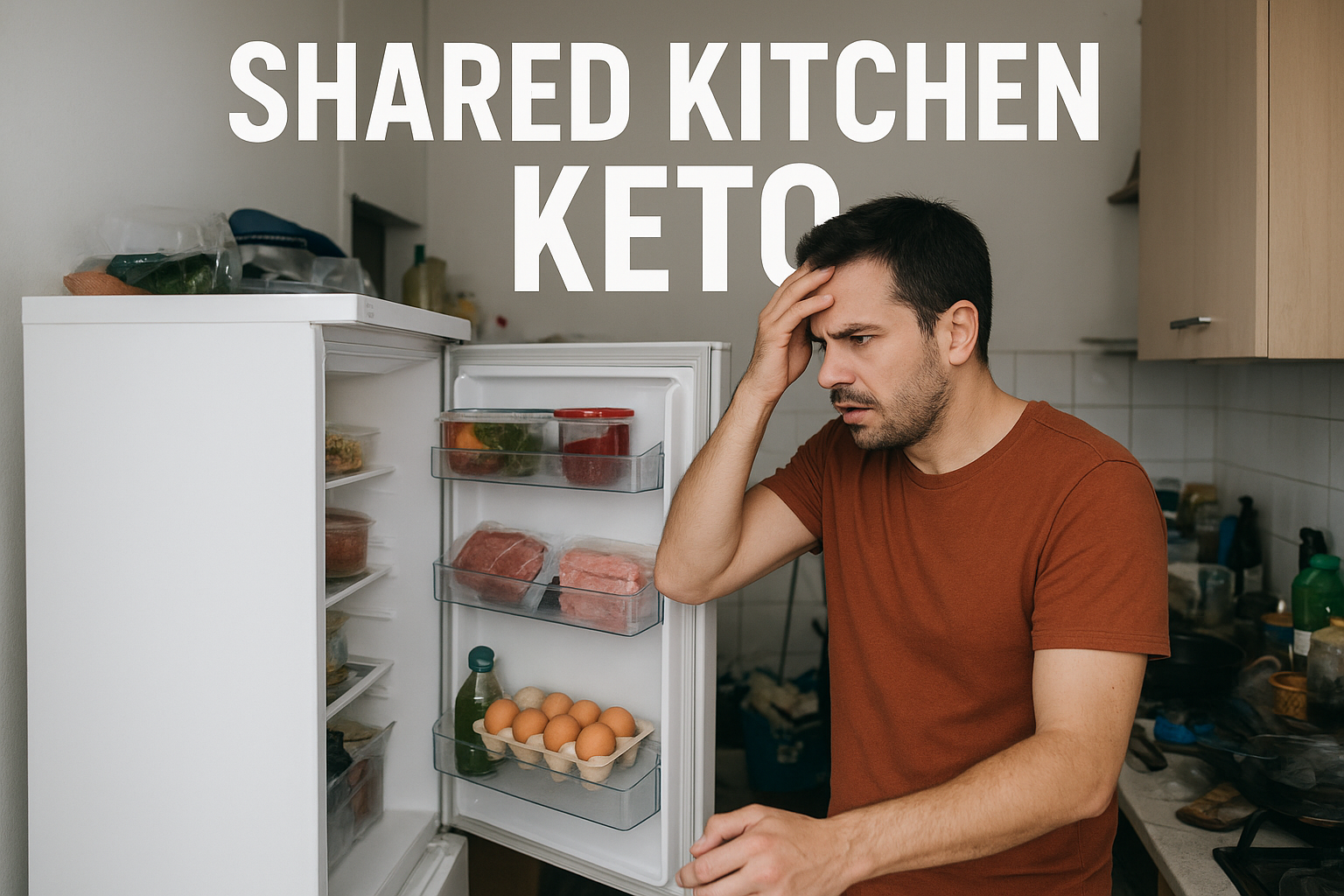
Lazy keto in a shared kitchen sounds manageable until your food keeps disappearing, the fridge is packed with other people’s stuff, and dinner turns into random bites from whatever you can reach fast.
That is not a motivation problem. It is usually a kitchen-control problem.
You buy food with good intentions, then come home to no clean pan, no space for your leftovers, and somebody ordering takeout while you stare at half a pack of deli meat and a bottle of mustard. If you are trying to make lazy keto in a shared kitchen work, the goal is not perfection. The goal is building a plan that still works when the kitchen is crowded, messy, and not fully under your control.
I’ve seen this pattern a lot: you tell yourself you will make something later, then later shows up and the kitchen is a mess, your labeled food is gone, and snack dinner wins again.
Why lazy keto in a shared kitchen falls apart so fast
When you live alone, keto problems are usually food-choice problems. In a shared kitchen, they become access and systems problems.
You are not just deciding what to eat. You are dealing with shared shelves, shared smells, shared takeout, shared cleanup, missing groceries, and the weird pressure of not wanting to be “the difficult one” in the kitchen.
That matters because lazy keto only works when easy choices are still decent choices. If the easy choice in your apartment is chips, frozen pizza, leftover noodles, or grabbing little bites while you wait for space to open up, your plan gets weak fast.
The fix is not becoming more disciplined. The fix is removing the points where your environment keeps beating your plan.
Your food is technically there, but not actually usable
This is where most people mess up. They count food they own as food they can eat tonight.
That is not the same thing.
Maybe your groceries are in the apartment, but they are buried behind other people’s containers. Maybe your chicken is raw and needs a clean pan you do not have. Maybe your leftovers are somewhere in a packed fridge and you do not even want to dig for them. On paper, you have food. In real life, you do not have dinner.
This is why people in shared kitchens end up with cheese, nuts, a few slices of deli meat, and whatever low-carb snack feels easiest. It looks harmless in the moment. Later, you are still hungry and looking for more.
A common mistake is buying “ingredients” when your real problem is access. Ingredients help when you control the kitchen. If you do not control the kitchen, you need default meals that work with almost no setup.
The direct fix is to build a tiny no-excuses backup layer. That means 2 or 3 repeat meals you can assemble in under 5 minutes, with no real cooking and almost no cleanup. If your current system depends on having counter space, pan space, and quiet time, it is too fragile.
That is why posts like Lazy Keto Meal Rescue matter. You need meals that still work when the kitchen is annoying, not just when life is calm.
Shared kitchens reward snack logic instead of real meals
Roommate kitchens create a lot of friction around actual meals and almost no friction around grazing.
You can grab a handful of nuts. You can eat a few bites of rotisserie chicken cold. You can stand there with a spoon and a container of something “low carb.” You can snack while someone else cooks. None of that feels like a big deal.
But lazy keto gets shaky when your meals stop feeling like meals.
In real life, this looks like eating just enough to delay dinner, then getting hit with bigger hunger later. Or you pick at random food while a roommate makes pasta, then tell yourself you already ate, then end up ordering takeout at 9 PM because you are starving.
The mistake here is thinking low carb automatically means satisfying. It does not. If the meal is weak on protein, weak on volume, and broken into random bites, hunger stays in the picture.
The better fix is simple: give every main meal a real anchor. Usually that means enough protein to actually finish the job. If dinner is not obvious, your backup should still center on protein first, not snack food first.
Shelf-stable protein can help here when used on purpose. A box of Chomps grass-fed beef sticks is not magic, but it is better than pretending a few cheese cubes count as dinner. Use something like that to bridge into a real meal, not replace meals all day.
If this pattern keeps hitting you midweek, Lazy Keto Meal Prep for People Who Hate Meal Prep is worth reading next because it solves the exact “everything falls apart by Wednesday” problem.
Your food keeps disappearing, so you stop planning like your plan matters
This one gets under people’s skin fast.
You buy yogurt, deli meat, leftovers, cooked chicken, or grab-and-go basics. Then someone “borrows” it, moves it, eats part of it, or stacks their stuff on top of it until you forget it is there. After a few rounds of that, you stop trusting your own setup.
Once that happens, you quit planning with confidence. You stop buying exact things for exact meals because you no longer believe those meals will still exist when you need them. That pushes you toward looser, sloppier choices.
A lot of people respond by trying to be more chill about it. That usually makes the food problem worse. Not every roommate situation needs conflict, but vague systems do not protect your meals.
The fix is boring, which is why it works. Create one clearly defined personal zone and one backup zone.
- Your personal zone is where your core keto food lives.
- Your backup zone is for things that survive when the fridge is packed or unreliable.
That might mean one shelf, one fridge bin, one freezer bag, and one pantry container. The point is not being territorial. The point is reducing chaos.
It also helps to stop buying “good intentions” food and start buying repeatable, protected food. If something matters for tomorrow’s lunch, portion it tonight. If leftovers matter, box them before you sit down. If your food keeps getting mixed up with everyone else’s, make it visually obvious that it is a full meal and not random community food.
This is also where Lazy Keto Grocery Systems helps. Grocery problems usually look like food problems, but they are really repeatability problems.
Zero fridge space turns “I’ll make something later” into takeout logic
When the fridge is stuffed, lazy keto gets harder because even decent food starts feeling inconvenient.
You open the door, see six half-empty drink cartons, mystery leftovers, someone else’s giant takeout box, and maybe one place where your eggs are balancing sideways. That does not feel like a setup you want to work with after a long day.
So you delay. You say you will figure it out later. Then later becomes the danger zone.
Now you are hungry, annoyed, and more open to bad tradeoffs. Your roommate says they are ordering burgers. Someone heats up pizza. You tell yourself you will just get something without the bun. Then fries show up, or the order gets bigger, or you decide one off-plan meal is easier than thinking.
The mistake is waiting until peak hunger to solve a storage problem.
The smarter fix is to plan for low-fridge-space meals on purpose. Think foods that can survive a crowded fridge or live partly outside it. Rotisserie chicken for one day. Eggs. Single-serve basics. Pantry items that pair with quick protein. Frozen burger patties if you have freezer room. Backup items that do not depend on a beautiful, organized kitchen.
And if dinner timing keeps getting split by other people’s schedules, Lazy Keto for Split Dinner Nights can help you stop eating twice and still feeling unsatisfied.
Roommate takeout pressure makes your own plan feel too small
This is not just about temptation. It is about comparison.
If your roommates are bringing home tacos, Chinese takeout, wings, dessert, or late-night fast food, your own simple meal can start to feel depressing even if it would have been fine an hour earlier.
That is where people start chasing the feeling of a fun meal instead of solving the hunger problem in front of them.
In real life, this sounds like: “I don’t want eggs again,” or “I’ll just order something too,” or “I already had a weird day, so whatever.” The plan falls apart because your food feels like backup food while everyone else’s food feels like the real event.
The common mistake is waiting to decide after other people’s food has already entered the room. That is too late for many people.
The fix is to make your own default meals feel finished before the pressure starts. Use meals with enough protein, enough salt, and enough volume that they feel like a complete answer, not punishment. You are not trying to win a willpower contest against takeout smells. You are trying to arrive at that moment already handled.
This is also where structure beats variety. You do not need ten creative dinners. You need three reliable ones that still work on busy, annoying nights.
Common mistakes people make with lazy keto in a shared kitchen
- They buy ingredients instead of fast fallback meals.
- They rely on shared fridge space with no personal system.
- They count snack food as a meal and wonder why hunger comes back.
- They delay dinner until they are too hungry to make a decent choice.
- They keep trying to “be flexible” in a setup that clearly needs more structure.
None of that means you cannot make keto work. It just means your environment is louder than your current system.
What to do instead when your kitchen is crowded and your plan keeps slipping
Start smaller than you think.
You do not need to control the whole kitchen. You need to control enough of your own routine that your meals stop depending on luck.
Pick one shelf, one bin, one bag, and three repeat meals. Build around food you can actually access when the apartment is busy. Protect your protein. Portion leftovers early. Keep one backup option that does not need cooking. And stop pretending that random low-carb bites are close enough to dinner.
If your current setup keeps making you hungry, frustrated, and easy to derail, that is useful information. Your system is asking too much from the space you live in.
Fix this first:
- Pick 3 roommate-proof meals you can make in 5 minutes or less, with protein first.
- Create one personal food zone in the fridge or pantry so your meals stop disappearing into chaos.
- Keep one shelf-stable backup for bad kitchen nights so hunger does not push you into takeout logic.
- Box leftovers and tomorrow’s food right away instead of trusting the shared kitchen to stay organized.
🔎 If this helped, here are more no-BS keto guides worth reading next:
- Lazy Keto Meal Rescue: What to Eat When the Day Is Already Going Sideways
- Lazy Keto Meal Prep for People Who Hate Meal Prep but Keep Losing Dinner to Chaos by Wednesday
- Lazy Keto for Split Dinner Nights When the Kids Eat Early, You Eat Late, and You End Up Snacking Through Both
Explore more Lazy Keto guides here: