You bought groceries for keto again. The cart looked full. The plan still fell apart by Wednesday.
That is not because you forgot carbs exist. It is usually because the grocery trip did not create meals, defaults, or any system strong enough to survive a real week.
This hub is for that exact problem. If your lazy keto grocery systems keep breaking down at the store, in the pantry, or at the end of the week, use this page to figure out which grocery mistake is doing the damage and where to go next.
Why Lazy Keto Grocery Systems Break Down Faster Than People Think
Most lazy keto breakdowns do not start at dinner. They start in the cart. You buy food that sounds keto, food that feels convenient, or food that looks cheap enough to throw in fast. Then you get home and realize you bought ingredients, snacks, and random filler instead of repeatable meals.
That is why grocery stress keeps showing up as hunger, cravings, takeout, and cleanup eating later in the week. The shopping trip did not fail because you bought one bad item. It failed because it never built a usable system.
Here is the truth: lazy keto grocery success is not about being strict in the aisle. It is about making sure the week has enough default food, enough backup food, and enough structure that tired decisions do not run the whole plan.
Start here:
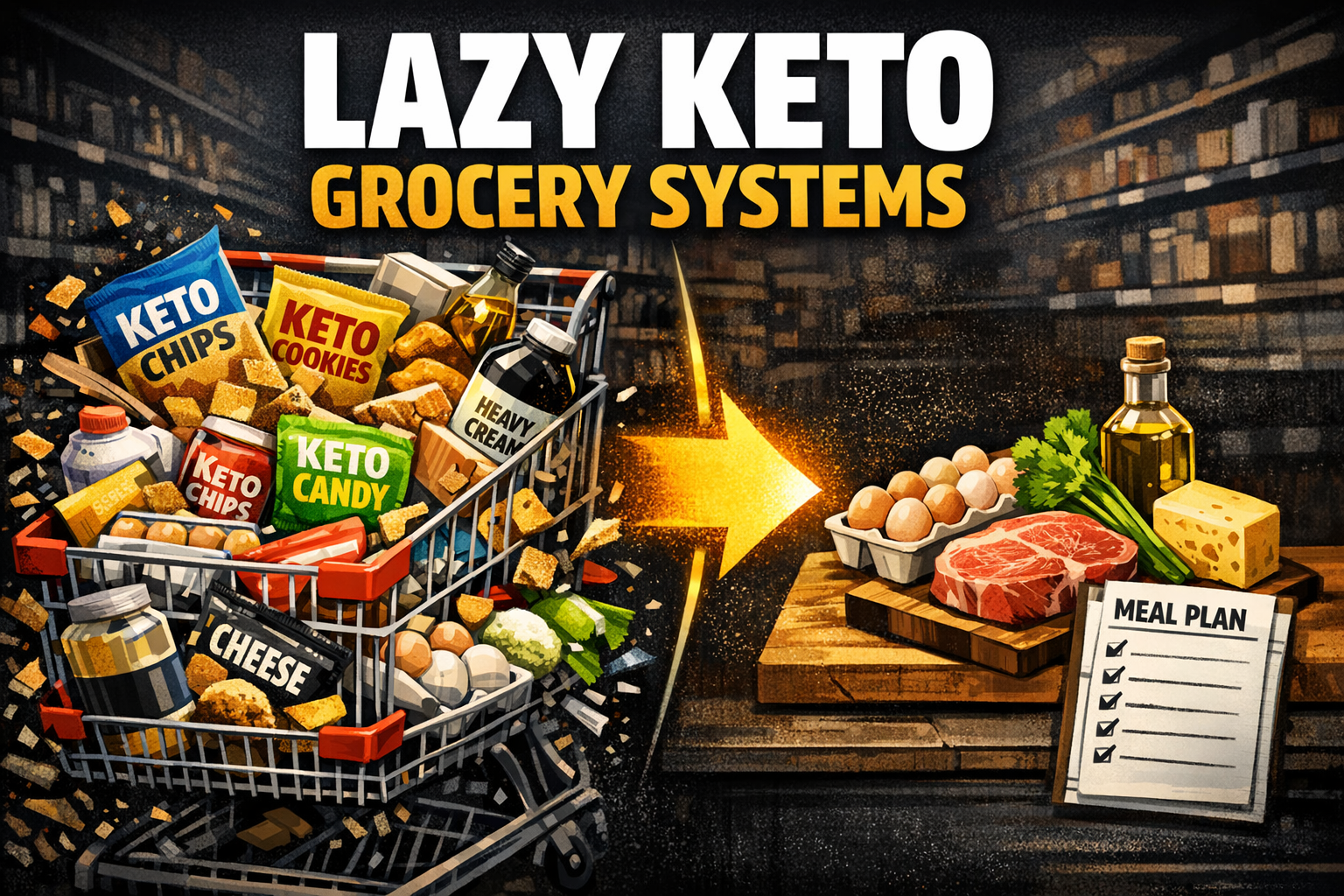
If your cart keeps filling with “keto” junk, fix the shopping logic first
A lot of people shop as if low carb labels are a plan. Bars, cookies, trail mix, sweet drinks, wraps, and little snack packs all look helpful in the moment. They feel safe because they say keto, low carb, or sugar free.
But those foods usually create the same problem: the house is full, yet there is still nothing solid to eat. You keep reaching for little extras because the groceries never turned into meals. If that sounds familiar, start with the biggest lazy keto grocery mistakes beginners make and a lazy keto grocery list for people who keep buying keto food but still have nothing to eat.
Real life example: you come home with jerky, cheese crisps, flavored nuts, keto candy, and a cauliflower pizza. It all looks on-plan. Two days later you are hungry, annoyed, and still ordering takeout because none of it built three easy dinners.
The common mistake is thinking grocery success means avoiding bread and pasta. In real life, the bigger problem is buying too many little foods and not enough real meal anchors.
If you shop hungry, the problem starts before the groceries even hit the trunk
Shopping hungry turns the whole store into a cravings trap. Suddenly convenience looks smarter than structure. Sweet tastes look like emergency supplies. Big packs feel efficient even when they are just oversized versions of the same random stuff that keeps derailing you.
If that is your pattern, read why lazy keto keeps falling apart when you shop hungry and buy food with no real plan. That post is the right next step when the cart keeps turning into a panic response instead of a week plan.
This matters because hungry shopping does not only change what you buy. It changes the ratio. You buy more grabby food, less meal food, and almost no boring basics that actually save weekdays.
If your big grocery run feels productive but still leaves you with chaos, look at volume vs usefulness
Costco and other big runs fool people all the time. The cart looks huge. The receipt proves effort. The fridge is packed. But a lot of that volume is duplicate snack energy, giant portions of one item, or bulk buys that do not solve breakfast, lunch, and dinner across the whole week.
If that is you, go to why big lazy keto grocery runs turn into random keto junk. That child post helps when your main issue is buying a lot without building anything useful.
Real life example: you leave with egg bites, sausages, cheese, nuts, keto treats, and one rotisserie chicken. It feels abundant on day one. By day four, the chicken is gone, the snacks are half gone, and dinner becomes another patchwork meal built from leftovers and wishful thinking.
The fix is not buying less food. The fix is buying food in roles: fast meals, backup meals, and a few extras instead of treating every item like it has equal value.
If you keep buying ingredients but never turn them into default meals, you do not have a food system yet
This is where a lot of smart shoppers get stuck. They buy meat, vegetables, sauces, and freezer items that could become meals, but the meals never actually become defaults. Everything depends on energy, timing, and motivation later.
When that is the pattern, read why lazy keto breaks down when you buy ingredients but never build default meals out of them. That is the right child post when your groceries look responsible but still leave you standing in the kitchen with no obvious next move.
One of the biggest mistakes here is overestimating how much cooking effort your real week can support. You buy for your ideal self, then your tired self ends up eating cheese, deli meat, and whatever is easiest because the groceries were never translated into actual defaults.
If the end of the week always turns sloppy, your system is missing a survival lane
Lots of people can stay on plan right after grocery day. The real test is day five, day six, and the weird in-between meals when the good options are half gone. That is where leftovers, half bags, one last sauce bottle, and random snack cleanup start replacing real structure.
If your plan keeps collapsing late in the week, go straight to why lazy keto gets harder at the end of the grocery week when only random low-carb leftovers are left. That post helps when the groceries were fine at first but the week had no cleanup system.
This is where people often blame motivation. But the real problem is that the grocery plan assumed every day would run clean. Real life does not do that. A good lazy keto grocery system has to survive the messy back half of the week too.
Common grocery mistakes that keep repeating the same bad week
The first mistake is shopping by product type instead of meal function. Buying protein is not enough. Buying vegetables is not enough. You need to know what becomes tonight’s dinner, tomorrow’s lunch, and the backup option when you are too tired to think.
The second mistake is treating keto snacks like meal insurance. Most of the time they just fill the house with easy nibbling and delay the moment you admit there is no real dinner plan.
The third mistake is building the whole week around one good grocery day. If there is no reset path for hungry shopping, big-box impulse buying, or end-of-week leftovers, the system is too fragile.
The fourth mistake is pretending the problem is discipline when it is really design. If your groceries repeatedly push you toward random food decisions, the setup is wrong.
Related:
How to use this hub
Pick the grocery problem that sounds most familiar. Keto junk in the cart. Hungry shopping. oversized grocery runs. ingredients without meals. late-week leftovers. Then read that child post first instead of trying to fix everything at once.
If your week keeps breaking in multiple places, the ending links below will help you tighten the full lazy-keto system, not just one aisle-level mistake.
Fix this first:
- Stop judging a grocery trip by how full the cart looks and judge it by how many easy meals it creates.
- Build around default meals first, then add backup foods, then add extras if they still fit.
- Do not shop hungry unless you already know exactly what roles each item is supposed to fill.
- If bulk shopping keeps making the house chaotic, cut duplicate snack buying before you cut meal food.
- Create an end-of-week survival plan so leftovers do not turn into random grazing and takeout.
If this helped, read these next:
- Lazy keto backup systems that stop random carb decisions when the week gets messy
- Lazy keto that actually works when life is busy and your food plan needs structure
- Fast lazy keto emergency meals for the nights when the grocery plan fails
Explore more Lazy Keto stories here: