
You can hold lazy keto together for one weird day.
Caregiving weeks are different. That is when hospital runs, waiting rooms, bad sleep, grab-whatever meals, and stress eating start stacking on top of each other until it feels like your whole plan disappeared.
If lazy keto caregiving weeks keep ending in cafeteria food, vending machine snacks, late-night overeating, and the “I guess I fell off again” story, this is usually not a willpower problem. It is a low-control environment problem.
One of the easiest ways to get thrown off is leaving home for “just a few hours” and realizing at 5 PM that your whole day has been coffee, random bites, and pure stress.
Here’s the reality check: keto usually does not fail first on carbs during caregiving weeks. It fails earlier than that. It fails when real meals disappear, backup food is missing, and stress starts making every fast option look reasonable.
Why lazy keto caregiving weeks get messy so fast
Caregiving is not just busy. It is stop-start busy. You might think you will eat after the appointment, after the phone call, after the shift change, or after the doctor comes back in. Then hours pass.
That changes your food decisions in a predictable way. By the time you finally eat, you are not choosing from a calm, planned state. You are choosing from low energy, low patience, and high stress.
That is why lazy keto can feel easy at home and impossible on caregiving weeks. The structure that usually saves you is gone.
1. You stop eating real meals and start living on delay mode
This is the first problem in most caregiving weeks. You keep pushing food later because something more urgent is happening. That sounds harmless for a few hours, but it usually ends with you getting too hungry to make a decent decision.
In real life, it looks like this: you leave the house early, drink coffee in the car, sit in a waiting room, grab a few nuts or a string cheese, then realize dinner is the first real thing you have eaten all day.
The common mistake is telling yourself those little bites “counted.” They did not do the job of a meal. They kept you limping along, but they did not give you enough protein, enough fullness, or enough control.
The fix is to stop treating caregiving weeks like normal weeks. On these days, a boring backup meal is better than a perfect meal that never happens. Build around easy default food before you leave the house. If you need help with that, read Lazy Keto Backup Plan: The Food Systems That Stop Random Carb Decisions.
A simple option is packing something like Chomps grass-fed beef sticks with a cheese stick or another real protein so you have something more solid than random snack bites. The point is not to live on snack food forever. The point is to stop the crash that turns into vending-machine logic later.
2. Stress makes convenience food feel more reasonable than it really is
Caregiving weeks create a weird kind of food blindness. You are tired, worried, and mentally overloaded, so the standard for what feels like an acceptable meal drops fast.
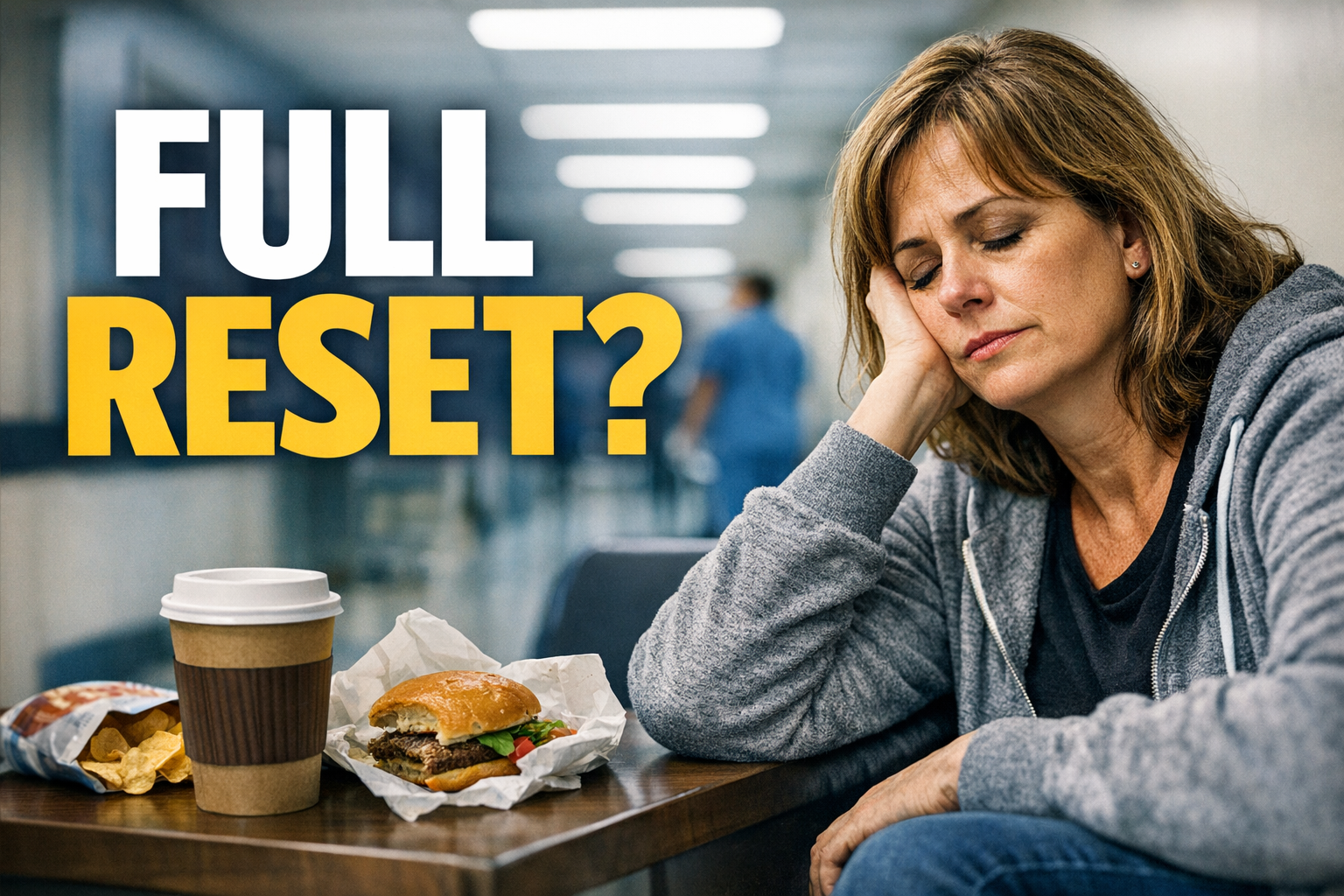
That is how a cafeteria sandwich, fries off someone else’s tray, crackers from a visitor bag, and a giant coffee drink start feeling like “good enough for today.” And if it happens for three or four days in a row, now you are not dealing with one off-plan meal. You are dealing with a full reset.
The mistake here is waiting until you are deep into the day before deciding what counts as your fallback food. Under stress, you will almost always choose whatever requires the least thinking right now.
The fix is reducing decisions before the day gets messy. Pick two or three low-friction foods you can repeat without thinking. That might be a protein shake, jerky, a bunless burger, deli meat and cheese, or eggs from a cafeteria breakfast line if that is what is available.
If hospital or clinic days are part of the problem, read Lazy Keto in Hospital Waiting Rooms When Vending Machines, Cafeteria Food, and I’ll Eat Later Wreck the Whole Day. If your bigger issue is leaving home without any backup at all, read Why Lazy Keto Falls Apart When You Leave the House With No Backup Food in the Car or Bag.
3. Bad sleep turns the whole week into a hunger and snack problem
Caregiving weeks rarely come with calm, full nights of sleep. Somebody needs something. You stay on alert. You wake up early. You scroll updates too late. Then the next day starts with low energy and fake urgency.
That matters because tired people do not just feel sleepy. They usually get hungrier, less patient, and more likely to chase quick food.
In real life, this looks like grabbing extra coffee, skipping breakfast, getting by on tiny bites, then eating everything in sight at night because the whole day never felt settled. It can also look like telling yourself you are “not that hungry,” then suddenly cleaning out leftovers at 9:30 PM.
The mistake is assuming the problem is lack of keto discipline. A lot of the time, the deeper problem is that sleep wrecked your appetite control and your planning.
The fix is to get more mechanical. On bad-sleep days, do not wait for perfect hunger cues. Eat a real protein-forward meal earlier than you think you need to. If mornings are rough, even something simple like Premier Protein shakes can work as a bridge when the alternative is more coffee and no food at all.
If the whole week is being dragged down by recovery from broken nights, read Why Keto Feels Worse After a Sick Kid Night (And What to Fix First). Different setting, same basic problem: broken sleep changes the food decisions that happen next.
4. You start eating emotionally without noticing when it happened
This is where a lot of people think they “blew it for no reason.” There was a reason. Caregiving is draining. It creates long stretches where your body wants comfort, relief, and a break. Food often becomes the fastest version of that.
The emotional eating on caregiving weeks is usually quiet at first. It might be bites of cafeteria cookies while buying coffee for someone else. It might be finishing leftover fries in the car because you are finally alone for ten minutes. It might be the late-night “I deserve something” meal after everybody else is settled.
The mistake is only watching for obvious binge behavior. The real damage often comes from repeated little reward decisions that keep stacking through the week.
The fix is naming the pattern faster. If you notice you are using food as relief, do not make it a morality thing. Make it a logistics thing. Ask: what can I put in front of this problem earlier? A packed meal, a repeatable drive-thru order, a protein snack in the bag, or a hard rule that dinner happens before you sit down for the night.
If this stress loop sounds familiar, read Caregiver Days and Keto: Why Feeding Everyone Else Leaves You Hungry and Off Track by Night. That post helps with the day-to-day version. This caregiving-weeks version matters because the pattern compounds when it lasts several days.
5. One rough day turns into a full reset story
This is the last trap. You have two or three messy caregiving days, the scale jumps, your meals feel random, and you decide you are basically starting over anyway.
That story does more damage than the original rough meals. Once people decide they are already off track, they stop trying to stabilize the next meal. Then one hard week becomes another hard week.
In real life, this looks like saying, “I’ll restart Monday,” while spending Thursday through Sunday eating whatever is easiest. It also shows up as overcorrecting with fasting after a chaotic day, which usually just makes the next rebound worse.
The mistake is treating disruption like failure. Caregiving weeks are disruption. They are not proof that keto cannot work for you.
The fix is to shrink the recovery target. Do not aim to “get fully back on track.” Aim to make the next meal less chaotic than the last one. That might mean eggs at home, a bunless burger on the way back, or a repeat lunch you can assemble in two minutes. If your bigger struggle is getting lazy keto to survive messy life in general, read Why Lazy Keto Falls Apart in Real Life – and How to Make It Work on Busy, Broke, Messy Weeks.
Common mistakes that make caregiving weeks worse
- Leaving home with no food plan at all. Hoping you will “figure it out” later usually turns into whatever is closest.
- Calling snacks a meal. A few bites can delay hunger, but they do not create the same control as a real meal.
- Using coffee as a meal substitute all day. That works until it really does not.
- Waiting until you are starving to choose food. That is when convenience food starts winning every argument.
- Treating one rough day like a full reset. You do not need a Monday restart. You need a better next meal.
What actually helps on lazy keto caregiving weeks
You do not need a perfect meal-prep system for weeks like this. You need a lighter system that still works under pressure.
That usually means:
- one packed backup protein before you leave
- one repeatable emergency meal you can get on the road
- one easier-than-takeout dinner for when you get home wrecked
- one rule for bad sleep days, like “protein before the second coffee”
The goal is not to win caregiving weeks with discipline. The goal is to remove enough friction that you stop sliding into random eating every time the day blows up.
Fix this first:
- Pick one default backup meal today. Do not wait until the next hospital run or appointment to decide.
- Pack real protein before leaving the house. Not just tiny snack bites. Enough food to stop the late-day crash.
- Make bad-sleep days more automatic. Eat earlier, keep coffee in check, and do not trust “I’m fine” when the whole week is chaotic.
- Stop the reset story fast. One messy caregiving day does not mean the whole week is lost.
If you can do those four things, lazy keto caregiving weeks get a lot less dramatic.
🔎 If this helped, here are more no-BS keto guides worth reading next:
- Caregiver Days and Keto: Why Feeding Everyone Else Leaves You Hungry and Off Track by Night
- Lazy Keto in Hospital Waiting Rooms When Vending Machines, Cafeteria Food, and I’ll Eat Later Wreck the Whole Day
- Lazy Keto Backup Plan: The Food Systems That Stop Random Carb Decisions
Explore more Lazy Keto guides here: