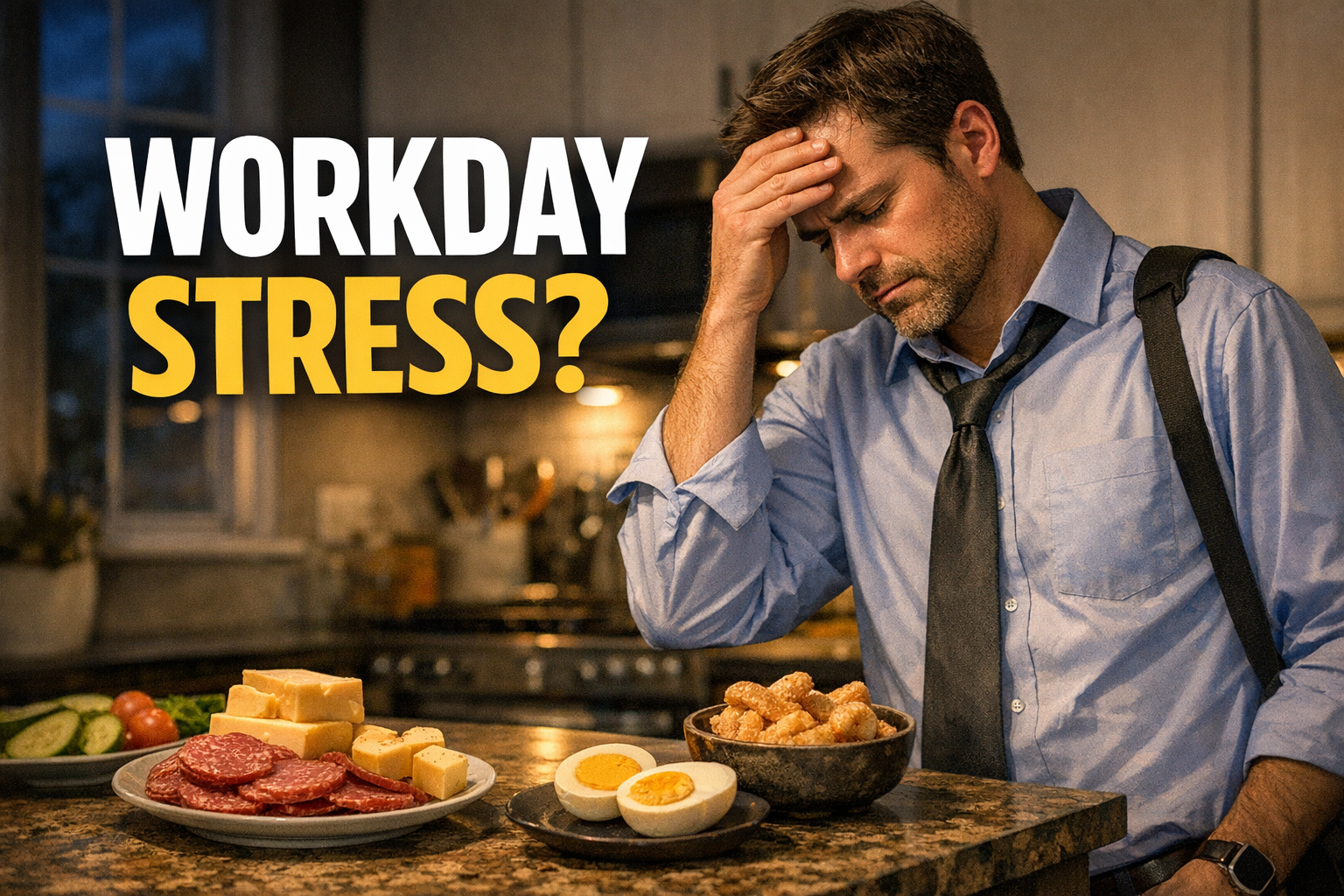
Why keto falls apart after a blowup day at work usually has less to do with carbs and more to do with what stress does to your structure.
You get through a rough call, a stupid email chain, or a tense meeting. Then the whole rest of the day starts running on revenge snacking, random low-carb bites, and the thought that you will get back on track later.
That is why keto stress eating after work can feel so confusing. Your carbs may still look “low enough,” but your appetite, food choices, and stopping point are a mess.
I have seen this pattern a hundred times: the day blows up at 2 PM, dinner gets delayed, and by 9 PM the bag of “safe” snacks is somehow empty.
Here is the reality check: this is not just a motivation problem. It is a stress-and-structure problem. When work stress hits hard, people stop making real meals, start grabbing easy low-carb food, and stay unsatisfied for hours.
Why keto stress eating after work gets out of hand fast
After a bad day, most people do not go straight from stress to a full carb binge. They usually go through a sneaky middle stage first.
That middle stage looks “keto enough” on paper. A few nuts. Some cheese. Beef sticks. A spoonful of peanut butter. A protein bar. A drive-thru bunless burger with no real plan around it. None of that feels like a total blowup in the moment.
The problem is that these bites often replace structure instead of solving hunger. Stress is already pushing your brain toward quick relief. Once dinner gets delayed and you start eating in pieces, it becomes very easy to keep chasing the feeling of being settled without ever getting there.
If you want a wider troubleshooting view, read Why Stress Eating Wrecks Keto Even When Your Carbs Still Look “Low” on Paper. This article is about the more specific version: the blowup day at work that spills into the evening.
Start here:
Cause #1: stress makes you want relief, not a real meal
This is where most people mess up. They think the problem starts with hunger. A lot of the time, it starts with emotional static.
After conflict, pressure, or a draining work mess, your brain wants something fast, easy, and comforting. That does not always mean cookies. On keto, it often means crunchy, salty, creamy, or “deserved” low-carb food.
So you tell yourself you are staying on plan. You eat pepperoni, cheese crisps, nuts, or sugar-free junk in little rounds while checking email and replaying the day in your head. You are eating for relief, but you are calling it dinner prep.
The common mistake is assuming that because the food is low carb, the pattern is harmless. It is not. Stress eating can blow past fullness just as easily when the food is technically keto.
The fix is to interrupt the relief loop early. Do not start with random bites. Start with a full stop and a real decision. Ask: “Am I trying to calm down, or am I actually ready for dinner?” If you are stressed and hungry, build one actual plate fast. Protein first, then salt, then enough food to feel done.
If stress regularly makes you feel out of control around food even when carbs stay low, this post helps connect the dots: Out of Control Around Food on Keto? Why Some People Stay Low Carb All Week and Still Struggle.
Cause #2: the workday blowup usually wrecks meal timing before you notice it
A bad day at work rarely stays in one box. It steals attention, delays lunch, extends meetings, triggers extra coffee, and pushes dinner later than planned.
That matters because late meals make everything feel more emotional. If lunch was weak or late, and dinner is still not happening by 7 PM, you are no longer dealing with simple stress. Now you have stress plus real physical hunger plus decision fatigue.
In real life, this looks like saying, “I’ll just snack while I cook,” then eating half your calories before the pan even gets hot. Or grabbing drive-thru on the way home, still not feeling settled, then picking through the kitchen an hour later because that meal did not really anchor you.
The mistake here is waiting too long to switch from surviving the workday to protecting the evening. People keep trying to power through, then act surprised when nighttime hunger explodes.
The fix is to create a workday crash landing. If you know dinner may get pushed late, have one deliberate bridge option ready the second the day goes sideways. That could be a ready-to-drink protein shake, leftover chicken, eggs, or a fast protein-plus-salt combo that buys you an hour without turning into a full grazing session.
If you need help spotting why nights keep getting harder, read Why Keto Gets Harder at Night. The stress-workday version often starts much earlier than dinner.
Cause #3: “safe” keto snacks do a bad job of ending the problem
Low-carb snack foods are not magic. Many of them are easy to overeat, easy to stack, and bad at giving you the clear “meal is over” signal you actually need after a hard day.
Nuts, cheese, jerky, bars, and keto treats can all fit somewhere in a plan. But when stress is high, they often become a chain instead of a choice. You eat one thing because it is easy. Then another because the first one did not do much. Then something sweet or crunchy because now you want a different kind of payoff.
This is why people say, “I stayed keto, but I still lost control.” They are not imagining it. You can stay low carb and still spend the whole evening in a half-fed, snacky state.
The mistake is treating snack foods like full emotional and physical coverage. They are usually not enough protein, not enough volume, or not enough structure to end the spiral.
The fix is simple and boring, which is why it works. Make the first food after the workday mess protein-forward and obvious. Not five little bites. One real thing. A plain burger patty, eggs, leftover meat, or Greek yogurt with a clear stopping point works better than pretending a handful of random low-carb snacks is a plan. Keep convenience food as a backup, not as all-night entertainment.
For a bigger troubleshooting map, read Keto Hunger and Cravings Fix Map. It helps you sort out whether your problem is stress, weak meals, sweet triggers, or all three.
When you stayed low carb but still kept eating
This is the part that frustrates people most. They look back and say, “I did not even break keto. Why does it still feel like I blew the whole night?”
Here is the truth. Low carb is not the same thing as settled. If your evening turns into slices of cheese, nuts, keto bars, diet drinks, and one more salty bite before bed, you can stay technically low carb while still staying physically hungry and mentally switched on.
In real life, this is the office-to-couch spiral. You leave work drained, grab something easy in the car, pick at food while making dinner, eat a light plate because you already snacked, then keep circling the kitchen because nothing ever felt finished.
The mistake is grading the night by carbs only. That misses the real problem: no real meal, no real stopping point, and no clear switch from work stress into recovery.
The fix is to treat “still eating” as a structure failure, not a carb-counting failure. Build one proper meal with enough protein and enough volume, then shut the loop. If this kind of spiral often turns into a full restart mindset the next day, read Keto Cheat Days and Slip-Ups: How to Recover Fast Without Making It Worse. If the bigger pattern is that your evenings keep unraveling whenever work stress breaks your routine, read Keto Routine Breakdowns.
Cause #4: after a blowup day, people keep trying to earn dinner instead of just eating it
This one causes a lot of damage. People feel guilty for the snacking, so they delay a real meal even more.
They think, “I already messed up, so I should keep it light tonight.” Then dinner becomes a sad little plate, or no plate at all, and the whole cycle comes roaring back at 9 or 10 PM.
In real life, this is the part where someone eats cheese and nuts at the counter, skips a proper meal because they think they already blew it, then ends the night hunting for one more thing. They are not weak. They are underfed, stressed, and still trying to fix the day with restraint instead of structure.
The mistake is trying to repair chaos by under-eating. That usually makes the next few hours worse and the next morning sloppier.
The fix is to stop grading the day and start stabilizing it. If the afternoon went off the rails, the answer is not punishment. The answer is a normal dinner with enough protein, enough salt, and enough volume to close the kitchen mentally and physically.
Cause #5: the night spiral keeps going because nothing tells your brain the day is over
After a rough workday, food often becomes the signal that the stress is finally easing up. That is why the evening can drag on in rounds.
You eat something while venting. Then something while cleaning up. Then a little dessert-like “keto” thing because you made it through the day. Then something salty because the sweet thing woke up more appetite instead of ending it.
The common mistake is thinking the solution is more willpower at 9 PM. Usually it is not. By then, you are dealing with leftover stress, decision fatigue, maybe low sodium, maybe a weak dinner, and a brain that still wants closure.
The fix is to create a clean end point on purpose. Eat a complete dinner. Put the leftovers away. Decide whether you need hydration, a shower, a walk, or ten quiet minutes more than you need another snack. A lot of “night hunger” after a bad workday is really a mix of under-eating, overstimulation, and no shutdown routine.
Common mistakes that make a bad workday turn into a bad keto night
- Trying to white-knuckle stress: if you act like stress is not part of the food problem, you will keep solving the wrong thing.
- Calling snacks dinner: low-carb bites are not the same as a real meal with enough protein and a clear stopping point.
- Letting coffee replace food: this buys time early and creates a bigger crash later.
- Saving all your food for night: that makes evening eating feel way more emotional and way harder to control.
- Using keto treats as a reward: after a stressful day, reward food often turns into one more round of appetite, not relief.
Related:
What to do when the day has already gone sideways
If you are reading this after one of those days, do not overcomplicate it.
First, drink something with salt if you have been running on coffee, stress, and not much food. Second, eat one real protein-first meal instead of continuing the snack parade. Third, stop trying to make the evening emotionally perfect with food.
You do not need a clean, pretty keto day to save the night. You just need to stop the chain reaction early enough that one bad meeting does not turn into six hours of picking at “safe” food.
Fix this first:
- Name the real problem. If the urge is coming from a blowup day at work, admit that stress is driving the food pull.
- Use a bridge on purpose. If dinner will be late, have one protein-forward backup instead of random snacking.
- Eat a real dinner anyway. Do not punish the afternoon mess by under-eating at night.
- Cut off the reward loop. Stop turning every low-carb bite into stress relief and call the meal finished.
- Build tomorrow’s fix tonight. Put one easy protein option and one hydration option where future-you can grab them fast.
→ If this helped, here are more no-BS keto guides worth reading next:
- Why Stress Eating Wrecks Keto Even When Your Carbs Still Look “Low” on Paper
- Keto Cheat Days and Slip-Ups: How to Recover Fast Without Making It Worse
- Keto Routine Breakdowns
Explore more Keto Problems & Side Effects guides here: