You can stay technically low carb all day and still watch keto stop working.
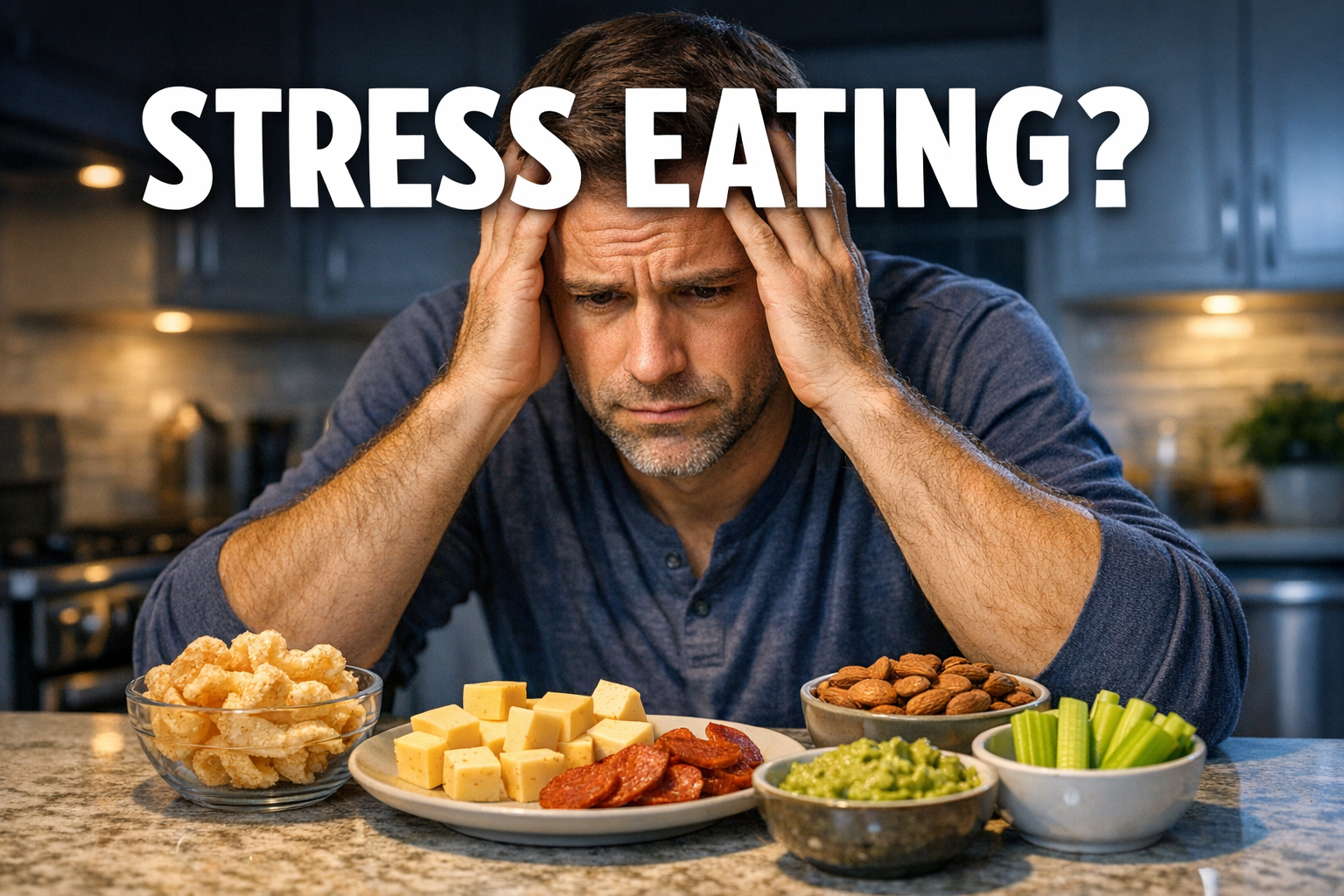
If stress eating on keto keeps showing up, the problem usually is not one big cheat meal. It is the constant picking, reward eating, and low-carb convenience food that keeps your appetite switched on from morning to night.
Why stress eating on keto still causes problems
Here’s the truth. Keto does not magically remove stress.
It can lower cravings for some people, but it does not stop you from using food as a break, a reward, or a way to shut your brain up for ten minutes. If your day feels heavy, food can still become the fastest relief button you can reach.
That is why stress eating on keto can be so sneaky. You may not be eating bread, chips, or candy. You may be eating cheese, jerky, nut butter, leftovers, or a “healthy” low-carb plate you keep rebuilding all evening. The food looks compliant, so the habit feels harmless. Usually it is not.
1. You start grazing instead of eating real meals
When you are tense, distracted, or overwhelmed, a full meal can feel like work. So instead of sitting down and eating something solid, you nibble. A few slices of cheese. Some deli meat. A spoon of peanut butter. A couple of low-carb snacks from the pantry. None of it looks dramatic, but it keeps happening.
In real life, this looks like eating while answering emails, cleaning up after the kids, or pacing around the kitchen at 4 PM because your brain is fried. You keep grabbing small things because they feel easier than making a proper plate.
The mistake is thinking small bites do not count because they are keto. They count. More important, they usually do not satisfy you. Grazing keeps your appetite open and makes it harder to notice when you are actually full.
The fix is boring, but it works: build real meals before stress hits. Aim for meals with enough protein and enough actual volume to calm you down. Eggs and meat at breakfast. Chicken thighs and a side at lunch. Beef, salmon, or burgers with something filling at dinner.
If your meals keep looking light and your hunger stays loud, read keto meal structure that actually keeps you full. Stress gets worse when your meals are weak to begin with.
2. You use low-carb food as a reward every time the day feels rough
A lot of people quit sugar, then accidentally rebuild the same reward loop with keto food.
The thought process sounds harmless: “I had a rough afternoon, so I’ll grab a keto treat.” Or, “At least this is low carb.” The carbs may stay lower than before, but the habit is still running the show.
That matters because stress eating is not just about ingredients. It is about what food is doing for you. If food becomes your main comfort tool, you will keep reaching for it every time life gets irritating, exhausting, or emotionally loud.
A common version of this is the nightly reward plate. You hold it together all day, then the second the house gets quiet, you start building a payoff meal: extra cheese, more leftovers, nuts, maybe a low-carb dessert, maybe one more “healthy” drink on the side. Technically low carb. Still a mess.
The mistake here is calling it discipline because the food fits keto rules. It is still stress eating if the main goal is relief, escape, or a payoff for surviving the day.
The fix is to separate hunger from reward. Before you eat, ask one blunt question: Am I actually hungry, or do I just want out of this feeling? If the answer is stress, buy yourself ten minutes first. Walk outside. Shower. Drink water. Make tea. Put your phone down. Do one thing that lowers the pressure without involving food.
If evenings are where keto keeps collapsing, read why keto gets harder at night. A lot of “night hunger” is really delayed stress plus delayed appetite catching up with you.
3. Stress and poor sleep team up and make cravings worse the next day
Stress rarely stays in one lane. It affects your sleep, and then bad sleep makes the next day harder. You wake up tired, less patient, and more interested in fast relief. That does not always mean high-carb junk food. On keto, it often means more caffeine, more snacking, and more low-carb “treat yourself” logic.
In real life, this looks like a rough night, an early wake-up, too much coffee, not enough real food, and then a weird mix of cravings and irritability by late afternoon. By evening, you are not just hungry. You are worn down. That is when extra bites, second dinners, and “I need something” eating shows up.
The mistake is treating the next day like a pure willpower problem. If stress wrecked your sleep, your appetite and cravings are usually going to be louder. That does not mean keto failed. It means the inputs got worse.
The fix is to stop pretending the next day is normal. Eat earlier. Keep caffeine under control instead of trying to power through on coffee alone. Use simple meals, not snack piles. And if low energy is part of the picture, a sugar-free electrolyte option like LMNT Zero Sugar Electrolytes can be a practical backup on rough days without turning into a fake dessert habit.
For the sleep-cravings connection, read why poor sleep makes keto cravings hit harder the next day and keto sleep problems. If stress is hitting your nights, it is usually hitting your food decisions the next day too.
4. Stress makes convenience food feel more reasonable than it really is
When you are overloaded, you do not want friction. That is when convenience food starts looking like a solution.
Maybe it is a bar because dinner is late. Maybe it is jerky, nuts, or cheese crisps because you cannot think straight. Maybe it is a second ready-made low-carb meal because the first one did not feel like enough. None of these foods are automatically bad. The problem is how stress changes your decision-making.
In real life, this looks like getting home fried, skipping a proper meal, then piecing together random keto products until you have eaten far more than you meant to. The food is easy, so it slips past your usual guardrails.
The mistake is assuming keto convenience food is neutral just because it is lower carb than fast food or candy. It is still easy to overeat when your brain wants relief and speed more than nutrition.
The fix is to lower friction in a smarter way. Keep fast backup meals that feel like real meals, not snack piles. Rotisserie chicken. Burger patties. Boiled eggs. Taco meat. Pre-cooked steak strips. Salad kits you can bulk up with protein. A simple container system also helps because it turns “I need food now” into “grab the real meal that is already ready.”
If you need a broader hunger-control reset, read keto appetite control.
5. Stress changes hunger signals, so evening overeating feels like it came out of nowhere
Stress does weird things to hunger. Some people lose their appetite for hours, then crash hard later. Other people feel snacky all day without ever feeling truly full. Either way, the signal gets messy.
On keto, that confusion can fool you. You may think, “I’m not eating many carbs, so I should be fine.” But if stress is driving the pattern, you can still undereat earlier, over-caffeinate, then rebound hard at night.
A real-life example: you power through the day on coffee because work is chaos. Lunch is tiny or delayed. By dinner you are wired, drained, and suddenly hungry enough to eat everything in sight. Then you keep going after dinner because the day still feels unfinished. That is not a motivation problem. It is a stress-and-routine problem.
The mistake is waiting for perfect hunger cues while your whole day is out of rhythm. Under stress, your appetite is not always a great coach.
The fix is to create a basic structure even when life feels noisy. Not a perfect plan. Just enough structure to stop the rebound. Eat at least two solid meals before the evening. Do not let caffeine replace food all day. Make dinner filling enough that you are not prowling for snacks an hour later.
If you keep feeling hungry even when you think you ate “enough,” go read keto appetite control and keto meal structure that actually keeps you full. Those two pages cover the basic meal problems stress tends to expose.
What most people get wrong about stress eating on keto
The first mistake is blaming carbs only. Carbs matter, but stress-driven eating can still derail keto even when carbs stay fairly low.
The second mistake is trying to fix this with stricter rules. More restriction often backfires when the real problem is pressure, exhaustion, and no repeatable meal structure.
The third mistake is keeping tempting low-carb snack food everywhere and calling it preparation. If your house is full of reward food, stressed-out you will find it.
The fourth mistake is treating stress eating like a character flaw. Usually it is a pattern, not a personality. That is good news, because patterns can be changed.
Related:
What actually helps when stress is the real problem
Start by making keto easier, not more intense. Keep fewer “fun” low-carb foods around. Make your first two meals stronger. Stop relying on coffee and random snacks to hold the day together. Have one or two non-food stress exits ready before the evening crash shows up.
Most of all, stop using low carb as proof that everything is fine. If the food noise is constant, something still needs fixing.
Fix this first:
- Eat two real protein-based meals before evening so stress does not turn into rebound hunger.
- Cut down the easy reward foods you keep grabbing on autopilot, even if they are technically keto.
- If a bad night happened, treat the next day like a recovery day instead of pretending cravings should feel normal.
- Use a 10-minute pause before stress snacks and do one non-food reset first.
- Build one repeatable backup dinner for rough days so you do not patch together random low-carb food all night.
If this helped, read these next: