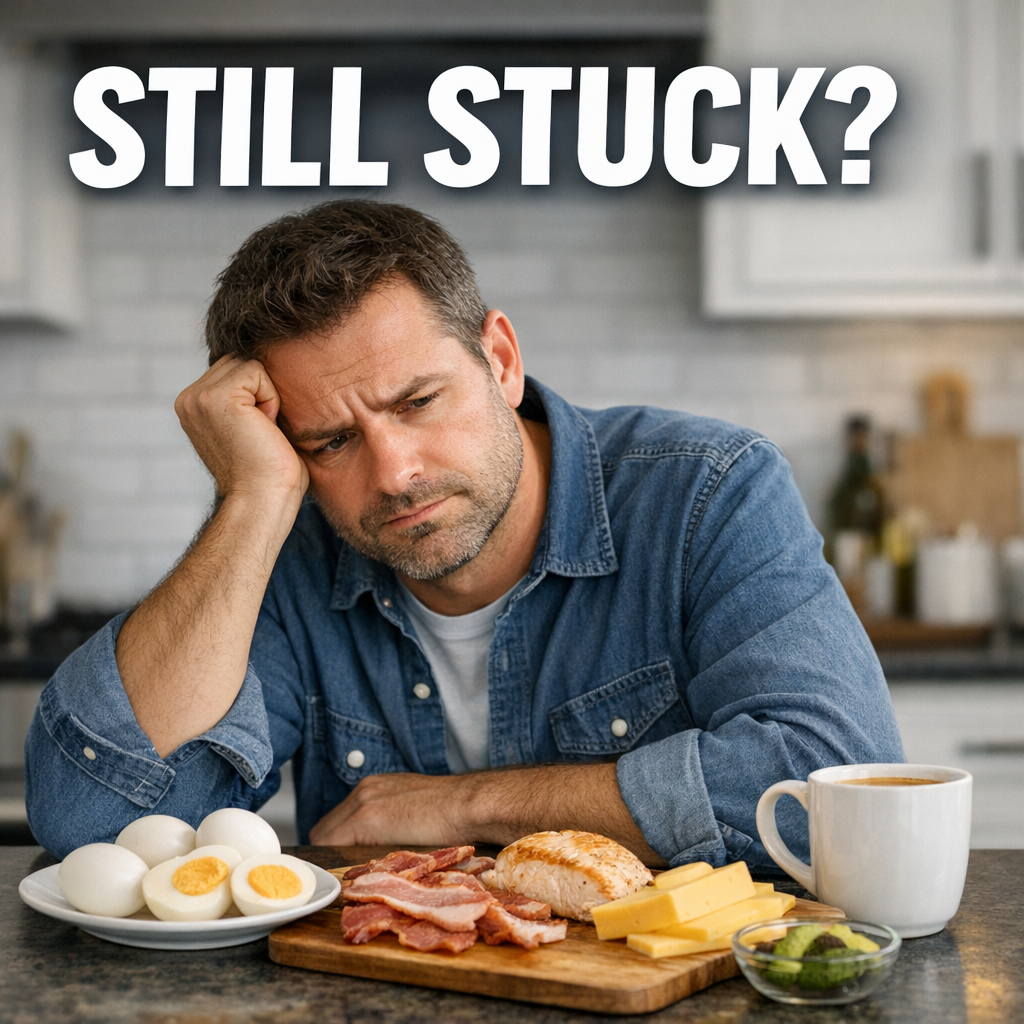
You made it past the first week. Maybe even the first month. Your carbs are low. You keep hearing that you just need more time to get fully fat adapted. But if fat adapted keto not working is the story of your month right now, here’s the truth: waiting is often the exact thing keeping the problem alive.
Keto should not feel like a long, mysterious holding pattern where you stay tired, hungry, bloated, stalled, or annoyed while hoping your body eventually flips some magic switch.
A lot of people hit that point where they think, “Maybe I just need another few weeks.” Then another few weeks go by and nothing really improves. You’re still white-knuckling your meals, still chasing snacks, or still wondering why the scale stopped moving.
I’ve seen this pattern a lot: someone makes it through the messy beginning, expects keto to suddenly become easy, and instead gets stuck in a weird middle zone where the plan looks fine on paper but still feels off in real life.
Why “fat adapted” becomes a bad excuse
Fat adaptation is a real idea. Your body does get better at using fat for fuel over time. But the internet turns that into a lazy answer for everything.
Still tired? Just wait.
Still hungry? Just wait.
Not losing weight? Just wait.
Getting cravings every night? Just wait.
That’s where people get stuck.
If keto still feels broken after the first month, the problem is usually not that your body needs more blind patience. The problem is that something practical is still off. Your electrolytes may be weak. Your protein may be too low. Your meals may look keto but not actually work. Your portions may have quietly drifted up. Your day may be built around snacks and sweet low-carb products instead of real meals.
If that sounds familiar, this is the point where you stop waiting and start troubleshooting. The post Keto After the First Month: Why It Gets Harder and How to Keep It Working is a good next read too, because this is where a lot of people slide from early momentum into confused maintenance mode.
Fat adapted keto not working? Start with what your day actually looks like
Most people do not fail keto because their body refused to adapt. They fail because the routine they built is weak.
Maybe breakfast is coffee plus cream. Lunch is a bar or some cheese. Dinner is better, but by then you’re starving and eating everything in sight. Or maybe you’re staying low carb but adding so much fat to food that your hunger signals and portions get messy fast.
That is not a waiting problem. That is a systems problem.
1. You’re still underdoing electrolytes, so everything feels harder than it should
This is one of the biggest reasons people think they are “not adapted yet.” They feel flat, headachy, weak, moody, or weirdly drained, so they assume it’s just part of the timeline.
Sometimes it’s not a time problem at all. It’s a sodium problem.
When carbs stay low, your body holds less water and sodium. That can keep showing up after the first week, especially if you’re drinking more water, sweating more, working out, or eating mostly plain whole foods without adding enough salt.
Real life version: you’re technically on plan, but by mid-afternoon you feel foggy and snacky. You want something quick, salty, or crunchy. Then later you tell yourself keto still “isn’t working yet.”
The common mistake is thinking electrolytes are only a beginner issue. They aren’t. They can stay relevant long after the first few days, especially if your routine keeps changing.
The fix is simple: stop guessing. Salt your food on purpose. Pay attention to days when you drink more coffee, exercise, or spend more time in the heat. If you need a backup tool, a simple electrolyte mix can help on days when food and fluids are off.
If you keep getting that “why do I suddenly feel terrible again?” pattern, read Keto Side Effects Guide: What Causes Headaches, Dizziness, Nausea, and More – and What to Fix First. It helps you separate actual keto problems from vague waiting-game logic.
2. Your protein is too weak, so you keep calling hunger a fat-adaptation issue
This is where a lot of “fat adapted keto not working” frustration really comes from. People are still hungry, so they assume their body has not learned how to run on fat.
But in a lot of cases, the real problem is much simpler: the meals are not built well.
If your day is heavy on coffee, cheese, nuts, bars, shakes with almost no real food, or small snack-style meals, your appetite can stay noisy. Low carb alone does not guarantee satiety.
Real life version: breakfast barely happens, lunch is random, and dinner turns into cleanup duty because your body is trying to make up for a weak first half of the day. Then you assume adaptation is taking longer than expected.
The mistake is chasing fullness with more fat while ignoring protein quality. That often backfires. You can end up with meals that are very keto, very calorie-dense, and still not that satisfying.
The better fix is to make at least two meals per day clearly protein-anchored. Meat, eggs, Greek yogurt if it works for you, or a direct protein fallback when life gets messy. If you need an easy backup, a low-carb protein powder can help on rushed days, but it should support real meals, not replace every meal.
If hunger is one of your main problems, read Why You’re Still Hungry on Keto: The No-BS Guide to Cravings, Electrolytes, Protein, and Appetite Control. That post gets into why “I’m eating keto” and “I’m actually full” are not the same thing.
3. You started adding fat to everything, and now the plan looks keto but works worse
Some people get to week three or week four and decide the answer is more butter, more cream, more cheese, more fat bombs, more “keto coffee,” and more spoonfuls of extra fat because that’s what a fat-adapted person is supposed to thrive on.
That idea sounds logical. In practice, it often makes things messier.
When you keep adding easy fat to food that was already fine, you can create meals that are heavy but not especially balanced. Weight loss slows down. Digestion gets weird. Hunger gets confusing. Portions stop feeling obvious.
Real life version: you used to eat eggs and bacon. Now it’s eggs, bacon, butter, cheese, coffee with heavy cream, and a couple “keto treats” later because the day still didn’t feel settled. Nothing looks high carb, but progress still stalls.
The common mistake is treating adaptation like permission to make every meal richer. But more fat is not always more effective. If your results got worse after you started pushing fat harder, that’s your clue.
The fix is to simplify your plate again. Build meals around protein first. Add enough fat to make food satisfying, not sloppy. Stop using extra fat as a shortcut for structure.
If the scale has slowed down or stopped, go straight to Why You’re Not Losing Weight on Keto: The No-BS Stall Fix Map. It’s a better tool than waiting around for some magical second phase.
4. You’re still eating too many sweet, snacky low-carb foods, so your appetite never settles down
This is the sneaky one.
A lot of people spend the first month replacing old foods with keto versions of old foods. Low-carb bars. Cookies. Ice cream. sweetened drinks. little “safe” treats. They stay under their carb limit and assume that means they are on the right track.
Technically, maybe. Practically, not always.
When your day keeps circling around sweet tastes and snack logic, appetite control can stay chaotic. You keep thinking about food. You keep wanting another bite. You keep telling yourself this will calm down once you’re more adapted.
But if your routine keeps the reward loop going all day, adaptation is not the main issue. The structure is.
Real life version: you eat “keto” enough to avoid obvious carbs, but your day is still built like a snack plan. A bar in the car. A sweet coffee. Cheese in the afternoon. A low-carb dessert at night. Then you wonder why you still feel mentally hooked on food.
The mistake is assuming low carb automatically means low trigger. It doesn’t.
The fix is to tighten the day around boring, reliable meals for a week or two. Not forever. Just long enough to see what happens when your appetite is not getting poked all day by low-carb treats and convenience foods.
Common mistakes people make while waiting to get “fat adapted”
Here’s where people usually waste time:
- They keep blaming time when the real issue is weak meal structure.
- They assume hunger means they need more fat, when they really need more protein or better meals.
- They ignore sodium once the first-week symptoms calm down.
- They keep using snack foods as meals and then wonder why appetite stays loud.
- They stop troubleshooting because “maybe this is just part of adaptation.”
That last one is the big trap.
If keto is still leaving you tired, hungry, bloated, stalled, or fixated on food after the first month, don’t romanticize the struggle. Don’t turn confusion into a badge of patience. Fix the setup.
What to expect instead
Getting more adapted should make the plan feel steadier, not more mysterious.
You should start seeing clearer hunger signals. Fewer random crashes. Better control around meals. Less obsession with the next snack. More consistency. That does not mean perfect. It means the plan starts acting more predictable.
If that is not happening, your next move is not just “wait longer.” Your next move is to audit what your day is built from.
Fix this first:
- Add salt and fluids on purpose for the next 3–5 days. Stop assuming electrolytes fixed themselves after week one.
- Make two meals clearly protein-first. Don’t let coffee, cheese, or bars do all the work.
- Pull back on extra fat and treat-style keto foods. Keep meals simple enough that you can actually see what’s helping and what’s hurting.
- Track the real problem. Are you tired, hungry, stalled, bloated, or snacky? Solve that issue directly instead of calling all of it “fat adaptation.”
- Use a troubleshooting map instead of blind patience. If weight loss is the problem, use the stall guide. If hunger is the problem, use the appetite guide. If side effects are the problem, use the side-effect guide.
🔎 If this helped, here are more no-BS keto guides worth reading next:
- Keto After the First Month: Why It Gets Harder and How to Keep It Working
- Why You’re Not Losing Weight on Keto: The No-BS Stall Fix Map
- Why You’re Still Hungry on Keto: The No-BS Guide to Cravings, Electrolytes, Protein, and Appetite Control
Explore more Keto That Actually Works guides here: