
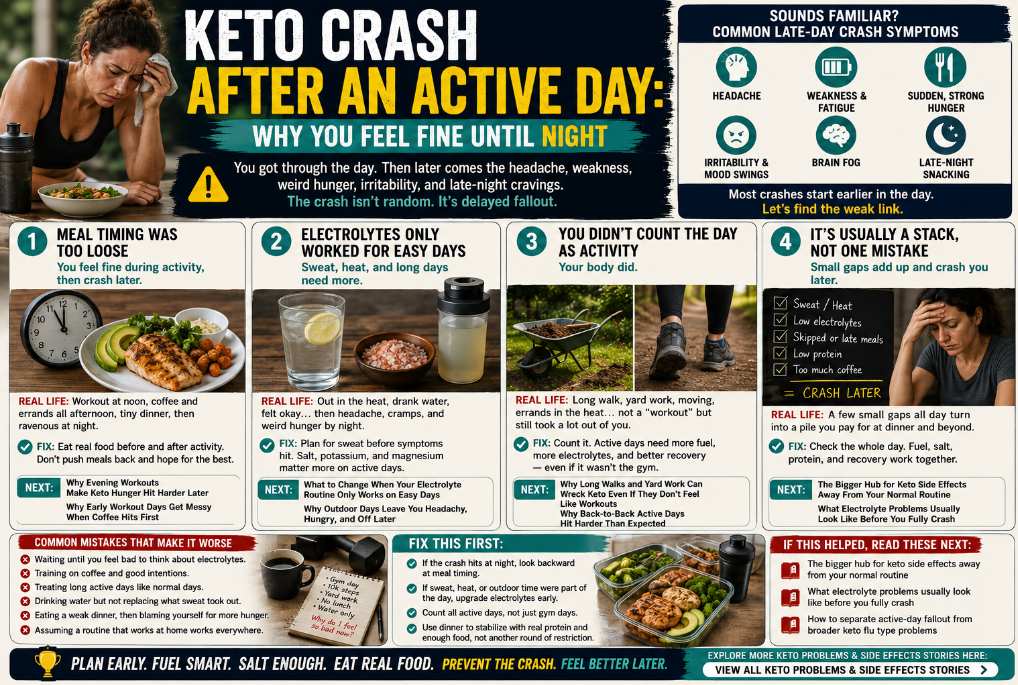
That delayed crash is what throws people off. They assume the workout went fine because the problem did not hit in the moment. Here is the truth. Most active-day keto crashes are not random. They are delayed fallout from weak setup earlier in the day. You sweated more than usual, salted less than usual, pushed food back, or told yourself you were fine until the crash showed up hours later. This guide is about that specific problem: when keto feels manageable during the activity, then gets messy at dinner, late evening, or the next morning.
1. You got through the activity, but meal timing was too loose
A lot of people assume they are safe if they can get through the workout, walk, or outdoor day without bonking. That is the wrong test. The real test is what happens later when the adrenaline drops, your appetite catches up, and the missed food finally matters. If hunger blows up after later training, read why evening workouts make keto hunger hit harder later. That is the best next step when dinner gets pushed late and the rest of the night turns into random eating. If the mess starts because you train early, run on coffee, and do not get enough real food in soon enough, go to why early workout days get messy when coffee hits first and protein shows up late. Real life example: you finish a workout at noon, stay busy, drink coffee, tell yourself you will eat later, and then hit dinner feeling half-starved and impossible to satisfy. That late-night hunger did not come from nowhere. It started when recovery got delayed. The common mistake is treating movement like a separate event instead of something the rest of the day has to support. The fix is boring but effective. Eat real food soon enough after the activity. Make sure protein is solid. Do not let the whole day turn into caffeine, errands, and a giant dinner that has to clean up everything at once.2. Your electrolyte routine only worked for easy days
This is where a lot of active-day keto problems get misread. People use the same routine that works at home on a calm day, then act surprised when it falls apart under heat, sweat, extra walking, or a longer stretch outside. If active days keep giving you that fine-then-awful swing, read what to change when your electrolyte routine only works on easy days. If the bigger pattern is heat, sun, or time outside, go next to why outdoor days leave you headachy, hungry, and off later. Real life example: you are out for hours, drink plain water, feel mostly okay, and assume you are handling it well. Then by evening you are headachy, cranky, snacky, and wondering why keto suddenly feels unstable. That is usually not a mystery. It is an electrolyte plan that stopped matching the day. The mistake is waiting for symptoms before taking the day seriously. Once the headache, shakiness, or weird hunger shows up, you are already playing catch-up. The fix is to plan for sweat before you feel bad. If the day is hotter, longer, or more active than normal, your usual light routine may not be enough. Plain water by itself often makes people feel more confused because they think they hydrated when they really just diluted a weak setup.3. You did not count the day as activity, but your body still did
One reason this topic overlaps with everything else is simple: the body does not care whether you called it a workout. Long walks, yard work, standing all day, park days, errands in the heat, moving furniture, and nonstop family stuff can hit the same weak spots as formal exercise. If that sounds familiar, read why long walks and yard work can wreck keto even when they do not feel like workouts. And if the issue keeps stacking across several days, go to why back-to-back active days hit harder than expected. Real life example: you never went to the gym, so you assume it was a normal day. But you spent hours outside, walked more than usual, skipped lunch, drank mostly water, and got home cooked. By dinner you are exhausted and oddly hungry. That still counts as an activity problem. The mistake is only adjusting for obvious exercise. The smarter move is noticing when life was physically demanding even if it did not look athletic. The fix is to stop using the word workout as the only trigger for better planning. If the day took more out of you, treat it like it mattered.4. A keto crash after an active day is usually a stack, not one mistake
This is why people get frustrated. They want one clean reason. Most of the time, the crash later is sweat plus under-salted food. Activity plus delayed meals. Extra movement plus weak protein. Caffeine instead of real recovery. Sometimes all of them at once. That is also why it can feel like keto is working until it suddenly is not. You can stay low carb and still feel wrecked if the day structure is too weak for the amount of output you actually had. A common mistake is trying to be extra disciplined after activity. People eat too lightly because they do not want to “undo” the workout, then end up overeating later because the setup was never enough in the first place. Another mistake is copying advice from fitness people whose goal is performance first and appetite control second. No BS Keto readers usually need the opposite. They need a routine that keeps them steady, fed, and less likely to spiral into cleanup eating at night. The fix is to ask better questions. Stop asking whether you were “good” today. Ask whether the day had enough salt, enough water, enough real food, and enough recovery for the amount of output you actually did. That question gets you somewhere. Arguing with yourself about discipline usually does not.Related:
Common mistakes that make the delayed crash worse
People wait until they feel bad to think about electrolytes. They train on coffee and good intentions. They treat long active days like normal days with slightly more movement. They drink water but do not replace what sweat took out. They eat a weak dinner after activity, then blame themselves for getting hungry again an hour later. And they keep assuming that if a routine worked at home on an easy day, it should work everywhere. It will not.Fix this first:
- If the crash hits at night, look backward at meal timing before you blame willpower.
- If sweat, heat, or outdoor time were part of the day, upgrade electrolytes before symptoms show up.
- Count long walks, yard work, and busy outdoor days as real activity, even if they were not workouts.
- Use dinner to stabilize the day with real protein and enough food, not to start another round of restriction.
If this helped, read these next:Explore more Keto Problems & Side Effects stories here: View all Keto Problems & Side Effects stories
- the bigger hub for keto side effects away from your normal routine
- what electrolyte problems usually look like before you fully crash
- how to separate active-day fallout from broader keto flu type problems