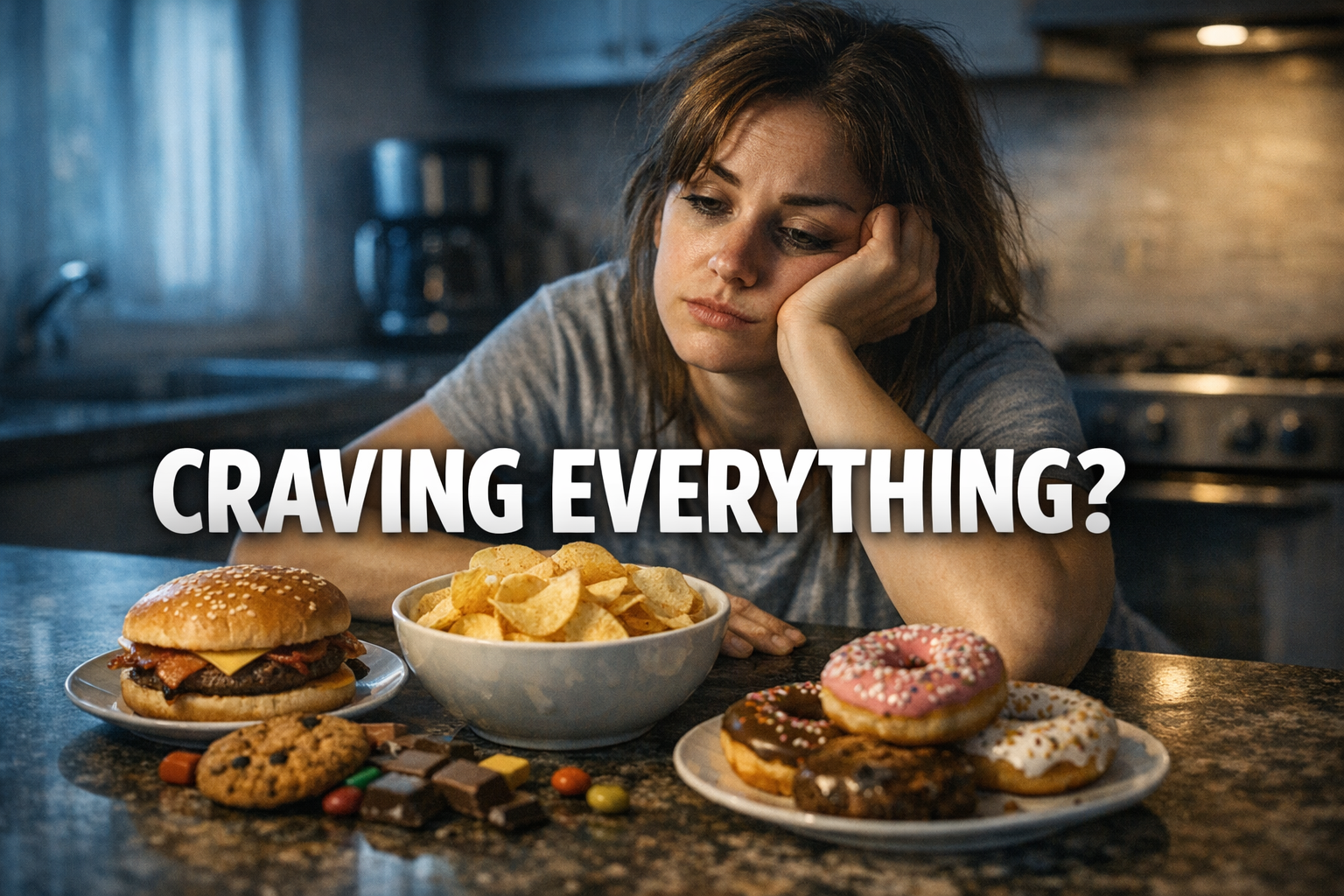
You stayed low carb. You did not go off the rails. Then after one bad night, keto cravings hit harder the next day and suddenly coffee, snacks, and “just one thing” sound way too good.
If poor sleep keto cravings sounds familiar, this usually is not a willpower problem. It is a next-day damage problem.
Here is the truth. Poor sleep changes hunger, patience, stress, and food judgment all at once. You may still be eating low carb, but the whole day gets easier to mess up.
That is why this can feel so confusing. You did not quit keto. You just woke up in a worse setup.
Why poor sleep keto cravings hit harder the next day
Sleep is not just about feeling rested. It also helps control appetite, stress, and how much friction you can handle before you start looking for quick relief.
After bad sleep, most people are more likely to lean on caffeine, delay meals, get impatient, snack early, and start wanting sweet or easy foods even if carbs stay low.
That matters on keto because a lot of next-day damage does not look like a giant cheat meal. It looks like a “good enough” morning that turns into weird hunger, random bites, more coffee, and a rough night again.
Start here:
1. You wake up under-fueled, so quick relief starts looking like a plan
After poor sleep, a lot of people say they are “not hungry” in the morning. What they really mean is they feel tired, foggy, slightly wired, or a little sick of food. That is not the same as being well-fueled.
So the day starts with coffee, maybe a little cream, maybe nothing else. By late morning, the body starts asking for relief. That is when sweet tastes, crunchy snacks, and grab-and-go keto products start sounding useful.
Real life example: you slept five broken hours, get up late, skip breakfast, and tell yourself lunch will fix it. By 10:30 you are already eyeing a bar, nuts, or something sweet even though you never sat down for a real meal.
The common mistake is thinking the answer is more tiny keto snacks. That usually keeps food noise going all day.
The better fix is boring and effective. Get one real meal in early with protein, salt, and enough substance to calm things down. Eggs, leftover meat, Greek yogurt if it fits your plan, or a simple protein-forward plate works better than trying to nibble your way through the morning.
If your appetite also feels strangely weak early and then comes roaring back later, that lines up with low appetite side effects on keto. Early under-eating often turns into later overeating.
2. Poor sleep makes caffeine feel urgent, then caffeine makes the day worse
This is where many next-day keto problems really start.
You are tired, so coffee feels like the fix. But when you use caffeine before food, water, or sodium, you often end up more wired than stable. Then you feel shaky, headachy, edgy, or weirdly hungry a few hours later.
That is why poor sleep and keto cravings often travel together. The bad night pushes more caffeine. The caffeine covers up the real problem for a little while. Then appetite gets messy.
In real life, this looks like a coffee-first morning, a light lunch or skipped lunch, then a hard swing into snacky cravings by afternoon. You may still stay low carb, but the day feels much harder than it should.
The mistake is thinking more coffee equals more control. It does not. It usually just buys you a shorter fuse and a rougher rebound.
The fix is to pair caffeine with actual support. Eat something real. Drink water. Replace sodium if you are dragging, lightheaded, or getting that flat low-energy feeling. A simple electrolyte mix can help if the bad-sleep day also has that dehydrated, depleted feeling, but it should support meals and structure, not replace them.
This also overlaps with keto dehydration in real life. Sometimes what feels like a craving spiral is partly fatigue plus low fluids plus sodium drift.
3. Your patience drops, so you start making lazy food decisions all day
Cravings are not just about hunger. They get louder when your brain is tired and does not want friction.
That is why poor sleep makes keto feel harder even when your carbs are still technically low. You are more likely to grab bites while cooking, order something sloppy, keep snacking because you do not want to think, or say yes to a sweet “keto” extra because the day already feels annoying.
Picture a normal bad-sleep workday. Lunch is late. You are behind. Somebody brings food into the office. Or you hit the drive-thru because you cannot deal with another decision. You are not wildly hungry. You are mentally done.
The common mistake is trying to fight this with motivation. That is the wrong tool.
The better fix is to cut decisions down before the hard part of the day hits. Use a default breakfast, a default lunch, and one backup option for the afternoon. Decide dinner early. Make the easiest choice a decent one.
If your whole routine starts coming apart after one rough night, read keto sleep problems next. This page is about the next-day cravings pattern. That page helps you zoom out and fix the repeat cycle.
4. Poor sleep makes sweet-seeking and reward eating louder, even if carbs stay low
This is where many people say, “I stayed keto, but I was out of control around food.”
That can absolutely happen.
After poor sleep, food starts looking like comfort, reward, and a break from being tired. On keto, that may not be donuts or pizza. It may be nuts, cheese, bars, dark chocolate, peanut butter, or a second and third coffee with sweet add-ins.
Real life example: the day starts rough, you hold it together through work, then by 4 PM you start prowling the kitchen. Not a real meal. Just bites. A handful here, something sweet there, another drink, then dinner later anyway.
The mistake is telling yourself it is fine because none of it broke your carb target.
But low carb does not always mean low appetite. Low carb does not always mean low food noise either.
The fix is to call the pattern what it is: tired reward eating. Then replace grazing with one real choice. Eat a proper meal, get outside for ten minutes, drink water, or shut down the loop before it turns into an all-evening snack session.
If your evenings are where this always explodes, the stronger follow-up is the keto hunger and cravings fix map. That is the best next step if you need the bigger troubleshooting path.
5. A bad night often creates a second bad night
This is the part that keeps the problem going.
You sleep badly. The next day you rely on caffeine, eat too little early, get weirdly hungry later, snack too long at night, and go to bed feeling off again. Then sleep is rough again. By day two or three, it feels like keto suddenly stopped working.
It did not. You are stuck in a bad loop.
This is especially common for parents, shift workers, stressed people, and anyone whose sleep is already fragile. One rough night does not just hurt that morning. It changes the whole rhythm of the next day.
The common mistake is trying to answer that with stricter carb rules or by eating as little as possible to “make up for” a messy day. That usually backfires at night.
The better fix is to make the recovery day simpler, not stricter. Keep meals plain. Stop chasing energy with sweet keto stuff. Eat enough earlier. Keep dinner steady. Then protect the next night instead of walking straight into another repeat.
If bad sleep itself is the recurring trigger, read why you can’t sleep on keto. If the sleep issue stays unresolved, the cravings problem usually keeps coming back.
What most people get wrong after a bad night
- They wait too long to eat because they do not feel normal hunger yet.
- They use coffee as a recovery plan.
- They try to stay in control with little snacks instead of one real meal.
- They keep chasing sweet tastes because they want energy or comfort.
- They under-eat all day, then act surprised when night hunger gets loud.
- They blame willpower instead of fixing structure.
If you slept badly, the goal is not a perfect keto day. The goal is to stop the next-day breakdown before it turns into a two-day mess.
Simple fixes for the next day
Keep the recovery day boring on purpose.
Eat one solid meal early. Do not let caffeine do all the work. Front-load some protein and salt. Reduce the number of food choices you need to make. Keep snack exposure lower than usual. If cravings hit, answer them with a meal before you start bargaining with yourself.
If the day also feels dry, flat, headachy, or unusually drained, support fluids and electrolytes instead of just throwing more coffee at it. That is one reason poor sleep and dehydration can blur together on keto.
If this keeps happening, the real fix is not better snacks. It is better troubleshooting around sleep, appetite, and routine.
FAQ: poor sleep keto cravings
Can poor sleep cause cravings even if I stay in ketosis?
Yes. Ketosis does not make you immune to tired-brain decisions, stress eating, or caffeine-driven appetite swings.
Why do cravings feel worse later in the day after bad sleep?
Because many people under-eat early, overuse caffeine, and burn through patience by afternoon. The rebound often shows up at night.
Should I fast after a bad night to “reset”?
Usually not if cravings are already loud. Fasting on top of bad sleep often makes the next-day breakdown worse.
What should I fix first: sleep, cravings, or electrolytes?
Fix the immediate day first with a real meal, fluids, sodium, and fewer food decisions. Then work upstream on the sleep problem so the pattern stops repeating.
Fix this first:
- Eat a real first meal. Do not try to survive a bad-sleep morning with coffee alone.
- Use caffeine with food and fluids. Stop treating coffee like a meal and a recovery plan at the same time.
- Lower your food decisions. Use default meals and one backup option for the hardest part of the day.
- Handle the afternoon on purpose. If cravings hit, choose a proper meal instead of starting a long snack loop.
- Protect tonight. Keep dinner simple, avoid late grazing, and work on the sleep side so tomorrow does not repeat today.
Read next: