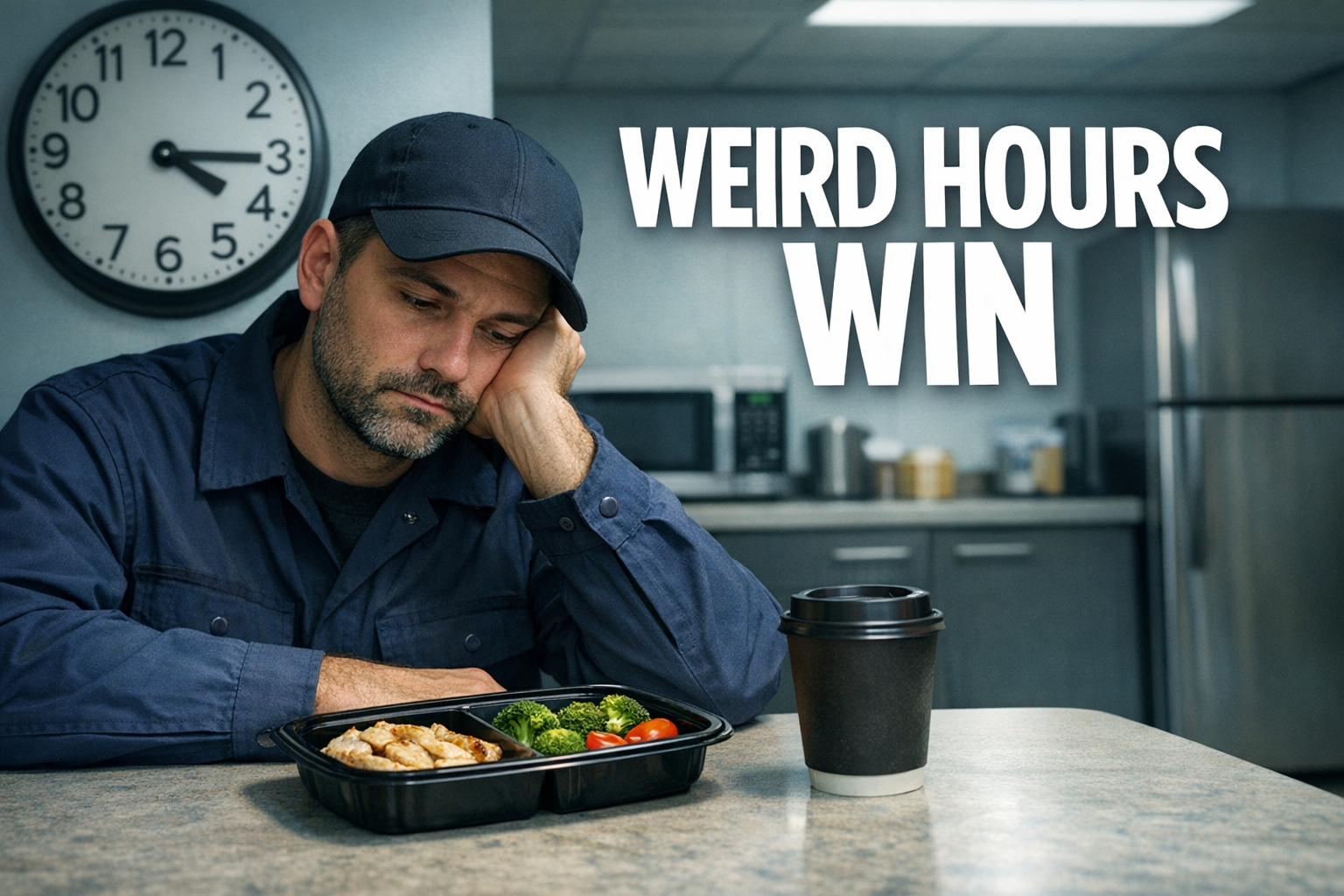
You can keep carbs low and still feel like lazy keto shift workers are playing the game on hard mode. If you work nights, rotate shifts, start at 4 AM, or eat lunch when everyone else is asleep, keto gets messy fast.
That is not because you have no discipline. It is usually because your schedule keeps pushing you into tired decisions, random meal timing, weak backup food, and long gaps that end in overeating.
If you have ever stood under gas station lights at 2 AM wondering whether beef jerky counts as dinner, welcome to the problem.
Why lazy keto shift workers struggle more
Lazy keto works best when meals are boring in a good way: simple, repeatable, easy to grab, and hard to screw up. Shift work wrecks that rhythm. Your body clock is off, your breaks move around, your sleep is inconsistent, and the food around you is usually built for convenience, not appetite control.
That means the real problem is not just carbs. It is that weird hours make you more likely to eat too late, eat too little, skip real meals, rely on packaged food, and confuse tiredness with hunger.
Start here:
Cause 1: Your meal timing gets random, so hunger sneaks up and hits harder
When your schedule changes every day, you stop eating on purpose and start eating whenever life lets you. That sounds harmless, but it usually means you go too long without a real meal.
Maybe you rush out early with coffee, miss your first break, grab cheese at noon, then inhale a giant dinner after work. Or you work overnight, feel oddly fine for a few hours, then hit a wall and start picking at anything easy.
This is where many people mess up. They think, “I’m not that hungry, so I’m fine.” Then the hunger lands all at once and now a protein bar, nuts, and break-room junk all disappear in ten minutes.
The fix is simple: stop waiting to feel starving. Build 2 or 3 default eating windows around your actual shift, not around a normal daytime schedule. If your workday is chaotic, treat your first solid protein-heavy meal like an appointment.
If you need help building default meals, this guide on lazy keto default foods makes the whole thing easier.
Cause 2: Tiredness feels like hunger, so you keep eating for energy
Shift workers are tired for real. That matters. Poor sleep makes food decisions worse, makes cravings louder, and makes “I need energy” feel exactly like “I need a snack.”
In real life, this looks like chasing energy all shift with coffee, cream, a handful of almonds, a keto bar, maybe some jerky, then another coffee. None of that feels huge on its own. Together, it becomes constant eating without much satisfaction.
The common mistake is assuming low carb automatically means low impact. It does not. If you are tired enough, you will eat to stay awake even when you are not truly hungry.
The fix is to separate energy support from snack drift. Drink water, salt your food properly, and ask one blunt question before eating: “Am I actually hungry, or am I just cooked?” If the answer is tired, take the smallest useful step first: water, a walk, a proper break, or caffeine with an actual meal instead of random snacking.
This is also why a weak lunch can wreck the rest of your day. Tired plus underfed is a bad combo.
Cause 3: Break-room food and gas-station food are built to be fast, not filling
Lazy keto can survive weird hours, but only if your backup food is better than the food trap waiting nearby. Most shift workers are surrounded by vending machines, pastries, sandwiches, pizza, chips, and “healthy” grab-and-go snacks that barely help.
Even if you stay low carb, the replacement choices can still be weak. You get a cheese stick, a diet soda, and maybe some nuts. That is not a real meal for a 10- or 12-hour shift.
This is the mistake: using keto-friendly snacks as full meal replacements over and over. A snack can rescue a rough moment. It cannot carry your whole system.
The fix is to stock 2 levels of backup food. Level one is emergency food you can keep in a bag, locker, or car. Level two is a real meal you can grab fast before a shift. Good examples are deli meat and cheese roll-ups, hard-boiled eggs, leftover burger patties, rotisserie chicken, Greek yogurt if it fits your approach, or a ready-to-drink protein shake when you truly cannot sit down.
If you need portable backup options, one reasonable choice is Premier Protein shakes. They are not magic. They are just better than pretending coffee is lunch.
For true emergency food, zero-sugar jerky like Tillamook Zero Sugar Beef Jerky can help you avoid a crash when you are stuck between breaks. Use it as backup, not as your entire plan.
And if your kitchen never has anything ready, fix that first with these fast lazy keto emergency meals.
Cause 4: Weird hours make “lazy keto” turn into constant convenience eating
Lazy keto is supposed to reduce friction. For shift workers, it often does the opposite because “easy” becomes “whatever is closest.”
At first, that feels manageable. You grab packaged meat, cheese crisps, nuts, bars, and sugar-free drinks because they are low carb and fast. Then your whole day becomes little bites instead of real meals.
That creates two problems. First, you never feel fully fed. Second, it becomes hard to tell where your hunger is coming from, because you have been half-eating for hours.
A lot of people think they need more keto snacks. Usually they need fewer snack decisions and more repeatable meals. That is a big difference.
The fix is to give every shift a default plan before it starts. Example:
- Meal 1 before work: eggs and sausage, or chicken and avocado
- Mid-shift backup: jerky or a protein shake only if needed
- Main meal after shift: leftovers, bunless burgers, or a simple bowl with meat, cheese, and vegetables
That kind of structure keeps lazy keto lazy in the right way. It removes decision fatigue instead of feeding it.
Cause 5: Sleep disruption makes late-night cravings and appetite confusion worse
When sleep is off, hunger gets weird. Some shift workers are not hungry when they should be, then ravenous when they should be winding down. Others crave crunchy, salty, or sweet food all night because their brain is looking for relief.
In real life, this might look like getting home exhausted, eating a second dinner, then standing in the kitchen taking little bites because your body feels unsettled. Or waking up before a shift with no appetite, skipping food, then overeating later.
The mistake is treating every off-schedule craving like a willpower problem. A lot of the time, your body is under-slept, overstimulated, and looking for easy comfort.
The fix is to expect this pattern instead of being surprised by it. Keep post-shift meals simple. Keep high-trigger foods out of easy reach on work weeks. If nights are your danger zone, decide your last meal before the shift even starts.
That is also why this older post on lazy keto meals for people who are too busy to cook fits so well here. Shift work punishes improvising.
Common mistakes shift workers make on lazy keto
- Using coffee with cream as a real meal
- Relying on snacks for an entire shift
- Waiting too long to eat because hunger feels delayed
- Keeping no backup food in the car, bag, or locker
- Buying convenience food that is low carb but not satisfying
- Trying to eat on a “normal” schedule when your life is not normal
Here’s the truth: shift work changes the job. You do not need a perfect keto plan. You need a durable one.
Related:
What actually makes lazy keto work on weird hours
The biggest upgrade is not better motivation. It is reducing the number of bad food decisions you have to make while tired.
That means:
- Pick 3 grab-and-go meals you can repeat every week
- Keep 1 emergency protein option with you at all times
- Stop building whole shifts around snack foods
- Eat before you become desperate
- Make your hardest part of the day easier on purpose
If your shift always gets ugly at 1 AM, solve 1 AM. If mornings are the mess, solve mornings. Lazy keto gets easier when you fix the failure point instead of hoping you will feel more motivated next time.
Fix this first:
- Pick one solid meal to eat at the same point in every shift, even if the clock time changes.
- Pack one real backup and one emergency backup before work starts.
- Stop calling snacks “meals” unless there is truly no other option.
- Build your plan around your weird hours, not around what a normal schedule should look like.
🔎 If this helped, here are more no-BS keto guides worth reading next:
- Lazy Keto Meals for People Who Are Too Busy to Cook
- Lazy Keto Falls Apart When Your House Has No Fast Emergency Meals
- Lazy Keto Is Easier When You Pick 10 Default Foods and Stop Improvising All Day
Explore more Lazy Keto stories here: