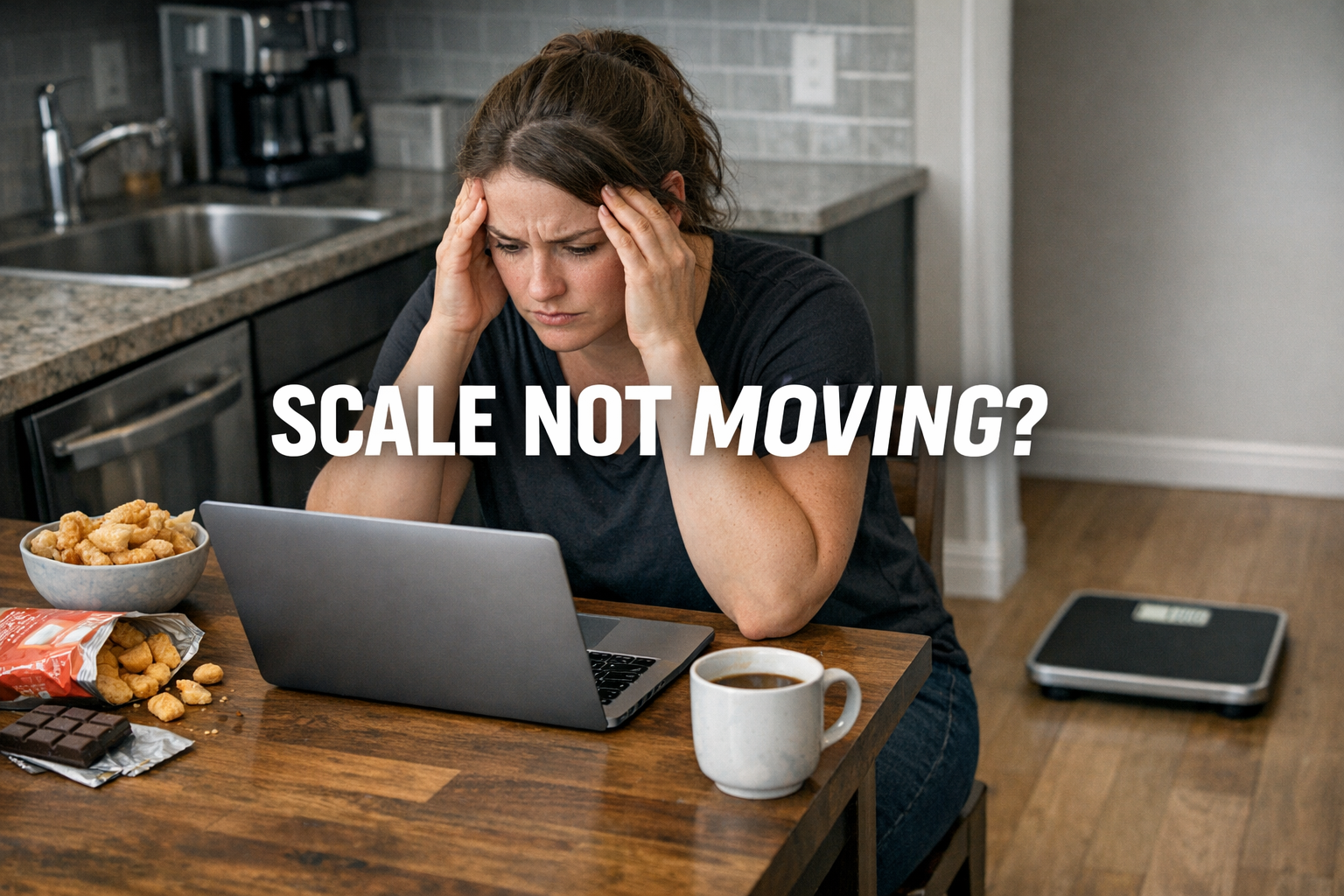
If your keto plateaus on work-from-home weeks, the problem usually is not that your body suddenly stopped responding. It is usually that home makes tiny bites, loose portions, and low-effort snacking feel invisible.
You are near your kitchen all day. Nothing feels like a real cheat. Nothing feels big enough to count. Then the scale sits there and you start wondering if keto just stopped working.
I’ve seen this pattern a lot: coffee, a few bites while answering email, a handful of something between calls, a “quick” lunch that never really fills you up, then a dinner that has to clean up the whole mess.
Here’s the truth. A work-from-home plateau is usually not about remote work itself. It is about frictionless eating. When food is ten steps away, the little decisions pile up fast.
Why work-from-home keto plateaus happen so often
At home, you do not get many natural stop signs. There is no packed lunch limit. No commute break between meals. No coworker seeing you grab a fourth snack. No reason to notice every bite.
That is why work-from-home keto can feel easy in the morning but messy by late afternoon. The food is always there, and your brain starts treating little bites like they do not matter.
When that keeps happening, keto plateaus on work-from-home weeks even if your meals still look low carb on paper.
Cause 1: Your “tiny bites” are not tiny anymore
This is the biggest one.
You grab a little cheese while making coffee. A spoonful of peanut butter before lunch. A few nuts during a meeting. Two slices of deli meat when you walk past the fridge. None of that feels like a meal. That is exactly why it is dangerous.
In real life, those bites stack into a full extra meal before dinner even starts. The problem is not only carbs. It is total intake, appetite confusion, and the way constant nibbling keeps you thinking about food all day.
A lot of people hit a plateau and assume they need stricter macros, longer fasting, or some fancy trick. But the first thing to check is much simpler: are you eating more in fragments than you realize?
This is the same blind spot covered in Keto Macro Blind Spots. Sauces, bites, drinks, and little tastes can stall progress without ever feeling like a real slip.
The common mistake is telling yourself, “It was just a bite.” Once you say that five or six times in one day, it stops being true.
The fix: create a hard rule for work hours. If it is not part of a planned meal or planned snack, it does not go in your mouth. That sounds strict, but it is easier than trying to mentally track random grazing.
If you need something between meals, put it on a plate or in a bowl. Sit down. Eat it on purpose. Random bites standing in the kitchen are what get people stuck.
Cause 2: Home portions keep drifting bigger because nothing marks the end of a meal
At home, it is easy to build meals by feel. A little more shredded cheese. Another spoon of dressing. A few extra bites while cooking. One more handful because you are still near the counter.
This is where a plateau gets sneaky. Your meals are still “keto.” They are just getting bigger than you think.
That is why so many people dealing with a stall need to read Why You’re Not Losing Weight on Keto: The No-BS Stall Fix Map. A plateau is often not one giant mistake. It is five small ones that feel harmless on their own.
Here is what it looks like in real life: you make eggs, bacon, and avocado for lunch. That sounds solid. But then you add a big pour of heavy cream to coffee, extra cheese on the eggs, half a bag of nuts while working, and a “healthy keto dessert” later. Now the day is much heavier than it felt when you described lunch.
The common mistake is assuming that because a food is low carb, the portion does not matter much. That logic can work for a few days. It usually stops working once routine gets lazy and portions start drifting.
The fix: tighten up just the foods that are easiest to underestimate. Nuts, cheese, dressings, cream, spoonful foods, crunchy snacks, and leftovers during cooking are the main troublemakers.
You do not need to weigh every lettuce leaf. But if your scale has stalled, a simple zero carb protein powder or a measured protein-based lunch can be more useful than another “healthy” snack plate. If measuring is the issue, a basic food scale works better than guesswork, but the bigger win is choosing simpler meals with a clear stopping point.
Cause 3: Your lunch is too weak, so the whole second half of the day gets sloppy
A lot of work-from-home plateaus are not really snack problems first. They are weak-lunch problems first.
If lunch is small, light, or mostly snack food, the rest of the day gets fragile. By 3 PM, you start circling the kitchen. By 5 PM, you are grabbing bites while deciding dinner. By 8 PM, you feel like keto “made you hungry,” when the real issue was that your middle meal never did its job.
This is especially common when lunch is something like:
- just a shake
- just cheese and nuts
- just leftovers that were too small
- just coffee because you were “busy”
That setup almost always creates later intake you do not fully notice.
One of the best companion reads here is Why Keto Falls Apart at Work When Lunch Is Too Weak. Even though that piece is about work more broadly, the pattern is even worse at home because there is no separation between your desk and your food.
The common mistake is trying to stay “light” earlier so you can save calories for later. Most people do the opposite by accident. A weak lunch leads to a bigger total day.
The fix: make lunch boring if needed, but make it filling. Build it around a real protein anchor and enough volume that you are not hunting for bites an hour later.
Think chicken, burgers without the bun, eggs with meat, tuna salad, leftover steak, or a serious protein bowl. If you keep missing lunch because meetings run long, a ready backup like Premier Protein Shake is better than pretending coffee will carry you through. Just do not let the shake become your whole food strategy every day.
Cause 4: You are using snacks to break up stress, boredom, and task switching
This is where remote work gets people.
You finish one task and want a reset, so you walk to the kitchen. You hit a boring call and want stimulation, so you grab something crunchy. You feel stuck on a problem, so food becomes a quick change of state.
At that point, the plateau is not about hunger alone. It is about using food as punctuation.
That is why the same person can say, “I am not even that hungry,” while still eating all day. The bites are doing another job. They are giving relief, distraction, or a tiny reward.
This overlaps with the pattern in Keto Desk Drawer Snacks, except at home the stash is bigger and easier to refill. Your whole kitchen becomes the desk drawer.
The common mistake is treating this like a willpower problem. It is usually a structure problem. If every stressful moment has a food path, you will keep taking it.
The fix: replace the transition, not just the snack. Stand up, refill water, walk outside for two minutes, switch rooms, or set a short reset timer. You need a break behavior that is not eating.
If you always want something crunchy during calls, do not keep open-ended snack foods beside your desk. Make them inconvenient. Friction helps.
Cause 5: You keep counting “at-home weeks” as normal even when they are not
Some work-from-home weeks are not normal weeks at all.
You are stressed. Sleep is off. Schedule is loose. Activity drops. You are near food all day. The scale stalls, and you tell yourself nothing changed because you were still home doing your usual routine. But the routine did change. The structure got weaker.
This is why a plateau can show up even when you are not eating obvious junk. You are eating in a way that blurs together: later mornings, patchy lunches, random bites, and more convenience food because your brain is tired.
In real life, it looks like this: you start Monday determined, then by Wednesday you are half-working, half-snacking, and half-promising yourself dinner will be cleaner. By Friday, the whole week feels fuzzy.
The common mistake is looking only for one “bad” food. The real problem is often that the whole week lost definition.
The fix: stop judging your week by intentions. Judge it by repeatable anchors:
- Did you eat a real lunch?
- Did you have planned meal times?
- Did you keep random bites out of the workday?
- Did your dinners start from actual hunger or from cleanup mode?
If two or three of those were off, the plateau makes sense.
Common work-from-home keto mistakes that keep the stall going
Once the scale stalls, people often make the problem worse.
Trying to fast harder while still grazing
If you say you are skipping breakfast but keep having cream, bites, and little tastes, you are not creating clarity. You are just making the day more chaotic.
Buying more keto snacks instead of fixing meal structure
Snack products usually help the plateau only if they replace something worse and stay controlled. If they become the plan, they usually keep the problem alive.
Blaming remote work instead of the eating pattern
Working from home is not automatically bad for keto. The real issue is easy access plus weak boundaries.
Waiting for motivation to come back
You do not need a motivation speech. You need fewer chances to eat by accident.
How to stop a work-from-home keto plateau without overcomplicating it
If your keto plateaus on work-from-home weeks, do not start with extreme changes. Start by making your days easier to read.
That means real meals, fewer food decisions, less grazing, and tighter control over the foods that quietly expand.
The goal is not perfection. The goal is to stop invisible intake from running the whole week.
Once you can actually see your pattern again, you can fix it fast. Most plateaus at home are not mysterious. They are just messy.
Fix this first:
- Pick one workweek rule: no random bites during work hours unless they are plated and intentional.
- Make lunch bigger and more protein-focused so the second half of the day stops turning into cleanup eating.
- Tighten the easy-to-overeat foods for one week: nuts, cheese, cream, sauces, crunchy snacks, and cooking bites.
- Replace stress-snack transitions with a non-food reset like water, a short walk, or a room change.
- Review the week honestly. If the kitchen stayed open all day, that is the plateau problem to fix next.
🔎 If this helped, here are more no-BS keto guides worth reading next:
- Keto Macro Blind Spots: Why Portions, Sauces, Bites, and Drinks Stall Progress
- Why You’re Not Losing Weight on Keto: The No-BS Stall Fix Map
- Why Keto Falls Apart on Work-From-Home Days When Every Break Turns Into a Food Decision
Explore more Keto Lies & Myths guides here: