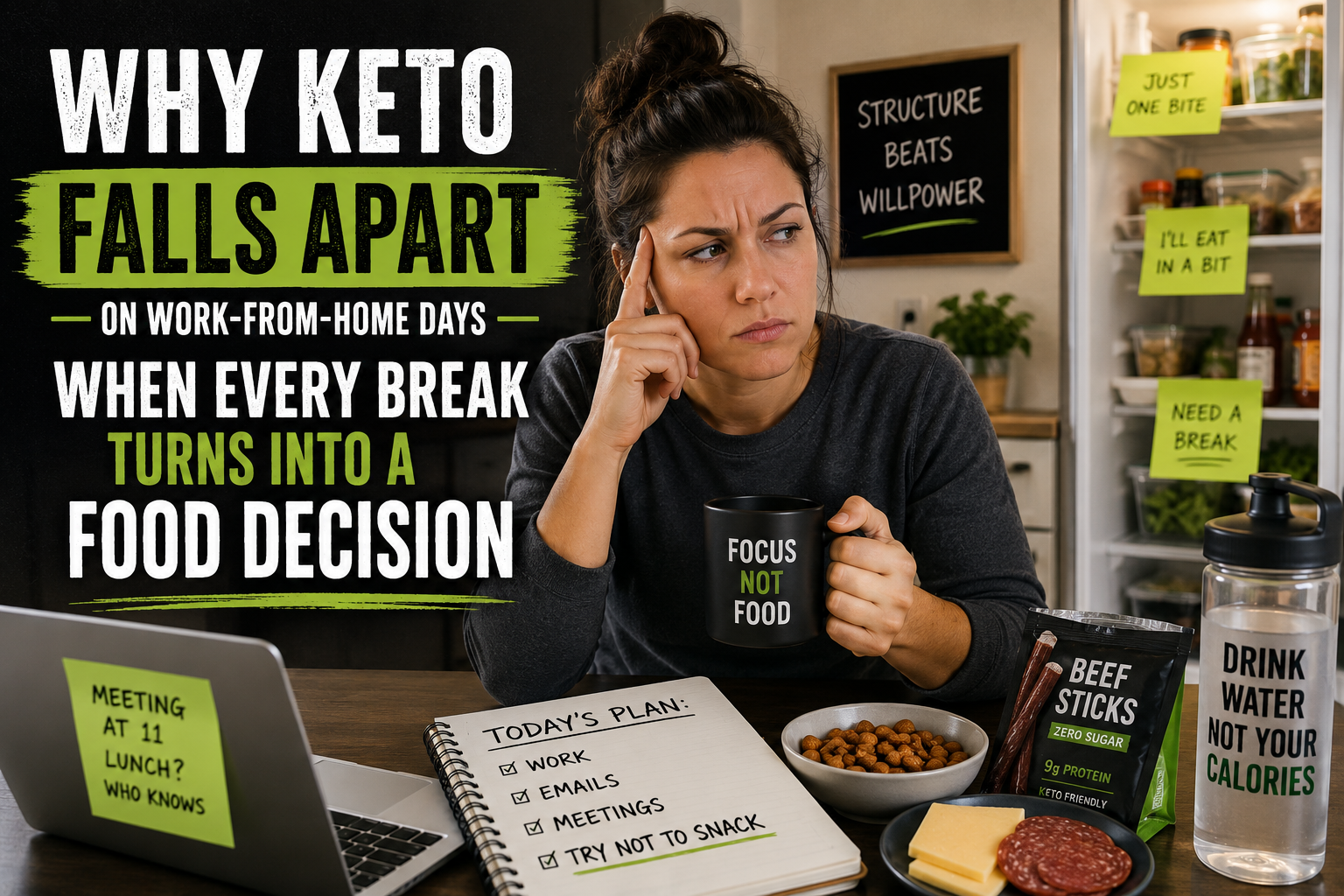
You can be doing keto “right” all morning while working from home and still be completely off track by mid-afternoon.
Not because you are lazy.
Not because keto suddenly stopped working.
Usually it happens because the fridge is always close, lunch keeps getting pushed back, and every short break turns into another food decision.
One bite becomes another. Then another.
By dinner, you somehow spent the whole day eating without ever having one solid meal.
Work-from-home keto falls apart when your day has access to food but no structure around it. That is why this problem is different from office eating, restaurant eating, or social eating. At home, nobody is stopping the random bites, the delayed lunch, or the boredom walk into the kitchen.
The fix is not more willpower. The fix is building a workday that makes fewer food decisions necessary.
Why work-from-home keto gets messy so fast
Office days create friction.
You have to bring food, leave your desk, or wait until lunch.
Work-from-home days remove that friction.
The kitchen is open all day. The pantry is visible. Leftovers are close. Coffee is easy. “I’ll eat in a minute” feels harmless.
That is why this problem belongs in its own lane. It is not just generic hunger. It is constant access plus weak structure.
If you want the broader system behind that fix, start with Lazy Keto That Actually Works. If you want the practical backup-food version, Lazy Keto Meal Rescue helps when the day is already getting chaotic.
Start here:
The kitchen is always open, so you keep eating in fragments
This is one of the biggest work-from-home keto problems.
You do not sit down and eat lunch. You eat pieces of lunch.
Maybe it starts with deli meat at 10:30. Then a few nuts. Then cheese. Then a protein shake because you are still somehow unsatisfied by 1 PM.
None of it feels like much in the moment.
Put together, you spent half the day nibbling without ever getting the fullness of a real meal.
This is where most people mess up: they assume small low-carb bites automatically create a low-problem day. Usually they do the opposite.
Scattered eating keeps hunger active because there is no real meal size, no clear stopping point, and no strong satisfaction signal.
The direct fix is building one default work-from-home lunch that is big enough to count. That usually means a real portion of protein, something salty, and enough food to shut down food thoughts for a few hours.
If your lunch keeps turning into snacks, pick default foods instead of improvising all day. If you stay hungry even after eating, go to the Keto Hunger and Cravings Fix Map.
Your breaks turn into boredom eating and procrastination eating
At home, the line between “I need a break” and “I need food” gets blurry fast.
You finish a task, hit a hard email, avoid a boring project, or feel your focus dip. So you walk into the kitchen because it feels like relief.
But what you actually needed might have been water, a short walk, ten minutes away from the screen, or the real meal you delayed an hour ago.
Over time, your brain starts linking work stress and procrastination with little bites of food. That is when the kitchen stops being where meals happen and starts becoming where avoidance happens.
Real-life version: you are not hungry enough for lunch, but somehow you are hungry enough for cheese slices, peanut butter, a keto bar, and whatever else is easy to grab while pretending to “take a quick break.”
The common mistake is treating every energy dip like a snack problem. A lot of the time it is boredom, stress, or task resistance wearing a food costume.
The fix is deciding in advance what a break means. Refill your water. Walk outside. Stand up. Stretch. Get away from the screen for five minutes. Just do not let every break default to opening the fridge.
If sweet low-carb products keep that reward loop running, read why keto gets harder at night. The same all-day reward pattern often blows up again after dinner.
“I’ll eat later” destroys meal timing
Work-from-home days create fake flexibility.
You tell yourself you can eat anytime, so you keep delaying the actual meal.
Then noon becomes 1 PM. One becomes 2:30. By then you are hungry enough that random food starts looking reasonable.
Standing in the kitchen eating turkey slices, spoonfuls of peanut butter, leftover taco meat, and a handful of something crunchy while answering messages is not a meal plan. It just feels efficient for about ten minutes.
This matters because weak meal timing usually creates the exact evening problems people blame on cravings, low discipline, or “bad keto days.” The real issue started hours earlier.
The mistake is thinking convenience can replace structure. Delaying lunch only works if a real lunch is already prepared and waiting.
The fix is simple: create a lunch deadline. Pick a time window and treat it like a meeting you do not skip. If the day gets messy, use a backup meal instead of turning the whole afternoon into grazing.
That is where a ready option like Premier Protein shakes can help. Not as the ideal meal every day, but as a backup that is better than skipping lunch and raiding the kitchen at 3 PM.
You have too many food options and not enough defaults
Another reason work-from-home keto fails is simple: home usually contains too many little food decisions.
There are leftovers, kid snacks, nuts, cheese, bars, condiments, freezer food, and something sweet that is technically low carb.
Even if each thing fits keto on paper, too many options create too many negotiations.
That becomes a problem when your workday is built on “What should I eat now?” instead of “This is my lunch. Done.”
A lot of people think stocking the house for flexibility is smart. On work-from-home days, it often just creates food noise.
The better move is fewer defaults, not more. Pick two easy lunches, one emergency backup meal, and one planned salty snack. That is usually enough.
If you need help building that kind of boring-on-purpose setup, this default foods guide is a better fix than buying more keto snacks.
You under-eat early, then the whole afternoon gets louder
A lot of work-from-home keto days collapse because breakfast was too small, coffee replaced food, or lunch got pushed too far back.
By afternoon, hunger is driving the day.
That is when snack cravings get louder, focus gets worse, and sweet foods suddenly start sounding worth it.
Real-life version: coffee in the morning, tiny breakfast, a long work stretch, random fridge bites, and then a mid-afternoon crash that makes dinner feel impossible to wait for.
That is not a discipline problem. That is weak meal structure.
The mistake is trying to patch real hunger with tiny snacks. You keep eating, but you never actually get fed.
The fix is boring and effective: make the first real meal count, prioritize protein early, and stop treating snacks like a substitute for lunch.
If you need a desk-drawer backup for crowded meeting days, something like Chomps beef sticks works better than pretending you are not hungry and then spiraling later.
Common work-from-home keto mistakes
- Keeping lunch vague instead of deciding it ahead of time
- Using snacks to solve what is really a meal problem
- Walking into the kitchen every time work feels annoying or stressful
- Confusing boredom and procrastination with hunger
- Trying to stay flexible instead of building repeatable routines
- Delaying meals until cravings take over
- Eating in fragments instead of eating one real meal
What a better work-from-home keto setup actually looks like
The no-BS version is boring on purpose:
- one planned lunch
- one backup protein option
- a real lunch cutoff time
- fewer kitchen trips
- protein earlier in the day
- breaks that are not built around food
That is usually enough to calm the entire day down.
You do not need perfect discipline. You need fewer decisions.
If your work-from-home keto day keeps falling apart, ask this first
Bored? Stop solving mental fatigue with snacks. Leave the room, refill water, or take a five-minute reset.
Behind? Use a backup meal now instead of delaying lunch again and turning the afternoon into random bites.
Underfed? Make lunch bigger tomorrow. More protein and a real portion usually fix more than another snack does.
Underplanned? Pick your default lunch before the workday starts. Keto gets easier when the answer is already decided.
Fix this first:
- Pick one default work-from-home lunch. Make it protein-heavy and big enough to stop constant food thoughts.
- Set a lunch cutoff time. Stop telling yourself you will eat later if later usually becomes grazing.
- Redefine breaks. Use breaks for movement, water, or stepping away from the screen instead of automatic kitchen trips.
- Keep one backup protein option ready. Prevent packed workdays from turning into random snacking.
- Reduce weekday food noise. Fewer default choices usually beat a kitchen full of options.
Frequently asked questions
Why is keto harder when working from home?
Working from home removes meal structure and increases food access. Without planned meals and routines, grazing becomes much more common.
Should I snack on keto while working from home?
Usually less than you think. Constant snacking often replaces real meals and keeps hunger active all day.
What is the best work-from-home keto lunch?
The best lunch is simple, protein-heavy, repeatable, and fast to grab without extra decisions.
Why do I keep craving food while working?
A lot of work cravings are really boredom, stress, procrastination, dehydration, or delayed meals.
How do I stop grazing all day on keto?
Planned meals, a lunch cutoff, fewer snack options, and stronger protein intake early in the day usually help most.
If this helped, read these next: