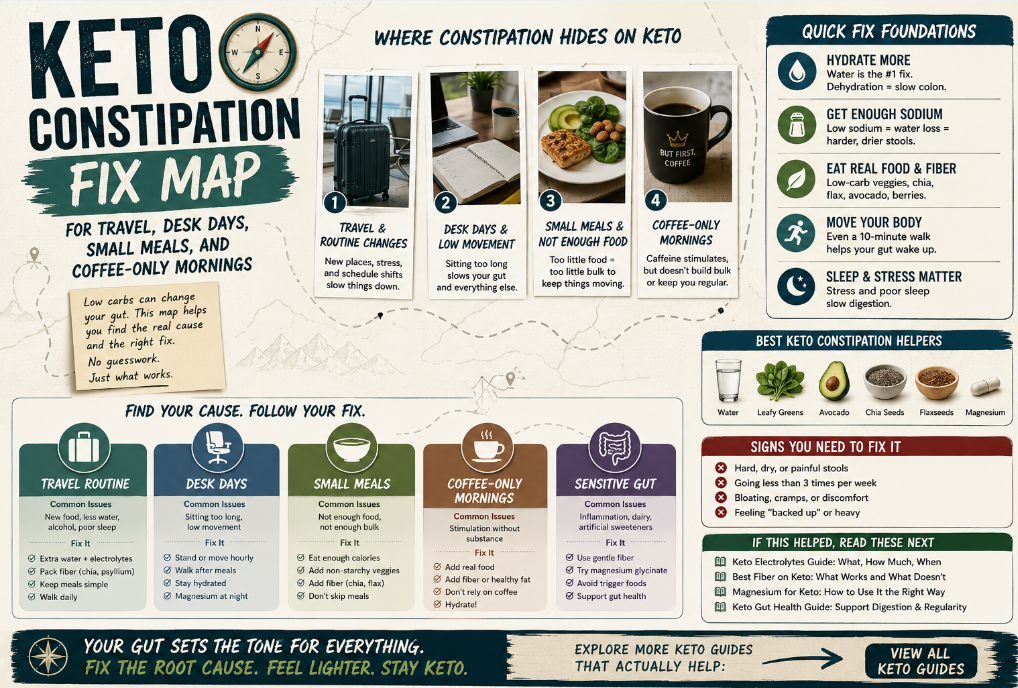
You can be low carb and still feel backed up, bloated, and off for days. This keto constipation fix map helps you figure out what changed first.
That is not random. And it usually is not a mystery fiber emergency either.
Most keto constipation problems come from a few repeat patterns. Meals get smaller. Coffee gets bigger. Fluids and salt get sloppy. Movement drops. Travel breaks your rhythm. Convenience food replaces real meals.
This page is the fix map. It is not here to dump twenty tips on you. It is here to help you figure out which version of keto constipation you are actually dealing with so you can fix the right thing first.
If you want the broad foundation, start with the main guide on constipation on keto. If you keep getting stuck in specific situations, use the sections below like a decision page.
Keto constipation fix map: start with what changed in real life
Here is the truth. Keto does not usually cause constipation just because carbs went down. The bigger issue is that your daily structure often changes with it.
You stop eating full meals. You drink more coffee. You eat more cheese, jerky, bars, and quick low-carb food. You sit longer. You travel. You drink less plain water than you think. Then your digestion slows down and you blame keto as a whole.
The better question is simple: what changed first?
- If meals got lighter and smaller, go to the small-meals section.
- If you sit all day and ignore your normal routine, go to the desk-days section.
- If this mainly happens on trips, go to the travel section.
- If coffee is doing most of the work before noon, go to the coffee-only section.
- If your keto routine leans hard on convenience food, check that section too.
Start here:
If meals got smaller, weaker, or snack-based, start there
This is one of the most common patterns.
People think they are doing great because appetite dropped, but what really happened is that breakfast disappeared, lunch became random, and dinner got pushed late. Now there is not much food volume, not much routine, and not much consistency in the day.
Real life version: coffee in the morning, a few bites of cheese or nuts at lunch, then a late dinner when you are already tired. That can look low carb on paper while still being terrible for digestion.
The mistake is assuming constipation means you need a fancy supplement first. Sometimes the real problem is that your body has almost no regular meal rhythm left.
The fix is boring but effective: bring back actual meals, stop making snacks do a meal’s job, and get more consistent with fluids and salt while you do it. If this sounds like your pattern, read the guide on keto constipation from small meals. It goes deeper on the low-food-volume problem.
If desk days make it worse, treat routine and movement like part of digestion
A lot of people keep looking at food only and miss the obvious part: they barely move on workdays.
Desk-day constipation usually builds from a stack of small misses. You sit for hours. You keep delaying bathroom breaks. You run on caffeine. You eat at weird times. You drink less water because you are busy or because you do not want to keep getting up.
That combination can slow everything down even if your macros still look fine.
Real life version: you sit through calls, answer messages, eat something quick at your desk, and tell yourself you will deal with it later. By evening you feel heavy, dry, and uncomfortable. The next morning starts with more coffee instead of a real reset.
The mistake here is trying to out-supplement a routine problem. If you do not change the day structure, the same problem keeps repeating.
Start with short walking breaks, earlier fluids, and a real lunch instead of grazing. Then read the desk-day constipation guide for the work-from-chair version of this problem.
If travel weeks break everything, stop expecting home rules to survive untouched
Travel compresses all the weak points into one ugly package.
Your meal timing changes. Your fluid intake drops. Salt gets inconsistent. Bathroom access changes. Stress goes up. You may sit for long stretches in cars or planes. Or you may walk a lot and still end up more dehydrated than usual.
That is why people can feel fine at home and then get backed up two days into a trip.
The mistake is planning only for carbs. People pack keto snacks, but they do not plan for hydration, meal timing, or how weird their bathroom routine gets away from home.
The fix is to think bigger than food labels. Keep fluids steady, stop treating coffee as hydration, build at least one real meal into the day, and expect your digestion to need more structure, not less. If this is your pattern, read the travel constipation guide. It is the right branch when your normal routine disappears.
If coffee-only mornings are normal, stop pretending that is neutral
Coffee is not the problem by itself. Coffee replacing food is the problem.
A lot of keto readers lose morning hunger and assume that means they found some magic appetite upgrade. Then the whole first half of the day turns into caffeine, very little food, very little water, and no real structure. By afternoon or evening they feel off, backed up, tired, and weirdly hungry all at once.
Real life version: two big coffees, no breakfast, a tiny lunch, then a late dinner. You may still be low carb, but your day is running on stimulation instead of nourishment.
The mistake is calling this appetite control when it is really under-fueling with a side of dehydration.
The fix is simple: if constipation keeps showing up with coffee-heavy mornings, stop chasing random add-ons and rebuild your morning structure. More real food. More plain fluids. Less caffeine as the entire plan. If the small-meals pattern overlaps here, go back to the small-meals constipation post because these two problems often travel together.
When convenience keto is the real issue
This section matters more than people think.
You can eat low carb all week and still build a routine that makes constipation more likely. That happens when keto becomes cheese snacks, jerky, bars, packaged low-carb foods, drive-thru protein, and coffee instead of normal meals with some rhythm behind them.
Real life version: burger bowl for lunch, jerky in the car, cheese crisps at your desk, not much water, not much walking, and then surprise that nothing is moving.
The mistake is saying, “But I stayed keto.” Sure. But staying keto is not the same thing as building a digestion-friendly routine.
The fix is to ask what convenience food replaced. If it replaced a real lunch, a real dinner, or your water habit, that is the actual problem. If fast food and convenience eating are becoming your default, also read fast-food keto survival. It helps you clean up the convenience pattern before it spills into bigger side effects.
Before you buy random fixes, check fluids and electrolytes
If constipation is showing up next to headaches, low energy, cramps, dizziness, or that dried-out next-day feeling, do not skip the hydration check.
Low fluids and sloppy electrolytes will not explain every case, but they are one of the first things worth ruling out. Harder stool, dry-mouth days, high coffee intake, hot weather, active days, and poor travel hydration all point in that direction.
If you need help making hydration more consistent, a simple electrolyte powder can be useful during travel, hot days, or those weeks where you clearly are not keeping up. Just do not treat it like the whole fix. It works best when you also bring meals and routine back into line.
For the full hydration side, read the keto dehydration guide. That is the right next step when the constipation problem comes with the rest of the dried-out side-effects package.
Related:
Common mistakes that keep keto constipation going
- Trying a supplement before fixing meal size, fluids, and salt.
- Letting coffee replace breakfast and acting like that has no downside.
- Ignoring movement on workdays when you barely stand up.
- Packing keto snacks for travel but no hydration plan.
- Calling convenience food a meal structure when it is really random intake.
- Thinking “still low carb” automatically means “set up well.”
Fix this first:
1. Figure out which pattern fits best: small meals, desk days, travel, coffee-only mornings, or convenience-food overload.
2. Fix food and fluids before you chase fancy solutions. Bigger real meals, steadier water, more consistent salt, less coffee-as-breakfast, and more movement solve a lot.
3. Read the one linked post that matches your real pattern instead of skimming random constipation tips.
4. If more than one lane fits, handle meal structure and hydration first. Those are usually the base problems.
5. If this keeps repeating, stop asking whether keto caused it and ask which version of your keto routine keeps causing it.
If this helped, read these next:
- Why constipation on keto happens and how to fix it fast
- Why travel weeks make constipation worse fast
- Why smaller meals and bigger coffee make constipation worse
Explore more Keto Problems & Side Effects stories here: