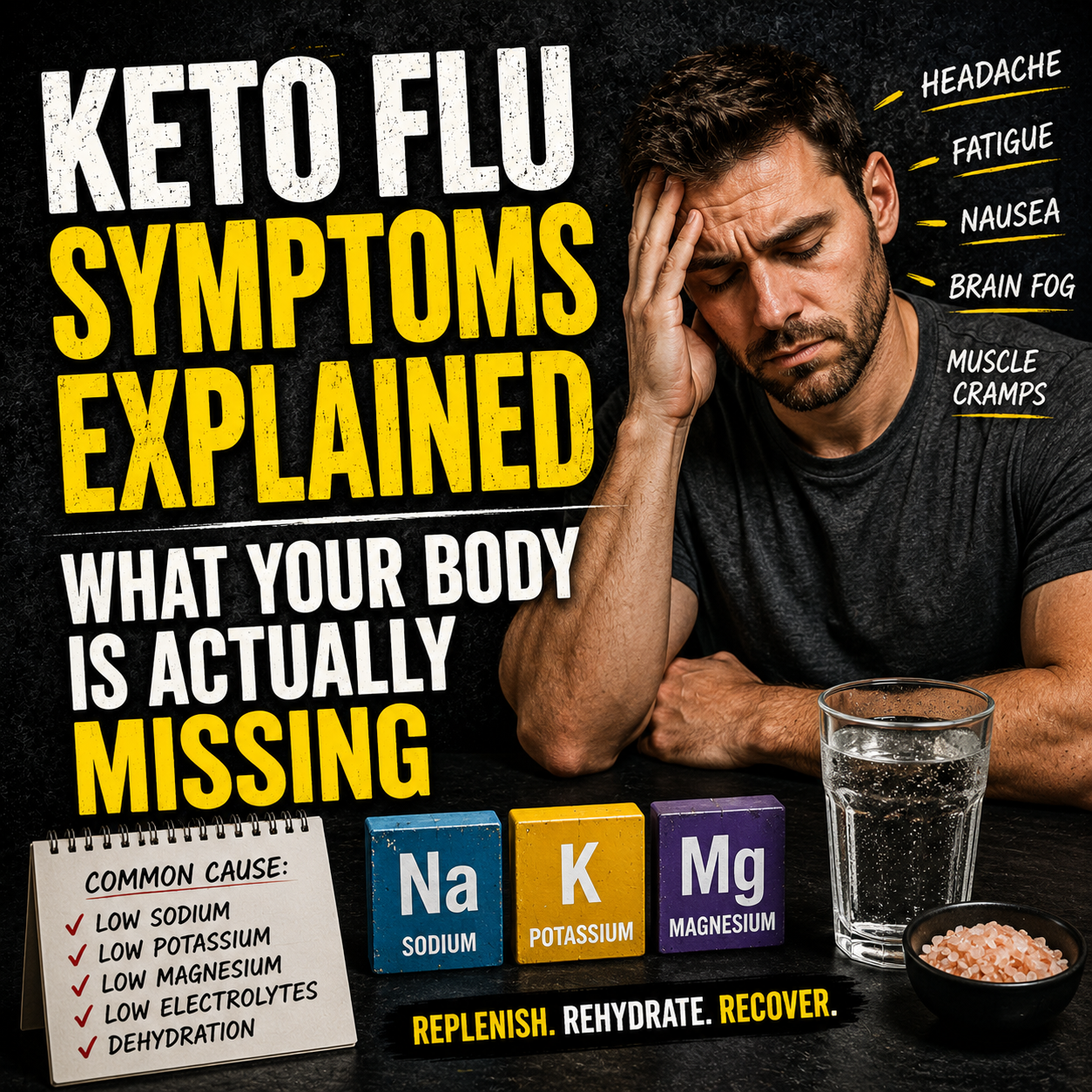
You cut carbs expecting keto to feel cleaner, steadier, and easier.
Instead, you got headaches, dizziness, weakness, cramps, or that flat exhausted feeling that makes the whole diet feel broken.
People call all of that “keto flu,” but then they treat it like one giant mystery instead of several different problems with different causes.
This hub is here to make things simpler.
If you think keto flu is hitting you, this page will help you figure out:
* which symptom pattern you actually have
* why it keeps happening
* which child post will help you fix the right problem first
What keto flu usually is
Keto flu is not a magical detox.
Most of the time, it happens because carbs drop quickly while sodium, fluids, meals, and routine do not adjust with them.
That is why the symptoms vary so much.
One person gets headaches.
Another gets dizzy.
Another feels weak.
Another wakes up with painful cramps.
Some people just feel tired and “off” for days.
If you need the basic explanation first, start with
keto flu explained and how to fix it fast.
That page covers the foundation.
This hub is for the next step: figuring out what your version of the problem actually looks like.
And here is the blunt truth:
If keto flu keeps dragging on, the setup is usually still wrong.
Start here:
If you feel weak, sodium is usually the first thing to check
Weakness is one of the most common early keto problems.
People often assume they need:
* more coffee
* more fat
* more willpower
* more time
But a lot of the time, they simply never replaced enough sodium.
If your legs feel heavy, workouts suddenly feel awful, or simple daily tasks feel harder than they should, read
why you feel weak on keto when sodium never gets replaced.
That post helps separate normal adaptation from a preventable mistake.
A common pattern looks like this:
* coffee for breakfast
* a light lunch
* plain water all day
* barely any salt
* crashing energy by afternoon
That is not mysterious keto failure.
That is usually under-salted keto combined with weak meal structure.
And this is why random snacking often does not fix the issue. If sodium and meal structure are the real problem, more tiny bites will not magically repair the day.
If tiredness continues after the first week, stop calling it temporary
Most people can tolerate a rough first few days.
The real frustration starts when the tiredness never leaves.
You keep waiting to “adapt,” but your energy still feels flat and unreliable weeks later.
In many cases, the original problem never got fixed.
Meals stayed too small.
Electrolytes stayed inconsistent.
Sleep got worse.
The routine never stabilized.
If that sounds familiar, read
why you are tired on keto even after the first week.
That page is especially helpful if you are technically past the beginner stage but still do not feel normal.
One of the biggest mistakes people make is simply waiting longer while repeating the exact same setup every day.
Time alone does not fix an unstable routine.
If dizziness is the main symptom, treat it like a warning sign
Dizziness tends to scare people because it feels dramatic.
Most assume keto itself must be dangerous or that they suddenly “need carbs.”
But dizziness usually shows up when low carbs get combined with:
* low sodium
* poor meal timing
* dehydration
* overly active days
* too much caffeine
If this is your main issue, read
why you get dizzy on keto when carbs are already low.
That post helps separate true keto adaptation from a poorly supported day.
A common example:
You stand up quickly and feel lightheaded. Panic kicks in, so you immediately assume you need sugar.
But the real problem may have been:
* coffee instead of breakfast
* plain water without sodium
* delayed meals
* not enough food overall
That confusion is exactly what this hub is meant to prevent.
If leg cramps hit at night, the fix path is different
Not all keto flu symptoms should be treated the same way.
Night cramps are a perfect example.
They still connect to electrolytes, but they usually need a more specific fix than a generic “drink more water” approach.
If you keep waking up with painful leg cramps, read
why leg cramps hit on keto at night and what actually fixes them.
That page helps you avoid the lazy mistake of treating every symptom with the exact same keto-flu advice.
A lot of people get temporary relief once, assume the problem is solved, and then the cramps keep returning because the daily routine underneath never changed.
If the whole thing feels messy, go back to electrolyte basics
One of the biggest reasons keto flu drags on is because people skip the basics and chase complicated fixes instead.
They start obsessing over:
* fancy supplements
* internet hacks
* carb fears
* expensive powders
Meanwhile, the real problem is still poor electrolyte balance and weak meal structure.
If you want the plain-English version of how this works, read
why electrolyte balance matters and how to get it right.
That page is especially useful when the problem is not one symptom, but the feeling that your entire keto routine feels unstable.
An electrolyte mix can help if it makes consistency easier.
But the product itself is not the solution.
The real goal is building a routine that prevents the crash from happening in the first place.
Common mistakes that keep keto flu going
The first mistake is calling everything “keto flu” without getting specific.
Headaches, weakness, dizziness, cramps, and fatigue overlap, but they do not always need the same solution.
The second mistake is blaming low carbs alone.
Low carbs start the transition, but the real problems usually come from what failed to adjust with them:
* sodium
* fluids
* meals
* sleep
* daily structure
The third mistake is using caffeine to power through symptoms.
That may temporarily hide the problem while the underlying setup keeps getting worse.
The fourth mistake is assuming keto flu only exists during the first week.
Symptoms often return during:
* travel
* hot weather
* stressful days
* poor sleep
* chaotic schedules
Especially if the routine was never stable to begin with.
Related:
How to use this hub
Start with the symptom that matches you most closely:
* weakness
* tiredness
* dizziness
* cramps
* general low-energy keto flu
Then read that child post first.
If your symptoms mainly appear when life gets chaotic, there is a good chance the problem is bigger than one food choice.
Outside-the-house days, stressful schedules, and bad sleep can bring symptoms back even after the beginner stage.
Fix this first:
- Stop calling everything keto flu and identify the actual symptom pattern.
- Replace sodium and fluids on purpose instead of hoping the problem disappears on its own.
- Keep eating real meals instead of surviving on coffee and tiny snacks.
- If symptoms continue after the first week, rebuild the routine instead of just waiting longer.
- Use the child post that matches your main symptom so you fix the right issue first.
If this helped, read these next:
Explore more Keto Problems and Side Effects stories here:
View all Keto Problems and Side Effects stories
Post Views Today: 271