
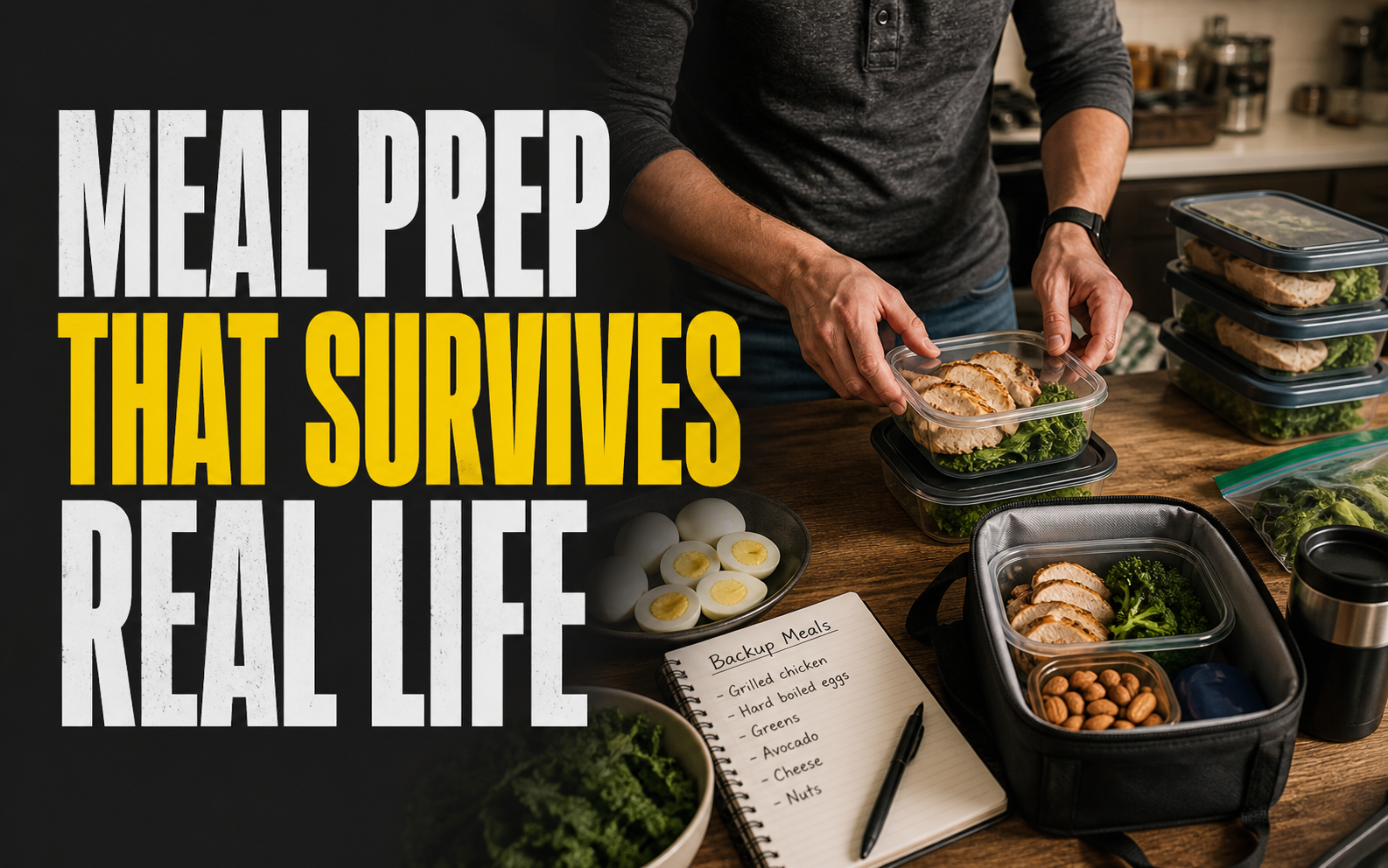
Most meal prep advice sounds good until real life gets involved.
You start the week with decent intentions. Then mornings speed up, lunches get skipped, dinner gets pushed, and by Wednesday the whole plan feels like leftovers, random snacks, and “we will figure something out.”
That is why lazy keto meal prep does not need to be prettier. It needs to survive a normal week.
Here is the reality check. If your plan depends on perfect timing, full energy, and a quiet kitchen, it is not a real system yet.
What actually works is simpler: default proteins, backup meals, packed lunch rescue, and a midweek recovery move before the whole thing falls apart.
Lazy keto meal prep starts with default proteins, not perfect recipes
This is where most people get lazy keto meal prep wrong. They prep recipes. What they really need is a protein base that can turn into several easy meals.
If your fridge has cooked chicken, taco meat, burger patties, hard-boiled eggs, or another repeat protein, you are not starting from zero every time somebody gets hungry. If your fridge has ingredients for an ambitious casserole you may or may not make, you are still one tired evening away from takeout.
Real life example: you buy ground beef, chicken thighs, shredded cheese, salad mix, and a few vegetables. That can become taco bowls, burger plates, egg scrambles, lettuce wraps, or a fast skillet dinner. But if your prep is one giant recipe that nobody wants leftovers from by Tuesday, the system dies early.
The common mistake is treating meal prep like a content hobby. People chase variety or perfectly portioned containers when the real problem is that they do not have a default answer to the question, “What is dinner in 15 minutes?”
The fix is boring on purpose. Pick two or three proteins you will actually eat more than once. Cook them early. Keep them plain enough to reuse. Add easy sides later.
- One shredded or chopped protein for bowls, salads, or wraps
- One fast hot protein like burger patties, sausage, or taco meat
- One no-cook protein option for bad days, like deli meat, rotisserie chicken, or boiled eggs
If your mornings are the first pressure point, read Lazy Keto on Early-Start Mornings. A lot of dinner problems begin when the day starts rushed and no food leaves the house.
Backup meals matter more than meal prep when you hate prepping
A lot of people say they hate meal prep when what they really hate is unrealistic meal prep. They do not want to spend half a Sunday cooking. Fair enough. The answer is not giving up. The answer is building backup meals that still work when energy is low.
Backup meals are the lazy keto safety net. They are not your ideal meals. They are the meals that keep one bad afternoon from turning into random low-carb junk, grazing, and a late-night order.
What does that look like in real life?
Maybe dinner is eggs and sausage because the day went sideways. Maybe it is leftover taco meat over bagged lettuce with cheese and olive oil. Maybe it is burgers from the freezer plus a quick vegetable. None of that is exciting. That is the point.
The mistake is filling the fridge with ingredients and pretending that counts as a backup plan. It does not. A backup meal has to be obvious enough that tired-you can make it without thinking.
That is also where a lot of lazy keto people quit by Wednesday. They use all their energy on the start of the week and leave nothing easy for the tired version of themselves.
The fix is to create a tiny emergency menu before the week starts:
- 2 emergency dinners you can make in under 15 minutes
- 1 freezer option for the nights when fresh food is gone
- 1 no-cook plate for the nights when nobody wants to cook at all
If dinner keeps collapsing anyway, go straight to Lazy Keto Meal Rescue. That one is built for the moment when the plan is already breaking and you need the next right move fast.
If your house runs on different schedules and appetites, read Lazy Keto Split Dinners. A lot of people are not failing meal prep. They are forcing one dinner system onto a house that does not work that way.
Packed lunches fail when they are built as leftovers only
Packed lunch is one of the biggest weak spots in lazy keto meal prep. People assume lunch will take care of itself if they cook dinner. Sometimes it does. A lot of the time it does not.
Leftovers help, but leftovers are not a full packed-lunch system. Some dinners do not leave enough behind. Some leftovers are annoying to reheat. Some mornings move too fast for container math.
That is why packed lunch rescue needs its own lane.
A good lazy keto lunch system has at least one fast grab-and-go option and one stronger meal option.
- Fast option: boiled eggs, deli meat, cheese, nuts, or leftover burger patties
- Stronger option: protein bowl, taco meat container, chopped chicken salad, or another meal that actually holds you
Real life example: you tell yourself lunch will be “whatever is left.” By 11:30 there is no clean container, nothing is portioned, and all you grab is cheese, nuts, and a meat stick. It is still low carb, but it is a weak lunch. Then dinner gets louder later because the day never had a real meal in the middle.
The common mistake is focusing on convenience and forgetting satiety. A packed lunch that looks keto is not enough if it does not stop the afternoon slide into snacking, coffee, and “I will eat later.”
The fix is to prep lunches on purpose, even if you hate prepping. That can be as simple as keeping one shelf or bin for grab-fast lunch parts and one stack of containers ready for stronger meals. Your lunch system does not need to be fancy. It needs to leave the house fast.
If your week keeps getting squeezed by money, energy, and grocery drift, read Real-Life Keto Survival on Tight Weeks. Tight weeks are exactly when packed lunches start disappearing and convenience food starts looking reasonable.
Midweek recovery is the part most meal prep advice forgets
This is the missing piece for a lot of readers. They prep the beginning of the week and act surprised when Wednesday night looks nothing like Monday.
Of course it does. Food is lower. energy is lower. Patience is lower. The fridge is weird. One person already ate. Another wants something different. And the original plan now feels like homework.
That does not mean your lazy keto meal prep failed. It means your system needed a reset point and did not have one.
The common mistake is thinking meal prep is a one-time event. In real life, it works better as a light setup plus a midweek correction.
Your midweek recovery can be simple:
- Cook one more protein on Tuesday or Wednesday
- Restock one easy vegetable or salad base
- Move freezer backups to the front before the fridge looks empty
- Decide the next two dinners before the tired scramble begins
That is it. Not a full restart. Just enough structure to stop the second half of the week from becoming random.
If Wednesday is where the wheels come off every single time, read Lazy Keto Meal Prep for People Who Hate Meal Prep but Keep Losing Dinner to Chaos by Wednesday. That post goes deeper on the exact middle-of-the-week breakdown.
What most people get wrong about lazy keto meal prep
They think meal prep means making a full week of meals in advance.
It does not.
They think if they hate prepping, they are just not meal-prep people.
Usually false.
They think groceries automatically become meals.
Also false.
And they think one good Sunday should carry a messy week with no backup, no lunch plan, and no reset.
That is the real trap.
Lazy keto meal prep is supposed to reduce decisions. It is supposed to make bad days less expensive and less chaotic. It is supposed to keep lunch from turning into a snack pile and dinner from turning into panic eating.
If your system is not doing that, you do not need more discipline. You need less friction.
Simple fixes if you keep quitting by Wednesday
- Stop prepping recipes first. Prep proteins first.
- Build two backup dinners before you build a perfect weekly menu.
- Pack lunch on purpose instead of hoping leftovers handle it.
- Do a Tuesday or Wednesday reset before the fridge gets random.
- Keep your grocery list tied to repeat meals, not wishful cooking.
If your grocery cart keeps looking full but dinner still feels like a mess, read Lazy Keto Grocery Systems. That is usually the missing layer between buying food and actually eating well.
FAQ
Do I need to meal prep every meal on lazy keto?
No. You need enough structure that the next meal is easy. That usually means cooked protein, one or two backup meals, and a lunch plan that can leave the house fast.
What if I hate leftovers?
Then stop building your whole system around leftovers. Keep repeat proteins plain, use them in different meals, and rely more on components than identical containers.
Why does my plan always fail in the middle of the week?
Because most people prep the start of the week and never plan the reset. Midweek is when food, energy, and patience all drop at the same time.
Fix this first:
- Pick two or three default proteins you can reuse in different meals this week.
- Write down two backup dinners for the nights when your ideal plan is already dead.
- Set up one packed lunch option that can leave the house in under five minutes.
- Add a Tuesday or Wednesday reset so the second half of the week does not become cleanup eating.
If this helped, read these next:
Explore more Lazy Keto stories here: